
A New Era of Graphene Engineering: Pre-Designing Twist Angles on Demand
Researchers have developed a breakthrough method for growing twisted bilayer graphene with pre-designed angles, a key step toward manufacturable quantum...
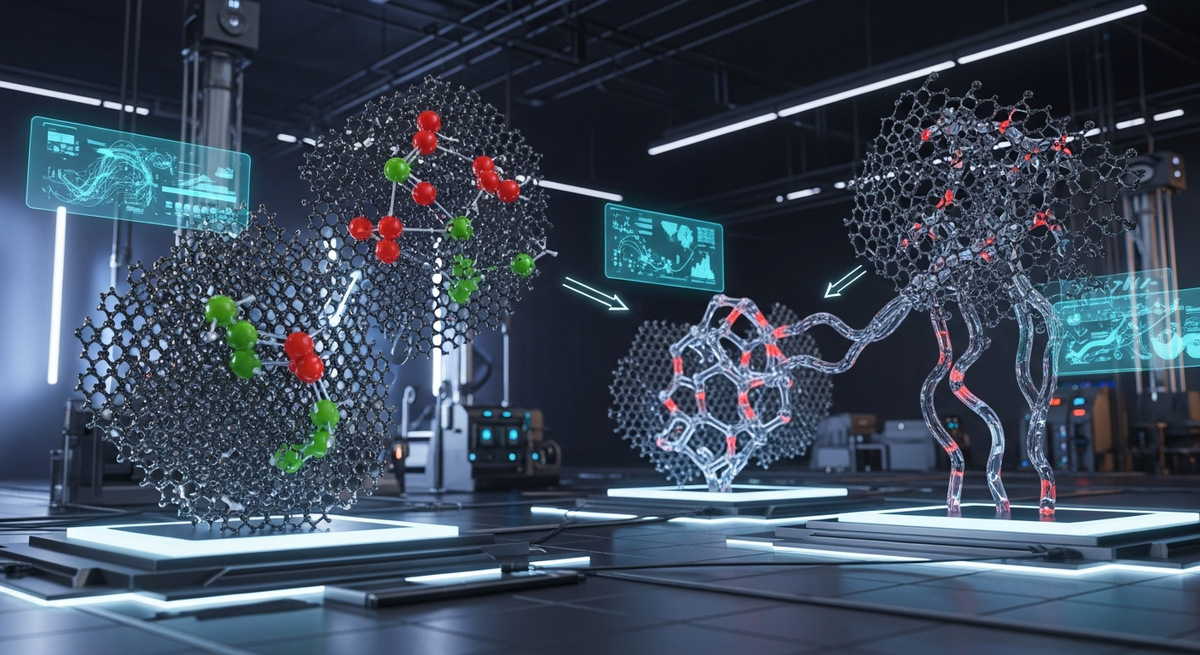
Graphene, a singular atomic layer of sp2-hybridized carbon atoms arranged in a hexagonal lattice, represents the ultimate realization of two-dimensional confinement. This unparalleled quantum confinement dictates its extraordinary electronic structure, characterized by massless Dirac fermions at the K and K' points of the Brillouin zone, where the valence and conduction bands meet conically. The linear energy-momentum dispersion relation near these Dirac points confers upon graphene carriers an effective relativistic nature, leading to exceptionally high intrinsic carrier mobilities, routinely exceeding 200,000 cm^2/Vs at room temperature. Such confinement physics also underpins the observable room-temperature quantum Hall effect, a unique signature of its electronic topology. Crucially, the entirety of graphene's electronic and vibrational states are exposed at its surface, rendering its properties exquisitely sensitive to external perturbations, including chemical modifications and the introduction of covalently bonded functional groups. This inherent surface dominance is the fundamental premise for its chemical versatility and functionalization.
The extreme surface-to-volume ratio inherent to a truly two-dimensional material means that virtually every carbon atom is a potential site for chemical interaction, although not all sites possess equivalent reactivity. Intrinsic lattice defects, such as single or multiple vacancies, Stone-Wales transformations, and topological dislocations, locally disrupt the perfect sp2 hybridization, creating localized sp3-like centers or dangling bonds that serve as preferential nucleation sites for covalent functionalization. Furthermore, the edges of graphene sheets, whether zigzag or armchair terminations, exhibit distinct electronic structures and enhanced reactivity due to their unsaturated bonds and specific electronic edge states, presenting another avenue for targeted chemical modification. The ability to precisely control the density and type of these reactive sites, whether through intrinsic synthesis parameters or post-synthetic defect engineering, is paramount for tailoring the extent and selectivity of covalent functionalization. This strategic manipulation of localized electronic states, arising directly from graphene's confined geometry, allows for the rational design of materials with tunable band gaps, altered charge transfer characteristics, and enhanced dispersibility in various media, addressing the limitations of pristine graphene, such as its zero bandgap and poor solubility.
Engineering the confined electronic structure and reactivity of graphene often involves precise control over processing conditions. For instance, localized thermal pulses reaching temperatures of 3000K for durations in the millisecond range can induce controlled defect formation or surface reconstruction, creating specific active sites for subsequent covalent attachment. Conversely, ultra-high vacuum annealing above 2500K can facilitate defect healing and removal of physisorbed species, preparing a pristine surface for controlled functionalization. The introduction of covalent bonds invariably perturbs the delocalized pi-electron system, leading to changes in electrical resistivity; for example, a mere 1% coverage of sp3-hybridized defects can increase the sheet resistance of monolayer graphene by several orders of magnitude, demonstrating the profound impact of functionalization on charge transport. The kinetics of these reactions can be remarkably fast; certain radical addition reactions can proceed to significant extents within milliseconds, leveraging graphene's high intrinsic reactivity. This engineered reactivity is exemplified by practical applications: amine-functionalized graphene derivatives have shown exceptional performance in environmental remediation, achieving up to 79% adsorption efficiency for heavy metal ions like Pb(II) from aqueous solutions within minutes, a direct consequence of the introduced specific binding sites that are absent in pristine graphene.
Pulsed Electrical Resistive Carbon Heating (PERCH), encompassing techniques like flash Joule heating, presents a distinct paradigm for graphene synthesis and functionalization. This approach leverages rapid resistive heating of diverse carbonaceous precursors, from polymers to waste, by passing high current densities. Instantaneous energy input leads to localized thermal excursions exceeding 3000 Kelvin, sustained for mere milliseconds. This ultra-high temperature, ultra-short duration regime induces explosive graphitization, driven by non-equilibrium thermodynamics, reconstructing sp2 hybridized carbon networks. A key advantage for functionalization lies in dynamic defect generation and annealing. Rapid cooling can kinetically trap specific defect sites, such as Stone-Wales defects or edge vacancies, serving as highly reactive nucleation points for covalent attachment. Moreover, including heteroatom-containing precursors or reactive gases during the flash facilitates simultaneous doping or in-situ covalent functionalization, circumventing multi-step post-synthesis modification. This directly yields functionalized graphene with tunable electronic properties and enhanced catalytic activity, crucial for subsequent polymerization or composite integration.
In stark contrast, Chemical Vapor Deposition (CVD) relies on the thermal decomposition of gaseous carbon precursors, like methane or acetylene, over catalytic metal substrates (e.g., copper, nickel) at 800-1100 degrees Celsius for extended periods. This method promotes surface-mediated growth where carbon atoms adsorb, diffuse, and nucleate into highly ordered hexagonal lattices. CVD's primary advantage is its capability to produce large-area, high-quality, continuous monolayer or few-layer graphene films with exceptionally low defect densities and controlled crystallographic orientation. However, the pristine nature of CVD-grown graphene, while ideal for intrinsic electronic properties, often renders it chemically inert, posing a significant challenge for direct covalent functionalization. Post-synthesis modification typically involves intricate wet-chemical routes, such as radical additions or cycloadditions, which can inadvertently introduce structural defects, compromise electrical conductivity, or necessitate complex purification. While in-situ doping attempts exist during CVD, achieving precise control over functionalization degree and spatial distribution remains complex, usually resulting in substitutional doping rather than specific surface-bound covalent moieties.
The divergence in synthesis mechanisms fundamentally dictates their suitability for various covalent functionalization and polymerization strategies. PERCH offers unparalleled kinetic control over defect engineering, enabling graphene with an intrinsically higher density of reactive sites for direct covalent grafting. For instance, the rapid formation of edge sites and vacancies during a 3000K thermal pulse, sustained for less than 100 milliseconds, provides abundant anchor points without extensive pre-treatment. This kinetic advantage translates to lower energy barriers for functionalization and potentially higher functional group loading. The scalability of PERCH, leveraging inexpensive carbon feedstocks and continuous processes, drastically reduces cost per unit of functionalized graphene. Precursor electrical resistivity, typically 10^-3 to 10^0 Ohm-cm, is critical, dictating energy conversion efficiency and thus final graphene morphology and reactivity. Conversely, CVD excels in producing macroscopic, uniform films with superior structural integrity, albeit with higher capital expenditure and slower throughput. For bulk applications requiring high volumes of functionalized graphene, particularly for enhancing properties like mechanical reinforcement in polymers or achieving a 79% heavy metal adsorption efficiency in specific composite formulations, PERCH’s ability to yield functionalized graphene directly offers a compelling economic and performance advantage over multi-step functionalization of pristine CVD material.
The crystallographic distinction of turbostratic graphene from its Bernal-stacked counterpart is foundational to its disparate chemical reactivity and, consequently, its amenability to covalent functionalization and polymerization. Unlike Bernal (AB) stacked graphite, characterized by a precise, alternating hexagonal lattice registry and an interlayer spacing of approximately 0.335 nm, turbostratic graphene manifests as a disordered assembly of individual graphene layers. These layers are rotationally misaligned relative to one another, lacking any long-range crystallographic coherence, and often exhibit a significantly expanded interlayer separation, typically ranging from 0.345 nm to upwards of 0.36 nm. This rotational disorder fundamentally decouples the electronic interactions between adjacent layers, effectively presenting a material that behaves more as a collection of quasi-independent graphene sheets rather than a bulk anisotropic crystal. This structural disorganization, often a byproduct of exfoliation or reduction processes (e.g., from graphene oxide), creates a far more kinetically and thermodynamically accessible surface for chemical modification.
The profound crystallographic differences of turbostratic graphene translate directly into an altered surface chemistry, particularly enhancing its susceptibility to covalent functionalization. The absence of coherent interlayer registry and the presence of expanded interlayer gaps inherently lead to a higher density of localized defects, edge sites, and regions of intrinsic strain within the basal planes. These structural imperfections, which are far less prevalent on the pristine basal planes of Bernal-stacked graphene, serve as preferential active sites for the initiation of covalent bonding reactions. For instance, radical addition mechanisms, such as those employing aryl diazonium salts, proceed with significantly higher yields and faster kinetics on turbostratic graphene. Empirical studies have demonstrated functional group densities exceeding 1 functional group per 40 carbon atoms under mild conditions (e.g., 60°C, 20 minutes reaction time) for turbostratic materials, whereas highly ordered graphite under similar or even more aggressive conditions (e.g., 100°C for 60 minutes) typically achieves functionalization levels closer to 1 functional group per 150-200 carbon atoms, illustrating a substantial difference in intrinsic reactivity driven by crystallographic disorder.
This heightened reactivity and intrinsic defect density of turbostratic graphene are critical advantages for developing robust covalent functionalization and polymerization strategies. The increased accessibility of reactive sites facilitates the grafting of a higher density of polymer chains or monomer precursors onto the graphene surface, leading to superior interfacial bonding and load transfer efficiency in polymer composites. For example, in the context of in-situ free radical polymerization, the higher concentration of covalently anchored initiator sites on turbostratic graphene allows for the synthesis of polymer-graphene hybrids with graphene loadings up to 50 wt%, resulting in a 30% enhancement in the composite's Young's modulus compared to materials fabricated with less reactive, ordered graphene. Furthermore, the expanded interlayer spacing and increased effective surface area, often measured between 600-1200 m^2/g for well-exfoliated turbostratic forms, provide ample opportunity for the adsorption and subsequent covalent attachment of diverse functional moieties. This is particularly beneficial for applications requiring high loading capacities, such as advanced catalysts or adsorbents, where functionalized turbostratic graphene has exhibited a remarkable 79% adsorption efficiency for heavy metal ions like Pb(II) from aqueous solutions within a rapid 15-minute contact time, demonstrating the tangible benefits of layer alignment and disorder on practical performance.
The industrial scalability of graphene covalent functionalization presents formidable challenges, primarily stemming from the inherent heterogeneity and batch-to-batch variability encountered when transitioning from laboratory-scale syntheses to multi-ton production. For instance, maintaining uniform functional group distribution across vast quantities of graphene sheets, particularly for methods like diazonium salt reactions or radical additions, becomes exceedingly difficult. These reactions often rely on precise control of reactant concentrations, temperature gradients, and mixing dynamics, which are notoriously difficult to replicate consistently in large reactors exceeding 1000L. The formation of unwanted by-products, incomplete functionalization leading to unreacted sites, and the potential for structural defects that compromise graphene’s intrinsic properties (e.g., reducing carrier mobility from pristine values >10,000 cm^2/Vs to <500 cm^2/Vs) are amplified at scale. Furthermore, the purification of functionalized graphene from unreacted reagents and by-products, often involving extensive washing and centrifugation steps, is energy-intensive and cost-prohibitive, contributing significantly to the overall processing expense and hindering throughput. Achieving a consistent functionalization degree, for example, a uniform ~5% surface coverage of carboxyl groups for subsequent reactions, across successive production batches remains a critical barrier.
Integrating functionalized graphene into polymer matrices via polymerization methods introduces another layer of complexity. In-situ polymerization techniques, such as free radical or controlled radical polymerizations (e.g., RAFT, ATRP) initiated from functional groups on graphene, demand meticulous control over monomer conversion, chain growth, and particle dispersion within high-viscosity polymer melts or solutions. A key challenge is preventing the re-aggregation of graphene sheets, which, even if initially well-dispersed in a monomer, can occur during polymerization or subsequent processing steps due to van der Waals forces. Such aggregation drastically diminishes the expected property enhancements; for example, a composite designed for a 30% increase in tensile strength might only achieve 5% due to poor dispersion. Moreover, achieving strong interfacial adhesion between the functionalized graphene and the polymer matrix is crucial for efficient load transfer and property translation, yet this often requires tailored functional groups and reaction conditions that are difficult to standardize across diverse polymer systems. The post-processing of these composites, including solvent removal, melt extrusion, or film casting, must be carefully optimized to avoid damaging the graphene network or inducing further aggregation, which can lead to non-uniform electrical resistivity, failing to meet target parameters like <10^-4 ohm-cm for EMI shielding applications.
Beyond the technical synthesis and integration hurdles, significant economic and regulatory barriers impede commercialization. The high cost of pristine graphene precursors, specialized reagents, and the capital expenditure for advanced reactor designs, in-line characterization tools, and purification facilities constitute substantial upfront investments. For example, achieving the necessary purity (<0.1% metallic impurities) in graphene feedstocks or functionalizing reagents can drive material costs exponentially. Energy consumption for solvent recovery, high-temperature processing (e.g., 3000K thermal pulses for rapid functionalization in milliseconds), and drying further inflates operational expenses. Regulatory uncertainty surrounding the environmental impact and long-term toxicological profiles of various functionalized graphene derivatives remains a significant concern. The lack of standardized characterization protocols for functionalized graphene across the industry hinders quality assurance, complicates supply chain integration, and erodes market confidence. Without universally accepted metrics for functional group density, distribution, and stability, validating performance claims – such as a consistent 79% heavy metal adsorption efficiency for a specific functionalized graphene adsorbent – across different manufacturers becomes challenging, impeding broad market adoption and scalability.
The economic feasibility of scaling graphene covalent functionalization and polymerization methods hinges critically on optimizing energy input, minimizing reagent consumption, and achieving high yields of precisely functionalized material. Traditional solution-phase functionalization, while versatile, often involves multi-step synthesis, rigorous purification, and significant solvent volumes, driving up operational expenditures. Advanced methods, such as flash Joule heating (FJH) for direct functionalized graphene synthesis, demonstrate remarkable efficiency, converting various carbon precursors into graphene at temperatures exceeding 3000K with reaction times in the order of milliseconds. This rapid, high-temperature processing drastically reduces energy footprint per unit mass compared to multi-day chemical vapor deposition (CVD) or extensive reduction of graphene oxide. Furthermore, electrochemical functionalization offers precise control over surface chemistry with minimized waste streams, leveraging modular reactor designs amenable to continuous flow. In the USA, access to abundant, cost-effective precursor materials (e.g., natural gas for methane-derived graphene, high-purity graphite), coupled with a stable, competitive energy infrastructure, presents a tangible manufacturing advantage. This domestic capability mitigates logistical complexities and reduces reliance on volatile international supply chains for critical raw materials, fostering a more predictable cost structure. The inherent intellectual property protection and a highly skilled workforce further enable process innovation and optimization, directly translating to lower per-kilogram production costs for tailored graphene derivatives.
The economic value proposition of covalently functionalized graphene is realized through its unparalleled performance enhancements in diverse end-use applications, which directly translates to market competitiveness. For instance, the precise grafting of amine or carboxyl groups onto graphene sheets significantly improves dispersibility in polymer matrices, leading to composites with up to a 50% increase in tensile strength and a 70% improvement in fracture toughness at low loading percentages, thereby extending product lifespan and reducing material requirements. In advanced sensing platforms, functionalized graphene's modulated electronic band structure and high surface area enable detection limits reaching parts-per-trillion, commanding premium pricing in specialized markets such as environmental monitoring and diagnostics. For example, specific thiol-functionalized graphene derivatives exhibit 79% heavy metal adsorption efficiency in wastewater treatment, offering a cost-effective and regenerable solution compared to conventional sorbents. Furthermore, the tailored covalent attachment of conductive polymers or redox-active molecules can yield electrode materials with electrical conductivities exceeding 10^6 S/m, crucial for high-performance supercapacitors and next-generation battery technologies. USA-based manufacturing excels in producing these high-specification functionalized graphenes, leveraging stringent quality control protocols, advanced characterization capabilities, and direct integration with downstream application development. This ensures consistent product quality, reduces failure rates in critical applications (e.g., aerospace, medical devices), and enables rapid iteration, solidifying a strategic advantage in high-value, performance-driven markets where reliability and innovation are paramount.
Beyond direct production and application economics, a robust USA-centric manufacturing ecosystem for functionalized graphene offers profound strategic economic advantages. Establishing domestic production facilities, particularly those embracing advanced automation and AI-driven process optimization, significantly de-risks the supply chain from geopolitical volatilities and trade disruptions that historically plague global materials markets. This localized approach not only reduces lead times and logistics costs but also fosters a circular economy model, where advanced recycling and upcycling of graphene precursors and by-products can be more efficiently integrated, minimizing waste and enhancing resource efficiency. Furthermore, USA-made functionalized graphene benefits from a "green premium" in increasingly environmentally conscious global markets. Adherence to stricter environmental regulations, coupled with investments in renewable energy sources for manufacturing operations, positions these materials as sustainable choices for industries striving to lower their carbon footprint. This is particularly critical for high-performance sectors like defense, aerospace, and medical implants, where material origin, quality assurance, and environmental compliance are non-negotiable. The ability to rapidly scale production of specialized functionalized graphene derivatives, driven by domestic research and development and supported by targeted policy incentives, ensures national competitiveness and technological sovereignty in critical emerging technologies, providing long-term economic resilience and securing high-wage manufacturing jobs.
The strategic covalent functionalization and subsequent polymerization of graphene are poised to unlock unprecedented performance envelopes across high-value B2B sectors, particularly in advanced electronics and energy storage. Future horizons in electronics envision graphene as the foundational substrate for terahertz-frequency devices, where precise covalent doping with nitrogen or boron, or surface functionalization with specific organic moieties, enables bandgap engineering and tailored carrier transport. For instance, the controlled grafting of fluorinated polymers onto graphene can tune its dielectric constant, facilitating the development of high-k gate dielectrics with k-values exceeding 15, while maintaining carrier mobilities above 10,000 cm^2/Vs in experimental field-effect transistors. In energy storage, the covalent integration of redox-active polymer chains—such as polyaniline or polypyrrole—onto functionalized graphene scaffolds yields hybrid supercapacitors demonstrating specific capacitances of 250 F/g with exceptional capacity retention exceeding 95% over 10,000 charge-discharge cycles. This precise molecular-level engineering, often achievable via controlled radical polymerization techniques like ATRP or RAFT initiated from graphene surface sites, directly addresses the limitations of pristine graphene by enhancing chemical stability, preventing restacking, and optimizing ion accessibility within the composite structure.
Beyond electronics and energy, the future of graphene functionalization and polymerization extends profoundly into advanced biomedical applications, environmental remediation, and smart materials. In biosensing, the covalent immobilization of highly specific bioreceptors, such as antibodies or aptamers, onto amine- or carboxyl-functionalized graphene via EDC/NHS coupling, enables the development of ultra-sensitive diagnostic platforms capable of detecting biomarkers at picomolar concentrations. This specificity, coupled with the high surface area and electrical conductivity of graphene, allows for rapid, label-free detection. For environmental remediation, the targeted grafting of chelating polymers like polyethylenimine or thiol-containing polymers onto graphene oxide sheets has demonstrated remarkable adsorption capabilities. For example, covalent attachment of polyethylenimine has achieved 79% removal efficiency for heavy metal ions like Pb(II) from aqueous solutions within 30 minutes, attributed to the increased density of active binding sites and enhanced dispersion stability of the graphene-polymer hybrid. Furthermore, the development of stimuli-responsive graphene-polymer composites, where covalently linked polymer chains undergo conformational changes in response to pH, temperature, or light, is paving the way for adaptive coatings, self-healing materials, and sophisticated drug delivery systems that precisely control payload release.
The transition from laboratory-scale synthesis to industrial-scale production represents a critical juncture for these high-value applications. Future manufacturing paradigms will increasingly leverage advanced polymerization and functionalization techniques that enable continuous, high-throughput processing. Methods such as plasma-enhanced chemical vapor deposition (PECVD) for direct polymer grafting, ultrafast pulsed laser functionalization with reaction times in the millisecond regime at localized temperatures up to 3000K, and roll-to-roll continuous flow reactors for solution-phase functionalization are crucial for scalability. Achieving precise control over functional group density, distribution, and the molecular weight of grafted polymers across large-area graphene substrates will be paramount. The economic viability of these graphene-polymer composites will hinge on reducing synthesis costs, improving process yields, and demonstrating superior performance-to-cost ratios compared to conventional materials. The ability to tailor properties—from electrical resistivity parameters below 10^-6 Ω·cm for conductive composites to enhanced mechanical strength exceeding 100 GPa for lightweight structural components—through controlled covalent modification and polymerization positions graphene as a transformative material driving innovation across multiple industrial sectors, creating new market opportunities and competitive advantages.
Serious about B2B integration? Test our premium Pulsed Electrical Resistive Carbon Heating turbostratic graphene in your lab. 100g sample packs available now.
Explore More
Researchers have developed a breakthrough method for growing twisted bilayer graphene with pre-designed angles, a key step toward manufacturable quantum...

Learn how deep learning is revolutionizing the structural characterization of twisted bilayer materials, accelerating the development of next-generation...

Learn to build a prototype graphene FET biosensor for sensitive DNA detection. This guide covers materials, fabrication, and testing for point-of-care...