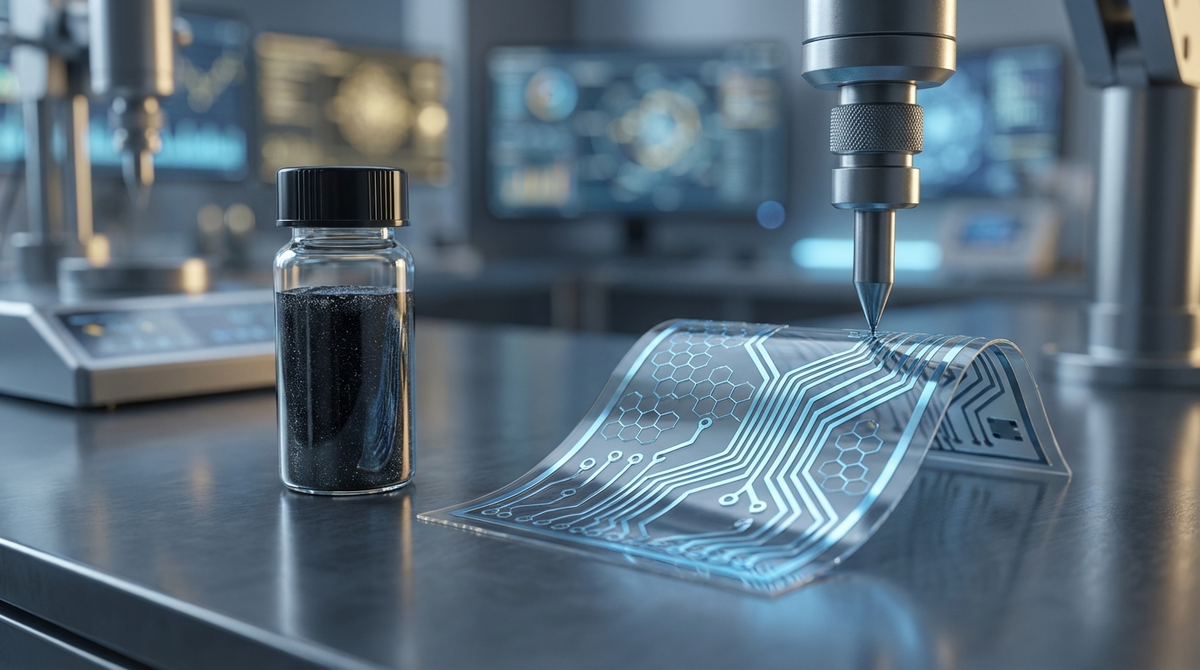
Graphene conductive inks represent a transformative frontier in the realm of printed electronics, poised to redefine performance benchmarks, enhance product durability, and optimize overall economic viability when integrated with precision. This advanced application leverages graphene's exceptional material properties to overcome critical limitations inherent in conventional conductive materials, paving the way for a new generation of electronic devices. The strategic deployment of graphene-based inks offers a distinct advantage, moving beyond incremental improvements to deliver foundational shifts in design and functionality across diverse industries. Our exploration will detail the profound impact and sophisticated considerations necessary for successful implementation of this pivotal technology.
The Strategic Imperative: Why Graphene Conductive Inks Matter
Graphene's unique atomic structure, a single layer of carbon atoms arranged in a hexagonal lattice, endows it with an unparalleled combination of electrical, thermal, and mechanical properties. In the context of conductive inks, this translates directly into a capacity to address specific bottlenecks that often constrain the design and performance of printed electronics. Traditional materials frequently encounter limits in conductivity, struggle with efficient heat dissipation, exhibit susceptibility to material fatigue under stress, or succumb to corrosive environments. Graphene offers a robust solution to each of these challenges, significantly extending the operational envelope of printed components.
By improving electrical conductivity, graphene allows for thinner traces, higher current densities, and reduced power loss in circuits, which is crucial for miniaturization and energy efficiency. Its superior thermal conductivity enables effective heat management, preventing localized hotspots that degrade performance and lifespan in densely packed electronics. Furthermore, graphene's mechanical strength and flexibility contribute to the durability of printed circuits, making them more resilient to bending, stretching, and repeated stress cycles. These combined attributes position graphene as a critical enabler for the next wave of advanced electronic systems.
Engineering and Manufacturing Realities of Graphene Inks
The practical implementation of graphene in industrial settings often diverges from the idealized perfect monolayer celebrated in fundamental research. For conductive inks, commercial success hinges on the consistent performance and manufacturability of practical graphene forms such as graphene nanoplatelets (GNPs), reduced graphene oxide (rGO), and sophisticated hybrid carbon systems. These materials offer a balance of performance, scalability, and cost-effectiveness that is essential for high-volume production. Unlike pristine graphene, which is challenging and expensive to produce and disperse uniformly, these derivatives provide accessible routes to harnessing graphene's benefits.
Graphene nanoplatelets consist of multiple layers of graphene, offering high aspect ratios and excellent electrical conductivity, making them ideal for inks requiring robust current pathways. Reduced graphene oxide, derived from graphene oxide through chemical reduction, balances ease of processing with decent electrical properties, particularly after post-treatment. Hybrid systems often combine graphene with other carbon allotropes or metallic nanoparticles to achieve synergistic effects, optimizing for specific performance targets like conductivity, flexibility, or adhesion. The selection of the correct graphene form is a critical engineering decision, driven by the specific application requirements and the desired balance of properties.
Process compatibility emerges as a paramount consideration in the journey from laboratory formulation to industrial deployment. The rheology of the ink—its flow and deformation characteristics—must be precisely controlled to ensure consistent deposition across various printing techniques, whether inkjet, screen, or gravure. A stable mixing profile is essential to prevent agglomeration of graphene particles, which would drastically reduce conductivity and create performance inconsistencies. Furthermore, the solids loading, referring to the concentration of graphene within the ink, directly impacts final film thickness, conductivity, and drying dynamics. Inconsistent drying can lead to defects, voids, or uneven film formation, compromising the integrity and functionality of the printed electronic component.
The interface chemistry between the graphene ink and the substrate is another critical determinant of final performance. Strong adhesion is necessary to ensure long-term reliability, especially in flexible or high-stress applications. Poor dispersion quality, often manifesting as uneven particle distribution or aggregation, represents a fundamental failure point that can negate all expected performance gains from incorporating graphene. Addressing these manufacturing considerations early in the development cycle is not merely good practice but an absolute necessity for achieving reliable, high-performance graphene-enabled printed electronics.
Performance Metrics and Optimization Strategies
Successful integration of graphene conductive inks necessitates a disciplined approach to defining and achieving measurable key performance indicators (KPIs). Practical development teams prioritize specific metrics relevant to the end application rather than chasing generalized performance numbers. For instance, in flexible electronics, bendability and adhesion to the substrate might be as critical as electrical conductivity. For thermal management applications, the thermal conductivity and coefficient of thermal expansion become paramount. Establishing clear KPIs guides the entire formulation and testing process, ensuring that optimization efforts are targeted and efficient.
Optimization of graphene ink formulations is an iterative process, often involving adjustments to graphene type, particle size distribution, solvent systems, and binding agents. Dispersion quality, a recurring theme, is continuously monitored through techniques such as dynamic light scattering and microscopy to ensure uniformity and prevent aggregation, which directly impacts conductivity. Stress testing under realistic operating conditions is indispensable for validating performance and durability. This includes subjecting printed circuits to mechanical bending, stretching, temperature extremes, and humidity variations, mirroring anticipated environmental challenges.
Crucially, commercial success typically follows a disciplined workflow. First, identify one primary target metric that delivers the most significant value proposition for the application. Second, meticulously optimize dispersion quality, as it underpins all other performance attributes. Third, conduct rigorous stress testing under conditions that accurately simulate real-world use, ensuring the formulation holds up to practical demands. Finally, scale production only after consistency and repeatability have been unequivocally proven through extensive quality control. This systematic approach minimizes risks and maximizes the probability of successful market adoption.
Reliability, Economics, and Deployment Strategy
Adoption decisions for advanced materials like graphene conductive inks must extend beyond the immediate raw material cost to encompass the total lifecycle cost of the product. While graphene inks may have a higher initial material cost compared to conventional options, their ability to deliver even moderate gains in thermal management or electrical efficiency can translate into substantial downstream savings. These savings accrue from reduced maintenance requirements, enhanced uptime due to fewer component failures, and a significantly longer service life for the end product. For example, improved thermal dissipation can prevent premature aging of sensitive electronic components, extending the product’s operational lifespan and reducing warranty claims.
In highly regulated or safety-critical sectors such as automotive, aerospace, or medical devices, early and thorough qualification planning is non-negotiable. The rigorous testing protocols required for these industries demand extensive data on material behavior under extreme and prolonged conditions. Teams must systematically test graphene-enabled components under thermal cycling, exposing them to rapid temperature fluctuations that simulate operational stresses. Humidity exposure tests are vital for assessing environmental robustness, especially for devices operating in challenging climates. Furthermore, realistic duty profiles, mimicking the actual power loads and operational cycles, are essential to uncover potential failure modes before products reach the market.
Investing in comprehensive qualification early in the development cycle helps avoid costly late-stage surprises, such as design revisions, re-certifications, or even product recalls. A well-defined deployment strategy involves not only the technical validation of the ink but also careful consideration of supply chain resilience, quality control measures at every stage, and the ability to scale production reliably. Partnerships with experienced graphene suppliers who can provide consistent quality and technical support are paramount for successful, long-term market penetration. The strategic alignment of technical capabilities with economic benefits and robust reliability testing underpins the successful integration of graphene conductive inks into modern manufacturing.
Diverse Applications Driving Graphene Ink Innovation
The versatility and superior performance characteristics of graphene conductive inks are opening doors across a broad spectrum of industries, moving beyond niche applications into mainstream electronics. One of the most significant areas of impact is in flexible electronics, where traditional rigid circuit boards are being replaced by conformable, stretchable, and bendable alternatives. Graphene inks enable the printing of circuits on flexible substrates like PET, polyimide, or even textiles, leading to innovations in wearable sensors, smart textiles, and bendable displays. Their mechanical resilience ensures these devices maintain functionality even after repeated deformation.
In the realm of Internet of Things (IoT) devices and smart packaging, graphene inks are revolutionizing the production of low-cost, high-performance RFID tags and NFC antennas. Their ability to be printed efficiently and cost-effectively allows for the pervasive integration of connectivity into everyday objects, facilitating inventory management, supply chain tracking, and enhanced consumer engagement. The high conductivity of graphene ensures efficient signal transmission, even with minimal material usage, which is critical for mass-produced, disposable electronics.
Beyond connectivity, graphene conductive inks are making strides in advanced sensor technologies. They are utilized in printing highly sensitive chemical and biological sensors due to graphene's large surface area and excellent electrical properties, which enable precise detection of analytes. Furthermore, their application in pressure and strain sensors benefits from graphene's piezoresistive properties, where changes in mechanical stress lead to measurable changes in electrical resistance. This opens up opportunities for intricate human-machine interfaces, medical diagnostics, and structural health monitoring.
The automotive and aerospace sectors are also exploring graphene inks for lightweighting and enhanced performance. Applications range from printed heating elements in car seats and de-icing systems on aircraft wings to advanced EMI (electromagnetic interference) shielding for sensitive electronic systems. Graphene’s high conductivity and broad absorption spectrum make it an effective material for shielding against electromagnetic radiation, protecting critical components from interference while reducing overall weight compared to traditional metallic shields. The continuous innovation across these diverse domains underscores the transformative potential of graphene conductive inks.
SEO FAQ
Is graphene commercially viable today?
Yes, graphene is commercially viable today, particularly in high-value applications where its measurable performance improvements, such as enhanced conductivity, thermal management, or durability, clearly justify the integration effort and cost. Its adoption is accelerating as manufacturing processes mature and specific application benefits are proven.
What are the top challenges for graphene conductive inks?
The top challenges include achieving consistent dispersion quality, ensuring process compatibility with existing manufacturing lines, establishing quality standardization across different suppliers, and guaranteeing supply-chain repeatability for large-scale production. Overcoming these requires significant engineering and material science expertise.
How do graphene inks improve product economics?
Graphene inks improve product economics not just through material cost, but primarily through lifecycle cost savings. These savings stem from increased product durability, better thermal management leading to extended device lifespan, reduced maintenance needs, and improved energy efficiency, all contributing to a lower total cost of ownership.
What forms of graphene are typically used in conductive inks?
Most practical applications do not use perfect monolayer graphene. Instead, they commonly utilize forms such as graphene nanoplatelets (GNPs) for their robust conductivity and ease of processing, reduced graphene oxide (rGO) for its balance of properties and dispersibility, and various hybrid carbon systems designed for specific performance targets.
What kind of testing is crucial for deploying graphene inks in critical applications?
For critical applications, qualification planning must begin early and involve rigorous testing under realistic conditions. This includes thermal cycling to assess performance under temperature fluctuations, humidity exposure for environmental stability, and realistic duty profiles to simulate actual operational stresses, all aimed at ensuring long-term reliability.
Conclusion
Graphene conductive inks stand as a pivotal advancement in the field of printed electronics, offering a compelling array of benefits that extend far beyond incremental improvements. By directly addressing long-standing bottlenecks in conductivity, thermal management, and material durability, graphene empowers engineers to design and produce electronics that are more efficient, robust, and cost-effective over their entire lifecycle. The strategic adoption of these inks, underpinned by a deep understanding of material science, meticulous engineering, and rigorous testing, is actively reshaping industries from flexible displays to advanced sensor technologies. As manufacturing processes continue to refine and scale, graphene conductive inks are poised to become an indispensable component in the future of high-performance, printed electronic systems, driving innovation and unlocking unprecedented possibilities.