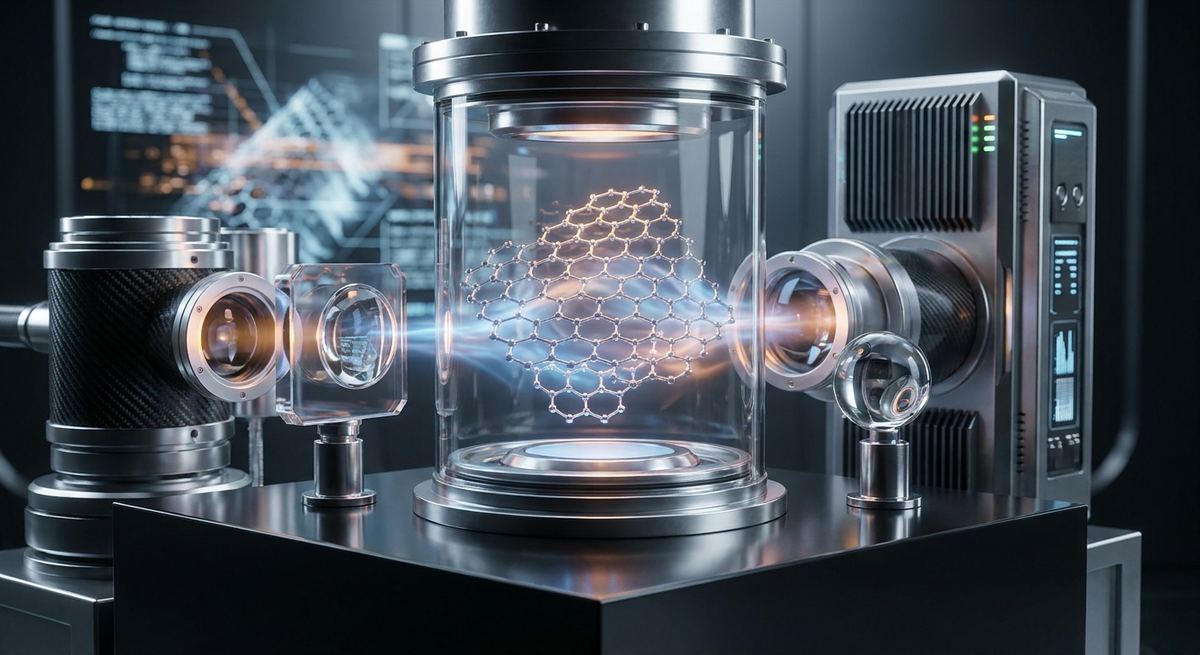
The advent of graphene has ignited an unparalleled surge of interest across the scientific and engineering communities, positioning it as an innovative material poised to redefine electromagnetic device design. Since its isolation in 2004, the promise of graphene-based technologies has captivated researchers, leading to intensive efforts to manufacture and characterize novel prototypes. However, the path from concept to commercial reality is often fraught with significant challenges, including the inherent complexities and high costs associated with advanced nanofabrication techniques. These hurdles frequently limit the scope of experimental exploration, slowing the pace of innovation.
To circumvent these practical limitations, the development of sophisticated computational electromagnetics techniques has become not just desirable, but essential. These powerful simulation tools allow for the comprehensive study of graphene and carbon nanotubes from a macroscopic perspective, bridging the gap between their fundamental atomic properties and their behavior in functional devices. By leveraging these computational methods, we can computationally explore a new generation of electromagnetic devices, offering a realistic preview of the future possibilities for graphene-based technology. This advanced modeling capability is critical for accelerating the design cycle and bringing revolutionary graphene applications closer to reality, particularly in the coveted terahertz, near-infrared, and optical regimes of the electromagnetic spectrum.
Bridging the Nano and Macro: The Essence of Graphene's Electromagnetic Behavior
Graphene’s extraordinary properties originate from its unique atomic structure—a single layer of carbon atoms arranged in a hexagonal lattice. Understanding how these nanoscale attributes translate into the material's macroscopic electromagnetic response is fundamental to designing effective devices. Computational electromagnetics achieves this crucial link by employing appropriate Maxwell’s equations, which govern classical electromagnetic fields, in conjunction with meticulously developed material parameter models. These models, in turn, are derived from the intricate quantum mechanics descriptions that detail graphene's electron behavior.
The constitutive parameters – permittivity (ε), permeability (μ), and conductivity (σ) – are the bedrock of any material model used in electromagnetic simulations. For two-dimensional materials like graphene, and similarly for carbon nanotubes, the electrical permittivity and magnetic permeability are often approximated to be equivalent to those of free space. Consequently, the electrical conductivity (σ) emerges as the pivotal parameter, encapsulating the material’s unique electronic transport properties. Developing a robust theoretical formulation for this conductivity, valid across the terahertz, near-infrared, and optical regimes, is therefore the primary objective in creating an accurate macroscopic material model suitable for Maxwell's equations.
This approach allows researchers to effectively translate the complex, nanodimensional electronic transport properties of graphene into a form that can be readily integrated into standard computational electromagnetic solvers. Without this critical bridge, the immense potential of graphene would remain largely confined to theoretical discussions or prohibitively expensive experimental trials. The ability to accurately model graphene's response to electromagnetic waves is what truly unlocks its applicability in advanced device architectures.
Unlocking the Terahertz Gap: Graphene's Promise in THz Technologies
The terahertz (THz) regime, often referred to as the "THz gap," represents a challenging yet highly promising region of the electromagnetic spectrum, spanning frequencies between microwaves and infrared light. For decades, the lack of efficient and compact devices for generating, detecting, and manipulating THz waves has hindered the full exploitation of this band for applications ranging from high-speed communications to advanced imaging and security screening. Graphene, with its exceptional electronic properties, offers a compelling solution to bridge this technological void.
The unique tunability of graphene's conductivity, achievable through electrostatic gating or chemical doping, allows for dynamic control over its interaction with THz radiation. This makes it an ideal candidate for developing reconfigurable THz devices that can adapt to different operational requirements. Intense research activity has focused on leveraging graphene to fill this gap, leading to the proposal and demonstration of numerous innovative THz components.
These include advanced filters capable of precisely selecting specific frequencies, highly sensitive emitters for generating THz radiation, and efficient detectors to capture and analyze THz signals. Graphene is also being explored for its ability to create novel absorbers that can selectively absorb THz waves, and as a medium for propagating THz signals with minimal loss. Furthermore, the development of graphene-based lenses promises unprecedented control over THz beam manipulation. The computational modeling discussed in this chapter is instrumental in designing and optimizing these complex THz devices, drastically reducing the experimental effort required to bring them to fruition.
Beyond THz: Graphene in Near-Infrared and Optical Devices
While graphene's impact on the THz regime is significant, its utility extends far into the higher frequency bands of the near-infrared and optical spectrum. In these domains, graphene continues to demonstrate its versatility and superior performance compared to conventional materials, largely due to its strong light-matter interaction and unique plasmonic properties. The ability to manipulate light at the nanoscale is crucial for the next generation of photonic and optoelectronic devices, and graphene is at the forefront of this revolution.
In the mid-infrared and optical regimes, graphene serves as a foundational material for developing compact and efficient waveguides, which guide light over specific paths with minimal dispersion. Its tunable optical properties also enable the creation of high-speed switches and directional couplers, essential components for optical communication networks and data processing. Graphene-based filters in these regimes offer precise spectral control, a critical feature for various sensing and imaging applications.
Furthermore, researchers are exploring graphene for nonreciprocal devices, which allow light to travel in one direction but not the other, a property vital for isolators and circulators. The material’s high electron mobility and unique surface plasmon polaritons make it excellent for designing advanced antennas that can operate efficiently at optical frequencies, enabling new forms of nanoscale light emission and detection. Finally, a wide array of other plasmonic devices are under development, leveraging graphene’s ability to support highly confined and tunable surface plasmons, opening doors for ultra-compact sensors, modulators, and enhanced light harvesting systems. The computational techniques detailed here are indispensable for exploring these complex interactions and optimizing the performance of such intricate devices.
Deriving Graphene's Signature: The Theoretical Conductivity Model
The cornerstone of accurately simulating graphene's electromagnetic response is a precise theoretical model of its electrical conductivity. This model effectively translates the intricate quantum mechanical behavior of electrons within graphene’s lattice into a macroscopic parameter that can be incorporated into Maxwell's equations. While various "bottom-up" approaches exist, often rooted in the pioneering work of Wallace and employing second quantization, these can be exceptionally complex and computationally intensive for practical device design.
To address this, the formalism presented in the academic chapter largely relies on first quantization, a more intuitive and manageable approach that focuses exclusively on single-particle wave functions. This simplification maintains accuracy while significantly enhancing computational feasibility. Regardless of the intermediate formulation chosen, the fundamental step for linking microscopic electronic transport to macroscopic conductivity is through Kubo’s equation. This powerful equation provides a rigorous framework for calculating the linear response of a system to an external perturbation, such as an electromagnetic field.
Approximations of Kubo’s equation can be made under specific conditions, such as particular temperature ranges or chemical potential values, leading to simpler mathematical expressions for conductivity that remain valid for the terahertz, infrared, and optical regimes. This flexibility allows researchers to tailor the conductivity model to the specific operating conditions and frequency ranges of their device designs. Moreover, the theoretical framework is sufficiently robust to represent carbon nanotubes as a specific case of graphene sheets, where the geometric periodicity leads to a quantization of transversal momentum, further demonstrating the model's versatility.
The Computational Toolkit: Differential and Integral Equation Methods
To truly harness the theoretical conductivity models for practical device design, sophisticated computational electromagnetics techniques are essential. The academic chapter highlights two primary categories of these methods: differential-equation-based formulations and integral-equation-based formulations. Each offers distinct advantages and is suited for different types of problems, providing a comprehensive toolkit for simulating graphene’s interaction with electromagnetic waves.
Differential-equation-based formulations, such as the Finite Difference Time Domain (FDTD) method or the Finite Element Method (FEM), operate by discretizing the entire computational domain into a grid or mesh. Maxwell’s equations are then directly solved at each point or element within this discretized space, either in the time domain or frequency domain. The unique conductivity properties of graphene are incorporated into the material parameters of the elements where graphene is present. This approach is highly versatile for complex geometries and inhomogeneous media, offering detailed field distributions throughout the entire device. It requires careful handling of boundaries and can be computationally intensive for large domains, but provides a comprehensive picture of electromagnetic wave propagation and interaction.
Integral-equation-based formulations, conversely, reformulate Maxwell’s equations into integral equations that typically only need to be solved on the surfaces or interfaces of the objects of interest. The Method of Moments (MoM) is a prime example of this approach. For two-dimensional materials like graphene, which can often be modeled as a surface with a specific conductivity, integral equations are particularly efficient. This method naturally incorporates graphene’s surface conductivity, making it well-suited for analyzing devices where the interaction primarily occurs at the graphene layer. While generally more efficient for problems involving homogeneous media and open boundaries, integral equations can become complex for highly heterogeneous or volume-filled structures. Both methodologies, however, are critical for computationally exploring novel graphene-based device architectures, offering complementary strengths for varied design challenges.
The Future of Graphene Design: Rapid Prototyping Through Simulation
The profound impact of computational modeling on the trajectory of graphene technology cannot be overstated. These advanced simulation tools are not merely academic exercises; they represent a fundamental shift in how we approach the design and development of next-generation electromagnetic devices. By providing a virtual laboratory, they empower engineers and scientists to rapidly prototype, test, and refine designs with unprecedented speed and efficiency, fundamentally changing the innovation landscape.
The ability to explore a vast parameter space computationally significantly reduces the reliance on expensive and time-consuming physical prototyping. This means that novel concepts, which might otherwise be deemed too risky or costly to pursue experimentally, can be thoroughly investigated in a simulated environment. The rapid iterative design cycles enabled by these tools lead to optimized device performance, shorter development timelines, and ultimately, a faster path to commercialization for graphene-based products.
Furthermore, computational modeling offers insights that are often difficult or impossible to obtain through experimental measurements alone. Detailed field distributions, energy absorption profiles, and the precise influence of material parameters can be visualized and analyzed, leading to a deeper understanding of the underlying physics. This realistic perspective on future possibilities for graphene technology, from THz communication systems to optical sensors, ensures that usa-graphene.com and its partners remain at the forefront of materials innovation, transforming theoretical potential into tangible, high-performance devices. The synergy between theoretical insight, advanced computational methods, and practical application is what will truly unlock graphene’s transformative power.
Frequently Asked Questions (FAQ)
1. What is computational electromagnetics for graphene?
Computational electromagnetics for graphene involves using advanced numerical techniques to simulate how electromagnetic waves interact with graphene and carbon nanotube structures. These methods link macroscopic Maxwell's equations with quantum mechanics-derived material parameters, primarily graphene's conductivity, to predict device behavior across terahertz, near-infrared, and optical frequency regimes. This allows for virtual prototyping and optimization of new devices before physical fabrication.
2. Why is graphene particularly interesting for THz and optical regimes?
Graphene's unique electronic properties, such as high electron mobility and tunable conductivity, make it exceptionally well-suited for the THz, near-infrared, and optical regimes. In the THz gap, it offers solutions for emitters, detectors, and filters. In the optical and NIR ranges, its strong light-matter interaction and plasmonic properties are ideal for waveguides, switches, and antennas, enabling miniaturization and dynamic control of light.
3. How does quantum mechanics connect to macroscopic device modeling?
The connection is established through the theoretical derivation of graphene's material parameters, particularly its electrical conductivity. Quantum mechanics, specifically through approaches like first quantization and Kubo's equation, describes the microscopic behavior of electrons within graphene's atomic lattice. This microscopic understanding is then translated into a macroscopic conductivity model, which can be directly incorporated into classical Maxwell's equations used in computational electromagnetics simulations.
4. What are the main types of computational methods used?
The academic chapter highlights two primary types: differential-equation-based formulations and integral-equation-based formulations. Differential methods, such as FDTD or FEM, discretize the entire volume and solve Maxwell's equations directly. Integral methods, like the Method of Moments, reformulate the equations to be solved mainly on surfaces, which is often more efficient for thin structures like graphene, particularly in homogeneous environments.
5. What are the practical benefits of simulating graphene devices?
Simulating graphene devices offers numerous practical benefits, including significantly reducing the need for expensive and time-consuming physical prototyping. It allows for rapid iteration of designs, optimization of performance, and exploration of a vast parameter space that would be unfeasible experimentally. This accelerates the development cycle, lowers costs, and provides deeper insights into device physics, ultimately speeding up the commercialization of groundbreaking graphene technologies.
Conclusion
The journey to unlock graphene's full potential in electromagnetic devices is fundamentally propelled by the power of computational modeling. From bridging the complex quantum mechanical behavior of its electrons to predicting its macroscopic interaction with electromagnetic waves, these advanced simulation techniques are indispensable. They allow us to overcome the inherent challenges of nanofabrication costs and experimental limitations, paving the way for a new era of innovation.
Whether addressing the elusive "THz gap" with novel filters and detectors or pushing the boundaries of optical communications with advanced waveguides and switches, graphene's versatility is undeniable. The meticulous theoretical derivation of its conductivity, coupled with robust differential and integral equation solvers, provides an unparalleled toolkit for researchers and engineers. This computational exploration offers a realistic and accelerated pathway to bringing groundbreaking graphene-based technologies from concept to market, solidifying its role as a cornerstone material for the future of electronics and photonics. The future of graphene device design is undoubtedly being built, refined, and realized in the virtual realm, promising transformative advancements across myriad applications.
Evaluate Our Quality
Serious about B2B integration? Test our premium Pulsed Electrical Resistive Carbon Heating turbostratic graphene in your lab. 100g sample packs available now.
A new Science paper shows how phase-change memristor hardware can run neural dynamical systems in milliseconds. Here is why graphene and 2D materials matter for the future of physics-driven computing.