
AI-Powered Characterization of Twisted Bilayer Graphene and 2D Materials
Learn how deep learning is revolutionizing the structural characterization of twisted bilayer materials, accelerating the development of next-generation...
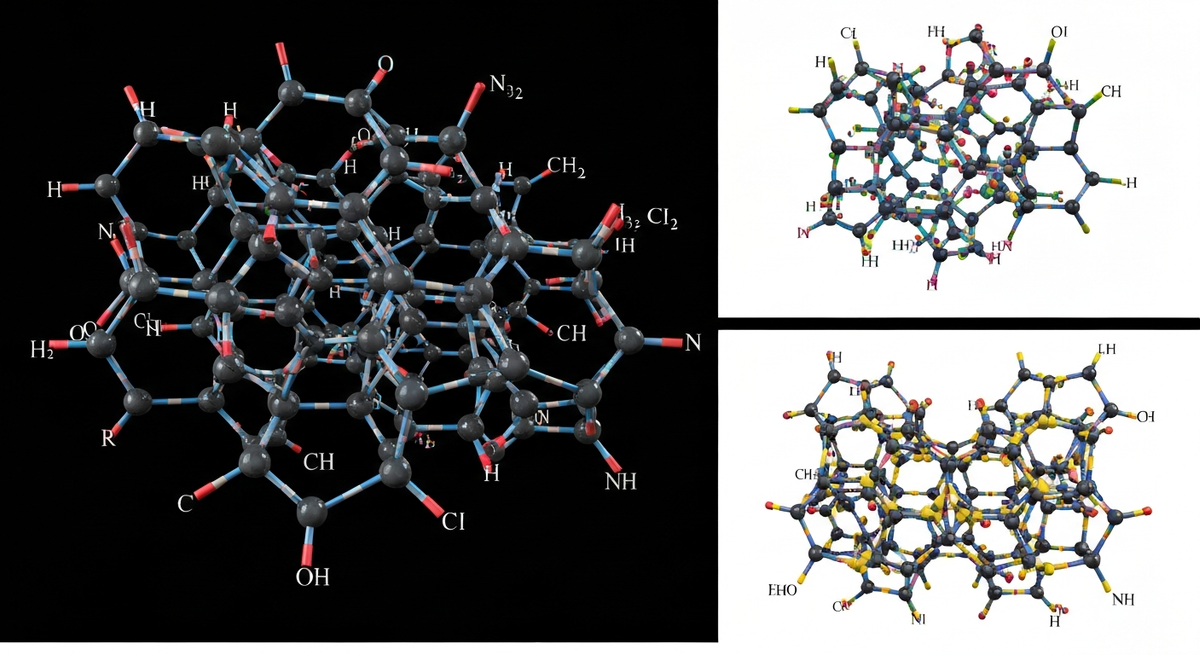
Graphene, often lauded as a wonder material, possesses an extraordinary suite of intrinsic properties that have captivated the scientific and industrial communities. Its single-atom-thick structure, composed of sp2-hybridized carbon atoms arranged in a hexagonal lattice, confers unparalleled electrical conductivity, exceptional mechanical strength, and remarkable thermal properties. Despite this impressive inherent capability, translating pristine graphene’s theoretical promise into widespread practical applications frequently necessitates a crucial step: chemical modification. This strategic alteration of graphene’s surface chemistry or electronic structure is not merely an enhancement; it is often the gateway to unlocking its full potential, transforming a pristine, chemically inert material into a versatile platform tailored for specific functions. Understanding these modifications is fundamental to appreciating the molecular uniqueness that defines the next generation of graphene-based technologies.
Pristine graphene stands as a testament to the elegant simplicity of carbon. Its two-dimensional nature bestows upon it a range of properties that are either superior to or distinct from conventional materials. Electrons in graphene behave as massless Dirac fermions, leading to extraordinarily high carrier mobilities and electrical conductivities, making it a prime candidate for next-generation electronics. Mechanically, graphene is the strongest material ever tested, possessing an impressive Young's modulus and tensile strength, which holds significant promise for advanced composites. Its thermal conductivity surpasses that of diamond, suggesting applications in heat management, while its transparency and impermeability to gases are also highly valuable attributes.
Despite these unparalleled characteristics, pristine graphene also presents inherent limitations for certain applications. Its chemically inert basal plane resists strong interactions with other molecules, limiting its dispersibility in solvents and its interfacial compatibility in composites. The absence of a natural bandgap in pristine graphene, while ideal for high-speed electronics, precludes its direct use in conventional semiconductor devices requiring on/off switching. These factors collectively highlight the necessity for targeted chemical modification, allowing researchers and engineers to overcome these hurdles and precisely engineer graphene for specific functional demands.
The impetus for chemically modifying graphene stems directly from the desire to overcome its intrinsic limitations and imbue it with new functionalities. Modification strategies are designed to precisely tailor graphene’s properties for specific applications, transforming a universal building block into a specialized component. One primary driver is enhanced processability; pristine graphene sheets tend to aggregate due to strong van der Waals forces, making uniform dispersion in solvents or polymer matrices challenging. Chemical functionalization can introduce steric hindrance or electrostatic repulsion, significantly improving solubility and dispersibility.
Another critical aspect is the engineering of electronic properties, particularly the introduction of a bandgap. While pristine graphene is a zero-bandgap semimetal, many electronic and optoelectronic devices require a semiconductor with a tunable bandgap for effective switching and light emission. Chemical modification, through covalent bonding or doping, can break the symmetry of the graphene lattice or introduce localized electronic states, thereby opening and tuning a bandgap. Surface reactivity is also a key target for modification, enabling selective binding sites for sensing applications, improved catalytic activity, or enhanced adhesion in composite materials. These tailored properties allow graphene to move beyond its fundamental state into a realm of specialized, high-performance materials.
Covalent functionalization involves the formation of strong chemical bonds between graphene’s carbon atoms and various functional groups. This approach fundamentally alters the electronic and structural integrity of the graphene lattice, leading to profound changes in its properties. One of the most prominent examples is the synthesis of graphene oxide (GO), typically achieved through the aggressive oxidation of graphite. GO features numerous oxygen-containing functional groups – hydroxyl, epoxy, and carboxyl groups – covalently attached to its basal plane and edges. These groups render GO highly hydrophilic, enabling excellent dispersibility in water and polar solvents.
The abundance of functional groups also makes GO an excellent precursor for further chemical reactions and a versatile platform for composite materials. However, GO is electrically insulating due to the disruption of its sp2 network. To restore conductivity, GO can be reduced to reduced graphene oxide (RGO) through chemical, thermal, or electrochemical methods. While RGO regains some electrical conductivity, it often retains residual oxygen groups and structural defects, resulting in properties that are typically inferior to pristine graphene but still valuable for applications like energy storage, sensors, and conductive inks, where its processability remains a significant advantage. Other forms of covalent modification include halogenation (e.g., fluorographene), hydrogenation (e.g., graphane), and the attachment of alkyl chains or amine groups. These modifications can induce bandgaps, alter surface energy, or provide specific sites for further bio-conjugation or catalytic activity, expanding graphene’s utility across diverse fields.
In contrast to covalent methods, non-covalent functionalization aims to modify graphene’s surface properties without disrupting its pristine sp2 lattice or electronic structure. This approach relies on weaker, reversible interactions such as van der Waals forces, π-π stacking, electrostatic interactions, or hydrogen bonding between graphene and various molecules. The primary advantage of non-covalent functionalization is the preservation of graphene’s inherent high electrical conductivity and mechanical strength, which are often compromised during covalent modification. This strategy is particularly valuable for applications where maintaining the integrity of graphene’s electronic properties is paramount.
Common non-covalent modifiers include surfactants, polymers, and biomolecules. Surfactants, like sodium dodecyl sulfate (SDS) or Triton X-100, can adsorb onto graphene’s surface, forming a protective layer that prevents aggregation and facilitates dispersion in solvents. Similarly, polymers can wrap around graphene sheets through π-π stacking or hydrophobic interactions, creating stable dispersions and enhancing compatibility with polymer matrices for composite materials. DNA, proteins, and other biomolecules can also be non-covalently adsorbed onto graphene, enabling biocompatible interfaces for biosensing, drug delivery, and cell culture applications. This method offers a flexible and controllable way to tailor graphene’s surface chemistry, allowing for tunable wettability, selective molecular recognition, and improved interface engineering, all while largely preserving its extraordinary intrinsic properties.
Beyond surface functionalization, graphene’s intrinsic electronic properties can be profoundly altered through doping and defect engineering. Doping involves substituting carbon atoms within the graphene lattice with heteroatoms, typically those with different numbers of valence electrons. Nitrogen (N) and boron (B) are the most common dopants, replacing carbon atoms to introduce either n-type (electron-donating, N-doping) or p-type (electron-accepting, B-doping) conductivity. N-doping, for instance, can enhance graphene’s electrocatalytic activity for oxygen reduction reactions, making it attractive for fuel cells and metal-air batteries. These substitutional dopants not only tune the Fermi level but can also induce localized electronic states, potentially opening a bandgap or creating active sites for chemical reactions.
Defect engineering, on the other hand, involves intentionally introducing structural imperfections into the graphene lattice. These defects can range from single-atom vacancies, where a carbon atom is missing, to Stone-Wales defects, which involve the rearrangement of hexagons into pentagon-heptagon pairs. While excessive defects can degrade graphene’s mechanical and electrical properties, controlled defect engineering can be highly beneficial. Vacancies can act as active sites for catalysis or preferential binding sites for sensing molecules. Stone-Wales defects can induce local strain, influencing electron transport, or create pathways for chemical attack. Both doping and defect engineering represent powerful strategies for fine-tuning graphene’s electronic band structure, charge carrier concentration, and surface reactivity, pushing its capabilities beyond what pristine graphene can offer for advanced electronics, catalysis, and energy applications.
The landscape of graphene chemical modification continues to evolve, with researchers exploring increasingly sophisticated and precise techniques. Plasma treatment, for instance, offers a dry and solvent-free method to introduce various functional groups onto graphene’s surface, often with excellent control over the type and density of functionalization. By exposing graphene to different gas plasmas (e.g., oxygen, nitrogen, argon), specific chemical moieties can be grafted, enabling tailored surface properties for adhesion, wettability, or biocompatibility. Laser reduction techniques provide another pathway, allowing for the rapid and spatially controlled conversion of graphene oxide films into patterns of reduced graphene oxide, which is critical for fabricating flexible electronic devices.
Photo-induced functionalization and electrochemical grafting are also gaining traction, offering mild and selective routes to attach specific molecules to graphene under ambient conditions. These methods are particularly attractive for applications sensitive to harsh chemical environments, such as biosensors or flexible electronics. The integration of advanced computational modeling, including density functional theory, is simultaneously accelerating the discovery and optimization of new modification pathways by predicting the stability and properties of novel functionalized graphene structures. As our understanding of graphene’s atomic-level interactions deepens, the precision and versatility of chemical modification strategies will only continue to expand, leading to even more sophisticated materials with unprecedented performance characteristics.
Q1: Is chemically modified graphene still considered "graphene"?
A1: Yes, generally it is. While chemical modification alters graphene's properties, the fundamental two-dimensional carbon lattice structure typically remains identifiable. The degree of modification determines how much the material deviates from pristine graphene. For example, graphene oxide is heavily modified but is a direct derivative, while lightly doped graphene retains most of its pristine characteristics.
Q2: What is the primary challenge in scaling up graphene chemical modification?
A2: A significant challenge lies in achieving uniform and scalable modification while maintaining control over the degree and type of functionalization. Many laboratory-scale methods involve complex purification steps or are batch-oriented. Developing continuous, cost-effective, and environmentally friendly processes that yield consistent, high-quality modified graphene remains a key focus for industrial adoption.
Q3: How does chemical modification affect graphene's mechanical strength?
A3: Covalent modifications, particularly those that disrupt the sp2 carbon network like heavy oxidation (e.g., graphene oxide), can significantly reduce graphene's intrinsic mechanical strength and stiffness. Non-covalent modifications, however, generally preserve the mechanical properties of the basal plane. In composite materials, well-interfaced modified graphene can actually enhance the overall mechanical strength of the composite.
Q4: Can graphene be modified to become biocompatible for medical applications?
A4: Absolutely. Chemical modification is crucial for making graphene biocompatible. Pristine graphene can sometimes exhibit cytotoxicity due to its sharp edges or aggregation. Functionalizing graphene with hydrophilic groups (e.g., GO, RGO), polymers (e.g., PEGylation), or biomolecules (e.g., proteins, DNA) can significantly improve its dispersibility in biological fluids, reduce non-specific interactions, and enhance its compatibility with cells and tissues, making it suitable for drug delivery, biosensing, and tissue engineering.
Q5: What is the difference between doping and functionalization?
A5: Doping typically involves the substitutional replacement of carbon atoms within the graphene lattice with heteroatoms (e.g., nitrogen, boron), altering its intrinsic electronic band structure. Functionalization, on the other hand, primarily refers to the attachment of chemical groups to the surface or edges of graphene, either covalently or non-covalently, to modify its surface chemistry, solubility, or reactivity. While both affect properties, doping changes the bulk electronic character, whereas functionalization often targets surface-related attributes.
Chemical modification is an indispensable tool in the advancement of graphene science and technology, moving it from a laboratory curiosity to a cornerstone of future innovation. The ability to precisely tune graphene’s properties – from its electronic band structure and surface reactivity to its dispersibility and biocompatibility – is what truly liberates its potential. Through intelligent design and execution of covalent and non-covalent functionalization, as well as doping and defect engineering, researchers are systematically overcoming the limitations of pristine graphene. This ongoing molecular tailoring is not merely about creating new derivatives; it is about engineering purpose-built materials that will underpin breakthroughs in electronics, energy storage, sensing, and biomedicine, ensuring graphene’s transformative impact is fully realized across numerous industries.
Serious about B2B integration? Test our premium Pulsed Electrical Resistive Carbon Heating turbostratic graphene in your lab. 100g sample packs available now.
Explore More
Learn how deep learning is revolutionizing the structural characterization of twisted bilayer materials, accelerating the development of next-generation...

Learn to build a prototype graphene FET biosensor for sensitive DNA detection. This guide covers materials, fabrication, and testing for point-of-care...

Discover how hopping-mediated charge transport explains graphene's electrical behavior beyond the ideal ballistic regime, a key insight for creating...