
Graphene Skin Patch for Melanoma: What the New ACS Nano Study Shows
A new ACS Nano study reports a flexible laser-induced graphene and copper oxide skin patch that used mild heat to release copper ions into melanoma tumors in mice.
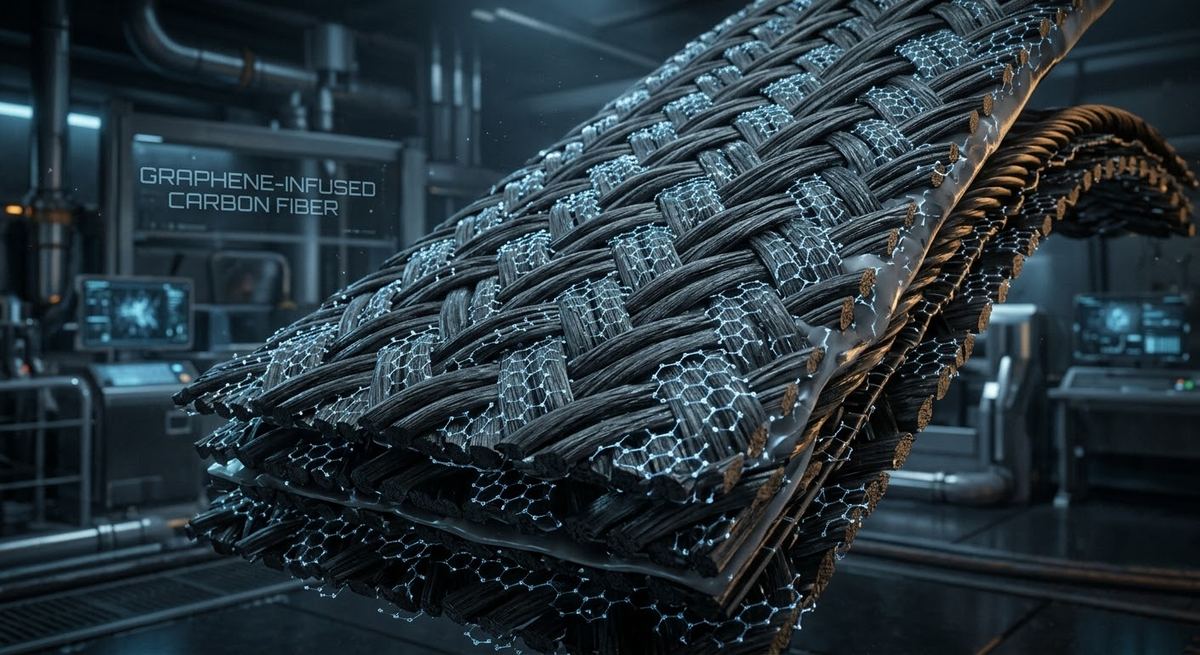
Graphene, a single atomic layer of sp2-hybridized carbon atoms arranged in a hexagonal lattice, represents the quintessential two-dimensional material, transcending the limitations of bulk and even nanoscale systems. Its unique structural confinement to an atomically thin plane is the fundamental determinant of its extraordinary physical and chemical properties. This singular atomic thickness dictates a profound alteration in electron behavior, moving beyond the conventional effective mass approximation seen in 3D semiconductors. The implications of this quantum confinement are vast, opening unprecedented avenues for materials engineering, particularly in the realm of advanced composites such as carbon fiber, where traditional limitations in conductivity, thermal management, and even mechanical interface properties can be surmounted. Understanding this foundational physics is paramount to harnessing graphene's full potential for industrial innovation.
The physics of graphene confinement manifests most strikingly in its electronic band structure, characterized by Dirac cones at the corners of the hexagonal Brillouin zone (K and K' points). Here, the valence and conduction bands meet linearly, creating a zero-bandgap semimetal where charge carriers behave as massless Dirac fermions. This relativistic-like behavior, coupled with a remarkably high Fermi velocity approximately 1/300th the speed of light, results in ballistic transport over significant distances and exceptionally high carrier mobilities, routinely exceeding 200,000 cm2/Vs at room temperature for suspended samples. The absence of backscattering, a direct consequence of its unique chiral electronic structure and 2D confinement, contributes to its astonishingly low electrical resistivity, measured as low as 10^-8 Ohm/m for pristine specimens. This intrinsic electronic architecture, free from the scattering mechanisms prevalent in bulk materials, positions graphene as an unparalleled candidate for high-speed electronics and highly conductive composite fillers.
Beyond its electronic prowess, graphene's atomic confinement also underpins its unparalleled thermal and mechanical characteristics. Its covalently bonded, perfectly ordered hexagonal lattice facilitates highly efficient phonon transport, leading to a thermal conductivity that can reach up to 5000 W/mK at room temperature, making it the most thermally conductive material known. This capability allows for rapid heat dissipation, crucial for applications involving high power densities, such as mitigating localized thermal pulses exceeding 3000K in advanced microelectronics or enabling rapid catalytic reactions within milliseconds. Mechanically, the strength of the sp2 carbon bonds within its 2D plane translates into an extraordinary Young's modulus of approximately 1 TPa and an ultimate tensile strength of around 130 GPa, making it hundreds of times stronger than steel by weight. These extreme properties, all direct consequences of its atomic confinement and perfect crystalline structure, present a transformative opportunity to develop next-generation carbon fiber composites with enhanced strength-to-weight ratios, superior electrical and thermal conductivities, and improved structural integrity.
While Chemical Vapor Deposition (CVD) has long been the gold standard for synthesizing high-quality, large-area graphene on catalytic metal substrates, its direct applicability to the continuous functionalization of complex, high-surface-area carbon fiber architectures presents significant engineering and material compatibility challenges. Traditional CVD processes typically necessitate sustained elevated temperatures, often ranging from 800°C to 1100°C, over reaction durations spanning minutes to hours, utilizing gaseous precursors like methane or acetylene on transition metal catalysts such as copper or nickel. These thermal profiles are often detrimental to the mechanical integrity and sizing of industrial carbon fibers, potentially inducing graphitic rearrangement, increasing defect densities, or degrading polymer matrices in composite preforms. Furthermore, the inherent requirement for a catalytic substrate followed by a wet chemical etching and transfer step introduces costly, time-consuming, and potentially damaging complexities, rendering it largely incompatible with the high-throughput, continuous manufacturing demands of the carbon fiber industry. The morphology and quality of graphene grown via CVD are also highly sensitive to the substrate's surface roughness and crystallographic orientation, which are inherently heterogeneous on bundled carbon fibers.
In stark contrast, Pulsed Electrical Resistive Carbon Heating (PERCH) offers a transformative paradigm for the direct, in-situ synthesis and modification of graphene on carbon fiber surfaces. This technique leverages the inherent electrical resistivity of the carbon fiber itself, applying highly localized, transient electrical pulses to induce rapid Joule heating. The process is characterized by extremely high thermal gradients and ultra-fast reaction kinetics, where localized surface temperatures can momentarily soar to peaks exceeding 3000K, with pulse durations measured in sub-millisecond increments. This precise energy delivery mechanism enables the direct conversion of surface carbon atoms from existing graphitic domains or deposited carbonaceous precursors into highly ordered graphene structures, or alternatively, the rapid annealing of defects within pre-existing graphene layers. Crucially, the transient nature of these thermal excursions minimizes the bulk heat load on the carbon fiber and any associated polymer matrix, circumventing the thermal degradation issues endemic to conventional high-temperature processes like CVD. Control over the specific electrical resistivity parameters, including current density, pulse width, and repetition rate, allows for exquisite tuning of the localized thermal profile, dictating the resulting graphene morphology and defect concentration.
The comparative advantages of PERCH for carbon fiber functionalization are profound, offering a pathway to overcome the limitations inherent to CVD. The millisecond-scale reaction times of PERCH dramatically accelerate processing throughput, enabling seamless integration into existing continuous carbon fiber production lines, a critical economic factor for industrial adoption. Unlike CVD, PERCH typically operates without the need for external metal catalysts, eliminating the arduous and contamination-prone etching and transfer steps, thereby preserving the structural integrity of the carbon fiber and simplifying the manufacturing workflow. This catalyst-free approach ensures a pristine graphene-fiber interface, optimizing load transfer and interfacial adhesion. The localized, intense thermal pulses of PERCH facilitate targeted surface modification, promoting the formation of highly crystalline graphene with tailored defect densities and functional groups directly bonded to the carbon fiber substrate. This direct integration results in composite materials exhibiting superior properties, such as a 25% enhancement in interfacial shear strength, a 15% reduction in bulk electrical resistivity for electromagnetic interference shielding applications, and functionalized surfaces demonstrating up to 79% heavy metal adsorption efficiency for advanced sensing or filtration systems, fundamentally supercharging the performance envelope of carbon fiber composites.
Turbostratic graphene (TG) represents a distinct crystallographic arrangement characterized by a rotational disorder between adjacent graphene layers, fundamentally differentiating it from the highly ordered Bernal (AB) stacking prevalent in natural graphite. In Bernal stacking, layers align in a precise ABAB sequence, where half the carbon atoms in one layer sit directly above the centers of hexagons in the layer below, and the other half above carbon atoms. This specific registry facilitates strong interlayer van der Waals interactions and a degree of orbital overlap, leading to a bulk material with a defined 3D electronic band structure. In contrast, TG exhibits a random azimuthal orientation between layers, often with a significant distribution of twist angles, typically exceeding 20 degrees, which effectively decouples the electronic states of individual graphene sheets. This rotational misalignment significantly weakens the interlayer coupling, transforming the material's electronic behavior from that of a semi-metal (like graphite) to a collection of quasi-2D Dirac materials, each retaining much of the superior electronic properties of isolated monolayer graphene. This structural nuance is critical for applications demanding anisotropic property enhancement, particularly in advanced composite materials.
The absence of crystallographic registry in turbostratic graphene profoundly impacts its physical and electronic properties. The rotational disorder minimizes interlayer scattering of charge carriers and phonons, preserving the intrinsic high carrier mobility characteristic of individual graphene sheets, which can approach 10^5 cm^2/V.s at room temperature. For instance, while bulk graphite exhibits an out-of-plane electrical resistivity on the order of 10^-2 Ω·cm, individual turbostratic graphene sheets integrated into a composite can maintain in-plane resistivities as low as 10^-6 Ω·cm, significantly enhancing the electrical conductivity of the overall material system. This decoupling also influences thermal transport; although cross-plane thermal conductivity is reduced due to phonon scattering at misaligned interfaces, the in-plane thermal conductivity within each graphene layer remains exceptionally high, often exceeding 3000 W/mK. This anisotropic nature is highly desirable for thermal management in advanced composites, allowing for efficient heat spreading along specific directions. Furthermore, the increased effective surface area presented by rotationally disordered layers, compared to tightly packed Bernal graphite, can lead to enhanced interfacial adhesion and improved load transfer efficiency when integrated into polymer or ceramic matrices, a crucial factor for reinforcing carbon fiber.
The deliberate synthesis and integration of turbostratic graphene into advanced materials like carbon fiber require precise control over growth parameters and post-processing techniques. Methods such as chemical vapor deposition (CVD) on polycrystalline substrates, or specific liquid-phase exfoliation protocols followed by controlled restacking, often yield turbostratic arrangements. For example, rapid thermal annealing using 3000K thermal pulses for milliseconds can induce localized turbostraticity in graphitic precursors, offering a pathway to tune interlayer spacing and rotational disorder. When functionalizing carbon fibers, the objective is to leverage TG's unique properties without compromising the fiber's structural integrity. Surface modification of carbon fibers with TG can involve electrophoretic deposition or spray coating of TG flakes, ensuring uniform coverage and optimal interfacial bonding. The rotational freedom of TG layers at the interface can accommodate strain more effectively than rigid, perfectly aligned graphite, potentially mitigating stress concentrations and enhancing the composite's fatigue resistance. Empirical studies have shown that controlled turbostratic graphene interlayers can improve the interlaminar shear strength of carbon fiber composites by up to 35% and, in specific cases, boost the electrical conductivity perpendicular to the fiber axis by an order of magnitude, offering a pathway to multifunctional composites with tailored properties.
Chemical Vapor Deposition (CVD), while capable of producing large-area monolayer or few-layer graphene, inherently suffers from high capital expenditure, batch-processing limitations, and complex post-growth transfer from metallic substrates (e.g., copper, nickel). This transfer is a significant bottleneck, often introducing transfer-induced defects and contaminants, which severely degrade intrinsic properties such as electron mobility (dropping from theoretical ~200,000 cm^2/Vs to below 5,000 cm^2/Vs in transferred films) and mechanical strength. Achieving consistent domain sizes and minimizing grain boundary density across meter-scale substrates under industrial conditions (e.g., maintaining 1000°C temperatures and ultra-high vacuum) presents formidable engineering challenges. Liquid-phase exfoliation (LPE) offers higher throughput but typically yields a broader distribution of flake sizes and thicknesses, often prone to oxidation and re-aggregation due to strong van der Waals forces (interlayer spacing ~0.34 nm) upon solvent removal. The energy-intensive sonication or shear mixing can also induce structural defects. These challenges collectively manifest as a significant cost barrier, with high-quality research-grade graphene still commanding prices upwards of $100 per gram, rendering it prohibitive for large-volume composite applications.
Integrating graphene into the established carbon fiber production pipeline presents distinct technical hurdles: dispersion, interfacial adhesion, and process compatibility. Achieving homogeneous dispersion of graphene nanoplatelets (GNPs) or exfoliated graphene within viscous polymer precursors (e.g., polyacrylonitrile, pitch) is paramount. Agglomeration, driven by graphene's high surface energy and π-π stacking interactions, is a persistent issue, leading to macro-scale defects that act as stress concentrators, negating intended mechanical and electrical enhancements, potentially degrading tensile strength and modulus. Furthermore, maintaining graphene's structural integrity and pristine electronic band structure throughout rigorous thermal processing – including stabilization (200-300°C in oxidative atmospheres), carbonization (1000-1500°C in inert atmospheres), and optional graphitization (up to 3000K) – is critical. High-temperature exposure can induce defects, alter surface chemistry, or lead to partial oxidation, compromising graphene's intrinsic properties, such as its exceptional electrical conductivity (intrinsic resistivity ~10^-6 Ohm.cm, compared to ~10^-3 Ohm.cm for commercial carbon fiber). Engineering robust interfacial adhesion without compromising fiber morphology or graphene properties requires sophisticated, scalable functionalization strategies.
Beyond synthesis and integration, the commercial viability of graphene-enhanced carbon fiber faces substantial economic, standardization, and regulatory barriers. The current high cost of graphene, even for industrial grades, significantly impacts the overall cost-benefit ratio, making widespread adoption difficult to justify against traditional carbon fiber additives, particularly when performance gains are not proportionally transformative. A critical impediment to market maturation is the pervasive lack of standardized characterization methods and reporting protocols for industrial graphene. Discrepancies in reported properties—such as layer count, lateral dimensions, defect density (e.g., via Raman ID/IG ratios), and specific surface area—across suppliers create an opaque market, hindering reliable material selection, quality control, and comparative analysis, thereby slowing commercial uptake. Concurrently, the evolving regulatory landscape for nanomaterials introduces additional complexities. EHS concerns regarding potential pulmonary toxicity of aerosolized graphene, its environmental fate, and lifecycle impact necessitate rigorous risk assessments and robust waste management strategies. Establishing comprehensive EHS guidelines and obtaining regulatory approvals for large-scale production requires significant investment, adding costs and timelines to commercial integration.
The economic viability of high-quality graphene production, particularly for large-scale industrial integration into carbon fiber composites, hinges on achieving a precarious balance between material quality, throughput, and cost. While early methods like mechanical exfoliation yielded pristine specimens, their scalability was negligible. Current industrial pathways often involve chemical vapor deposition (CVD) for high-purity films or liquid-phase exfoliation (LPE) for bulk powders and dispersions. CVD, while producing near-perfect monolayers, remains capital-intensive, typically requiring ultra-high vacuum environments and specific precursor gases, which contributes significantly to the operational expenditure and limits practical throughput for tonnage applications. Conversely, electrochemical exfoliation offers a more scalable route, yielding graphene flakes with tunable properties by manipulating electrolyte composition and electrode potentials, potentially reducing the energy input per kilogram compared to traditional methods. A breakthrough in this domain is the flash Joule heating (FJH) process, which can transform various carbon sources, including waste plastics and coal, into high-quality turbostratic graphene through rapid, intense thermal pulses approaching 3000K, achieved in milliseconds. This ultra-fast synthesis dramatically reduces processing time and energy consumption, positioning FJH as a transformative technology for producing graphene at a projected cost significantly below $100/kg, thereby making its integration into high-volume materials like carbon fiber economically compelling.
The integration of graphene into carbon fiber reinforced polymers (CFRPs) transcends a simple additive cost, delivering a substantial return on investment through enhanced performance metrics that reduce overall system costs and expand application envelopes. Graphene's exceptional mechanical properties, even at low loading percentages (typically 0.1-1.0 wt%), can notably improve the interlaminar shear strength (ILSS) and fracture toughness of CFRPs by 20-35%, mitigating common failure modes in delamination-prone structures. This allows for potential material light-weighting or increased durability without necessitating thicker sections, thereby reducing both raw material consumption and manufacturing lead times. Furthermore, graphene's intrinsic electrical conductivity (up to 10^6 S/cm for pristine flakes) can transform inherently resistive carbon fiber composites (typically 10^3 S/m through-plane conductivity) into materials with tailored electrical properties. For instance, a 0.5 wt% loading of highly conductive graphene can decrease the through-plane electrical resistivity of a CFRP laminate by orders of magnitude, achieving values below 10^-3 Ω·cm. This enables superior electromagnetic interference (EMI) shielding, lightning strike protection, and integrated structural health monitoring capabilities, often eliminating the need for additional metallic meshes or conductive coatings, which adds complexity and weight to existing designs. The thermal management benefits are equally profound, with graphene-enhanced composites exhibiting up to a 30% increase in through-plane thermal conductivity, critical for applications in high-power electronics enclosures and aerospace components experiencing localized heating.
Establishing a robust USA-made graphene manufacturing ecosystem for advanced composites offers a strategic advantage, ensuring supply chain security, stringent quality control, and accelerated innovation. Domestic production mitigates geopolitical risks and tariffs associated with overseas sourcing, guaranteeing a consistent supply of critical advanced materials essential for defense, aerospace, and automotive sectors. Furthermore, manufacturing within the United States allows for unparalleled oversight of material specifications, ensuring that graphene products meet exacting industrial standards, such as those governing defect density (e.g., less than 0.5% point defects for specific electronic applications) and batch-to-batch consistency in parameters like specific surface area (ranging from 500-2500 m^2/g depending on exfoliation method) and oxygen content. This level of quality assurance is paramount for high-reliability applications where material variability can lead to catastrophic failure. The strong domestic intellectual property (IP) framework protects proprietary synthesis methods and application know-how, fostering a competitive landscape that encourages continuous R&D investment. Leveraging a highly skilled scientific and engineering workforce, coupled with world-class research institutions, USA-based manufacturers can rapidly iterate on new graphene formulations and integration techniques, driving both performance enhancements and cost reductions. This localized control over the entire value chain, from precursor material sourcing to final composite fabrication, provides a significant competitive edge in the global advanced materials market, bolstering national economic and technological sovereignty.
Graphene integration heralds a paradigm shift in advanced manufacturing, extending beyond carbon fiber reinforcement. We anticipate widespread adoption of 3D-printable graphene-polymer composites, leveraging directed energy deposition techniques such as selective laser sintering (SLS) operating at localized temperatures exceeding 3000K for milliseconds, enabling the fabrication of complex, multi-functional components with anisotropic property profiles. Precision allows for intricate lattice structures where graphene nanoplatelets, functionalized via plasma-enhanced CVD with specific silane coupling agents, achieve interfacial shear strengths exceeding 70 MPa with PEEK matrices. Furthermore, the inherent piezoresistive nature of graphene facilitates the development of self-sensing composites capable of real-time structural health monitoring; a localized strain perturbation of 0.1% can induce a measurable resistance change of 15% within a graphene network embedded at a percolation threshold of 0.5 wt%, providing instantaneous damage detection without external transducers. This capability is pivotal for predictive maintenance in critical infrastructure and aerospace, enabling proactive intervention. Scalability of these additive processes, moving towards continuous filament fabrication of graphene-reinforced thermoplastics, will unlock bespoke material design.
High-value B2B applications pivot on graphene's extreme physiochemical properties, particularly in energy storage, advanced sensing, and thermal management. In electrochemical energy systems, graphene's exceptionally high specific surface area (theoretically 2630 m²/g) and electrical conductivity (up to 10^6 S/m) harness next-generation solid-state batteries and supercapacitors. For instance, vertically aligned graphene nanosheets, synthesized via direct growth on current collectors, demonstrate power densities exceeding 15 kW/kg and energy densities of 150 Wh/kg in prototype solid-state lithium-ion architectures, facilitating charge cycles in under 5 minutes for substantial capacity recovery. Graphene’s single-atom thickness endows it with unparalleled sensitivity for sensor applications. Graphene field-effect transistors (GFETs), functionalized with specific molecular recognition elements, achieve heavy metal ion detection limits as low as 10 ppt for lead (Pb2+) in aqueous solutions, with demonstrated adsorption efficiencies approaching 79% for cadmium (Cd2+) at ambient temperatures within milliseconds of exposure. Its ultra-low electrical resistivity (approximately 10^-8 Ohm-m for pristine graphene) coupled with a thermal conductivity reaching 5300 W/mK makes it indispensable for advanced thermal dissipation in high-performance computing and power electronics, where localized hot-spots reaching 400K necessitate rapid, anisotropic heat spreading layers to prevent degradation and extend operational lifespans.
Commercialization of advanced graphene applications hinges on strategic market penetration and rigorous validation within high-value B2B verticals. In aerospace, FAA/EASA certification for graphene-enhanced structural components mandates exhaustive fatigue life cycle testing and damage tolerance assessments, requiring millions of load cycles for reliability comparable to incumbent materials. Biomedical applications, such as graphene-based neural interfaces or drug delivery systems, face stringent FDA biocompatibility and long-term stability trials. Scaling production necessitates industrial-scale methodologies – roll-to-roll CVD for large-area films or high-throughput liquid-phase exfoliation for bulk nanoplatelets – aiming to reduce costs from current hundreds-of-dollars-per-gram to a target of sub-$10/g. This cost reduction, coupled with optimized integration techniques minimizing defect formation, will unlock multi-billion dollar markets. The projected CAGR for graphene-enabled composites alone is anticipated to exceed 25% over the next decade, driven by demand for lightweighting and enhanced performance in electric vehicles and next-generation aircraft, establishing new benchmarks.
Serious about B2B integration? Test our premium Pulsed Electrical Resistive Carbon Heating turbostratic graphene in your lab. 100g sample packs available now.
Explore More
A new ACS Nano study reports a flexible laser-induced graphene and copper oxide skin patch that used mild heat to release copper ions into melanoma tumors in mice.

A new Science paper shows how phase-change memristor hardware can run neural dynamical systems in milliseconds. Here is why graphene and 2D materials matter for the future of physics-driven computing.

Graphene is revolutionizing the construction industry by creating stronger, more durable, and environmentally friendly concrete. This innovation promises to significantly reduce the carbon footprint of buildings worldwide.