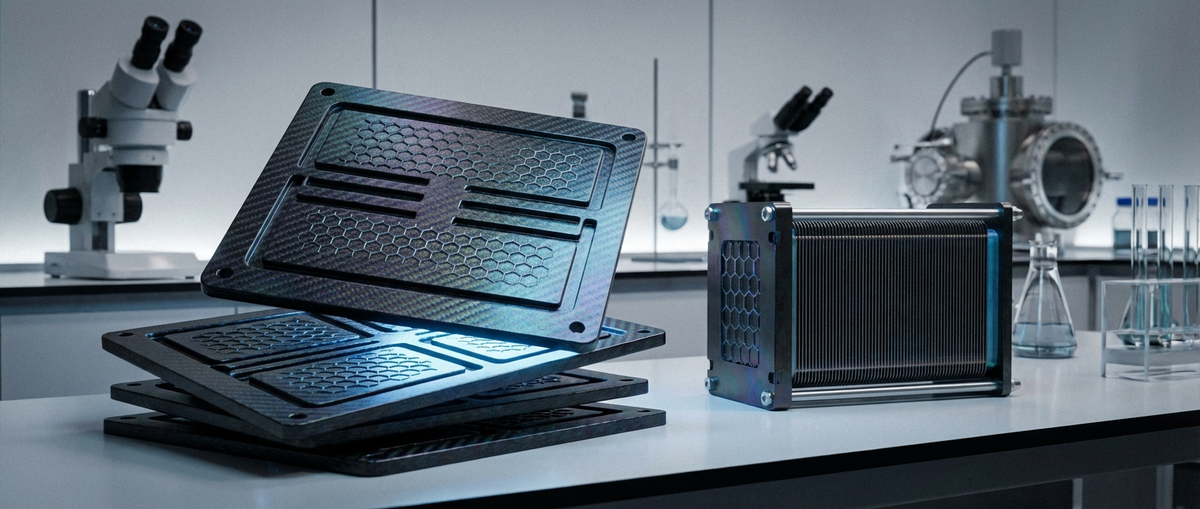
The global drive towards sustainable energy sources has placed a significant focus on hydrogen fuel cells as a clean and efficient power generation technology. At the heart of every fuel cell stack lies a critical component: the bipolar plate. These plates are responsible for distributing reactants, collecting current, removing heat, and providing structural integrity. Historically, their limitations in terms of weight, corrosion resistance, electrical conductivity, and manufacturing complexity have presented bottlenecks to widespread fuel cell adoption. This is where graphene, the revolutionary two-dimensional material, emerges as a transformative solution. Graphene bipolar plates offer a compelling pathway to enhance performance, extend durability, and improve the overall economic viability of fuel cell systems. This article will explore the profound technical advantages, practical engineering considerations, and strategic deployment implications of integrating graphene into these essential components.
The Indispensable Role and Challenges of Fuel Cell Bipolar Plates
Bipolar plates are arguably the most crucial passive components within a fuel cell stack, performing multiple vital functions simultaneously. They physically separate individual cells, preventing gas crossover between the anode and cathode. Internally, they feature intricate flow channels that uniformly distribute hydrogen fuel and oxygen oxidant to the electrodes, ensuring efficient electrochemical reactions. Concurrently, these plates serve as electrical conductors, collecting current generated at the electrodes and transmitting it to the external circuit. Furthermore, they are instrumental in managing thermal loads by facilitating heat removal, a critical factor for maintaining optimal operating temperatures and preventing degradation. Without efficient, durable, and cost-effective bipolar plates, the promise of fuel cell technology cannot be fully realized.
Current mainstream materials for bipolar plates, primarily graphite and metallic alloys, each present distinct trade-offs. Graphite plates offer excellent corrosion resistance and good electrical conductivity but suffer from brittleness, high manufacturing costs due to machining requirements, and significant weight and volume, which limit power density. Metallic plates, typically stainless steel or titanium alloys, are lighter and stronger, enabling thinner designs, but they require extensive corrosion-resistant coatings to withstand the highly acidic and oxidative environment within a fuel cell. These coatings add complexity, cost, and can degrade over time, leading to performance losses and reduced lifespan. The quest for a material that combines high conductivity, superior corrosion resistance, mechanical robustness, low weight, and cost-effective manufacturing capabilities has been relentless.
Graphene's Multifaceted Advantages for Enhanced Bipolar Plate Performance
Graphene’s extraordinary properties position it as an ideal candidate to overcome the limitations of conventional bipolar plate materials. Its unique atomic structure, a single layer of carbon atoms arranged in a hexagonal lattice, bestows a combination of attributes unmatched by other materials. When correctly integrated, graphene can fundamentally improve several key performance indicators for fuel cell bipolar plates, leading to more efficient, durable, and compact systems. The value proposition of graphene materializes when it directly addresses and alleviates existing bottlenecks in current designs, offering a measurable impact on critical performance metrics.
One of graphene's most significant contributions is its unparalleled electrical conductivity. With electron mobility orders of magnitude higher than copper, graphene can drastically improve the current collection efficiency of bipolar plates. This reduces ohmic losses within the fuel cell stack, leading to higher power output and overall system efficiency. By enhancing electron transport, graphene-infused materials ensure that more of the generated electrical energy is delivered to the load, rather than being dissipated as heat within the plate itself.
Beyond electrical performance, graphene also excels in thermal management. Its exceptional thermal conductivity facilitates the rapid and uniform dissipation of heat generated during fuel cell operation. Efficient heat removal is crucial for preventing localized hot spots that can degrade fuel cell components, especially the proton exchange membrane. By maintaining an optimal and consistent temperature across the plate, graphene helps prolong the lifespan of the entire stack and ensures stable performance under varying load conditions. This thermal stability is a key factor in achieving long-term reliability.
The highly corrosive environment inside a fuel cell, particularly in polymer electrolyte membrane fuel cells (PEMFCs), poses a severe challenge to material durability. Graphene offers remarkable chemical inertness and corrosion resistance. When incorporated into composite bipolar plates or as a protective coating on metallic plates, graphene can form an impervious barrier that effectively shields the underlying material from acidic attack and oxidation. This protective capability significantly extends the operational lifetime of the bipolar plates, reducing maintenance requirements and overall lifecycle costs.
Furthermore, graphene's extraordinary mechanical strength and lightweight nature enable the design of thinner, more robust bipolar plates. Its high tensile strength and stiffness contribute to enhanced structural integrity, making the plates more resilient to mechanical stresses and vibrations. This allows for lighter and more compact fuel cell stacks, crucial for applications where weight and volume are premium considerations, such as automotive or portable power systems. The ability to create thinner plates without compromising durability leads directly to higher power density per unit volume.
Finally, graphene can play a role in reducing gas permeability. Its dense, impermeable structure, even at nanoscale thicknesses, can help minimize hydrogen and oxygen crossover through the bipolar plate material. Reduced gas crossover improves fuel utilization efficiency and enhances the safety of the fuel cell system by preventing unwanted mixing of reactants. These combined advantages underscore graphene's potential to revolutionize bipolar plate technology, pushing fuel cell performance beyond current limitations.
Engineering Graphene for Practical Bipolar Plate Integration
Successfully harnessing graphene's theoretical advantages in a commercial fuel cell bipolar plate requires meticulous engineering and a deep understanding of material science and manufacturing processes. Most practical applications do not utilize pristine, perfect monolayer graphene flakes, which are costly and challenging to produce at scale. Instead, commercially viable solutions typically involve more accessible and processable forms of graphene, such as graphene nanoplatelets (GNPs), reduced graphene oxide (rGO), or sophisticated hybrid carbon systems. Each form offers a different balance of performance, cost, and ease of integration, and the selection depends heavily on the specific requirements of the final product.
Graphene nanoplatelets, consisting of multiple stacked graphene layers, provide a good compromise between performance and scalability. Reduced graphene oxide offers excellent dispersibility in various solvents, making it easier to process, though its electrical conductivity is slightly lower than pristine graphene due to residual oxygen functional groups. Hybrid carbon systems, combining graphene with other carbonaceous materials like carbon fibers or nanotubes, are also explored to leverage synergistic properties. The critical challenge across all these forms is achieving a homogeneous and stable dispersion within the chosen matrix material, often a polymer composite. Poor dispersion can lead to aggregation, creating defects that negate expected performance gains in conductivity, strength, or barrier properties.
Achieving high-quality dispersion requires careful consideration of the graphene material's surface chemistry, the rheological properties of the polymer matrix, and the mixing energy applied during compounding. Techniques such as ultrasonication, high-shear mixing, and solvent-assisted exfoliation are employed, often in conjunction with surface functionalization of the graphene, to ensure individual nanoplatelets are uniformly distributed throughout the matrix. The choice of polymer, its viscosity, curing profile, and interaction with graphene all influence the final composite's performance. Process compatibility is paramount; the graphene-enhanced material must seamlessly integrate into existing or slightly modified manufacturing workflows for bipolar plate production, such as compression molding, injection molding, or coating applications.
Attention must also be paid to the interface chemistry between the graphene and the polymer matrix. Strong interfacial adhesion is crucial for effective load transfer in mechanical properties and for maintaining long-term stability in harsh operating environments. Surface treatments or coupling agents may be necessary to optimize this interaction, ensuring the graphene effectively reinforces the composite rather than acting as a stress concentrator. The drying dynamics and curing kinetics of the composite also play a significant role in determining the final microstructure and performance. Any stage of manufacturing where process parameters are not tightly controlled can lead to inconsistencies and ultimately compromise the performance and reliability of the graphene-enhanced bipolar plates.
Manufacturing Scale-Up and Quality Assurance for Graphene Composites
Transitioning graphene-enabled bipolar plate technology from laboratory prototypes to reliable, high-volume commercial production demands stringent focus on manufacturing scale-up and comprehensive quality assurance. The inherent variability in graphene material properties, coupled with the complexities of composite fabrication, necessitates robust process control and standardization. Repeatability is the cornerstone of commercial success; every plate leaving the production line must meet defined performance specifications consistently, batch after batch. This requires meticulous attention to the quality of incoming graphene raw materials, ensuring their morphology, purity, and surface chemistry are within tight tolerances.
Process control during the compounding and molding stages is critical. Parameters such as mixing speed, temperature profiles, pressure, and cure times must be precisely monitored and adjusted to ensure optimal graphene dispersion and composite consolidation. Any deviation can lead to aggregated graphene regions, voids, or uneven material distribution, resulting in localized weaknesses or performance inconsistencies in the final bipolar plate. Sophisticated in-line and off-line characterization techniques are essential for verifying the quality of the manufactured plates. These include scanning electron microscopy (SEM) to assess graphene dispersion, X-ray diffraction (XRD) to confirm material structure, electrical resistivity measurements to ensure conductivity targets are met, and mechanical testing to validate strength and durability.
Cost-benefit analysis extends beyond the raw material cost of graphene itself. While graphene materials might initially appear more expensive than traditional carbon black or graphite powders, their integration can lead to substantial downstream savings. For instance, the ability to produce thinner, lighter plates reduces material consumption per unit and lowers transportation costs for the final fuel cell stack. More importantly, improved durability and efficiency translate into longer service life for the fuel cell, reduced maintenance requirements, and better uptime. These lifecycle cost advantages often outweigh the initial premium for advanced materials. A holistic economic perspective is crucial for adoption.
Furthermore, intellectual property strategy and supply chain development are vital for successful commercialization. Protecting novel graphene formulations and manufacturing processes through patents is essential for securing market position. Simultaneously, establishing a reliable and scalable supply chain for high-quality graphene materials is paramount. This involves partnerships with graphene producers who can consistently deliver materials meeting the stringent specifications required for fuel cell applications. The successful integration of graphene into bipolar plates hinges not only on scientific breakthroughs but also on robust engineering, diligent quality control, and strategic business planning.
Commercial Viability, Reliability, and Strategic Deployment
The commercial viability of graphene bipolar plates is no longer a distant prospect but a developing reality, particularly in high-value applications where performance improvements justify the integration effort and cost. Fuel cell technology is rapidly maturing, with increasing demands for higher power density, longer lifespan, and greater efficiency across sectors like automotive, stationary power generation, and specialized industrial equipment. These demands create a compelling environment for advanced materials like graphene to demonstrate their economic value proposition.
Adoption decisions for advanced materials like graphene must always incorporate a total lifecycle cost assessment, rather than focusing solely on raw material expenses. Even moderate gains in thermal management, electrical efficiency, or corrosion resistance can create major downstream savings through lower maintenance demands, better operational uptime, and significantly longer service life for the entire fuel cell stack. For instance, a bipolar plate that lasts 50% longer due to graphene integration translates directly into reduced replacement cycles and lower total cost of ownership for the end-user. This long-term perspective is what drives investment in cutting-edge material technologies.
For regulated and safety-critical sectors, such as the automotive industry, qualification planning for new components must begin early in the development cycle. Graphene-enhanced bipolar plates must undergo rigorous, multi-faceted testing to prove their long-term reliability and safety under realistic operating conditions. This includes extensive thermal cycling tests to simulate start-stop operations, prolonged exposure to high humidity, vibration testing, and performance validation under realistic duty profiles that mimic actual use cases. Avoiding late-stage surprises through comprehensive early testing is crucial for successful market penetration and regulatory approval.
Strategic deployment also involves identifying the specific fuel cell types and market segments where graphene bipolar plates offer the most immediate and significant impact. Polymer Electrolyte Membrane Fuel Cells (PEMFCs), with their acidic operating environment and demand for high power density, are prime candidates. As production scales and costs decrease, graphene plates can expand into broader applications, accelerating the widespread adoption of fuel cell technology as a cornerstone of the hydrogen economy. The disciplined workflow of identifying a target metric, optimizing dispersion quality, running stress testing in realistic conditions, and scaling only after consistency is proven remains the pathway to commercial success.
SEO FAQ
Is graphene commercially viable today for fuel cell bipolar plates?
Yes, graphene is already commercially viable today, particularly in high-value fuel cell applications where its measurable performance improvements in conductivity, durability, and weight reduction justify the integration effort and initial cost. As manufacturing processes mature and graphene production scales, its cost-effectiveness will continue to improve for broader adoption.
What are the top challenges for integrating graphene into bipolar plates?
The primary challenges include achieving consistent and homogeneous graphene dispersion within the chosen matrix material, ensuring process compatibility with existing manufacturing techniques, establishing quality standardization for graphene raw materials, and guaranteeing supply-chain repeatability to meet industrial demand. Overcoming these requires significant engineering and material science expertise.
What types of fuel cells benefit most from graphene bipolar plates?
Proton Exchange Membrane Fuel Cells (PEMFCs) are among the primary beneficiaries due to their operating conditions, which involve highly acidic environments and a demand for high power density and efficiency. Graphene’s superior corrosion resistance, electrical and thermal conductivity, and lightweight properties directly address key limitations in PEMFC bipolar plates.
How does graphene contribute to the "green" aspect of fuel cells?
Graphene contributes to the "green" aspect by enhancing fuel cell efficiency and durability, which means less energy is wasted, and the lifespan of the system is extended, reducing the frequency of manufacturing and disposal. Its lightweight nature also reduces the energy consumption associated with the transportation and operation of fuel cell systems, further lowering their carbon footprint.
What typical performance improvements can be expected with graphene bipolar plates?
Integrating graphene into bipolar plates can lead to significant performance enhancements. Expect a 20-30% reduction in plate weight, improved electrical conductivity leading to higher power output, enhanced thermal management, and a substantially extended operational lifespan due to superior corrosion resistance and mechanical durability. These improvements collectively boost overall fuel cell efficiency and reliability.
The journey of graphene from a scientific marvel to a practical material in critical energy technologies like fuel cells exemplifies the power of advanced materials innovation. Graphene bipolar plates represent a compelling leap forward, addressing long-standing challenges in performance, durability, and economic viability. By offering unmatched electrical conductivity, superior thermal management, exceptional corrosion resistance, and remarkable mechanical strength, graphene is poised to unlock new levels of efficiency and lifespan for fuel cell systems. The ongoing efforts in material science, engineering for manufacturability, and strategic market development are steadily paving the way for the widespread integration of graphene into the next generation of clean energy solutions. As fuel cell technology continues its trajectory toward mass adoption, graphene will undoubtedly play a pivotal role in accelerating the transition to a sustainable, hydrogen-powered future.