Graphene Biological and Chemical Sensors Explained
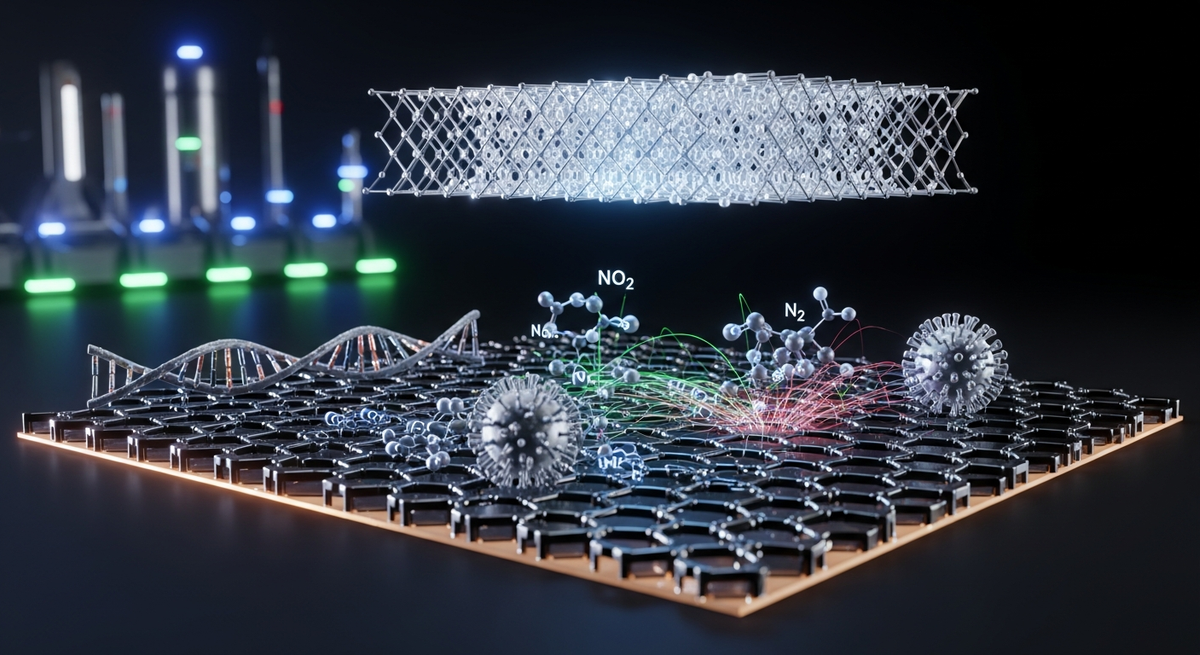
Graphene has rapidly transitioned from a theoretical concept to a foundational material in modern sensor technology. Physicists first explored the theory behind this two-dimensional carbon allotrope decades ago, but its isolation in 2004 triggered a massive shift in materials science. Researchers quickly realized that a single layer of carbon atoms arranged in a hexagonal lattice possesses exceptional electrical and mechanical properties. These unique characteristics make graphene an ideal candidate for developing highly sensitive biological and chemical sensors. Today, engineers utilize this nanomaterial to detect molecular interactions with unprecedented accuracy.\n\nThe inherent thinness of graphene provides an exceptionally high surface-to-volume ratio, which is crucial for sensing applications. Every atom in a pristine graphene sheet is exposed to the surrounding environment, allowing for immediate interaction with target molecules. When a biological or chemical agent binds to the graphene surface, it induces a measurable change in the electrical conductivity of the material. This direct transduction mechanism eliminates the need for complex amplification steps found in traditional sensors. Consequently, scientists can achieve single-molecule detection limits in both liquid and gaseous environments.\n\n## The Fundamental Principles of Graphene Sensors\n\nUnderstanding the operation of graphene-based sensors requires examining the unique electronic band structure of the material. Graphene operates as a zero-bandgap semiconductor where charge carriers behave as massless Dirac fermions. This allows electrons to travel through the carbon lattice at extremely high velocities with minimal scattering. When target analytes adsorb onto the sensor surface, they act as electron donors or acceptors, altering the local charge carrier concentration. The resulting shift in electrical resistance provides a clear, quantifiable signal directly correlated to the concentration of the detected substance.\n\nPure graphene is chemically inert, which initially presents a challenge for selective sensing applications. Engineers must modify the carbon lattice to create specific binding sites for target molecules without destroying the underlying electrical conductivity. This modification process often involves introducing controlled defects or attaching chemical functional groups to the graphene surface. These functional groups act as anchors for receptor molecules, ensuring that only the desired analyte triggers an electrical response. By carefully tuning these surface interactions, developers can build sensor arrays capable of distinguishing between closely related chemical compounds.\n\nThe structural integrity of graphene also plays a vital role in its sensing capabilities. The material is renowned for being incredibly strong, boasting a tensile strength significantly higher than that of structural steel. This mechanical robustness allows engineers to integrate graphene sensors into flexible substrates like polymers and textiles. Flexible graphene sensors can conform to irregular surfaces, making them highly suitable for wearable health monitors and industrial structural analysis. The combination of electrical sensitivity and physical durability sets graphene apart from brittle conventional semiconductors used in current sensor designs.\n\n## Designing Biological Sensors with Graphene\n\nBiological sensing demands a high degree of specificity to operate effectively within complex fluids like blood or saliva. Researchers functionalize graphene with specific biological recognition elements, including antibodies, enzymes, and single-stranded DNA probes. When the target biomarker encounters the functionalized graphene surface, a highly specific binding event occurs. This binding alters the electrostatic environment immediately adjacent to the graphene sheet, causing an instant shift in electrical conductivity. Such direct electronic readout bypasses the fluorescent tagging required in many conventional biological assays, streamlining the diagnostic process.\n\nGraphene field-effect transistors represent one of the most promising architectures for advanced biosensing platforms. In this configuration, the graphene channel sits between source and drain electrodes, exposed directly to the biological sample. The binding of charged biomolecules to the channel acts as an artificial gate voltage, modulating the current flowing through the device. This architecture provides real-time, label-free detection of critical health markers, including cancer proteins and viral particles. The extreme sensitivity of the graphene channel enables the identification of diseases at their earliest stages, long before physical symptoms manifest.\n\nBiocompatibility remains a critical consideration when designing graphene sensors for direct interaction with living tissue. Graphene oxide and reduced graphene oxide are frequently utilized in these applications due to their high solubility and easily modifiable surface chemistry. These graphene derivatives can be engineered to minimize cellular toxicity while maintaining strong electrical communication with biological systems. Scientists have successfully deployed these modified materials to monitor cellular metabolic activity and detect neurotransmitter release in real time. Continued refinement of these interfaces will eventually enable long-term implantable biosensors that seamlessly integrate with human physiology.\n\n## Advancements in Chemical Sensing Capabilities\n\nChemical sensors based on graphene excel in detecting trace amounts of hazardous gases and volatile organic compounds. Industrial environments require rapid and reliable detection systems to monitor toxic leaks and ensure worker safety. Graphene gas sensors operate by measuring the change in electrical resistance when gas molecules adsorb onto the carbon lattice. Gases like nitrogen dioxide and ammonia exhibit strong charge-transfer interactions with graphene, resulting in massive signal responses even at parts-per-billion concentrations. This rapid response time allows facility managers to initiate emergency protocols instantaneously upon detecting a chemical threat.\n\nEnvironmental monitoring networks also benefit significantly from the deployment of graphene-based chemical sensors. Heavy metal contamination in water sources poses a severe threat to global public health and local ecosystems. Graphene sensors functionalized with specific chelating agents can selectively bind heavy metal ions like lead, mercury, and cadmium. These sensors offer a portable, low-cost alternative to bulky laboratory equipment, enabling continuous field analysis of water quality. Municipalities can deploy widespread sensor networks to map contamination sources and track the effectiveness of water treatment processes.\n\nThe selectivity of chemical sensors can be further enhanced by utilizing graphene quantum dots. These nanoscale fragments of graphene exhibit unique quantum confinement effects and size-dependent photoluminescence. When target chemical species interact with the quantum dots, they cause measurable quenching or enhancement of the emitted light. This optical sensing mechanism provides a complementary approach to the electrical detection methods used in continuous graphene sheets. By combining both electrical and optical graphene sensors, researchers can build highly redundant systems that virtually eliminate false positive readings.\n\n## Fabrication Techniques for Sensor Integration\n\nThe commercial viability of graphene sensors depends heavily on scalable and consistent manufacturing processes. Chemical vapor deposition has emerged as the premier method for synthesizing high-quality, large-area graphene films. In this process, hydrocarbon gases decompose at high temperatures on a catalytic metal substrate, typically copper, forming a continuous carbon layer. The resulting graphene film is then carefully transferred onto the desired sensor substrate, such as silicon wafers or flexible plastics. While this transfer process can introduce defects, engineers have developed automated roll-to-roll techniques to maintain material integrity during mass production.\n\nLiquid-phase exfoliation offers an alternative fabrication route, particularly suited for producing graphene inks and composites. This method involves applying mechanical shear forces to bulk graphite in the presence of stabilizing solvents to separate individual atomic layers. The resulting graphene dispersions can be deposited onto substrates using standard inkjet printing or screen-printing technologies. Printed graphene sensors are highly cost-effective and can be rapidly prototyped for various disposable sensing applications. This approach drastically lowers the barrier to entry for developing low-cost point-of-care diagnostic devices.\n\nIntegrating graphene with microfluidic systems represents a major leap forward in automated sensor design. Microfluidic channels precisely guide tiny volumes of biological or chemical samples directly across the active graphene sensor area. This controlled sample delivery maximizes the interaction between the analyte and the sensor, ensuring highly reproducible measurements. The miniaturization afforded by microfluidics allows multiple graphene sensors to be packed onto a single diagnostic chip. These lab-on-a-chip devices can perform complex multiplexed analyses using only a single drop of blood or water.\n\n## Comparing Graphene to Traditional Sensor Materials\n\nSilicon has dominated the semiconductor and sensor industry for decades, but it presents fundamental limitations in certain applications. Silicon-based sensors typically require thick active layers to achieve adequate signal transduction, which inherently limits their surface-to-volume ratio. Graphene completely bypasses this limitation due to its strict two-dimensional nature, exposing every single atom to the sensing environment. This architectural difference gives graphene an undisputed advantage in raw sensitivity and limits of detection. Engineers are now looking at graphene not merely as a replacement for silicon, but as a material that enables entirely new sensing paradigms.\n\nTraditional metal oxide gas sensors also fall short when compared to the capabilities of graphene-based alternatives. Metal oxide sensors typically require operating temperatures of several hundred degrees Celsius to activate the necessary chemical reactions. This constant heating demands significant power consumption, making them unsuitable for battery-operated or remote sensing networks. Graphene sensors, by contrast, exhibit exceptional sensitivity at standard room temperature, drastically reducing their power requirements. This low-power operation allows graphene sensors to run continuously for years on a single coin-cell battery or energy-harvesting setup.\n\nSignal noise is a persistent challenge in sensor engineering, often obscuring the detection of trace analytes. The high charge carrier mobility of graphene helps mitigate this issue by providing a very strong initial electrical signal. Because electrons travel through graphene with minimal scattering, the inherent thermal noise of the material remains remarkably low. This high signal-to-noise ratio ensures that even the smallest fluctuations caused by target molecules are easily distinguishable from background interference. Consequently, graphene sensors deliver highly reliable data streams even in complex, noisy environments like industrial manufacturing floors.\n\n## Future Applications in Medical Diagnostics\n\nThe integration of graphene sensors into the medical field will drastically alter how physicians monitor and diagnose patient health. Wearable biosensors utilizing flexible graphene components can continuously track glucose levels, hydration, and cardiovascular biomarkers through human sweat. This continuous data stream provides a comprehensive picture of patient health, eliminating the need for periodic, invasive blood draws. Machine learning algorithms can analyze this continuous data to predict medical emergencies like heart attacks or diabetic shock before they occur. The transition to preventative, continuous monitoring marks a massive leap forward for personalized medicine.\n\nImplantable neural interfaces represent one of the most ambitious applications of graphene sensor technology. The brain operates through highly complex electrical signals, and monitoring these signals requires electrodes that are both sensitive and biocompatible. Traditional metal electrodes are rigid and often trigger immune responses, leading to scar tissue formation that degrades the signal over time. Graphene provides a flexible, chemically inert alternative that safely conforms to the soft tissue of the human brain. Researchers are currently developing high-density graphene arrays to study neurological disorders and build advanced prosthetics controlled directly by thought.\n\nTranslating these advanced graphene concepts from the laboratory into clinical practice requires rigorous testing and standardization. Regulatory bodies demand extensive proof of long-term stability and non-toxicity before approving any new medical device. Materials scientists are actively working to standardize the synthesis and functionalization of graphene to ensure absolute batch-to-batch consistency. Collaboration between physicists, biochemists, and medical professionals is essential to navigate these complex regulatory pathways successfully. As these manufacturing challenges are resolved, graphene biosensors will become a standard tool in clinics and hospitals worldwide.\n\n## Frequently Asked Questions\n\n### What exactly is a graphene-based sensor?\nA graphene-based sensor is an analytical device that uses a single layer of carbon atoms to detect biological or chemical substances. When target molecules interact with the graphene surface, they change the electrical properties of the material. Engineers measure these electrical changes to determine the exact concentration of the targeted substance. These sensors are known for their extreme sensitivity and rapid response times.\n\n### Why is graphene better than silicon for making sensors?\nGraphene is entirely two-dimensional, meaning every atom is exposed to the surrounding environment. This creates an incredibly high surface area that maximizes interaction with target molecules. Silicon sensors require bulk material, which fundamentally limits their sensitivity compared to a single-atom-thick layer. Additionally, graphene conducts electricity much faster than silicon, resulting in clearer and more immediate sensor readings.\n\n### Can graphene sensors operate at room temperature?\nYes, one of the primary advantages of graphene sensors is their ability to function perfectly at room temperature. Traditional metal oxide gas sensors often require high heat to trigger the necessary chemical reactions for detection. Graphene detects molecular interactions through direct charge transfer, entirely eliminating the need for internal heating elements. This makes graphene sensors highly energy-efficient and ideal for battery-operated remote devices.\n\n### How do scientists make graphene sensors specific to one disease?\nPure graphene detects many things, so scientists must attach specific biological receptors to its surface. These receptors are often antibodies or DNA strands that only bind to a specific disease marker. When the target marker connects to the receptor, it pulls an electrical charge from the graphene sheet
Evaluate Our Quality
Serious about B2B integration? Test our premium Pulsed Electrical Resistive Carbon Heating turbostratic graphene in your lab. 100g sample packs available now.
Explore More
Related Research & Articles


Graphene-Based Biological and Chemical Sensors Guide
Explore the principles and applications of graphene-based biological and chemical sensors, detailing fabrication methods, unique properties, and future uses.

Graphene Electrochemical Sensors: Fabrication & Performance
Explore the fabrication, chemical doping, and performance of printed graphene-based electrochemical sensors for toxic gas detection and biosensing.