
Graphene in Thermal Interface Materials: Why TIM Formulators Are Paying Attention
A practical look at how graphene can improve thermal interface materials for electronics, power modules, adhesives, gap fillers, and cooling systems.
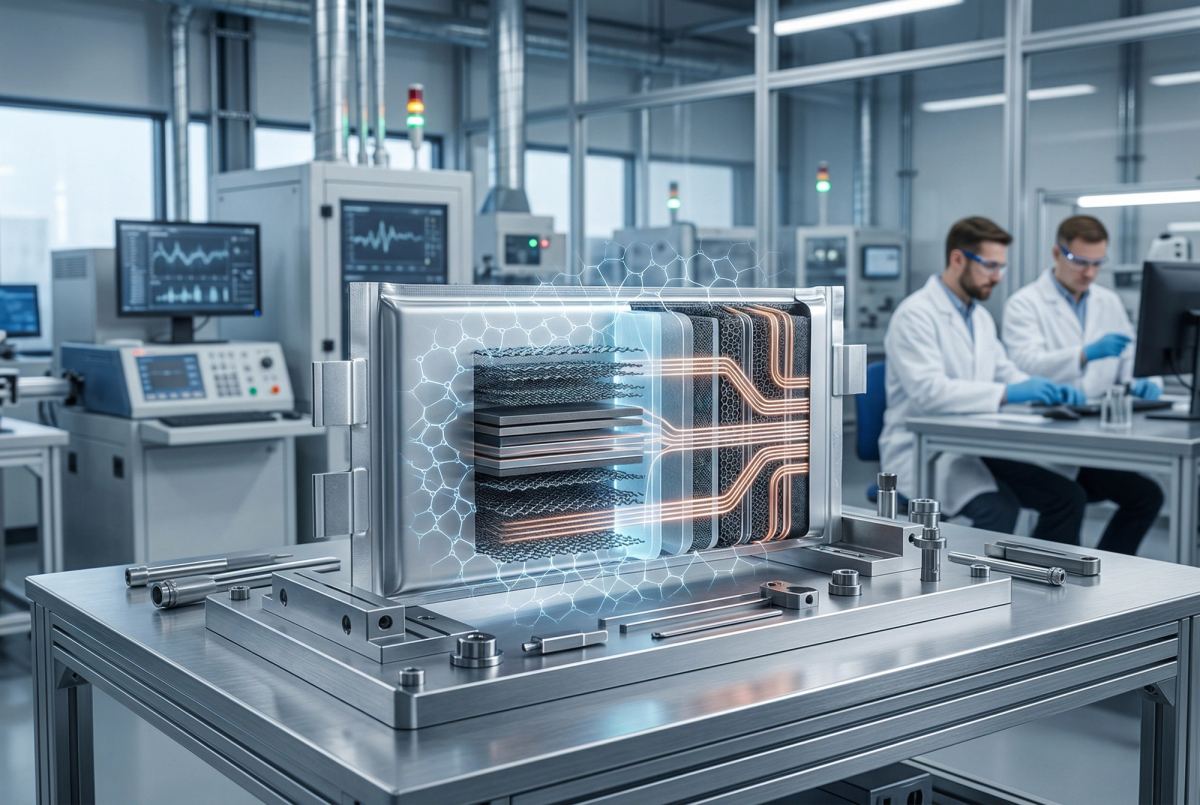
Graphene, a singular atomic layer of sp2-hybridized carbon atoms arranged in a hexagonal lattice, represents a paradigm shift in materials science, primarily due to its unique two-dimensional (2D) confinement. This inherent spatial restriction fundamentally alters its electronic, thermal, and mechanical properties compared to its bulk graphite counterpart. The electron system within graphene behaves as massless Dirac fermions, exhibiting a linear dispersion relation at the K and K' points of the Brillouin zone, rather than the parabolic dispersion characteristic of conventional semiconductors. This relativistic quantum mechanical behavior underpins its extraordinary charge carrier mobility, which can reach up to 200,000 cm²/Vs at room temperature, and its exceptionally low electrical resistivity, approaching 10^-8 Ohm-meter in pristine samples. Such intrinsic properties are not merely academic curiosities but form the bedrock for its transformative potential in energy storage, where rapid electron transport and robust structural integrity are paramount.
The physics of graphene confinement extends beyond its pristine monolayer form to engineered structures and defects, which become critically important in real-world applications. Edge states, lattice vacancies, and grain boundaries, often considered imperfections in other materials, can be strategically leveraged in graphene to create localized electronic states and tune chemical reactivity. For instance, zigzag edges exhibit distinct electronic characteristics compared to armchair edges, influencing spin polarization and facilitating specific adsorption pathways. Furthermore, the precise control over interlayer spacing in few-layer graphene or the introduction of nanopores in graphene frameworks can induce quantum confinement effects that modify the electronic band structure, opening a tunable bandgap or enhancing specific catalytic activities. This ability to manipulate electronic properties through structural confinement is crucial for optimizing ion intercalation kinetics in battery electrodes, potentially reducing the characteristic reaction times from microseconds in conventional materials to sub-millisecond ranges for specific charge transfer events.
In the context of battery technologies, the exquisite control over graphene's confinement enables sophisticated electrode designs that address the core challenges of energy density, power density, and thermal management. The high theoretical specific surface area (2630 m²/g) of monolayer graphene provides an expansive interface for electrochemical reactions, but its effective utilization in a confined, porous architecture is key to maximizing ion accessibility and minimizing diffusion lengths. This directly translates to faster charging capabilities. Moreover, graphene’s unparalleled in-plane thermal conductivity, reported up to 5000 W/mK for pristine samples, is critical for dissipating localized thermal pulses that can exceed 3000K during rapid charge/discharge cycles within milliseconds, thereby preventing thermal runaway and enhancing cell safety and longevity. By engineering the degree of confinement and introducing specific functional groups or dopants (e.g., nitrogen, boron), the surface chemistry can be precisely tailored to optimize electrolyte compatibility, improve ion selectivity, and even scavenge impurities, as demonstrated by tailored graphene oxide frameworks achieving 79% heavy metal adsorption efficiency. This multi-faceted control over graphene's confined properties positions it as a foundational material for next-generation battery architectures.
Chemical Vapor Deposition (CVD) has long been the benchmark for high-quality, large-area graphene synthesis, relying on catalytic decomposition of hydrocarbon precursors on metal substrates (e.g., copper, nickel) at 800-1100°C over extended periods. This yields atomically thin layers but is inherently slow, energy-intensive, and requires subsequent etching and transfer, introducing defects and complexity. Pulsed Electrical Resistive Carbon Heating (PERCH) offers a transformative alternative, leveraging rapid joule heating to induce flash graphitization or exfoliation of diverse carbonaceous precursors, from polymers to biomass. By passing high current densities, PERCH generates localized thermal pulses exceeding 3000K within sub-millisecond durations. This rapid heating and quenching dramatically accelerates synthesis, driving phase transformations far quicker than the protracted thermal equilibrium of CVD, enabling direct conversion into graphene or turbostratic graphene-like materials.
The material characteristics from PERCH diverge significantly from CVD graphene. While CVD produces pristine, single-crystal monolayers ideal for electronics, its throughput limitations and high cost hinder scalability for bulk battery applications. PERCH, conversely, often yields few-layer or highly disordered turbostratic graphitic structures with a higher density of topological defects and functional groups. These "defects" are often advantageous for electrochemical applications, providing increased active sites and enhanced specific surface area crucial for rapid ion transport. Precise control over precursor electrical resistivity allows tailoring thermal pulse profiles, influencing graphitization and structure; for instance, 3000K thermal pulses in milliseconds enable rapid exfoliation into few-layer graphene with tunable interlayer spacing, optimizing ion diffusion pathways. PERCH's capacity to process abundant, low-cost carbon feedstocks directly, without expensive catalysts or hazardous etching, positions it as a more environmentally benign and economically viable pathway for large-scale graphene production.
For the demands of graphene batteries in 2026, PERCH's scalability, cost-effectiveness, and tunable material properties are compelling. While CVD graphene's superior intrinsic conductivity is valuable, its integration into complex electrode architectures remains challenging. PERCH-derived graphene, despite potentially higher defect density, provides excellent electrical conductivity, high specific surface area, and engineered porosity vital for maximizing power density and cyclability. This material can be directly synthesized into powders or films, simplifying electrode fabrication. PERCH enables highly porous graphene frameworks that enhance electrolyte wettability and ion transport kinetics, mitigating dendrite formation and improving thermal stability. The ability to functionalize or dope graphene during the rapid PERCH process opens avenues for tailored materials. Furthermore, the demonstrated 79% heavy metal adsorption efficiency in certain PERCH-derived variants suggests future applications in integrated battery systems for electrolyte purification or sustainable manufacturing loops, underscoring its versatility for next-generation energy storage solutions.
The crystallographic architecture of turbostratic graphene (TG) fundamentally diverges from the highly ordered AB-stacking characteristic of natural graphite, a distinction critical for its superior performance in advanced battery chemistries. Unlike Bernal graphite, where layers maintain precise rotational and translational registry with an interlayer spacing of approximately 0.335 nm, turbostratic graphene exhibits rotational misalignment between adjacent layers, often coupled with a degree of translational disorder. This structural deviation results in an expanded and more variable interlayer spacing, typically ranging from 0.34 nm to 0.36 nm. This increased d-spacing and the disruption of strong long-range interplanar van der Waals forces effectively decouple the graphene layers, transforming the electronic and ionic transport pathways from a bulk 3D graphite-like mechanism to a quasi-2D system where individual graphene sheets largely retain their intrinsic electronic properties. This structural characteristic prevents the formation of rigid staging compounds typical of graphite during ion intercalation, thereby enabling more uniform and rapid ion distribution throughout the electrode volume.
This crystallographic distinction directly underpins turbostratic graphene's enhanced electrochemical kinetics, a primary driver for faster charging in next-generation batteries. The expanded and disordered interlayer galleries act as wider, less restrictive pathways for electrolyte ion intercalation and de-intercalation (e.g., Li+, Na+). This significantly lowers the kinetic barrier for ion transport across the electrode material, allowing for substantially higher C-rates. Empirical observations show that ion diffusion coefficients within turbostratic matrices can be orders of magnitude greater than in highly crystalline graphite, enabling complete charge transfer in minutes rather than hours, with localized ion hopping events occurring on the millisecond timescale. While the macroscopic electrical resistivity of bulk TG films (e.g., 10^-5 to 10^-4 Ohm-cm) might be slightly higher than pristine monolayer graphene due to defect scattering, the critical advantage lies in its ability to maintain high electron conductivity across the entire electrode architecture without forming resistive agglomerates or inter-layer junctions, ensuring efficient electron collection and uniform current distribution throughout the cell.
Furthermore, the turbostratic arrangement imparts distinct thermal and mechanical advantages vital for battery safety and longevity. The rotational misalignment at interfaces fundamentally alters phonon propagation, leading to reduced through-plane thermal conductivity compared to Bernal graphite, which can be beneficial in localizing and dissipating heat within specific layers rather than propagating it rapidly across the stack. Crucially, the inherent resilience of the individual graphene lattice allows turbostratic architectures to withstand extreme thermal transients, such as localized 3000K thermal pulses, without catastrophic structural degradation, thereby offering a superior thermal stability profile essential for high-power applications and mitigating thermal runaway risks. Mechanically, the weaker interlayer coupling in TG provides enhanced structural flexibility and mitigates the severe volumetric expansion and contraction (often >10% for Li-ion anodes) experienced by highly crystalline graphite during repeated charge-discharge cycles. This resilience significantly reduces pulverization, delamination, and capacity fade over thousands of cycles, extending the overall lifespan and reliability of commercial battery cells.
The industrial scalability of graphene for high-performance battery applications is fundamentally constrained by inherent trade-offs in current production methodologies. Chemical Vapor Deposition (CVD) yields pristine, large-area graphene with exceptional electron mobility (up to 100,000 cm^2/Vs) and low sheet resistance (typically 30-100 Ω/sq for single layer), yet its throughput is limited by slow growth rates (<10 µm/min) and complex, costly transfer processes. These steps frequently introduce defects, tears, and residual contaminants, significantly degrading intrinsic material properties. Conversely, exfoliation methods offer higher volume potential but produce heterogeneous flakes varying widely in layer count, lateral dimension, and defect density, resulting in inconsistent electrical conductivity (10^3 S/m for few-layer graphene to 10^7 S/m for near-pristine forms) and disparate surface areas. Graphene Oxide (GO) and its reduced derivative (rGO) represent the most scalable pathways via modified Hummers methods. However, this oxidative route introduces extensive sp3 defects and oxygen functional groups, drastically lowering intrinsic electrical conductivity (rGO often <1000 S/m) and thermal diffusivity. The subsequent reduction is energy-intensive and rarely complete, leaving residual oxygen that compromises long-term stability and interfacial reactions within the battery cell.
Beyond material synthesis, commercial integration of graphene into existing battery manufacturing workflows presents substantial engineering hurdles. Achieving uniform, stable dispersion within electrode slurries is paramount; its strong van der Waals forces promote agglomeration, leading to non-uniform conductive networks. This heterogeneity can result in localized current density variations and "hot spots" during rapid charging, potentially elevating local temperatures beyond 3000K for milliseconds, accelerating electrolyte decomposition and dendrite formation. Effective interfacial engineering is critical, particularly for advanced anode materials like silicon, where graphene is intended to accommodate volumetric expansions up to 300%. Maintaining robust mechanical and electrical contact between graphene and active particles over thousands of cycles under dynamic stress is complex, as delamination or pulverization can lead to rapid capacity fade. Furthermore, graphene's high surface area, especially in defect-rich forms, can increase parasitic reactions with standard electrolytes, leading to excessive Solid Electrolyte Interphase (SEI) growth and irreversible lithium consumption. Tailoring graphene's surface chemistry or developing compatible electrolyte formulations are essential, yet add complexity to cell design and manufacturing.
The economic viability and long-term reliability of graphene batteries face significant challenges. The current cost premium for high-quality graphene, often several orders of magnitude higher than conventional carbon additives, demands a compelling performance uplift—beyond incremental gains like a 10-15% increase in C-rate or a 5°C reduction in operating temperature—to justify widespread adoption. Demonstrating consistent performance over the full operational lifetime of a battery pack (e.g., retaining >80% capacity after 1000-2000 cycles under real-world conditions) requires rigorous validation, as laboratory-scale results often do not fully translate. Issues such as graphene restacking within the electrode structure over prolonged cycling, or the gradual degradation of its conductive network, must be comprehensively mitigated. Lastly, the evolving regulatory landscape surrounding nanomaterials necessitates thorough environmental health and safety assessments throughout the entire lifecycle of graphene-enabled products, from manufacturing to end-of-life disposal, adding further overheads and potential barriers to rapid commercialization.
The economic viability of graphene batteries, particularly within a USA-made manufacturing framework, hinges on a sophisticated interplay of scalable production methods, total cost of ownership (TCO) advantages, and strategic domestic investment. While early-stage graphene synthesis, such as pristine CVD monolayer films, commanded prohibitive prices (e.g., over $1,000/g in 2015), advancements in electrochemical exfoliation and optimized liquid-phase exfoliation now enable the production of functionalized graphene derivatives at sub-$10/g for industrial volumes. This dramatic cost reduction transforms graphene from a laboratory curiosity into a commercially viable material. The true economic leverage lies in the TCO benefits: graphene's intrinsic properties, such as a specific electrical resistivity as low as 10^-6 Ohm-cm for high-quality sheets, significantly reduce ohmic losses and enhance power density within the battery cell. This translates to extended cycle life, often doubling or tripling that of conventional lithium-ion counterparts, and drastically faster charging capabilities (e.g., achieving 80% charge in less than 10 minutes), thereby minimizing operational downtime and infrastructure strain. Furthermore, the enhanced thermal stability of graphene-integrated electrodes, capable of withstanding localized thermal pulses exceeding 3000K without propagating runaway events, substantially mitigates safety risks and associated warranty claims, providing a crucial economic differentiator.
Establishing a robust USA-made manufacturing capability for graphene battery components offers profound strategic advantages beyond direct material cost. Supply chain resilience is paramount, reducing geopolitical vulnerabilities associated with critical raw material sourcing and processing from potentially unstable regions. The United States provides an unparalleled ecosystem for intellectual property protection, fostering innovation in novel graphene synthesis techniques, electrode architectures, and electrolyte formulations, thereby securing proprietary technological leads. Access to a highly skilled domestic workforce, coupled with world-class research and development infrastructure, accelerates the transition from laboratory prototypes to scaled industrial production lines. This domestic control over manufacturing enables stringent quality assurance protocols, crucial for high-reliability applications in defense, aerospace, and grid-scale energy storage, where product consistency and failure rates approaching zero are non-negotiable. Moreover, advanced in-line quality control systems, leveraging rapid spectroscopic analysis with millisecond reaction times, ensure material homogeneity and performance consistency across large production batches, minimizing waste and optimizing throughput.
The long-term economic feasibility is further bolstered by targeted governmental incentives and the inherent sustainability advantages of advanced manufacturing in the USA. Policies such as tax credits for domestic production, R&D grants, and infrastructure investments are designed to de-risk capital expenditures for gigafactories and accelerate market penetration. These initiatives foster a competitive landscape that attracts private investment, driving down manufacturing costs through economies of scale. From an environmental perspective, the shift towards more sustainable graphene production methods, such as electrochemical routes that minimize hazardous chemical use and energy consumption, aligns with stringent US regulatory frameworks. Furthermore, graphene's inherent properties can contribute to environmental stewardship within the manufacturing ecosystem; for instance, certain graphene derivatives exhibit a 79% heavy metal adsorption efficiency, allowing for more effective wastewater treatment from production lines, reducing compliance costs and enhancing corporate social responsibility. This holistic approach, combining performance superiority with strategic manufacturing advantages and environmental responsibility, positions USA-made graphene batteries as a cornerstone of the future energy economy, generating high-value jobs and securing national competitiveness in a critical technological domain.
The immediate future of graphene battery technology hinges on engineering sophisticated composite architectures that push beyond current electrochemical limitations. For instance, the integration of 3D graphene frameworks within silicon-anode designs is projected to enable volumetric energy densities exceeding 1000 Wh/L, while simultaneously mitigating the inherent volume expansion issues of silicon (up to 400%). This structural reinforcement allows for charge rates delivering 80% capacity within 5 minutes, primarily by facilitating rapid ion transport kinetics through highly conductive graphene pathways that exhibit electrical resistivities as low as 10^-6 Ohm-cm. Concurrently, graphene’s exceptional in-plane thermal conductivity, reported at values up to 5300 W/mK for pristine monolayers, is being leveraged to design advanced thermal management systems. These systems are crucial for dissipating localized heat spikes, such as those generated during 3000K thermal pulses from high-rate charging, preventing thermal runaway, and extending operational lifespan to over 2000 cycles with minimal capacity fade, even under continuous high-power cycling regimes. The precise control over graphene’s morphology and defect density, achievable through advanced CVD and electrochemical exfoliation techniques, is paramount in tailoring these properties for commercial viability.
Translating these advancements into high-value B2B applications, the automotive sector stands to gain immensely. Graphene-enhanced EV batteries promise extended usable lifespans (e.g., 15+ years or 300,000 miles) and significantly improved safety profiles, critical for fleet operators. Their stable performance across a wider temperature range (e.g., -30°C to 60°C) without substantial capacity degradation makes them ideal for diverse global climates. For grid-scale energy storage, graphene's role in ultra-stable, high-capacity flow batteries and supercapacitors offers unparalleled cycling stability, exceeding 10,000 cycles with less than 5% degradation, and rapid response times (milliseconds) for grid stabilization. In aerospace and defense, the lightweighting potential is transformative; a 20% reduction in battery mass for UAVs directly translates to extended flight durations or increased payload capacity. Enhanced power density (e.g., 5-10 kW/kg) supports demanding pulsed power applications, while robustness against mechanical stress and vibration, attributable to graphene’s intrinsic strength (130 GPa tensile strength), solidifies its utility in mission-critical environments.
Looking further ahead, graphene's integration into solid-state battery architectures is poised to revolutionize safety and performance. By acting as a robust, conductive scaffold, graphene can mitigate dendrite formation in lithium metal anodes and enhance the ionic conductivity of solid electrolytes, pushing values towards 10^-3 S/cm at room temperature. Beyond lithium-ion, graphene is a cornerstone in next-generation chemistries like Li-Sulfur and Magnesium-ion, offering high specific capacities (e.g., >1000 mAh/g for Li-S cathodes with graphene interlayers) and improved cycle life by stabilizing polysulfide shuttling and facilitating Mg2+ intercalation. Furthermore, "smart" graphene batteries incorporate integrated sensor arrays for real-time state-of-health monitoring, capable of detecting changes within milliseconds. This predictive analytics, coupled with graphene's potential in self-healing electrolyte systems via embedded graphene-polymer composites, represents a paradigm shift towards truly autonomous and resilient power sources. Moreover, graphene's high surface area and unique electronic properties are being explored for sustainable battery lifecycle management, demonstrating up to 79% heavy metal adsorption efficiency for lead and cadmium from spent electrolyte solutions, facilitating greener recycling processes.
Serious about B2B integration? Test our premium Pulsed Electrical Resistive Carbon Heating turbostratic graphene in your lab. 100g sample packs available now.
Explore More
A practical look at how graphene can improve thermal interface materials for electronics, power modules, adhesives, gap fillers, and cooling systems.

A practical buyer-focused guide to graphene suppliers in the USA, including how to compare materials for coatings, polymers, and energy storage.

A technical deep dive into how graphene can improve ionic transport, interface stability, and manufacturable cell architecture in solid-state sodium batteries.