Energy Storage, Graphene Batteries
Graphene Batteries in 2026: Faster Charging, Better Thermal Stability, and Smarter Commercial Cell Design
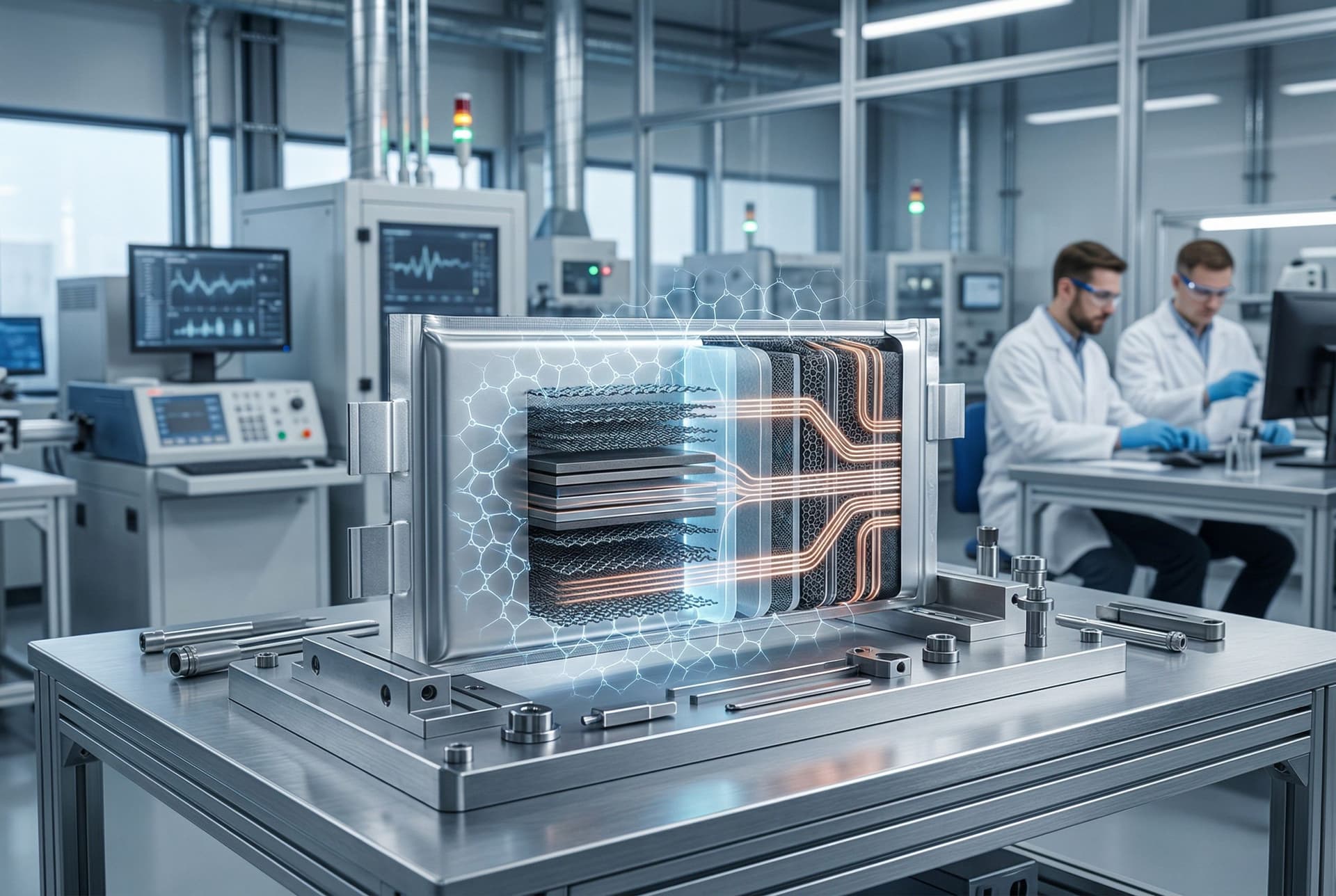
Graphene batteries remain one of the most searched battery topics because they sit at the intersection of performance, manufacturing, and market hype. In 2026, the most useful question is not whether graphene will magically replace lithium-ion overnight. It is how graphene is being used today to improve charging speed, thermal stability, and commercial battery design in ways that product teams can actually build around.
That is where the real story lives. Graphene is not one battery chemistry. It is a material platform that can improve current collectors, conductive additives, thermal pathways, electrode architecture, and protective layers. Those improvements matter because battery buyers want faster charging without overheating, higher power without severe degradation, and cell designs that can survive real-world manufacturing tolerances.
What Graphene Batteries Mean in 2026
When people say “graphene batteries,” they often mean different things. Some are talking about lithium-ion cells that use graphene-enhanced anodes or cathodes. Others mean graphene in the conductive network, separator coatings, thermal interface layers, or flexible current-collecting structures. A smaller set of developers is pursuing graphene-dominant or graphene-derived architectures, but most commercial progress still comes from hybrid designs.
That distinction matters for buyers and engineers. In 2026, the most credible graphene battery products are usually not “100% graphene batteries.” They are battery systems where graphene helps solve a bottleneck that classic materials struggle with: resistance, heat, mechanical stress, or current distribution.
In other words, graphene is becoming commercially useful as an enabler, not a slogan.
Why Graphene Improves Charging Speed
Fast charging is fundamentally a transport problem. To charge a cell quickly, ions must move through the electrolyte and into active material without creating excessive polarization, heat, or plating risk. Graphene helps in several ways.
First, it improves electrical conductivity in electrode networks. Graphene nanoplatelets and few-layer graphene can form efficient electron pathways, reducing resistance and allowing higher current flow with less loss.
Second, it can support thinner, more uniform electrode structures. If conductive material is better distributed, designers can reduce “dead zones” where current concentrates and causes local heating.
Third, graphene can improve charge acceptance in silicon-rich anodes and other high-capacity systems that otherwise suffer from poor conductivity and volume expansion. In these designs, graphene does not eliminate the swelling problem, but it helps the electrode maintain connectivity as the material cycles.
The practical result is not infinite charging speed. It is more realistic than that: faster charging windows with better control, especially when paired with advanced thermal management and battery management systems. For consumer electronics, power tools, e-bikes, and some EV applications, that is enough to matter.
Thermal Stability Is the Real Commercial Differentiator
A battery that charges quickly but overheats is not commercially attractive. This is why thermal stability is becoming one of the most important graphene value propositions in 2026.
Graphene has very high in-plane thermal conductivity, and even when it is used in composite form, it can improve heat spreading across a cell or pack. That is especially useful in prismatic, pouch, and cylindrical cells where hotspots can develop during high-rate charging.
Graphene also appears in thermal interface materials, coatings, and heat-spreading films that help move heat away from sensitive areas. In pack design, the goal is not just to cool the battery. It is to keep temperature gradients tighter so that cell aging stays more uniform.
That matters commercially because uneven temperature accelerates imbalance, side reactions, and warranty problems. A battery pack with better thermal stability can usually support more aggressive charging profiles, better cycle life, or both.
For manufacturers, the advantage is straightforward: thermal reliability reduces risk. For buyers, it means fewer surprises when the product leaves the lab and enters the real world.
The Commercial Battery Designs That Benefit Most
Not every battery platform benefits from graphene in the same way. The strongest commercial case usually appears in five design areas.
1. Silicon-Enhanced Lithium-Ion Anodes
Silicon can boost capacity, but it expands and contracts dramatically. Graphene helps maintain conductive contact and structural integrity. That makes it especially attractive for premium consumer electronics and performance-oriented cells.
2. High-Power Lithium-Ion Cells
Cells that need rapid discharge and rapid recharge benefit from lower resistance and better heat spreading. Graphene-enhanced conductive networks can improve those properties without requiring a full chemistry redesign.
3. EV Battery Packs
For electric vehicles, graphene is often most compelling at the pack level: thermal interface layers, heat spreaders, conductive additives, and protective coatings. These are not glamorous uses, but they are the kinds of uses that survive procurement scrutiny.
4. Sodium-Ion and Emerging Storage Systems
Sodium-ion batteries face similar transport and conductivity constraints. Graphene can improve electrode kinetics and offset some of the lower energy density by helping the cell run efficiently.
5. Flexible and Wearable Batteries
Graphene’s mechanical flexibility makes it a strong candidate for thin, bendable, or lightweight storage systems. These products often need conductive materials that do not crack under repeated deformation.
What Is Actually Commercially Ready?
This is where 2026 buyers need to stay grounded. Graphene battery commercialization is real, but it is uneven.
The most mature uses are the ones that slot into existing manufacturing lines: conductive additives, coatings, thermal management layers, and composite electrodes. These applications are easier to scale because they do not require reinventing the entire cell factory.
More ambitious concepts, such as fully graphene-based batteries or radical energy-density leaps, remain much harder to commercialize. They may be scientifically interesting, but they usually face issues with cost, process repeatability, or performance tradeoffs.
So the commercial rule of thumb is simple: if graphene can be added to improve a known battery design, it is much more likely to reach market than a design that depends on graphene replacing everything else.
The Manufacturing Challenges Buyers Should Watch
Graphene battery products can only succeed if the material is consistent. Buyers should ask the same questions every serious battery engineer asks:
- What type of graphene is being used: nanoplatelets, few-layer graphene, graphene oxide, or reduced graphene oxide?
- What is the particle size, defect density, and oxygen content?
- How well does the material disperse in the chosen binder or electrolyte system?
- Does the supply chain support repeatable batch-to-batch performance?
- Can the material survive high-rate cycling, calendaring, and electrode processing?
These questions matter because graphene is not a generic “performance dust.” In battery manufacturing, particle morphology, surface chemistry, and dispersion behavior can make the difference between a promising lab sample and a failed pilot line.
What 2026 Means for Battery OEMs and Materials Buyers
For OEMs, 2026 is less about hype and more about integration. The companies that win will be those that use graphene to solve specific bottlenecks: charging time, heat management, cycle stability, or power density. The most credible business cases will usually involve incremental gains that stack into meaningful product advantages.
That is still valuable. A battery that charges faster, runs cooler, and degrades more slowly is easier to sell, easier to warranty, and easier to differentiate in a crowded market.
For materials buyers, the best approach is to evaluate graphene as a functional additive or design tool, not as a miracle chemistry. Start with the problem you want to solve, then match the graphene form to that problem.
Final Takeaway
Graphene batteries in 2026 are not a fantasy, but they are also not a finished revolution. The strongest commercial opportunities are in faster charging, thermal stability, and smarter battery design, especially when graphene is used to improve existing lithium-ion, sodium-ion, and flexible battery platforms.
That is the key insight: graphene is most powerful when it makes a battery easier to engineer, not when it is treated as a slogan. The winners in this market will be the teams that use graphene to reduce resistance, spread heat, and build more reliable cells at scale.
For battery developers, that is already enough to matter.
SEO Summary
Graphene batteries in 2026 are increasingly defined by practical gains in charging speed, thermal stability, and commercial cell design. The most credible applications use graphene in conductive networks, thermal management layers, silicon-rich anodes, and high-power battery architectures.