Graphene-Based Solar Cells: Advancing Next-Gen Photovoltaics
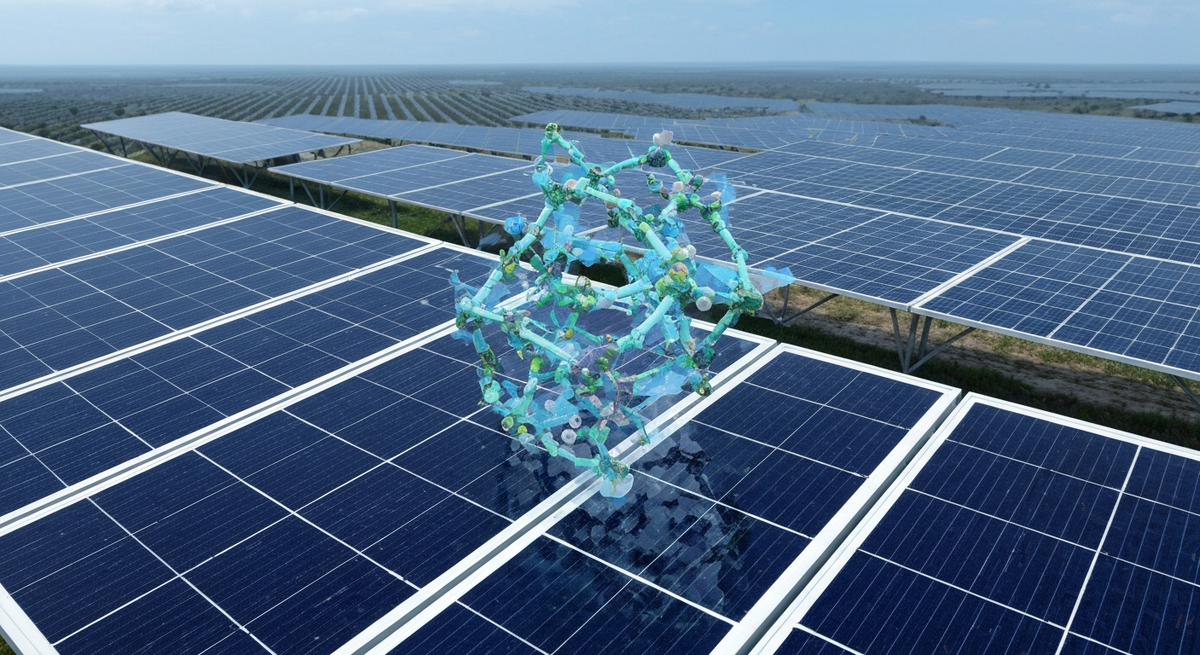
The global energy landscape is undergoing a profound transformation, driven by the pressing need for sustainable power sources. As conventional energy reserves dwindle, the imperative to harness renewable alternatives, particularly solar energy, intensifies. Traditional silicon-based solar cells, while effective, face inherent limitations stemming from the energy-intensive purification processes and intricate crystal slicing required for their manufacture, rendering them expensive and often rigid. This economic and practical hurdle has propelled researchers worldwide to explore novel materials and architectures, paving the way for innovations like nanostructured and hybrid solar cells.
Organic photovoltaic (OPV) cells have emerged as a significant area of interest within this quest for alternatives. A critical component in most solar cell designs is the transparent electrode, historically dominated by indium tin oxide (ITO). However, ITO's high cost and scarcity, largely due to its indium content, present a substantial barrier to widespread, affordable adoption. This is where graphene, a material derived from ubiquitous carbon, offers a compelling solution, providing a high-performance, cost-effective, and sustainable alternative.
Beyond its role as a transparent conductor, graphene's stable and inert structure presents unique opportunities for integrating semiconducting nanostructures directly onto its pristine surface without compromising its intrinsic electrical or structural integrity. This versatility extends graphene's utility across the entire solar cell architecture, encompassing transparent electrodes, active layers, and crucial interface layers. The exploration of graphene-based solar cells represents a pivotal step towards developing more efficient, flexible, and economically viable photovoltaic technologies.
Graphene: The Next-Generation Transparent Conducting Electrode
Transparent conducting electrodes (TCEs) are fundamental to optoelectronic devices, including solar cells, touch screens, and light-emitting diodes, demanding materials that offer high transparency coupled with low sheet resistance. Historically, materials such as indium oxide (In2O3), zinc oxide (ZnO), and tin oxide (SnO2), along with their ternary compounds like ITO (typically 90% In2O3 and 10% SnO2), have fulfilled this role. Commercial ITO boasts impressive performance, achieving resistance as low as 5 Ω/sq with a transparency of approximately 80%.
However, ITO presents several significant limitations that impede its broader application and the development of next-generation devices. Its cost and scarcity, driven by the preciousness of indium, are primary concerns. Furthermore, ITO exhibits brittleness, making it unsuitable for flexible electronics, and is susceptible to degradation in both acidic and basic environments. These drawbacks have spurred the search for alternatives, leading to investigations into metal grids, metallic nanowires, and other metal oxides.
Graphene has emerged as a particularly promising material for TCE applications, addressing many of ITO's shortcomings. An ideal monolayer of graphene offers an exceptional transparency of 98% across a wide wavelength range, surpassing ITO's typical 80%. While its sheet resistance of 6 kΩ/sq for a pristine monolayer is higher than that of commercial ITO, graphene’s inherent flexibility makes it an ideal candidate for flexible electronics, a domain where ITO consistently fails. Its stability and abundance further solidify its position as a superior transparent conducting electrode for future photovoltaic designs.
Optimizing Performance with Graphene Interfacial Layers
The interfacial layer is a profoundly vital component within the solar cell architecture, playing a critical role in enhancing overall device performance. These layers are strategically incorporated to minimize contact resistance, mitigate charge recombination, and reduce current leakage, all of which directly contribute to an improved fill factor and more efficient charge extraction. Often referred to as electron transport layers (ETL) or hole transport layers (HTL), they are positioned at the cathode and anode interfaces, respectively.
The surface of a photoactive donor material frequently contains high densities of carrier traps and interfacial trap holes, which can severely impede efficient charge collection. The strategic incorporation of interlayers effectively circumvents direct contact between the photoactive donor and the electrodes, thereby neutralizing this persistent problem. Beyond mitigating traps, these interfacial layers fulfill several key functions: they decrease the energy barrier for charge injection and extraction, form selective contacts for specific charge carriers, and determine the overall polarity of the device.
Interfacial layers also modify surface properties, altering film morphology in beneficial ways, and suppress diffusion and undesirable reactions between electrode materials and polymers. They can even modulate the optical field as an optical spacer, further optimizing light harvesting. Poly-3,4-ethylenedioxythiophene:polystyrenesulfonate (PEDOT:PSS) has been a common anodic interlayer (HTL) due to its high work function and compatibility with ITO.
Despite its advantages, acidic PEDOT:PSS is highly hygroscopic, a property that can lead to the degradation of ITO and significantly reduce the device's long-term performance. While inorganic materials offer an alternative to PEDOT:PSS, their processing often proves expensive, perpetuating the need for new, cost-effective HTL materials. In this regard, solution-processable graphene oxide (GO) sheets have shown immense promise as a high-performance, less expensive alternative. Similarly, for ETLs, conventional metal oxides like calcium (Ca) and barium (Ba) have been used, but their instability and high cost render them impractical for commercial applications. Graphene, with its high conductivity, transparency, and flexibility, emerges as a highly promising candidate for ETLs, suitable for both rigid and flexible device platforms.
Graphene as the Active Layer in Advanced Photovoltaics
The active layer stands as the most significant component of any solar cell, directly responsible for the conversion of light into electrical energy. This critical layer is typically composed of a donor and an acceptor material, arranged either as adjacent layers or, more commonly, in a bulk heterojunction (BHJ) formation. In a BHJ architecture, the donor and acceptor materials are intimately mixed, ensuring nanoscale separation that facilitates efficient exciton dissociation and charge transport. When light is absorbed by the active layer, bound electron/hole pairs, known as excitons, are generated.
These excitons subsequently dissociate at the donor-acceptor interface, and the resulting free electrons and holes are then collected at the respective opposite electrodes, contributing to the generated current. Conventional polymer solar cells frequently employ various polymers as donor materials and PCBM ([6,6]-phenyl C71 butyric acid methyl ester) as an acceptor. However, PCBM presents considerable drawbacks for commercial viability, primarily its high cost and a relatively low absorption spectrum in the crucial visible light region.
These limitations have driven the development of alternative acceptor materials. Carbon nanotubes (CNTs) were among the first materials explored, recognized for their high charge mobility, extensive π–π conjugation, and large aspect ratio. While CNTs offered a cost-effective alternative to PCBM, they often resulted in very low power conversion efficiencies (PCEs), limiting their practical utility. More recently, graphene and its derivatives, particularly graphene quantum dots (GQDs), have emerged as ideal alternatives for acceptor materials.
These graphene-based materials boast high electron mobility, a band gap that is easily tunable, and, crucially, good solubility in organic solvents after functionalization. Their large 2D planar structure and atomic thickness provide an expansive interfacial area for efficient exciton generation and a continuous, highly conductive pathway for electron transfer. This combination of properties positions graphene and GQDs as highly effective components for the active layer, promising significant advancements in solar cell performance and cost-effectiveness.
Beyond Organic: Graphene's Role in Dye-Sensitized and Solid-State Solar Cells
While organic photovoltaics (OPVs) represent a significant frontier for graphene integration, its versatile properties extend its applicability to other promising solar cell technologies, specifically dye-sensitized solar cells (DSSCs) and various solid-state cell architectures. The fundamental advantages that graphene brings to OPVs—namely high conductivity, superior transparency, and remarkable mechanical flexibility—are equally valuable in these alternative systems, offering new pathways to enhance their performance and expand their design possibilities.
In DSSCs, graphene and its derivatives can serve multiple functions, improving charge transport and collection efficiency. For instance, graphene can be incorporated into the counter electrode to enhance catalytic activity and electron transfer, or it can be integrated into the photoanode to improve electron mobility and reduce charge recombination. The high surface area and excellent conductivity of graphene make it an attractive material for improving the overall efficiency and stability of DSSCs, potentially offering a more robust and efficient alternative to traditional materials.
For solid-state cells, including those based on perovskite materials, graphene's unique characteristics offer similar benefits. Its role as a transparent conducting electrode or an efficient charge transport layer can significantly boost device performance. The ability to form seamless interfaces with various semiconducting materials and its inherent stability are critical for developing high-efficiency, long-lasting solid-state solar cells. The exploration of graphene in these diverse solar cell platforms underscores its broad potential to drive innovation across the entire photovoltaic industry, pushing beyond the limitations of conventional materials.
Architectural Innovations: Building on Pristine Graphene for Enhanced Efficiency
A particularly exciting avenue in the development of graphene-based solar cells involves the ability to construct semiconducting nanostructures directly onto a pristine graphene surface. This innovative architectural approach capitalizes on graphene’s inherently stable and inert structure, ensuring that its exceptional electrical and structural properties remain unimpaired during the fabrication process. This capability represents a significant departure from traditional methods where the integration of active materials can often degrade the performance of underlying layers.
The inertness of graphene means that it does not readily react with deposited materials, providing a clean and stable platform for precise nanoscale engineering. This allows for the direct growth or deposition of various semiconducting nanomaterials, such as quantum dots, nanowires, or thin films, in highly controlled configurations. Such precise integration is crucial for optimizing light absorption, exciton generation, and charge separation within the active layer of solar cells.
By leveraging graphene as a foundational template, researchers can design novel solar cell architectures that maximize the interfacial area between donor and acceptor materials, facilitating more efficient exciton dissociation and charge transport pathways. This direct integration technique streamlines fabrication processes and minimizes potential performance losses associated with complex interface engineering. The ability to build intricate, highly functional nanostructures directly on graphene opens up unprecedented opportunities for creating highly efficient, compact, and robust graphene-based solar cells, pushing the boundaries of photovoltaic design and performance.
Frequently Asked Questions (FAQ)
Q: What makes graphene a superior transparent electrode compared to ITO?
A: Graphene offers significant advantages over ITO due to its higher transparency (98% for a monolayer versus ITO's ~80%) and superior mechanical flexibility, making it ideal for flexible electronics. Unlike ITO, which is brittle and sensitive to environmental factors, graphene is derived from ubiquitous carbon, addressing cost and scarcity issues while maintaining stability.
Q: How does graphene improve the efficiency of solar cells as an interfacial layer?
A: As an interfacial layer, graphene minimizes contact resistance, reduces charge recombination, and prevents current leakage, thereby improving the fill factor and charge extraction efficiency. Graphene oxide (GO) provides a cost-effective, high-performance alternative to traditional, often unstable or expensive, electron and hole transport layers like PEDOT:PSS or metal oxides.
Q: What advantages do graphene and GQDs offer as active layer components?
A: Graphene and graphene quantum dots (GQDs) offer high electron mobility, easily tunable band gaps, and good solubility after functionalization, making them ideal acceptor materials. Their large 2D planar structure provides an extensive interfacial area for exciton generation and continuous pathways for efficient electron transfer, surpassing the limitations of PCBM and CNTs.
Q: Why is the ability to build nanostructures on pristine graphene significant for solar cells?
A: The ability to directly build semiconducting nanostructures on pristine graphene is significant because graphene's stable and inert surface preserves its electrical and structural properties. This enables the creation of novel, highly optimized solar cell architectures that maximize light absorption and charge separation without compromising the underlying material's integrity, streamlining fabrication and boosting performance.
Q: What are the primary challenges in the commercialization of graphene-based solar cells?
A: The primary challenges in commercializing graphene-based solar cells include scaling up cost-effective, high-quality graphene production, optimizing device architectures for long-term stability and efficiency comparable to silicon, and developing reliable industrial-scale manufacturing processes. Further research is needed to fully integrate graphene's unique properties into robust, economically viable products.
The profound potential of graphene-based solar cells to redefine the landscape of renewable energy is undeniable. From its role as a superior transparent conducting electrode, offering unparalleled flexibility and transparency, to its transformative impact as an advanced interfacial layer and a highly efficient active material, graphene addresses the critical limitations of conventional photovoltaic technologies. Its ability to enable novel architectural designs, such as the direct integration of nanostructures, further cements its position as a pivotal material in the ongoing quest for more efficient, cost-effective, and sustainable energy solutions.
As research and development continue to advance, the commercial viability and widespread adoption of graphene-based solar cells draw closer. The ongoing innovations in material synthesis, device engineering, and performance optimization are steadily overcoming the remaining technical hurdles. We invite you to explore the cutting-edge developments and comprehensive resources available at usa-graphene.com to learn more about how graphene is shaping the future of solar energy and other advanced applications.
Evaluate Our Quality
Serious about B2B integration? Test our premium Pulsed Electrical Resistive Carbon Heating turbostratic graphene in your lab. 100g sample packs available now.
Explore More
Related Research & Articles


Graphene-Based Solar Cells: Architecture and Efficiency
Explore the molecular theory of graphene chemical modification and discover how precise oxidation framing enhances advanced solar cell efficiency.
