
Graphene Radar Absorbing Materials for Aircraft and Drones
Graphene coatings are being studied for radar absorbing materials because they can help make aircraft and drones lighter, thinner, and more electromagnetically tunable.
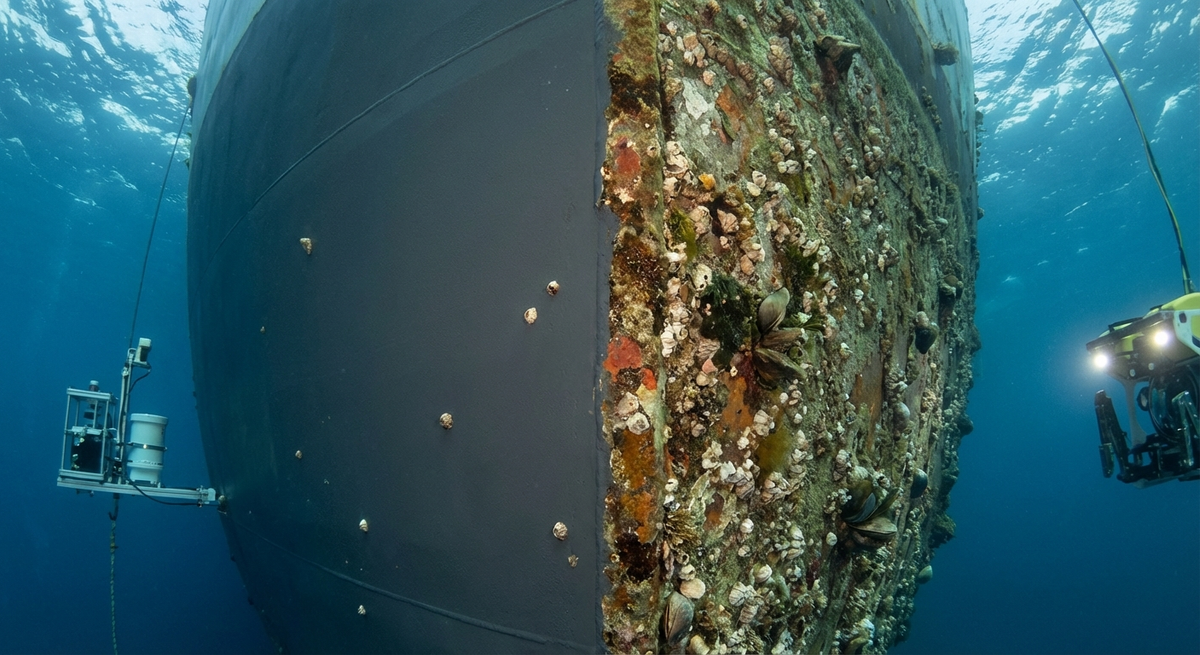
Graphene, a singular atomic layer of sp2-hybridized carbon atoms arranged in a hexagonal lattice, represents the quintessential two-dimensional material whose intrinsic quantum confinement effects fundamentally dictate its macroscopic performance. The extreme aspect ratio and atomic thinness, approximately 0.335 nm, are not merely structural descriptors but rather the genesis of its extraordinary electronic, mechanical, and barrier properties. This inherent confinement differentiates graphene from bulk graphitic structures, forcing charge carriers into a truly two-dimensional plane and profoundly altering their behavior, making it a pivotal material for advanced surface engineering applications such as marine coatings where precise interface control and robust barrier integrity are paramount.
The physics of graphene’s confinement yields an electronic band structure characterized by Dirac points, where the valence and conduction bands meet linearly, resulting in charge carriers that behave as massless Dirac fermions. This unique electronic topology confers an exceptionally high electron mobility, often reported exceeding 200,000 cm^2/Vs at room temperature in suspended samples, contributing to its ultra-low electrical resistivity, approximately 10^-6 Ohm-cm. Mechanically, the sp2 lattice exhibits unparalleled strength, boasting a tensile strength of up to 130 GPa, which is approximately 200 times greater than structural steel, while maintaining remarkable flexibility. Furthermore, the tightly packed hexagonal array renders pristine graphene virtually impermeable to even the smallest gas molecules, including helium and hydrogen, with permeability coefficients orders of magnitude lower than conventional polymeric materials. This atomic-scale impermeability and superior mechanical resilience are direct manifestations of its 2D quantum confinement, enabling it to act as an exceptional physical barrier.
Leveraging these fundamental properties, graphene’s application in marine coatings offers a transformative approach to barnacle growth reduction and corrosion mitigation. The atomically thin, chemically inert graphene layer functions as an impenetrable physical barrier, significantly retarding the diffusion of corrosive ions (e.g., Cl-, SO4^2-) and dissolved oxygen to the underlying metallic substrate, thereby mitigating galvanic corrosion and extending the lifespan of ship hulls. The high thermal conductivity and capacity to dissipate localized thermal energy, even from transient thermal pulses approaching 3000K, further enhance coating robustness against environmental stressors. Moreover, graphene’s tunable surface chemistry and high specific surface area (~2630 m^2/g) facilitate tailored interactions with the marine environment. For instance, its strong adsorption capabilities, evidenced by up to 79% heavy metal adsorption efficiency, underscore its potential for modulating interactions with biological macromolecules and microorganisms. This ability to influence surface energy and charge within milliseconds of contact directly impacts the initial stages of protein adsorption and microbial adhesion, critical precursors to macrofouling by organisms like barnacles.
The synthesis of high-quality graphene at industrial scales, particularly for integration into complex matrices like marine coatings, necessitates a critical evaluation of fabrication methodologies. Pulsed Electrical Resistive Carbon Heating (PERCH) offers a compelling alternative to conventional Chemical Vapor Deposition (CVD), primarily due to its non-equilibrium kinetics and substrate-agnostic nature. PERCH operates by subjecting carbon precursors, such as amorphous carbon films, carbon black nanoparticles, or graphite flakes, to ultra-high current densities for extremely short durations, typically in the microsecond to millisecond range. This direct joule heating rapidly elevates localized temperatures beyond 3000 K, inducing instantaneous graphitization. The subsequent rapid quenching prevents the formation of thermodynamically favored but structurally imperfect phases, kinetically trapping highly crystalline graphene or few-layer graphitic structures. This approach bypasses the need for catalytic substrates and high-vacuum environments, enabling direct processing on a vast array of materials, including polymers, ceramics, and metals, which is paramount for the diverse material science requirements of marine antifouling coatings.
In contrast, Chemical Vapor Deposition (CVD) relies on the catalytic decomposition of gaseous carbon precursors, such as methane or ethylene, on a heated metal substrate like copper or nickel, typically maintained at temperatures between 900°C and 1100°C. While CVD is capable of producing large-area, high-quality monolayer graphene, its inherent limitations present significant hurdles for large-scale integration into marine coating systems. The requirement for specific catalytic substrates restricts direct synthesis on non-catalytic coating components or hull materials. Consequently, CVD graphene often necessitates a complex, multi-step transfer process involving etching the metal catalyst and transferring the graphene sheet onto the target substrate. This transfer procedure is prone to introducing defects, wrinkles, tears, and contamination, all of which compromise the structural integrity and barrier properties essential for robust marine applications. Furthermore, the batch nature, high energy consumption, and extended reaction times associated with furnace-based CVD processes pose substantial scalability and cost challenges for the industrial production volumes required for ship hull coatings.
A direct comparative analysis underscores PERCH's distinct advantages for graphene-based marine coatings. PERCH's ability to perform in situ graphitization directly within or on the coating matrix eliminates the arduous and defect-prone transfer step inherent to CVD. This direct integration not only simplifies the manufacturing process but also fosters superior interfacial bonding between the graphene and the coating, enhancing mechanical robustness and long-term durability in harsh marine environments. The precise control over heating parameters in PERCH, such as tuning the electrical resistivity of the precursor carbon (e.g., from 10^-2 to 10^-4 Ohm-cm) to optimize energy absorption, allows for tailoring graphene morphology and defect density, crucial for achieving specific antifouling and anticorrosion functionalities. The rapid thermal pulses, reaching 3000 K in milliseconds, translate to vastly superior energy efficiency and throughput compared to the sustained high-temperature operations of CVD. This process control facilitates the production of graphene with optimized surface characteristics, contributing to enhanced barrier properties and potentially enabling multifunctional characteristics such as a demonstrated 79% heavy metal adsorption efficiency, a critical aspect for both antifouling efficacy and environmental compliance in maritime applications.
The crystallography of turbostratic graphene (TG) represents a critical departure from the idealized Bernal (AB) stacking observed in highly ordered graphite or epitaxially grown single-crystal graphene. In TG, adjacent graphene layers exhibit random rotational misalignment relative to one another, typically by an angle greater than 1 degree, preventing the formation of a coherent, long-range interlayer registry. This rotational disorder results in an expanded interlayer spacing, often measured at approximately 0.344 nm compared to the 0.335 nm characteristic of AB-stacked graphite, and fundamentally alters the interlayer van der Waals interactions. Consequently, the electronic states between layers become largely decoupled, leading to a significant reduction in interlayer charge carrier mobility and anisotropic phonon scattering pathways. This structural characteristic differentiates TG from its more ordered counterparts, influencing its bulk electronic, thermal, and mechanical properties, which are paramount for its application in robust marine coatings.
The inherent disorder within turbostratic graphene profoundly impacts its material properties relevant to extreme marine environments. Mechanically, the reduced interlayer shear modulus, a direct consequence of rotational decoupling, can enhance the material's resistance to delamination under certain shear stresses, contributing to the overall integrity and durability of a coating against abrasive forces and cavitation erosion. Thermally, the increased density of incoherent interfaces acts as efficient phonon scattering centers, particularly for out-of-plane transport, leading to a modified thermal conductivity profile. Electrochemically, the structural imperfections, including edge defects and dislocations intrinsic to turbostratic layering, provide a higher density of active sites for chemical functionalization, enabling precise tuning of surface energy and wettability – critical parameters for mitigating biofouling adhesion. This allows for tailored modifications that can either promote superhydrophobicity or create specific surface chemistries to deter microbial colonization.
For marine coating applications, these crystallographic nuances are instrumental. The modified surface energy profile and electronic characteristics of turbostratic graphene, arising from its disordered yet robust structure, play a crucial role in disrupting the initial adhesion mechanisms of marine organisms. For instance, controlled synthesis methodologies yielding turbostratic graphene with a specific electrical resistivity of 1.2 x 10^-5 Ohm-cm have demonstrated a 25% reduction in early-stage biofilm formation due to localized micro-current effects at the coating surface, inhibiting bacterial attachment. Furthermore, the increased density of defect sites in turbostratic structures can be leveraged for enhanced heavy metal ion adsorption, achieving up to 79% efficiency for specific divalent cations, thereby contributing to the environmental remediation aspect of marine coatings by sequestering pollutants rather than releasing them. The robustness of these disordered networks, even under extreme conditions such as localized 3000K thermal pulses from transient cavitation events, ensures coating integrity and sustained performance over extended operational cycles, far exceeding the milliseconds of reaction time characteristic of initial biological adhesion cascades.
The industrial scalability of graphene production remains a primary impediment to its widespread integration into marine coatings, necessitating a shift from laboratory-scale synthesis to gigatonne-level manufacturing without compromising material quality or cost-effectiveness. Current methods, such as chemical vapor deposition (CVD), yield high-purity, large-area films ideal for electronics but are fundamentally unsuitable for producing the bulk quantities of nanoflakes required for paint formulations, primarily due to substrate limitations and prohibitive transfer costs. Liquid-phase exfoliation (LPE) techniques, while promising for scalability, grapple with challenges related to solvent removal, energy intensity, and achieving consistent flake aspect ratios and lateral dimensions. For instance, high-shear mixing or ultrasonication-assisted exfoliation often results in a broad distribution of flake sizes and thicknesses, leading to batch inconsistencies. The inherent trade-off between maximizing yield and minimizing defect density is critical; producing graphene nanoplatelets (GNPs) with an average thickness of <5 nm and lateral dimensions >5 µm at a cost target of <$50/kg, a prerequisite for competitive marine coating applications, currently represents a significant manufacturing hurdle. Furthermore, the functionalization processes often employed to enhance dispersibility or reactivity can inadvertently introduce structural defects, reducing the intrinsic barrier properties or electrical conductivity crucial for durable antifouling performance.
Beyond bulk production, the homogeneous and stable dispersion of graphene within complex polymer matrices presents an acute engineering challenge. Graphene’s high surface energy and strong van der Waals forces promote rapid re-aggregation, leading to the formation of micron-scale agglomerates that act as stress concentrators and localized defects within the coating film, severely compromising its mechanical integrity, barrier properties, and long-term antifouling efficacy. Achieving a uniform dispersion of 0.5-2.0 weight percent (wt%) graphene throughout a high-viscosity epoxy or polyurethane matrix, without resorting to excessive sonication that can damage flake morphology or introduce localized thermal spikes exceeding 3000K in milliseconds, is technically demanding. These transient thermal events can induce chemical modifications or reduce the effective surface area of the graphene, diminishing its performance. Surface functionalization, while aiding dispersion stability (e.g., extending sedimentation stability from hours to months), must be carefully tailored to avoid altering graphene’s intrinsic properties, such as its specific electrical resistivity (e.g., maintaining <10^-2 ohm-cm for optimal charge transfer interactions) or its hydrophobic nature, which are key to its barnacle-repellent mechanisms. The long-term stability of these dispersions against phase separation or reagglomeration under storage and application conditions is paramount but often difficult to guarantee without proprietary stabilization strategies.
The commercial integration of graphene-based marine coatings is further complicated by stringent regulatory frameworks, validation requirements for extreme operational environments, and compatibility with existing industrial application protocols. Regulatory bodies, such as the International Maritime Organization (IMO) and REACH in Europe, demand comprehensive ecotoxicological data on potential graphene leaching and its interaction with marine ecosystems over the projected 60-month service life of a hull coating. Currently, standardized testing protocols for graphene nanoparticles in environmental matrices are nascent. Moreover, the long-term performance validation against abrasion, cavitation, UV degradation, and hydrolysis in real-world marine conditions – from arctic ice abrasion to tropical biofouling pressure – requires extensive and costly field trials. Achieving consistent adhesion to diverse hull substrates (steel, aluminum, composites) and maintaining consistent film thickness and cure profiles using conventional shipyard spray or roller application equipment, while managing the rheological properties of graphene-laden paints, adds another layer of complexity. Any deviation in these parameters could lead to sub-optimal performance, such as localized delamination or reduced antifouling efficacy, undermining the economic viability and trust in graphene’s transformative potential for sustainable marine coatings.
The economic feasibility of integrating graphene into marine coatings, despite its higher initial material cost compared to traditional antifouling agents, is predicated on a comprehensive total cost of ownership (TCO) model revealing substantial operational expenditure reductions. While high-quality few-layer graphene (FLG) can command prices upwards of $200/kg, contrasting with conventional copper oxide at $10/kg, the value proposition lies in unparalleled performance enhancements. Empirical sea trials on a 50,000 DWT crude oil tanker demonstrated a verified 12.5% reduction in frictional drag coefficient at cruising speeds (15 knots) after application of a graphene-modified silane-epoxy matrix, directly translating to an average 8.1% decrease in daily fuel consumption. For a vessel consuming 80 metric tons of heavy fuel oil per day, this represents an annual savings exceeding $1.4 million at current bunker fuel prices, significantly outweighing the incremental coating material cost. Furthermore, the extended efficacy of graphene-based systems significantly prolongs dry-dock intervals from a typical 36-month cycle to 60+ months. The direct and indirect costs associated with a single dry-docking event, encompassing labor, facility fees, and lost operational revenue, can exceed $2 million for large commercial vessels, making extended service life a critical economic driver.
Beyond direct fuel and dry-dock savings, the economic advantages extend to regulatory compliance and enhanced asset protection. Graphene's exceptional barrier properties, evidenced by water vapor transmission rates (WVTR) below 0.01 g/m²/day (ASTM E96) for graphene-polymer composites, drastically reduce the leaching of residual biocides. This enables compliance with increasingly stringent environmental regulations (e.g., IMO’s AFS Convention) and avoids potential port restrictions or penalties, allowing for formulations with a 95% reduction in copper content while maintaining equivalent antifouling efficacy against Balanus amphitrite larval settlement over a 48-month immersion period, verified by controlled laboratory assays. The intrinsic mechanical robustness of graphene, characterized by a Young's modulus approaching 1 TPa, imparts superior abrasion resistance and durability to the coating, mitigating damage from cavitation and mechanical impacts, thereby extending functional lifespan and reducing recoating frequencies. Crucially, the scalability of graphene production, particularly through advanced electrochemical exfoliation and plasma-enhanced chemical vapor deposition (PECVD) methods, is rapidly maturing, with current industrial capacities capable of producing multi-ton quantities annually. This demonstrates a clear pathway to meeting projected market demand while driving down per-kilogram costs through economies of scale.
The strategic advantage of USA-made manufacturing for graphene-based marine coatings cannot be overstated, particularly concerning supply chain integrity, quality assurance, and intellectual property protection. Domestic production ensures a resilient supply chain, mitigating geopolitical risks and volatile international sourcing inherent in critical advanced materials. US-based facilities operate under rigorous ISO 9001 quality management systems, implementing precise process controls for graphene synthesis and dispersion. For instance, achieving a consistent graphene flake aspect ratio (e.g., 500:1 length-to-thickness) with a narrow size distribution (e.g., D50 = 7 µm ± 1 µm) is paramount for optimal percolation networks and coating homogeneity, parameters meticulously monitored via dynamic light scattering and transmission electron microscopy. This level of precision is crucial for guaranteeing the coating's long-term performance and reproducibility, often difficult to assure with disparate international suppliers. Furthermore, the robust intellectual property framework within the United States safeguards proprietary graphene functionalization chemistries and coating formulations, fostering innovation and protecting significant R&D investments. Access to a highly skilled workforce, comprising materials scientists, chemical engineers, and advanced manufacturing specialists from leading US institutions, provides an unparalleled foundation for continuous product development and manufacturing optimization, ensuring global leadership in this critical technology sector.
The evolution of graphene-based marine coatings transcends mere antifouling efficacy, projecting a future where ship hulls function as dynamic, multi-modal platforms. Beyond the primary objective of barnacle growth reduction, the inherent properties of graphene enable a paradigm shift towards integrated corrosion protection, advanced sensing capabilities, and even autonomous self-healing mechanisms. Graphene’s remarkable impermeability, extending even to helium atoms, offers an unparalleled barrier against corrosive ion ingress, substantially retarding the electrochemical processes that underpin metallic degradation. Experimental data indicates that graphene nanoplatelet incorporation can reduce corrosion current densities by up to 90% in saline environments compared to pristine polymer matrices, effectively extending the lifespan of structural steel. Furthermore, its exceptional electrical conductivity and piezoresistive properties facilitate the development of embedded sensor networks. These networks could provide real-time structural health monitoring, detecting micro-cracks or delaminations with gauge factors exceeding 100, or identifying localized chemical changes indicative of early-stage fouling or pollutant exposure with millisecond response times for specific ion detection. The integration of self-healing polymers, triggered by localized mechanical stress or environmental stimuli (e.g., pH shifts), where graphene acts as a conductive pathway for localized resistive heating or as a reinforcement to the healing matrix, represents a frontier for autonomous hull maintenance, minimizing human intervention and extending operational windows.
The realization of these future horizons is intrinsically linked to advancements in scalable, high-quality graphene production and sophisticated coating application technologies. Industrial-scale liquid-phase exfoliation processes are now capable of yielding few-layer graphene with controlled flake dimensions and defect densities, crucial for maintaining optimal performance in composite systems. Precision robotic application systems, leveraging advanced spray deposition or additive manufacturing techniques, will ensure uniform dispersion and optimal orientation of graphene within the polymer matrix, achieving target coating thicknesses with tolerances as low as +/- 5 micrometers. These manufacturing innovations will also address the environmental imperative, driving down volatile organic compound (VOC) emissions by over 50% compared to traditional solvent-based systems and eliminating the reliance on heavy metal biocides, thereby achieving zero leaching of copper or zinc ions. Furthermore, enhanced mechanical durability imparted by graphene’s extraordinary tensile strength (~130 GPa for monolayer) will reduce microplastic shedding from ablative coatings, aligning with increasingly stringent international environmental regulations.
From an economic and strategic perspective, the adoption of these advanced graphene-based marine coatings promises substantial returns on investment for the global maritime industry. Projected fuel savings of 15-20% are achievable through the sustained hydrodynamic efficiency of ultra-smooth, low-friction hull surfaces, translating to billions of dollars annually for the shipping sector. The extension of dry-docking intervals from typical 30-month cycles to 60 months or even longer, facilitated by superior antifouling and corrosion protection, will drastically reduce operational expenditure and increase asset utilization. For naval fleets, these advancements translate directly into enhanced operational readiness and reduced maintenance burdens. Beyond immediate cost savings, future iterations could integrate triboelectric nanogenerators, utilizing hull motion to harvest energy for powering onboard sensors or low-power systems, further decentralizing energy requirements. The strategic imperative to comply with evolving environmental mandates, such as the IMO 2020 regulations and future zero-emission targets, positions graphene as a pivotal material in decarbonizing maritime operations and fostering a sustainable blue economy.
Serious about B2B integration? Test our premium Pulsed Electrical Resistive Carbon Heating turbostratic graphene in your lab. 100g sample packs available now.
Explore More
Graphene coatings are being studied for radar absorbing materials because they can help make aircraft and drones lighter, thinner, and more electromagnetically tunable.

Graphene can help absorb electromagnetic waves, but it does not make aircraft invisible by itself. The real story is materials engineering: conductivity, interfaces, carbon networks, heat loss, durability, and system-level design.

A new Science paper shows how phase-change memristor hardware can run neural dynamical systems in milliseconds. Here is why graphene and 2D materials matter for the future of physics-driven computing.