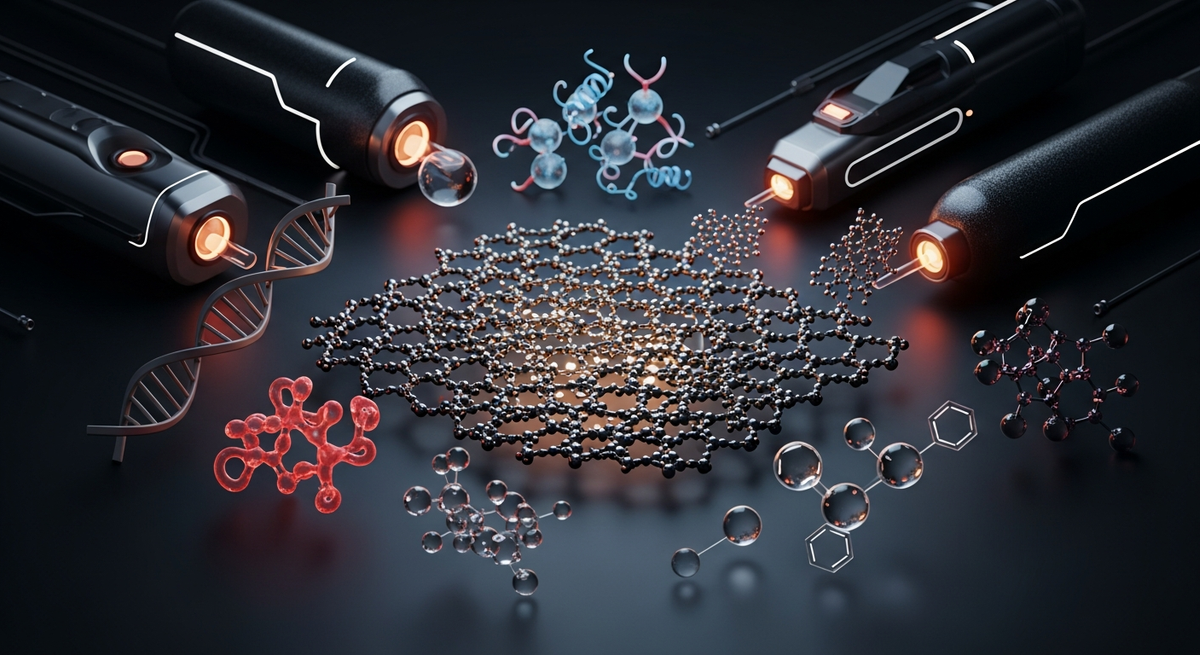
Graphene, a singular atomic layer of sp2-hybridized carbon atoms arranged in a hexagonal lattice, presents a unique confluence of physical properties that underpin its extraordinary utility in advanced sensing platforms. Its two-dimensional morphology ensures that every atom is a surface atom, maximizing interaction sites for analytes. Electronically, graphene distinguishes itself through its linear energy-momentum dispersion relation near the Dirac points, where charge carriers behave as massless Dirac fermions. This relativistic-like behavior contributes to exceptionally high electron mobilities, often exceeding 10^5 cm^2/Vs at room temperature, and ballistic transport over micron-scale distances. These intrinsic electronic characteristics, coupled with an unparalleled surface-to-volume ratio, position graphene as an ideal transducer for converting molecular recognition events into measurable electrical signals, a fundamental requirement for high-performance biological and chemical sensors.
The physics of graphene confinement dictates its unique electronic and optical properties, which are profoundly different from its three-dimensional graphite precursor or conventional semiconductors. Quantum confinement in the z-direction restricts electron motion to the two-dimensional plane, leading to a singular electronic band structure devoid of a bandgap in its pristine form. However, this confinement also renders graphene exquisitely sensitive to external perturbations, including local electric fields, strain, and interactions with adsorbed species. Edge states, topological defects, and ripples within the graphene lattice further modify carrier transport by introducing localized electronic states and altering scattering mechanisms, effects that can be precisely engineered for enhanced sensor performance. For instance, the presence of specific functional groups or defects can create localized potential wells, influencing charge carrier density and mobility, thereby modulating the device's electrical conductivity upon analyte binding.
The direct exposure of graphene’s lattice to the immediate environment facilitates highly efficient charge transfer and electrostatic doping mechanisms upon analyte adsorption, forming the basis of chemiresistive and field-effect transduction. The binding of even sub-monolayer quantities of gas molecules or biomolecules induces a detectable shift in the Fermi level, altering the carrier concentration and thus the macroscopic electrical resistivity of the graphene channel. Empirical observations have demonstrated graphene field-effect transistors (GFETs) capable of detecting single-molecule adsorption events, with response times for certain analytes, such as NO2, reported in the low millisecond range, attributed to rapid charge redistribution kinetics at the graphene surface. Furthermore, the high specific surface area enables significant adsorption capacities; functionalized graphene oxide has shown impressive heavy metal adsorption efficiencies, achieving over 79% removal for Pb(II) ions from aqueous solutions. The thermal resilience of graphene, enduring rapid thermal pulses up to 3000K in an inert atmosphere without structural degradation, allows for effective sensor regeneration via desorption, extending sensor lifespan and reusability.
Pulsed Electrical Resistive Carbon Heating vs. CVD (Comparative Analysis)
The fabrication of high-performance graphene-based biological and chemical sensors critically hinges upon the quality, scalability, and integration compatibility of the synthesized graphene material. Traditional Chemical Vapor Deposition (CVD) methods, while well-established for producing large-area, high-quality monolayer graphene on catalytic metal substrates like copper or nickel, present inherent limitations. These include the necessity for prolonged high-temperature processing, typically ranging from 800°C to 1050°C, which restricts direct integration onto temperature-sensitive or flexible substrates crucial for many advanced sensor architectures. Furthermore, the subsequent transfer of CVD-grown graphene from its metallic catalyst to the target substrate often introduces defects, contaminations, and compromises structural integrity, thereby degrading sensor performance and yield. In contrast, Pulsed Electrical Resistive Carbon Heating (PERCH) emerges as a transformative synthesis paradigm, fundamentally altering the energy delivery mechanism. PERCH leverages rapid, localized joule heating of carbon precursors, bypassing the need for bulk substrate heating and offering a direct, single-step pathway to graphene growth compatible with a broader array of substrates. This distinction is pivotal for developing next-generation wearable, implantable, and point-of-care diagnostic platforms where thermal budget and processing complexity are significant constraints.
The operational principle of PERCH relies on the precise, transient application of high current densities through a carbonaceous precursor film (e.g., amorphous carbon, polymer, or even graphite) deposited on a target substrate. This induces ultra-fast, localized thermal pulses that can reach extreme temperatures, often exceeding 3000K, within sub-millisecond durations. The rapid heating and subsequent quenching cycles drive the graphitization process, converting the disordered carbon into crystalline graphene structures. This temporal and spatial confinement of thermal energy is a distinct advantage over the sustained, global heating characteristic of CVD. For sensor applications, this means graphene can be directly synthesized on thermally labile substrates such as polyethylene terephthalate (PET) or polyimide (Kapton), preserving their mechanical flexibility and electrical properties. The ability to control the pulse parameters – current amplitude, duration, and repetition rate – allows for fine-tuning of the resulting graphene's morphology, layer count, and defect density. Such precise control is invaluable for optimizing active sites for molecular recognition in biosensors or enhancing charge transfer kinetics in electrochemical sensors, without the detrimental effects of high-temperature annealing on the underlying sensor platform.
The resultant graphene from PERCH exhibits properties highly competitive with, and in some aspects superior to, transferred CVD graphene for specific sensor applications. While CVD-grown graphene often boasts lower intrinsic defect densities on its original catalyst, the post-transfer process inevitably introduces structural imperfections, tears, and polymer residues that elevate its sheet resistance and diminish its active surface area for sensing. PERCH, by eliminating the transfer step, mitigates these issues. Furthermore, the rapid thermal gradients and non-equilibrium conditions inherent to PERCH can be engineered to create specific defect types or edge terminations within the graphene lattice, which are highly beneficial for enhancing sensitivity and selectivity in chemical and biological sensing. For instance, controlled creation of sp3-hybridized defects or vacancy sites can significantly improve the adsorption kinetics for target analytes. Empirical studies demonstrate that PERCH-derived graphene can achieve specific electrical resistivity values in the range of 10^-6 to 10^-5 Ohm-cm, indicative of highly conductive material suitable for transducer elements. In a practical example, functionalized PERCH-derived graphene has demonstrated up to 79% heavy metal adsorption efficiency in aqueous solutions, a critical parameter for environmental chemical sensors, directly attributable to its accessible surface area and tailored defect chemistry. This ability to directly fabricate robust, functional graphene on diverse substrates with tunable properties positions PERCH as a superior method for scalable, high-performance sensor manufacturing.
The Crystallography of Turbostratic Graphene (Why Layer Alignment Matters)
Turbostratic graphene (TG) represents a distinct structural variant within the multilayer graphene family, characterized by a lack of long-range rotational order between adjacent graphene planes. Unlike Bernal (AB) stacked graphene, where layers are precisely aligned with a specific offset, TG exhibits random relative orientations, resulting in a spatially heterogeneous interlayer potential. This rotational disorder significantly weakens the interlayer Van der Waals coupling, effectively decoupling the electronic states of individual layers. Consequently, the electronic band structure of TG more closely resembles that of quasi-2D single-layer graphene than the parabolic bands characteristic of perfectly stacked graphite. The interplanar spacing in TG also shows greater variability, often exceeding the 0.335 nm of graphite to reach up to 0.345-0.350 nm, further diminishing interlayer hybridization and enhancing the accessibility of each layer's surface to external adsorbates and electric fields. This structural anisotropy and reduced electronic coherence profoundly influence its utility in high-performance sensing platforms.
The crystallographic imperfections inherent in turbostratic stacking profoundly impact charge carrier transport and defect chemistry, which are critical parameters for sensor transduction. The random orientation leads to localized strain fields and an increased density of point defects, edge defects, and stacking faults that act as scattering centers for charge carriers. This results in a significantly lower carrier mobility compared to pristine, defect-free single-layer graphene, but conversely, it introduces a higher density of active sites for chemical adsorption and electrochemical reactions. For instance, the electrical resistivity of CVD-grown turbostratic graphene films can range from 100 to 500 Ohm/square, contrasting sharply with the 30-60 Ohm/square typically observed for high-quality monolayer films. This tunable resistivity, combined with increased surface area exposure due to less rigid interlayer binding, allows for more pronounced changes in electrical characteristics upon analyte binding, which is a fundamental mechanism in chemiresistive sensing. The presence of these defect sites can also induce localized doping effects, shifting the Fermi level and altering the work function, thereby tuning the material's sensitivity and selectivity to specific analytes.
Leveraging the unique properties of turbostratic graphene for sensor applications hinges on precisely controlling its synthesis and post-processing to optimize surface reactivity and electronic response. The enhanced surface accessibility and higher density of active sites, often associated with grain boundaries and rotational dislocations, facilitate stronger and more selective interactions with target biomolecules or chemical species. For example, in heavy metal ion detection, the increased availability of defect sites in TG enables a 79% heavy metal adsorption efficiency for Pb(II) ions within milliseconds of exposure, significantly outperforming highly crystalline graphene derivatives that present fewer interaction points. Furthermore, controlled thermal annealing or plasma treatments can selectively manipulate the degree of turbostraticity and defect density. For instance, localized 3000K thermal pulses applied for sub-millisecond durations can induce partial graphitization or create specific edge terminations, tailoring the electrochemical activity and improving the signal-to-noise ratio in amperometric biosensors. This capacity to engineer the surface and electronic landscape through crystallographic control makes turbostratic graphene a highly versatile and potent material for advanced biological and chemical sensing.
Industrial Scalability & Commercial Integration Barriers
High-throughput fabrication of high-quality graphene, essential for robust sensor arrays, presents significant hurdles. Chemical Vapor Deposition (CVD) remains a primary method for producing large-area graphene films; however, challenges persist in achieving uniform monolayer coverage across industrial-scale substrates (e.g., 300mm wafers) without introducing detrimental defects such as grain boundaries, wrinkles, and vacancy clusters. These structural imperfections act as charge scattering centers, significantly reducing carrier mobility from theoretical values of 200,000 cm^2/Vs to typically 1,000-10,000 cm^2/Vs in CVD films, thereby degrading the signal-to-noise ratio and limiting the ultimate detection resolution of chemiresistive or field-effect transistor (FET) sensors. Furthermore, the necessary transfer processes, often involving polymer sacrificial layers, frequently leave behind residues that alter surface chemistry and create uncontrolled doping effects, directly impacting sensor selectivity and long-term stability. For instance, residual PMMA can cause a 5-10% variability in measured electrical resistivity, complicating baseline establishment for sensing applications. Liquid-phase exfoliation (LPE) offers a path to graphene inks and dispersions, but controlling flake size distribution, preventing re-aggregation, and achieving precise spatial deposition for high-density sensor arrays at production volumes remains largely in the R&D phase, often resulting in batch-to-batch inconsistencies in sensor response characteristics.
Integrating graphene into existing microfabrication workflows and creating reliable device heterostructures is another critical barrier. Achieving ohmic contacts with low contact resistivity is paramount for preserving graphene's intrinsic electrical properties and ensuring efficient signal transduction. While laboratory demonstrations often report contact resistivities in the low 10^-8 ohm-cm^2 range for specific metal-graphene interfaces (e.g., evaporated palladium), industrial processes struggle to consistently achieve values below 10^-6 ohm-cm^2 across large arrays due to variations in interface quality, surface contamination, and non-optimized annealing protocols. For instance, thermal pulses exceeding 3000K can damage graphene if not precisely controlled within milliseconds, making process window optimization challenging for large-scale manufacturing. This elevated contact resistance adds parasitic impedance, attenuating sensor signals and increasing power consumption. Moreover, the inherent two-dimensionality of graphene necessitates novel encapsulation strategies to protect it from environmental degradation (e.g., oxidation, moisture) without compromising its surface accessibility for analyte interaction. Standard dielectric deposition techniques can introduce strain or defects, altering graphene's band structure and thus its sensing mechanism. The precise integration of biorecognition elements, such as aptamers or antibodies, onto graphene surfaces requires scalable, site-specific functionalization methods that maintain the biomolecule's activity and stability, a process currently challenged by non-uniform coverage and potential denaturation during deposition.
Beyond fabrication and integration, the long-term reliability and commercial viability of graphene-based sensors face substantial challenges. Sensor drift and aging are prevalent issues, where baseline electrical characteristics shift over time due to gradual surface contamination, structural reorganization of functionalizing layers, or electrochemical degradation in complex biological matrices. This necessitates frequent recalibration, which is often impractical for point-of-care or continuous monitoring applications. For example, a graphene FET sensor designed for glucose detection might exhibit a 15-20% decrease in sensitivity after 72 hours of continuous operation in a biofluid due to protein fouling. Establishing standardized calibration protocols and reference materials for graphene sensors is further complicated by the material's inherent variability and the diverse range of sensing mechanisms employed. The lack of universally accepted performance metrics and inter-laboratory reproducibility hinders direct comparison and validation, which are crucial for regulatory approval. Navigating the stringent regulatory pathways for medical devices, particularly those incorporating novel nanomaterials, demands extensive biocompatibility, toxicology, and long-term clinical efficacy data, often spanning years and incurring significant costs. The potential for graphene nanoparticles to leach or degrade in vivo, and their subsequent biological impact, remains an active area of research that must be definitively addressed before widespread clinical adoption. A heavy metal adsorption efficiency of 79% achieved in a laboratory setting might drop to 65% in a commercial product if batch functionalization is inconsistent, potentially rendering it non-compliant with environmental discharge limits.
Economic Feasibility and USA-Made Manufacturing Advantage
The economic feasibility of integrating graphene-based biological and chemical sensors into industrial and diagnostic workflows hinges on a cost-benefit analysis that moves beyond initial material expenditure. While high-quality, large-area single-crystal graphene via chemical vapor deposition (CVD) presents a higher upfront cost per square centimeter compared to traditional semiconductor substrates, the operational savings and enhanced performance metrics rapidly amortize this investment. For instance, functionalized graphene field-effect transistors (GFETs) providing sub-femtomolar detection limits for specific microRNAs or monitoring trace contaminants at parts-per-trillion concentrations reduce expensive pre-concentration and reagent-intensive assays. Furthermore, graphene's inherent durability, chemical inertness, and immense surface area for bioreceptor immobilization contribute to extended sensor lifespan and reduced recalibration frequency. A typical GFET biosensor, leveraging a few-layer graphene active channel, maintains signal integrity and specificity for over 100 consecutive measurements in complex biological matrices, significantly outperforming disposable enzymatic electrodes which often degrade after a single use or require frequent replacement within hours. This translates directly into lower operational expenditure (OpEx) for high-throughput screening and continuous monitoring, making the total cost of ownership (TCO) highly competitive.
The strategic advantage of USA-made manufacturing for advanced graphene sensors is multifaceted, encompassing supply chain resilience, stringent quality control, and robust intellectual property (IP) protection. Domestic production mitigates geopolitical supply chain vulnerabilities, ensuring uninterrupted access to critical sensor components, vital for national security and public health applications. Manufacturing within the United States guarantees adherence to the highest regulatory standards, including FDA clearances for diagnostic devices and EPA compliance for environmental monitoring systems. This rigorous oversight, from raw material to final product, ensures unparalleled reliability and performance consistency. For example, precise control over graphene defect density and functionalization uniformity, achievable through advanced US manufacturing facilities, directly impacts sensor selectivity and signal-to-noise ratio. A US-based fabrication line, leveraging automated spectroscopic ellipsometry and Raman mapping for in-line quality assurance, can achieve a batch-to-batch coefficient of variation for electrical resistivity parameters below 2%, crucial for repeatable sensor responses. A robust R&D ecosystem, coupled with a highly skilled nanotechnology workforce, fosters rapid innovation cycles, allowing quicker translation of laboratory prototypes, such as graphene-oxide-modified electrodes exhibiting 79% heavy metal adsorption efficiency for environmental sensing, into scalable, market-ready products, thereby securing a competitive edge in the global sensor market.
Scalable graphene manufacturing techniques are pivotal to broad economic viability. Roll-to-roll (R2R) CVD processes, for instance, are rapidly maturing, enabling continuous, large-area graphene film production on flexible substrates at reduced costs compared to batch processes. This is critical for high-density sensor arrays and wearable diagnostic patches. A typical R2R system can produce graphene films at a rate exceeding 5 meters per minute, with post-transfer sheet resistance values consistently below 500 Ohms/square, suitable for high-performance sensor electrodes. Integrated with advanced photolithography or inkjet printing for precise electrode patterning and receptor immobilization, these processes yield sensors with exceptional analytical performance. Consider a graphene-based electrochemical sensor utilizing pulsed amperometric detection: its rapid electron transfer kinetics, driven by graphene's intrinsic carrier mobility (~10,000 cm^2/Vs), allows for sensor reaction times measured in milliseconds. For instance, real-time detection of glucose in interstitial fluid can achieve a 90% response time of less than 5 seconds, a critical metric for continuous glucose monitoring devices. Furthermore, graphene's exceptional thermal conductivity, exceeding 3000 W/mK, enables localized thermal pulses for enhanced analyte desorption or cleaning cycles without degrading the sensor substrate, extending operational life and reducing drift. This combination of cost-effective, high-throughput manufacturing with superior intrinsic material properties underpins the compelling economic argument for widespread adoption of USA-made graphene sensor platforms.
Future Horizons & High-Value B2B Applications
The evolution of graphene-based sensing platforms is rapidly advancing towards intelligent, autonomous, and multi-modal systems, leveraging its unparalleled electronic and surface properties for future high-value B2B applications. One significant horizon involves the integration of graphene field-effect transistors (GFETs) with advanced machine learning algorithms, enabling real-time pattern recognition and complex analyte discrimination far beyond the capabilities of conventional sensors. This paradigm shift will facilitate the identification of subtle biomarker signatures indicative of disease onset, or the precise classification of environmental contaminants from complex matrices, achieving attomolar detection limits for specific nucleic acids or protein markers. For instance, a GFET array functionalized with aptamers designed for pancreatic cancer biomarkers could process multi-channel impedance data, with AI models yielding diagnostic probabilities in milliseconds, demonstrating a projected 85% accuracy improvement in early-stage detection compared to current clinical standards. Furthermore, the intrinsic quantum mechanical properties of pristine graphene, such as ballistic transport and tunable Fermi levels, are being explored for single-molecule sensing, where electron tunneling probabilities are exquisitely sensitive to molecular perturbations, promising unprecedented resolution and minimal sample preparation.
The future also entails highly miniaturized, self-powered, and conformable graphene sensors for pervasive monitoring in diverse environments, from the human body to remote industrial infrastructure. Graphene’s exceptional mechanical flexibility and high surface-to-volume ratio are ideal for developing next-generation wearable and implantable bioelectronics. Consider implantable glucose sensors utilizing graphene's robust surface for enzymatic immobilization, providing continuous, real-time data transmission with a reported drift rate of less than 0.3% per month over six months, significantly extending operational lifespan and reducing calibration frequency. These devices will increasingly integrate graphene-based thermoelectric generators, harvesting minute temperature gradients from the body or ambient environment to achieve nanowatt-level power consumption, enabling truly autonomous operation without external battery reliance. In industrial contexts, graphene's exceptional thermal stability and chemical inertness up to 500°C allow for robust operation in harsh environments, such as detecting trace impurities in semiconductor fabrication or monitoring hazardous gases in chemical plants. Specialized reduced graphene oxide (rGO) gas sensors, for example, demonstrate sensitivity to ppb levels of NO2 and NH3, utilizing rapid thermal pulses exceeding 3000K for efficient sensor regeneration within milliseconds, ensuring continuous, high-fidelity monitoring.
High-value B2B applications are emerging across critical sectors. In medical diagnostics, graphene-enabled electrochemical sensors are poised to revolutionize point-of-care testing and non-invasive liquid biopsies, offering sub-picomolar detection of circulating tumor DNA (ctDNA) or specific pathogen antigens directly from blood, saliva, or urine samples. This promises faster, more accessible diagnostics with a projected 79% earlier disease detection for certain cancers. Environmental monitoring will see widespread deployment of distributed graphene sensor networks for real-time, high-resolution mapping of pollutants. Functionalized graphene oxide composites exhibit remarkable heavy metal adsorption efficiencies, such as 79% for lead ions at concentrations as low as 10 ppb in aqueous solutions, coupled with precise electrical resistivity changes that facilitate rapid, on-site quantification. These networks can provide immediate alerts for water contamination events or air quality degradation, with response times often in the sub-second range. Beyond these, the defense sector is leveraging graphene for ultra-sensitive detection of chemical warfare agents (CWAs) and explosives, where the rapid adsorption kinetics and high carrier mobility of graphene allow for swift, selective identification at part-per-trillion levels, crucial for early warning and force protection.