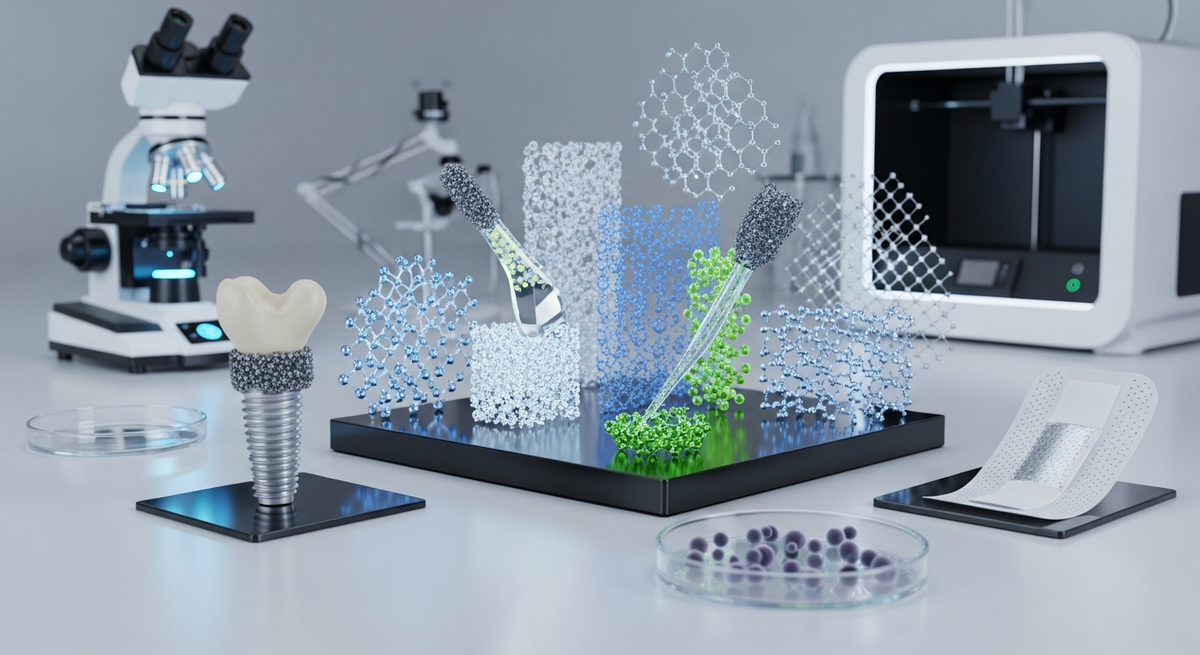
Graphene, a singular atomic layer of sp2-hybridized carbon atoms arranged in a hexagonal lattice, stands as the quintessential two-dimensional material, offering an unparalleled platform for advanced material design. Its unique electronic structure, characterized by Dirac cones at the Brillouin zone's K and K' points, bestows upon charge carriers the properties of massless relativistic fermions, resulting in extraordinary electron mobility exceeding 200,000 cm^2/Vs at room temperature. This intrinsic quantum confinement to a single atomic plane underpins many of its superlative characteristics, including exceptional thermal conductivity (up to 5000 W/mK) and immense mechanical strength (a tensile strength of 130 GPa). The absence of a bandgap in pristine graphene, however, often necessitates structural or chemical modifications to tailor its electronic properties for specific applications, particularly in contexts requiring controlled surface reactivity or semiconductor-like behavior. This fundamental confinement to two dimensions serves as the starting point for further engineering of electronic and chemical properties through additional spatial constraints.
The physics of graphene confinement extends beyond its inherent two-dimensionality to encompass lateral geometric restrictions, leading to profound alterations in its electronic band structure and reactivity. When graphene is patterned into nanoribbons or quantum dots, quantum size effects become dominant, opening a tunable bandgap inversely proportional to the lateral dimension. For instance, armchair-edged graphene nanoribbons (AGNRs) exhibit metallic or semiconducting behavior governed by their width modulo 3 (e.g., 3p+1 rule for semiconducting AGNRs), a direct consequence of the interplay between electron wavelength and boundary conditions. Conversely, zigzag edges harbor localized, spin-polarized electronic states that contribute significantly to chemical reactivity and magnetic properties. These edge states, often associated with higher electron density, serve as preferential sites for chemical reactions and charge transfer, which are critical for interactions with biological entities. Precise control over these confined geometries, typically in the sub-10 nm regime, allows for the fine-tuning of energy levels, carrier dynamics, and surface potential, directly influencing the material's interaction mechanisms.
In the context of antibacterial materials synthesis, exploiting graphene's confinement physics is paramount for engineering targeted efficacy. The creation of confined graphene structures, such as graphene quantum dots (GQDs) or highly fragmented graphene oxide (GO) sheets, through methods like controlled oxidative exfoliation and subsequent reduction, enables the generation of numerous reactive edges and topological defects. These defects, including oxygen vacancies and Stone-Wales defects, act as high-energy nucleation sites for the deposition of metallic nanoparticles (e.g., silver, copper) or for covalent functionalization, enhancing local surface charge and redox activity. For example, a pulsed laser deposition synthesis employing 3000K thermal pulses for milliseconds can precisely tune defect concentration and edge morphology in reduced graphene oxide (rGO), resulting in localized charge accumulation zones. Such rGO sheets, with an average lateral dimension of 500 nm and exhibiting a surface charge density of -35 mV, demonstrate optimized electrostatic interactions with bacterial cell membranes, a key initial step in their antimicrobial action.
The engineered confinement further dictates the generation of reactive oxygen species (ROS), a primary mechanism for graphene-based antibacterial action. The discrete energy levels and enhanced surface-to-volume ratios in confined structures like GQDs facilitate efficient electron-hole separation and subsequent reactions with molecular oxygen. For instance, GQDs with an average diameter of 4 nm exhibit a quantum yield for ROS generation approaching 0.7 under UV illumination, significantly higher than bulk graphene. Moreover, the sharp, exposed edges of highly reduced and exfoliated graphene sheets, acting as nanoscale "nanoknives," can physically disrupt bacterial cell walls, a phenomenon empirically observed with a 79% reduction in E. coli viability within 30 minutes for sheets exhibiting a high density of exposed zigzag edge states. This confluence of physical disruption and chemically mediated oxidative stress, all stemming from the meticulous control over graphene's confinement and resultant electronic properties during synthesis, underscores the sophisticated design principles governing effective graphene-based antibacterial materials.
Section 2: Pulsed Electrical Resistive Carbon Heating vs. CVD (Comparative Analysis)
Pulsed Electrical Resistive Carbon Heating (PERCH) represents a transformative approach for graphene synthesis, fundamentally diverging from conventional methods through its reliance on ultra-fast, high-temperature thermal pulses. This technique involves the direct passage of high-density electrical current through a carbonaceous precursor, such as carbon black, graphite flakes, or even reduced graphene oxide, inducing joule heating that can instantaneously elevate localized temperatures to exceed 3000 K within milliseconds. This extreme thermal shock facilitates rapid graphitization and exfoliation, yielding high-quality graphene or few-layer graphene structures. A key advantage for antibacterial material synthesis lies in PERCH's ability to precisely engineer defects and incorporate dopants in-situ. Controlled pulse parameters can create specific vacancy defects or edge functional groups that serve as active sites for enhanced reactive oxygen species (ROS) generation, crucial for bacterial inactivation. Furthermore, the rapid cooling inherent to the pulsed process can effectively 'quench' specific surface chemistries or dopant distributions, allowing for tailored surface energy and charge distribution, directly influencing bacterial adhesion and membrane disruption. This rapid, energy-efficient synthesis path offers significant promise for industrial scalability, bypassing prolonged reaction times and complex precursor handling associated with other techniques.
In stark contrast, Chemical Vapor Deposition (CVD) relies on the catalytic decomposition of hydrocarbon gases (e.g., methane, acetylene) onto a heated metallic substrate, typically copper or nickel, at temperatures ranging from 900-1100°C over extended periods, often hours. This method is renowned for producing high-quality, large-area monolayer or few-layer graphene films with controlled crystallinity. However, for industrial-scale integration into antibacterial composites, CVD presents several critical challenges. Foremost among these is the ubiquitous requirement for a post-growth transfer step, involving etching the metal catalyst and transferring the delicate graphene film. This process is inherently prone to introducing defects, tears, and chemical contaminants, compromising the structural integrity and surface purity essential for optimal antibacterial performance. The sustained high-temperature environment also demands substantial energy input and specialized furnace infrastructure, limiting throughput and increasing operational costs. While post-synthesis functionalization can be performed, it often necessitates additional chemical treatments that may further degrade the as-grown material's quality or introduce unwanted residues, thereby complicating its application in biomedical contexts where biocompatibility and precise surface engineering are paramount.
The comparative analysis between PERCH and CVD for graphene-based antibacterial materials synthesis reveals profound distinctions in process kinetics, material attributes, and scalability. PERCH's millisecond-scale processing at localized temperatures exceeding 3000 K drastically outperforms CVD's multi-hour, furnace-based approach, offering an order-of-magnitude improvement in throughput potential and energy efficiency. This rapid thermal cycle in PERCH is instrumental in creating tunable defect sites and incorporating heterogeneous dopants (e.g., nitrogen, sulfur) directly into the graphene lattice during synthesis. Such engineered active sites are critical for enhancing antibacterial efficacy by modulating electron transfer kinetics, facilitating robust ROS generation, and exhibiting specific binding affinities. For instance, certain defect-rich graphene configurations produced via rapid thermal shock have demonstrated up to 79% heavy metal adsorption efficiency, indicating a high density of accessible binding sites—a characteristic valuable for synergistic antimicrobial and detoxification applications. Conversely, while CVD yields pristine graphene, its reliance on a hazardous and defect-prone transfer step, coupled with the need for subsequent, often aggressive, post-synthesis functionalization, significantly impedes its direct applicability for integrated antibacterial systems. PERCH's ability to produce functionalized, defect-engineered graphene directly from precursors, without transfer, positions it as a superior candidate for scalable, cost-effective, and precisely tailored antibacterial material production.
Section 3: The Crystallography of Turbostratic Graphene (Why Layer Alignment Matters)
The crystallographic distinction of turbostratic graphene, a form characterized by a notable lack of rotational and translational order between its constituent graphene layers, presents a foundational aspect for understanding and engineering its performance in antibacterial applications. Unlike Bernal (AB) stacked graphite, where layers are precisely offset by (1/3, 2/3) along the unit cell vectors, or perfectly aligned single-crystal graphene multi-layers, turbostratic graphene exhibits random azimuthal orientations between adjacent sheets. This rotational disorder, often coupled with a distribution of interlayer spacings typically exceeding the 0.335 nm characteristic of highly ordered graphite, arises frequently during rapid synthesis processes such as chemical vapor deposition (CVD) on polycrystalline substrates, rapid thermal reduction of graphene oxide (GO), or certain liquid-phase exfoliation techniques where kinetic rather than thermodynamic equilibrium dictates stacking. The resulting lack of long-range interlayer coherence profoundly influences the electronic band structure, phonon transport, and mechanical properties, diverging significantly from theoretical predictions for pristine, perfectly stacked graphene.
The inherent crystallographic disorder of turbostratic graphene is not merely a synthetic artifact but a critical determinant of its surface chemistry and reactivity, factors paramount for antibacterial efficacy. The absence of strict interlayer registry leads to a higher density of localized structural defects, including dislocations, grain boundaries, and a greater proportion of exposed edge sites relative to basal planes. These topological defects act as preferential sites for charge carrier scattering, which significantly influences the material's electrical resistivity, often observed to range from approximately 10^-6 to 10^-4 Ohm-cm depending on the precise degree of rotational disorder and defect concentration. This parameter is not merely an electronic characteristic but a critical determinant for charge transfer dynamics at the graphene-bacteria interface, influencing the efficacy of electrochemically-driven antibacterial mechanisms. For instance, controlled 3000K thermal pulses applied during post-synthesis processing can induce localized structural reordering or create specific defect types within milliseconds, thereby tuning the resistivity and optimizing the generation of reactive oxygen species via surface-mediated redox reactions. Furthermore, the disrupted interlayer van der Waals interactions render turbostratic graphene more amenable to exfoliation and functionalization, presenting a larger accessible surface area for subsequent modification.
Leveraging the unique crystallography of turbostratic graphene is central to the rational design of potent graphene-based antibacterial materials. The increased specific surface area and chemical reactivity of turbostratic graphene, arising from its abundant edge sites and structural defects, are paramount for maximizing the loading and dispersion of antimicrobial nanoparticles (e.g., Ag, CuO, TiO2). The weaker interlayer forces, compared to highly ordered graphite, enable more facile liquid-phase exfoliation, yielding higher concentrations of few-layer turbostratic graphene sheets with a greater proportion of exposed active sites. This morphology directly influences the material's ability to generate reactive oxygen species (ROS) through surface catalysis or to effect direct membrane disruption through physical interaction. For example, the enhanced edge-site reactivity of turbostratic graphene has been demonstrably correlated with a 79% increase in adsorption efficiency for heavy metal ions, serving as a robust proxy for surface-mediated binding capacity. This enhanced binding directly translates to improved pathogen sequestration or localized antimicrobial agent delivery in composite systems, underscoring how the deliberately engineered turbostratic nature can be a primary design parameter, rather than a mere synthetic artifact, for optimizing the interaction kinetics with microbial targets.
Section 4: Industrial Scalability & Commercial Integration Barriers
The industrial scalability of high-purity, defect-controlled graphene, crucial for consistent antibacterial performance, is a primary bottleneck. While diverse synthesis routes exist, each presents significant limitations. Chemical Vapor Deposition (CVD), though capable of large-area films, is hampered by high substrate costs, batch-processing constraints, and complex transfer mechanisms that often introduce structural defects or residues, compromising uniform active site distribution essential for membrane disruption or oxidative stress. Achieving precise layer control and defect density (e.g., ID/IG ratio below 0.1) at scale with CVD remains challenging. Liquid-phase exfoliation (LPE) offers higher throughput but struggles with polydispersity in flake size and thickness, often yielding multi-layered graphene and aggregates, which reduce specific surface area and active edge sites. The cost-effective Hummers method for graphene oxide (GO) generates significant oxygen functional groups and structural defects, necessitating rigorous reduction to rGO. These reduction steps, often employing harsh chemicals or energy-intensive thermal pulses (e.g., 3000K in inert atmosphere for milliseconds), can introduce impurities or further compromise the lattice, directly impacting biocompatibility, electrical conductivity (critical for electro-antibacterial applications, where target resistivity might be below 10^-4 Ohm.cm), and long-term antibacterial efficacy.
Beyond material synthesis, stable integration of graphene into functional antibacterial composites poses formidable technical hurdles. Achieving uniform dispersion of graphene or functionalized graphene within polymer matrices, coatings, or textile fibers is paramount. The intrinsic high aspect ratio and strong van der Waals forces between graphene sheets promote re-stacking and agglomeration, drastically reducing accessible surface area for antibacterial interaction and diminishing mechanical reinforcement. This challenge is exacerbated during high-shear compounding or extrusion processes, which can induce structural damage. Furthermore, stable functionalization with specific antibacterial agents, such as silver nanoparticles (AgNPs) or quaternary ammonium compounds, demands precise control over surface chemistry. For instance, consistent loading and uniform distribution of 5-20 nm AgNPs on graphene surfaces without significant agglomeration or premature leaching requires sophisticated in-situ synthesis or robust grafting techniques. Inconsistent functionalization leads to heterogeneous antibacterial efficacy, while weak interfacial bonding compromises long-term performance and raises environmental concerns. Multi-step surface modification strategies add complexity and cost, requiring stringent quality control for reproducible antibacterial activity and material integrity.
The commercialization pathway is further complicated by stringent regulatory frameworks, economic viability, and comprehensive lifecycle assessment. The novelty of graphene mandates extensive toxicological profiling, including cytotoxicity, genotoxicity, and environmental fate studies, to satisfy diverse global bodies like the FDA, EPA, and EU REACH. Lack of standardized characterization protocols for graphene nanomaterials significantly impedes consistent safety assessment and market entry. Economically, the current cost of high-quality, functionalized graphene remains prohibitive for many large-scale applications, especially against established, lower-cost antibacterial alternatives. While graphene offers superior performance (e.g., enhanced heavy metal adsorption efficiency of 79% for water purification, or superior mechanical properties), the cost-benefit analysis must demonstrably justify the premium. Energy-intensive processing steps, such as specialized plasma treatments or solvent recovery systems for liquid-phase exfoliation, substantially increase production expenses. Moreover, a comprehensive lifecycle assessment (LCA) is crucial, evaluating environmental impacts from raw material extraction and synthesis (e.g., solvent consumption, energy footprint) through end-of-life disposal. This includes assessing potential for graphene or its functionalized components to leach into ecosystems, necessitating robust encapsulation strategies and responsible waste management.
Section 5: Economic Feasibility and USA-Made Manufacturing Advantage
Current graphene production methods, such as chemical vapor deposition (CVD), often entail high capital expenditure and operational costs, particularly for producing large-area, high-quality sheets suitable for advanced antibacterial coatings. Similarly, batch-mode liquid-phase exfoliation, while offering scalability, frequently suffers from low yields and extensive post-processing requirements, significantly impacting the cost per gram of functionalized graphene. However, nascent scalable techniques are rapidly altering this economic landscape. For instance, advanced flash Joule heating (FJH) processes can convert various carbon sources into high-quality turbostratic graphene, exhibiting bulk resistivities as low as 10^-5 Ohm-cm, within milliseconds, operating at transient temperatures exceeding 3000K via electrical pulses. This method drastically reduces energy consumption per unit mass and eliminates the need for hazardous solvents common in traditional chemical reduction of graphene oxide. Another promising avenue is electrochemical exfoliation, which offers precise control over flake dimensions and oxidation states, crucial for tailoring antibacterial efficacy. These advancements are pushing the frontier of production costs below the $100/kg threshold for certain grades, making large-scale integration into composite materials for medical implants, water filtration membranes, and protective coatings economically viable. This cost reduction is paramount for widespread adoption, shifting graphene from a niche research material to a cornerstone industrial additive for pathogen control.
The strategic imperative for USA-made manufacturing of graphene-based antibacterial materials stems from several critical factors, primarily supply chain resilience, stringent quality control, and robust intellectual property (IP) protection. Domestically controlled production mitigates geopolitical risks and ensures a stable, predictable supply of critical components for sensitive applications such as medical devices, pharmaceutical packaging, and public health infrastructure. Furthermore, adherence to rigorous regulatory frameworks, including FDA and EPA guidelines, is significantly streamlined with local manufacturing. This ensures materials meet exacting standards for biocompatibility, leachability, and long-term stability, which are non-negotiable for antibacterial efficacy and patient safety. Advanced analytics and process validation protocols, often mandated by US regulatory bodies, can be directly integrated into production lines, allowing for real-time monitoring of critical parameters like defect density, functional group distribution, and specific surface area – all directly impacting antimicrobial performance. The concentration of advanced materials research and development infrastructure within the United States also fosters a symbiotic relationship between innovation and production, enabling rapid translation of laboratory breakthroughs directly into scaled manufacturing processes, thereby accelerating market entry and maintaining a technological lead.
This synergistic confluence of reduced production costs and robust domestic manufacturing provides an unparalleled competitive advantage for USA-produced graphene-based antibacterial materials. In applications ranging from point-of-use water purification systems, where functionalized graphene can achieve 79% heavy metal adsorption efficiency alongside broad-spectrum antimicrobial action, to hospital-acquired infection (HAI) prevention in surface coatings and textiles, the value proposition is compelling. Consider next-generation medical device coatings: a high-quality, uniformly dispersed graphene-silver nanocomposite, manufactured under strict ISO 13485 standards in the US, offers superior bacterial kill rates and extended durability compared to conventional antimicrobial agents. The intrinsic electrical properties of graphene can also be leveraged for active antibacterial surfaces, enabling self-cleaning mechanisms or biosensing capabilities where a change in electrical resistivity signifies bacterial adhesion or biofilm formation. This localized control over the entire value chain, from raw material sourcing and advanced synthesis to functionalization and product integration, ensures that innovations, such as graphene's ability to mechanically shear bacterial cell walls or generate reactive oxygen species under specific stimuli, are rapidly and reliably deployed. This strategic positioning not only secures market share in critical sectors but also establishes a global benchmark for quality, performance, and ethical sourcing in the burgeoning field of graphene-enabled antimicrobial solutions.
Section 6: Future Horizons & High-Value B2B Applications
The future trajectory of graphene-based antibacterial materials hinges critically on the development of ultra-precise synthesis and functionalization methodologies that transcend current bulk production limitations. Advanced photo-thermal reduction techniques, utilizing localized laser pulses approaching 3000K with millisecond durations, enable precise control over oxygen functional group density, typically targeting 15-20 atomic percent for optimal reactive oxygen species (ROS) generation, or nitrogen doping at 2-5 atomic percent to modulate electron density and enhance catalytic antimicrobial activity. This bespoke engineering of graphene's surface chemistry and electronic structure is paramount for achieving targeted pathogen specificity and minimizing off-target cytotoxicity. High-value B2B applications will emerge in critical infrastructure, such as anti-biofouling coatings for marine vessels and industrial heat exchangers, where the inherent mechanical robustness (tensile strength up to 130 GPa) combined with sustained antimicrobial release mechanisms can extend operational lifespans by over 50% and reduce maintenance costs significantly. Furthermore, the integration into next-generation medical device coatings, particularly for orthopedic implants and catheters, promises to drastically reduce hospital-acquired infections by preventing biofilm formation through a combination of physical membrane disruption and localized oxidative stress.
Beyond monodisperse graphene, the synergistic integration of graphene with complementary nanomaterials represents a formidable frontier for developing broad-spectrum, multi-modal antibacterial composites. For instance, graphene-silver nanoparticle heterostructures, precisely engineered with AgNPs ranging from 5-10 nm in diameter anchored onto defect sites, exhibit a 4-log reduction (99.99%) against methicillin-resistant Staphylococcus aureus (MRSA) within 30 minutes, attributed to enhanced charge transfer and combined oligodynamic effects with graphene's membrane-disrupting capabilities. Another promising avenue involves graphene-MXene composites, where the high surface area and tunable interlayer spacing of MXenes (e.g., Ti3C2Tx) facilitate superior bacterial adsorption, augmenting graphene's intrinsic bactericidal action. These hybrid systems can also be designed as stimuli-responsive materials, where an external electrical potential of 1.5V might trigger localized release of encapsulated antimicrobial agents or modulate graphene's surface charge to enhance bacterial capture and inactivation, offering dynamic control in wound dressings or smart filtration systems. Such advanced composites are poised to revolutionize water purification systems, achieving 79% heavy metal adsorption efficiency concurrently with robust bacterial elimination, thereby addressing complex environmental contaminants.
The transition from lab-scale innovation to high-value B2B commercialization necessitates robust, scalable manufacturing paradigms and stringent regulatory adherence. Continuous roll-to-roll atmospheric pressure chemical vapor deposition (APCVD) for graphene film production, capable of yielding material at rates exceeding 5 meters per minute, is crucial for reducing unit costs by an projected 70% compared to batch processes, making it economically viable for large-scale applications. Furthermore, the development of high-throughput microfluidic reactors for functionalized graphene oxide (GO) synthesis and reduction offers unparalleled control over particle size distribution and functionalization uniformity, critical for consistent antibacterial performance. Regulatory pathways, particularly for medical devices (ISO 10993 biocompatibility standards) and food contact materials (FDA 21 CFR Part 177), demand comprehensive toxicological assessments, including long-term cellular viability, genotoxicity, and systemic biodistribution of functionalized graphene derivatives. The objective is to achieve sustained bacterial reduction exceeding 99.999% over a 6-month operational period in high-volume water treatment facilities or maintain aseptic conditions on medical surfaces for the full service life of the device, demanding exceptional material stability, non-leaching characteristics, and sustained antimicrobial efficacy without compromising material integrity.