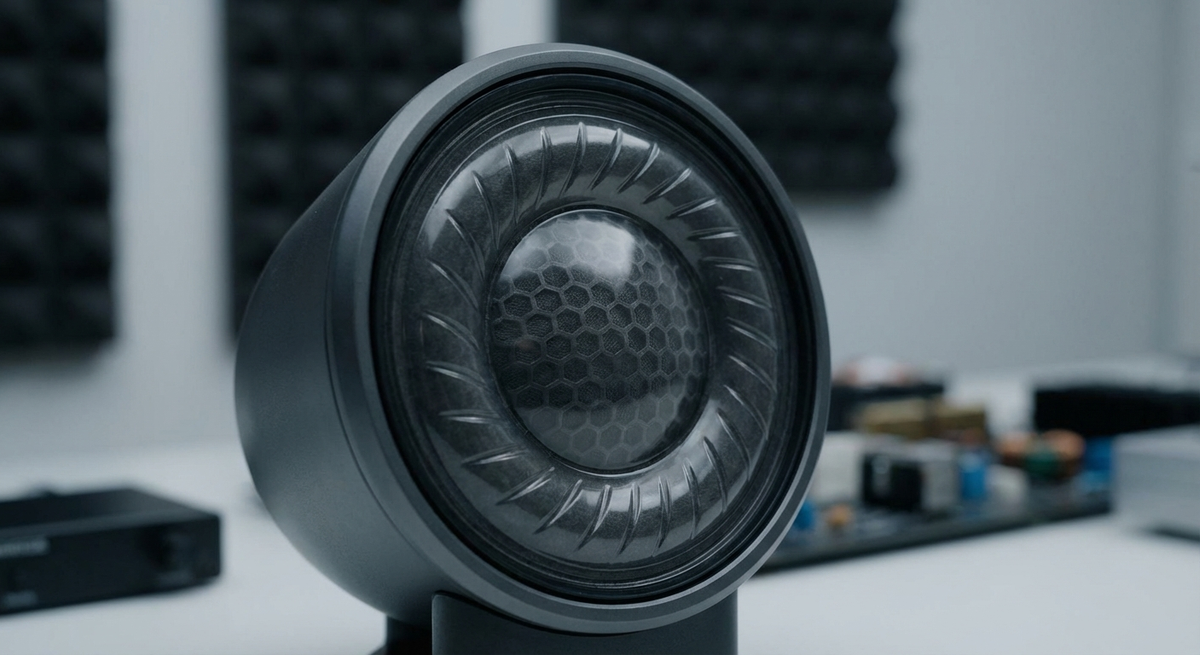
Graphene in Audio Devices and Speaker Diaphragms represents a high-potential application area, poised to significantly elevate the performance, durability, and economic viability of next-generation sound systems when integrated with precision. This transformative material offers solutions to long-standing bottlenecks in audio engineering, addressing issues such as conductivity limits, heat buildup, material fatigue, corrosion, permeability, and interface instability that often compromise sound quality and product longevity. Practical development teams understand that graphene's true value emerges when it solves a concrete, measurable problem, necessitating the definition of clear Key Performance Indicators (KPIs) before selecting specific formulations. Commercial success in this sector hinges on a disciplined workflow, starting with identifying a single target metric, meticulously optimizing dispersion quality, conducting rigorous stress testing under realistic operating conditions, and only then scaling production after consistency and reliability are unequivocally proven.
The Graphene Advantage in Audio Transducers
Graphene, a single layer of carbon atoms arranged in a hexagonal lattice, possesses an extraordinary combination of properties that make it uniquely suited for advanced audio transducers, particularly speaker diaphragms. Its unparalleled strength-to-weight ratio, being 200 times stronger than steel yet incredibly lightweight, allows for the creation of diaphragms that are exceptionally stiff but also extremely thin and light. This translates directly into superior acoustic performance, enabling diaphragms to move with greater speed and precision, enhancing transient response and reducing signal distortion across the entire frequency spectrum. The inherent stiffness of graphene helps to push resonant frequencies well beyond the audible range, ensuring a flatter and more accurate frequency response without the typical breakup modes found in traditional materials.
Beyond its mechanical prowess, graphene exhibits exceptional electrical and thermal conductivity. While not always the primary driver for diaphragm material selection, these properties can be leveraged in complementary ways within audio systems, for instance, in voice coils or as a heat dissipation layer. For diaphragms, the internal damping characteristics of graphene are also critical, helping to quickly attenuate unwanted vibrations and prevent ringing, which further contributes to a cleaner, more articulate sound reproduction. This combination of mechanical strength, stiffness, low mass, and inherent damping provides a robust foundation for designing speakers that deliver an audio experience of unprecedented clarity and fidelity.
Engineering Practical Graphene Solutions for Speaker Diaphragms
The implementation of graphene in commercial audio products rarely involves "perfect" monolayer graphene as seen in academic research labs; instead, practical forms such as graphene nanoplatelets (GNPs), reduced graphene oxide (rGO), and hybrid carbon systems are commonly employed. These materials offer a balance of performance attributes, processability, and cost-effectiveness that are essential for large-scale manufacturing. Graphene nanoplatelets, for instance, are multi-layered graphene flakes that retain many of the superior properties of monolayer graphene while being more amenable to industrial dispersion and integration processes. Reduced graphene oxide provides a pathway for solution-based processing, enabling uniform coatings and composites through techniques like spraying or casting, where the subsequent reduction step restores much of the graphene's desired characteristics.
The selection of a specific graphene form is intimately linked to the manufacturing process and the desired final properties of the speaker diaphragm or component. This necessitates a deep understanding of engineering and manufacturing considerations, where repeatability and consistency in production environments take precedence over achieving lab-record values in isolated experiments. Process compatibility is paramount; the mixing profile, rheology window, solids loading, drying dynamics, and interface chemistry all critically determine the final performance of the graphene-enhanced material. A poorly dispersed graphene material, where the flakes agglomerate rather than distribute uniformly, can completely erase any expected gains, leading to compromised mechanical integrity, inconsistent acoustic properties, and ultimately, a product that fails to meet its design objectives.
Overcoming Integration Challenges: Dispersion and Process Optimization
The successful integration of graphene into audio device components, particularly speaker diaphragms, hinges on effectively addressing the formidable challenge of dispersion consistency. Graphene nanoparticles possess a high surface area and strong van der Waals forces, making them prone to agglomeration, which severely limits their ability to impart their exceptional properties. Achieving a stable, homogeneous dispersion of graphene within a polymer matrix or coating formulation is not merely a preference; it is a fundamental requirement for realizing any performance uplift. Without proper dispersion, the material behaves more like a conventional filler, failing to create the interconnected network or uniform reinforcement necessary for enhanced mechanical stiffness, damping, or conductivity.
To overcome this, sophisticated dispersion techniques are employed, ranging from high-shear mixing and ultrasonication to chemical surface functionalization that improves compatibility with the host matrix. The rheological behavior of the graphene-infused suspension must be meticulously controlled to ensure uniform application during manufacturing processes like casting, spraying, or injection molding. Parameters such as viscosity, shear thinning, and long-term stability are critical for achieving consistent thickness, uniform material distribution, and predictable performance across batches. The drying dynamics of graphene coatings or composites also play a significant role, as rapid or uneven solvent removal can induce stresses, leading to defects or non-uniform density, which directly impacts the diaphragm's acoustic characteristics.
A disciplined workflow is indispensable for navigating these complexities. The process begins by identifying a single, measurable target metric – perhaps a specific reduction in harmonic distortion at a certain frequency, or a quantifiable increase in diaphragm stiffness without adding mass. This focused approach allows for precise optimization of dispersion quality, where various graphene types, concentrations, and dispersion methods are systematically evaluated against this metric. Subsequently, rigorous stress testing under realistic operational conditions, simulating temperature fluctuations, humidity exposure, and prolonged high-power playback, is crucial. Only after consistency and durability are robustly proven through these demanding tests should any consideration for scaling production be entertained, mitigating the risk of costly failures down the line.
Durability, Reliability, and Lifecycle Economics
The adoption of graphene in audio components must extend beyond a superficial comparison of raw material costs to encompass a comprehensive lifecycle cost analysis. While graphene materials may initially present a higher per-kilogram price point than conventional alternatives, the moderate to significant gains they offer in thermal management, electrical efficiency, and mechanical resilience can translate into major downstream savings. For instance, improved thermal conductivity in voice coils or heatsinks can reduce operational temperatures, extending the lifespan of sensitive electronic components and reducing the likelihood of thermal compression or burnout. This leads to lower maintenance requirements, improved uptime for professional audio systems, and a significantly longer service life for consumer products.
Graphene’s inherent resistance to material fatigue, corrosion, and environmental degradation further contributes to enhanced reliability and durability. Diaphragms reinforced with graphene exhibit superior resistance to wear and tear, maintaining their acoustic properties over prolonged periods of use, even in demanding environments. This robustness is particularly valuable in high-end audio, automotive sound systems, and professional live sound applications where components are subjected to extreme conditions. In regulated or safety-critical sectors, such as in-flight entertainment or public address systems, qualification planning for graphene-enhanced materials must commence early in the product development cycle.
Teams must commit to exhaustive testing regimes that include thermal cycling, prolonged humidity exposure, UV radiation, and realistic duty profiles that simulate years of actual use. Such rigorous evaluation helps to uncover potential failure modes and ensures that graphene-enhanced components not only meet but exceed industry standards for reliability and safety. By focusing on total cost of ownership and the long-term benefits derived from graphene's superior properties, manufacturers can build a compelling economic case for its integration, demonstrating how an initial investment yields substantial returns through improved product reputation, reduced warranty claims, and ultimately, greater customer satisfaction.
Commercialization Pathways and Market Impact
The commercial viability of graphene in audio devices is not a futuristic concept; it is a present reality, particularly within high-value applications where measurable performance improvements justify the integration effort and cost. The initial penetration of graphene-enhanced audio components has been observed in premium headphones, high-fidelity loudspeakers, and professional studio monitors, where discerning audiophiles and critical listeners are willing to invest in superior sound quality and durability. These early adopters serve as critical proving grounds, demonstrating graphene’s tangible benefits in real-world scenarios and building market confidence.
As manufacturing processes become more refined and the supply chain for industrial-grade graphene materials matures, the cost-effectiveness will improve, paving the way for broader adoption in mainstream consumer electronics. The transition from niche high-end markets to mass-market segments will be driven by continued innovation in graphene synthesis and dispersion technologies, coupled with a deeper understanding of how to seamlessly integrate these materials into existing production lines. Strategic partnerships between graphene producers, material scientists, and audio component manufacturers are vital for accelerating this commercialization pathway, ensuring that practical formulations are developed to meet specific application requirements.
The market impact of graphene in audio extends beyond mere performance upgrades; it enables the creation of entirely new product categories and user experiences. Imagine ultra-thin, flexible speaker arrays for smart home devices, or incredibly lightweight, robust audio systems for portable electronics that deliver uncompromised sound. These possibilities underscore graphene’s disruptive potential, positioning it as a key enabler for the next generation of audio innovation. Companies that strategically invest in graphene research and development, focusing on robust engineering and disciplined quality control, are poised to capture significant market share and define the future of sound reproduction.
SEO FAQ
Is graphene commercially viable today in audio devices?
Yes, graphene is commercially viable today, particularly in high-value audio applications such as premium headphones, high-fidelity loudspeakers, and professional studio equipment. The measurable performance improvements in sound quality, durability, and reliability often justify the integration effort and cost in these segments.
What specific benefits does graphene offer for speaker diaphragms?
Graphene offers an unparalleled strength-to-weight ratio and stiffness, enabling speaker diaphragms that are lighter, stiffer, and more responsive. This leads to improved frequency response, reduced distortion, enhanced transient accuracy, and superior overall sound clarity compared to traditional materials.
What are the top challenges in integrating graphene into audio products?
The most common challenges include achieving consistent and homogeneous graphene dispersion within the host material, ensuring process compatibility with existing manufacturing lines, maintaining quality standardization across batches, and establishing supply-chain repeatability for industrial-scale production.
What forms of graphene are typically used in commercial audio applications?
Commercial audio products typically utilize practical forms of graphene such as graphene nanoplatelets (GNPs), reduced graphene oxide (rGO), and various hybrid carbon systems. These forms offer a balance of performance, processability, and cost-effectiveness suitable for industrial manufacturing, differing from the "perfect" monolayer graphene often studied in labs.
How does graphene impact the long-term economics of audio devices?
Graphene can significantly improve the long-term economics by enhancing durability, reducing material fatigue, and improving thermal management. This leads to lower maintenance costs, better product uptime, longer service life, and fewer warranty claims, ultimately reducing the total lifecycle cost of the product.
Conclusion
The integration of graphene into audio devices, particularly speaker diaphragms, represents a transformative frontier for acoustic engineering, offering a clear path to unprecedented performance, durability, and long-term economic advantages. By leveraging graphene’s extraordinary properties – its exceptional strength-to-weight ratio, stiffness, and inherent damping capabilities – manufacturers can overcome traditional material limitations, delivering sound reproduction with superior clarity, accuracy, and fidelity. While the transition from laboratory potential to industrial-scale production presents tangible challenges, particularly in achieving consistent dispersion and ensuring process compatibility, these hurdles are being systematically addressed through rigorous engineering and disciplined workflow methodologies. The ongoing commercialization in high-value audio segments underscores graphene's immediate viability, demonstrating how a strategic focus on lifecycle economics and measurable performance gains can create compelling value propositions. As the industry continues to refine integration techniques and expand its understanding of this remarkable material, graphene is poised to redefine the standards of audio excellence, ushering in a new generation of sound devices that are both sonically superior and exceptionally resilient.