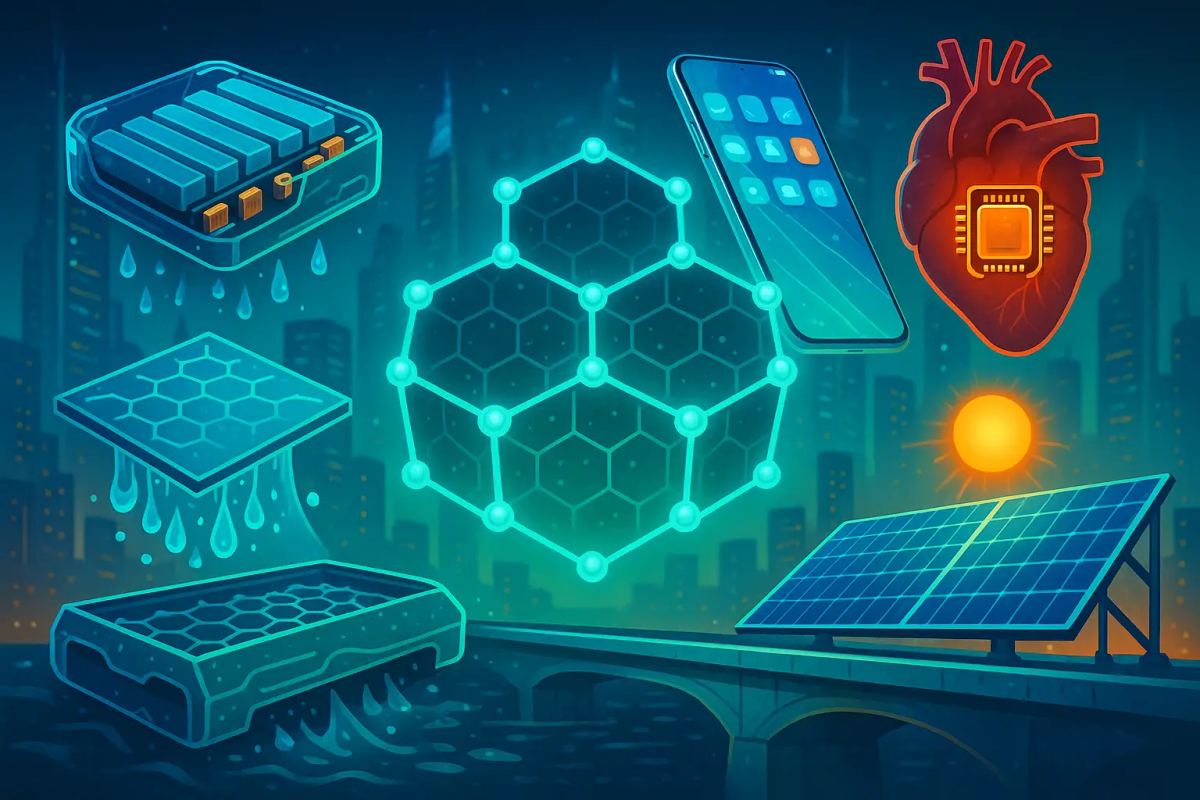
The emergence of graphene, a single layer of carbon atoms arranged in a two-dimensional hexagonal lattice, has ignited a profound shift across scientific and industrial landscapes. Heralded as a wonder material, graphene boasts an unparalleled suite of properties: it is the strongest material known, an excellent conductor of electricity and heat, transparent, lightweight, and impermeable to gases. These extraordinary characteristics position graphene not merely as an incremental improvement, but as a foundational material poised to redefine entire industries. From powering the next generation of electronics to purifying our water and enhancing medical treatments, graphene's potential applications span an astonishing breadth, promising solutions to some of humanity's most pressing challenges. This exploration delves into over 120 real-world uses, highlighting how graphene is actively shaping a more efficient, connected, and sustainable future.
Electronics and Photonics: The Digital Backbone
Graphene’s exceptional electron mobility and optical transparency are revolutionizing electronics and photonics. Transparent conductive films, essential for modern touchscreens and flexible OLED display electrodes, benefit immensely from graphene’s conductivity and flexibility, offering superior performance and durability over traditional indium tin oxide. High-speed field-effect transistors, already demonstrated to operate at frequencies exceeding 300 GHz, leverage graphene’s ballistic electron transport for unprecedented processing speeds in next-generation computing and communication devices. This includes the development of highly efficient RF power amplifiers and mixers, critical components for advanced wireless technologies.
Graphene's low electrical resistance is also vital for creating low-resistance on-chip interconnects, reducing energy loss and improving the performance of integrated circuits. Its unique quantum Hall effect provides stable quantum Hall resistance standards, crucial for precision metrology and fundamental physics research. Broadband photodetectors, capable of sensing across the UV to THz spectrum, utilize graphene's wide absorption range and ultrafast response times, opening avenues for advanced imaging, communication, and security systems. Optical phase and intensity modulators for fibre links benefit from graphene’s strong light-matter interaction, enabling faster and more energy-efficient data transmission.
Further expanding its role in optical technologies, graphene is integral to plasmonic waveguides and nanoantennas, facilitating novel ways to manipulate light at the nanoscale. It serves as a platform for single-photon emitters and quantum dots, paving the way for quantum computing and secure communication systems. Saturable-absorber mirrors using graphene enable mode-locked lasers to produce ultrashort pulses, finding applications in precision manufacturing and medical diagnostics. The material's flexibility and conductivity also make it ideal for large-area flexible printed circuits and conductive inks, enabling cost-effective manufacturing of flexible electronics through ink-jet or aerosol printing techniques.
Graphene’s exceptional conductivity and thinness are also harnessed in transparent IoT and 5G antennas, which can be integrated seamlessly into windows or surfaces without aesthetic compromise. RFID and NFC tag antennas constructed from graphene offer enhanced performance and durability compared to conventional materials. Its ability to absorb and reflect electromagnetic radiation makes it an excellent candidate for EMI and RFI shielding foils and window coatings, protecting sensitive electronics from interference. Beyond electrical conductivity, graphene’s superior thermal conductivity is exploited in heat spreaders for CPUs, GPUs, and LEDs, alongside high thermal conductivity pastes, significantly improving thermal management in high-performance devices. This leads to cooler operation, extended device lifespan, and enhanced reliability.
Terahertz sources and detectors, as well as frequency multipliers and mixers for millimetre-wave communications, benefit from graphene's high-frequency capabilities and low noise. Low-loss microwave waveguides enhance signal integrity in high-frequency applications. Finally, reconfigurable smart antennas leveraging graphene's tunable electrical properties allow for dynamic adjustment of antenna beam patterns, critical for adaptive communication systems and cognitive radio. These advancements collectively underscore graphene’s transformative impact on the digital infrastructure that underpins our modern world.
Energy Storage and Conversion: Powering the Future
The global demand for more efficient and sustainable energy solutions finds a powerful ally in graphene. Its unique combination of high surface area, exceptional electrical conductivity, and robust mechanical strength makes it an ideal material for advanced energy storage and conversion devices. In lithium-ion batteries, graphene significantly enhances performance, particularly as an anode material. High-rate, high-capacity silicon/carbon hybrid anodes incorporating graphene mitigate silicon’s volume expansion issues, leading to faster charging times, increased energy density, and extended cycle life for electric vehicles and portable electronics.
Graphene also plays a crucial role in the development of next-generation sodium-ion battery anodes, offering a viable alternative to lithium-ion technology with abundant and low-cost sodium. For lithium-sulphur batteries, graphene acts as a cathode host, effectively trapping polysulphides to prevent their dissolution, thereby improving capacity retention and cycle stability—a key challenge for this high-energy-density chemistry. In solid-state batteries, graphene can serve as an efficient current collector, enhancing charge transfer and overall device performance. Graphene-coated battery separators act as a dendrite barrier, preventing short circuits and improving the safety and longevity of lithium-metal batteries.
Electric-double-layer supercapacitor electrodes benefit immensely from graphene’s extremely high surface area and conductivity, enabling rapid charge and discharge cycles, and delivering high power density for applications requiring bursts of energy. On-chip micro-supercapacitors, ranging from microjoule to millijoule scales, leverage graphene’s printability and miniaturization capabilities for integrated power solutions in microelectronics. In fuel cells, graphene acts as a highly effective platinum catalyst support, offering superior corrosion resistance and enhancing the catalytic activity of precious metals for both oxygen reduction and hydrogen oxidation reactions, thereby reducing the required platinum loading and lowering costs.
Graphene is also explored for hydrogen evolution and oxygen evolution electrocatalysts, crucial for efficient water splitting to produce green hydrogen. Its high surface area and strong affinity for hydrogen make it an excellent hydrogen physisorption storage medium, offering a safer and more efficient alternative to conventional methods. In the realm of solar energy, graphene serves as a transparent electrode for perovskite and organic solar cells, improving light harvesting and charge collection efficiency. It also functions as effective hole and electron transport interlayers in various solar cell architectures, facilitating charge separation and reducing recombination losses.
Dye-sensitised solar cell counter-electrodes benefit from graphene’s catalytic properties and conductivity, enhancing their performance and stability. Thermoelectric generator legs, utilizing graphene/tellurium nanocomposites, efficiently convert waste heat into electrical energy, contributing to energy recovery and sustainability. Finally, piezoelectric energy harvesters incorporating 3D graphene foams can convert mechanical vibrations and movements into electrical power, offering a continuous power source for low-power devices and wearable electronics. These diverse applications underscore graphene’s potential to be a cornerstone of future energy systems.
Filtration, Membranes, and Environmental Solutions
Graphene’s atomically thin, impermeable structure combined with its precise pore formation capabilities makes it a revolutionary material for filtration, membranes, and environmental remediation. Angstrom-precision desalination membranes, utilizing graphene oxide or porous graphene, promise significantly more energy-efficient and effective water purification than conventional reverse osmosis, addressing global water scarcity challenges. Gas-separation membranes, particularly those for hydrogen/carbon dioxide and oxygen/nitrogen separation, leverage graphene’s selective permeability to achieve high efficiency in industrial processes and carbon capture, reducing energy consumption and environmental impact.
In proton-exchange membrane (PEM) fuel cells, graphene-based materials offer enhanced proton conductivity and durability, improving the efficiency and lifespan of these vital clean energy devices. Capacitive de-ionisation electrodes benefit from graphene’s high surface area and electrical conductivity, allowing for highly efficient removal of ions from water, offering an alternative to traditional softening processes. For tackling oil spills and industrial wastewater, graphene-based oil–water separation filters and booms exhibit superhydrophobic and oleophilic properties, effectively absorbing oil while repelling water, making cleanup operations faster and more efficient.
Graphene nanoflakes possess an exceptionally high surface area with numerous active sites, making them highly effective heavy-metal adsorption materials for contaminants like lead (Pb²⁺) and mercury (Hg²⁺) in contaminated water. This provides a cost-effective and environmentally friendly approach to water detoxification. Expanding beyond liquid filtration, graphene-based air filtration systems can capture ultrafine particulate matter (PM2.5) and volatile organic compounds (VOCs), significantly improving air quality in industrial and urban environments. Its catalytic properties also enable the degradation of various organic pollutants in water and air.
The high adsorption capacity of graphene also makes it a promising material for carbon dioxide capture technologies, offering a pathway to mitigate greenhouse gas emissions from industrial sources. Graphene oxide membranes can be engineered to allow precise molecular sieving, useful for separating complex chemical mixtures in pharmaceutical and chemical manufacturing processes. Furthermore, graphene’s inherent antimicrobial properties can be leveraged in water purification systems to inhibit bacterial and viral growth, providing an additional layer of safety and hygiene. These environmental applications highlight graphene's capacity to deliver transformative solutions for a cleaner, healthier planet.
Advanced Composites and Structural Materials
Graphene’s exceptional mechanical properties, including its unparalleled strength and stiffness, make it an ideal reinforcement material for advanced composites and structural materials. When incorporated into polymers, such as plastics and resins, graphene significantly enhances tensile strength, flexural modulus, and toughness, while simultaneously reducing the overall weight. This leads to the development of lighter, stronger components for aerospace, automotive, and sports equipment industries, improving fuel efficiency and performance. Graphene-reinforced metals, including magnesium and aluminum alloys, exhibit improved strength-to-weight ratios, enhanced fatigue resistance, and superior wear properties, making them suitable for demanding structural applications.
The addition of graphene to ceramics can dramatically increase their fracture toughness, hardness, and wear resistance, opening possibilities for more durable cutting tools, protective coatings, and high-temperature components. Beyond mechanical enhancement, graphene imparts multi-functionality to composites. Its electrical conductivity allows for the creation of conductive composites suitable for EMI shielding applications, antistatic materials, and even integrated heating elements. These smart composites can also embed graphene-based sensors for structural health monitoring, detecting cracks or damage in real-time within aircraft wings or bridge structures.
Graphene's inclusion in cement and concrete mixtures offers a revolutionary approach to construction. It significantly increases the compressive and tensile strength of concrete, reduces permeability to water and corrosive agents, and extends the lifespan of infrastructure, all while potentially reducing the amount of cement needed and thus lowering carbon emissions associated with its production. For extreme protection, graphene-enhanced materials are being explored for ballistic protection, leveraging its incredible strength and energy absorption capabilities to create lighter and more effective body armor and vehicle protection systems.
Moreover, graphene can be incorporated into protective coatings to enhance abrasion resistance and durability for various surfaces, extending the life of products from industrial machinery to consumer goods. The development of self-healing composites, where graphene networks can conduct heat or electrical signals to initiate repair mechanisms, represents a frontier in material science. These advanced graphene composites are not just stronger; they are smarter, more durable, and capable of performing multiple functions, pushing the boundaries of material engineering across numerous sectors.
Biomedical and Healthcare Innovations
Graphene's unique combination of properties—biocompatibility, high surface area, electrical conductivity, and mechanical strength—positions it as a transformative material in biomedical and healthcare applications. Biosensors leveraging graphene's exceptional sensitivity enable highly accurate and rapid detection of a wide range of biomarkers, including glucose, DNA, proteins, and pathogens. These label-free sensing capabilities are revolutionizing diagnostics, offering early disease detection and personalized medicine. Graphene-based platforms provide a large surface area for molecular interactions, leading to enhanced signal amplification and improved detection limits crucial for clinical applications.
In drug delivery systems, graphene's high loading capacity and ability to be functionalized allow for the precise and targeted delivery of therapeutic agents to specific cells or tissues. This minimizes side effects and improves the efficacy of treatments, particularly for complex diseases like cancer. Graphene oxide, with its excellent dispersibility and biocompatibility, is widely investigated for carrying anticancer drugs, genetic material, and vaccines. For tissue engineering, graphene scaffolds provide an excellent environment for cell growth, differentiation, and tissue regeneration. Their electrical conductivity can be harnessed to stimulate neuronal and cardiac tissue development, mimicking the body's natural electrical signals.
Medical implants can be coated with graphene to improve biocompatibility, reduce inflammation, and prevent bacterial colonization, leading to better integration with the body and reduced risk of infection. Graphene’s inherent antimicrobial properties make it a powerful tool for developing sterile surfaces and devices. Neural interfaces benefit from graphene's flexibility and high conductivity, allowing for seamless integration with brain tissue without causing damage, paving the way for advanced brain-computer interfaces, prosthetics, and treatments for neurological disorders. This allows for more precise sensing and stimulation of neural activity.
For cancer therapy, graphene can act as a photothermal agent, absorbing near-infrared light and converting it into heat to selectively destroy cancer cells, either alone or in combination with chemotherapy drugs for enhanced efficacy. Wearable health monitors incorporating flexible graphene sensors can continuously track vital signs, physical activity, and biomarkers from sweat, providing real-time health insights for preventative care and disease management. The development of graphene-enhanced antimicrobial materials for wound dressings, surgical instruments, and hospital surfaces helps to combat antibiotic-resistant infections, improving patient safety and healthcare outcomes.
Sensors, Coatings, and Smart Technologies
Graphene’s extraordinary sensitivity, large surface area, and electrical tunability make it an unparalleled material for advanced sensors, protective coatings, and smart technologies. Graphene-based gas sensors exhibit ultra-high sensitivity and rapid response times for detecting a wide array of harmful gases, including volatile organic compounds (VOCs), nitrogen oxides (NOx), carbon monoxide (CO), and even explosives, often operating efficiently at room temperature. This capability is critical for environmental monitoring, industrial safety, and defense applications, providing immediate alerts to hazardous conditions.
Strain and pressure sensors incorporating graphene demonstrate extreme sensitivity to minute deformations, making them ideal for highly flexible and wearable applications. These can be integrated into smart textiles for monitoring physiological parameters or into structural components for detecting early signs of fatigue. Graphene humidity sensors offer fast response and high sensitivity, crucial for climate control, industrial processes, and smart packaging. Photonic sensors utilizing graphene’s broad spectral absorption and strong light-matter interaction can detect specific light frequencies or changes in refractive index with high precision, enabling advanced optical sensing.
In the realm of protective coatings, graphene acts as an impermeable barrier against corrosive agents. Graphene-based corrosion protection coatings significantly extend the lifespan of metals and other materials in harsh environments, from marine vessels to industrial pipelines. Anti-fouling coatings leveraging graphene's smooth surface and antimicrobial properties reduce biofouling on ship hulls, medical devices, and industrial equipment, leading to reduced maintenance and increased efficiency. Graphene-enhanced self-cleaning surfaces exploit its photocatalytic properties, breaking down organic contaminants upon exposure to light.
Graphene’s low friction coefficient and high strength make it an excellent additive for lubricants and anti-wear coatings, reducing friction in moving parts and extending the operational life of machinery. Smart textiles integrated with graphene can provide various functionalities, including uniform heating for thermal comfort, embedded sensors for health monitoring, and even energy harvesting capabilities from body movement or sunlight. Furthermore, graphene-enhanced 3D printing filaments are enabling the fabrication of stronger, more electrically conductive, and multi-functional printed parts, expanding the possibilities for rapid prototyping and additive manufacturing across industries.
Frequently Asked Questions
What properties make graphene so versatile for these diverse applications?
Graphene's remarkable versatility stems from a unique combination of extreme properties: it is the strongest material known, yet incredibly lightweight and flexible. It boasts exceptional electrical and thermal conductivity, surpassing copper and diamond, respectively. Graphene is also optically transparent, impermeable to gases, and possesses an extremely high surface area, making it ideal for interactions at the molecular level. This synergistic blend of characteristics allows it to excel across mechanical, electrical, optical, and chemical applications, often outperforming conventional materials.
Are these graphene applications commercially available today, or are they still in research?
Many graphene applications have already transitioned from laboratories to commercial markets. Products such as graphene-enhanced composites for sports equipment, conductive inks for printed electronics, thermal management solutions, and specialized sensors are currently available. Other applications, particularly in advanced areas like medical implants, quantum computing, and large-scale energy grids, are in various stages of advanced research and development, with rapid progress being made towards commercialization within the next decade.
What are the biggest challenges to widespread graphene adoption?
Despite its potential, graphene faces several challenges for widespread adoption. Key hurdles include the scalability of high-quality graphene production at competitive costs, ensuring consistent material quality across different manufacturing batches, and developing robust and efficient methods for integrating graphene into existing industrial processes. Overcoming these economic and engineering challenges is crucial for unlocking graphene's full commercial potential and making it a pervasive material.
How does graphene compare to other advanced materials like carbon nanotubes or silicon?
Graphene often offers a unique combination of properties that can be superior or complementary to other advanced materials. Compared to carbon nanotubes, graphene typically provides larger surface areas and easier integration into thin films, while also offering distinct electronic and optical properties. Against silicon, graphene exhibits significantly higher electron mobility, superior mechanical flexibility, and transparency, making it ideal for flexible electronics and high-frequency applications where silicon struggles. It is not necessarily a replacement but often an enabling material that expands technological possibilities.
What is the long-term vision for graphene technology?
The long-term vision for graphene technology is to see it become a foundational material woven into the fabric of daily life, silently enhancing everything from our infrastructure and transportation to our health and digital interactions. Researchers and industries envision a future where graphene enables widespread sustainable energy solutions, provides advanced medical diagnostics and treatments, facilitates ultra-fast and secure communication networks, and creates materials that are lighter, stronger, and smarter than ever before. Graphene is poised to be a key enabler of a more efficient, interconnected, and sustainable global society.
Graphene stands at the forefront of a materials revolution, offering an unprecedented array of solutions to complex challenges across diverse sectors. From its foundational role in next-generation electronics and energy systems to its transformative potential in environmental remediation and advanced medicine, the breadth of graphene's applications is truly astounding. The journey from laboratory discovery to widespread commercialization is ongoing, marked by continuous innovation and a growing understanding of how to harness this extraordinary material effectively. As production methods improve and costs decrease, graphene is set to become an increasingly ubiquitous component in products that will define the future, driving advancements that were once considered the realm of science fiction. The era of graphene is not just on the horizon; it is actively shaping our present and laying the groundwork for a profoundly re-engineered world.