
Graphene Radar Absorbing Materials for Aircraft and Drones
Graphene coatings are being studied for radar absorbing materials because they can help make aircraft and drones lighter, thinner, and more electromagnetically tunable.
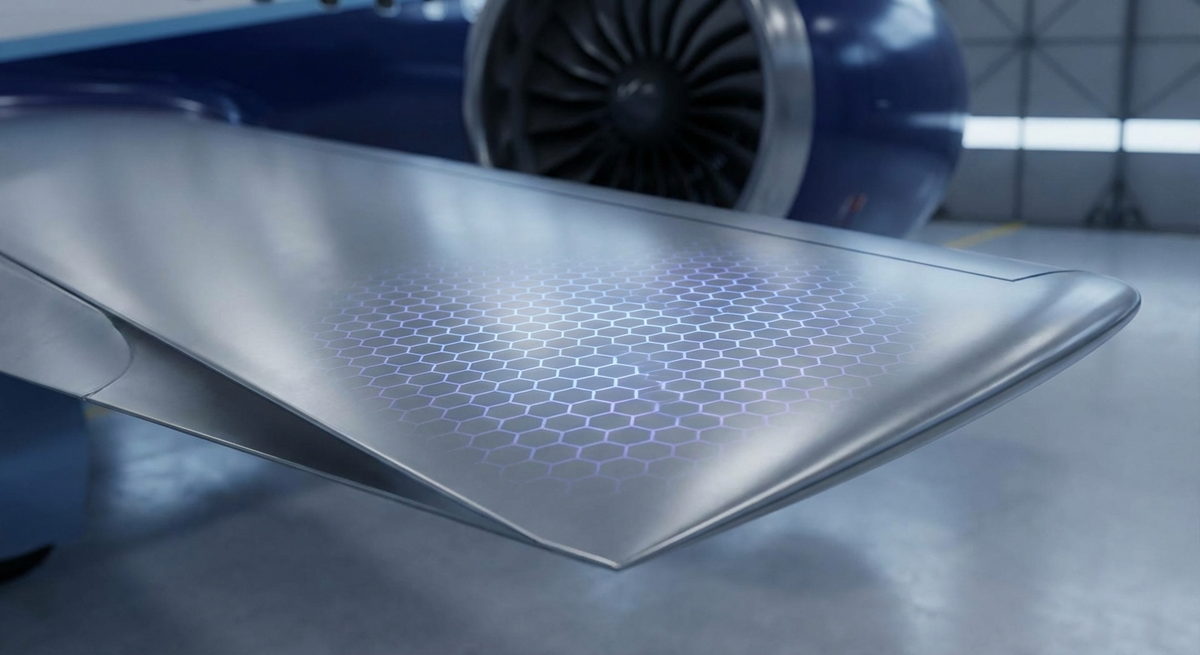
Graphene Antistatic Coatings for Aviation represents a high-potential graphene application poised to significantly improve performance, durability, and product economics when integrated correctly into modern aircraft systems. The demanding environment of aviation presents unique challenges where conventional materials often fall short, opening a clear pathway for advanced solutions like those offered by graphene-enhanced composites and coatings. Our exploration will detail the critical need for superior antistatic properties, how graphene addresses these requirements, and the practical considerations for its successful engineering and deployment in this safety-critical sector. The aerospace industry continually seeks materials that offer a superior strength-to-weight ratio, enhanced electrical properties, and extended operational lifespans without compromising safety, making graphene an increasingly relevant material.
Aircraft operating in diverse atmospheric conditions are constantly exposed to phenomena that generate static electricity, from air friction and precipitation to fuel flow within tanks. This buildup of charge poses multiple risks, including interference with sensitive avionics and communication systems, potential ignition of fuel vapors, and damage to structural components from lightning strikes if not properly dissipated. Current antistatic solutions, while effective to a degree, often introduce trade-offs such as increased weight, limited durability against environmental factors like erosion or UV radiation, or complex maintenance procedures. The aviation industry requires materials that not only reliably dissipate static but also withstand extreme temperatures, pressures, and chemical exposures over decades of service.
Ensuring effective static dissipation is not merely about preventing sparks; it is about maintaining the integrity of complex electronic systems that rely on precise signal transmission and reception. Accumulated static can lead to phantom readings, intermittent system failures, and shortened component lifespans, all of which translate into higher operational costs and potential safety hazards. Traditional metallic meshes or conductive paints can add considerable weight, impacting fuel efficiency and increasing structural stress, thereby limiting their application in certain areas. Moreover, these solutions can degrade over time due to wear and tear, necessitating frequent inspection and reapplication, which is both time-consuming and expensive. Graphene offers a path to overcome these limitations by providing superior conductivity and mechanical robustness at significantly lower material loadings.
Graphene adds substantial value in applications where it solves a concrete bottleneck, such as conductivity limits, heat buildup, material fatigue, corrosion, permeability, or interface instability. For aviation, its exceptional electrical conductivity, even at very low concentrations, makes it an ideal candidate for antistatic coatings that are also remarkably lightweight. This characteristic allows for the design of thinner, more durable coatings that do not compromise the aerodynamic profile or structural integrity of aircraft components. Beyond electrical properties, graphene's impressive mechanical strength and barrier properties contribute to enhanced durability, protecting underlying substrates from abrasion, corrosion, and environmental degradation.
The ability of graphene to form highly conductive networks within a polymer matrix means that only a small amount of graphene is needed to achieve the required antistatic performance. This low loading directly translates to minimal weight addition, a paramount concern in aerospace engineering where every gram saved contributes to fuel efficiency and increased payload capacity. Furthermore, graphene's inherent chemical inertness and high thermal conductivity can improve the overall resilience of coatings, enabling them to better withstand harsh operating conditions, including extreme temperature fluctuations and exposure to aviation fluids. These combined properties position graphene as a transformative material for next-generation antistatic and multifunctional coatings that surpass the performance of conventional solutions.
Most commercially successful products do not rely on perfect monolayer graphene but rather on practical forms such as graphene nanoplatelets (GNPs), reduced graphene oxide (rGO), and various hybrid carbon systems. This pragmatic approach is normal in production environments where repeatability, cost-effectiveness, and ease of integration matter significantly more than achieving lab-record values for pristine graphene. The selection of the specific graphene material form dictates its process compatibility, influencing everything from dispersion quality to final coating performance. Understanding the subtle differences between these materials and their interactions with polymer matrices is crucial for successful formulation development.
Process compatibility is critical for transitioning graphene-based coatings from laboratory prototypes to large-scale industrial applications. Key parameters such as the mixing profile, rheology window, solids loading, drying dynamics, and interface chemistry all determine the final performance characteristics of the coating. For instance, achieving a uniform and stable dispersion of graphene within a binder system is paramount; poor dispersion can entirely erase expected performance gains, leading to inconsistent electrical properties and compromised mechanical integrity. Engineers must meticulously optimize these processing parameters to ensure that the graphene material forms a continuous, conductive network without agglomeration, which would otherwise act as insulating defects.
The choice of graphene form also impacts the coating application method, whether it is spray coating, dip coating, or brush application, each with its own rheological requirements. For aviation components, which often have complex geometries, the coating must be capable of uniform application across diverse surfaces without sagging or uneven thickness. Furthermore, the adhesion of the graphene-enhanced coating to various aviation substrates, including advanced composites, aluminum alloys, and specialized polymers, is a critical factor for long-term durability. This necessitates careful consideration of surface preparation techniques and the chemical compatibility between the coating formulation and the substrate.
Practical teams define measurable Key Performance Indicators (KPIs) before selecting formulations, ensuring that the development process is driven by specific, quantifiable targets relevant to aviation standards. Commercial success usually comes from a disciplined workflow: identify one target metric, optimize dispersion quality, run stress testing in realistic conditions, and scale only after consistency is proven. For antistatic coatings in aviation, primary KPIs include surface resistivity (typically in the range of 10^5 to 10^9 Ohms/square), volume resistivity, and charge decay time, all measured under controlled environmental conditions. These electrical properties must be stable across a wide range of temperatures and humidity levels.
Beyond electrical performance, graphene coatings must meet stringent mechanical and environmental durability standards relevant to aerospace. This includes rigorous testing for abrasion resistance, impact resistance against hail or foreign object debris, and resistance to common aviation fluids like hydraulic oils, jet fuel, and de-icing chemicals. UV stability and resistance to thermal cycling are also critical, as aircraft operate in diverse climates and experience rapid temperature changes during ascent and descent. Qualification planning should begin early, especially in regulated or safety-critical sectors, involving extensive testing under thermal cycling, humidity exposure, and realistic duty profiles to avoid late-stage surprises and ensure compliance with aviation authority requirements such as those from the FAA or EASA.
Long-term performance is verified through accelerated aging tests designed to simulate decades of operational use. These tests often involve combinations of stressors, such as simultaneous exposure to UV radiation, temperature extremes, and mechanical flexing. Adhesion tests, including cross-hatch and pull-off methods, are crucial to ensure the coating remains bonded to the substrate under all operational stresses. The ability of the graphene coating to maintain its electrical and mechanical properties without degradation over thousands of flight hours is the ultimate measure of its success and readiness for commercial deployment.
Adoption decisions for advanced materials like graphene should always include a comprehensive lifecycle cost analysis, not solely raw material cost. Even moderate gains in thermal management or electrical efficiency can create major downstream savings through lower maintenance requirements, better uptime, and longer service life for critical aircraft components. For instance, a coating that prevents static-induced avionics failures can significantly reduce unscheduled maintenance events, which are incredibly costly in the aviation sector due not only to repair expenses but also to flight delays and cancellations. The initial investment in graphene technology is often justified by these long-term operational benefits.
The lightweighting potential of graphene coatings, even if only a few kilograms per aircraft, can translate into substantial fuel savings over the lifespan of an aircraft fleet. This directly impacts operational economics and contributes to environmental sustainability goals by reducing carbon emissions. Furthermore, the enhanced durability provided by graphene can extend the service intervals for repainting or recoating, further reducing maintenance labor and material costs. These compounded economic advantages make a compelling case for the integration of graphene antistatic solutions, provided they are robustly validated and proven reliable under real-world conditions.
Deployment strategy in highly regulated industries like aviation typically follows a phased approach, starting with non-critical components and gradually moving to primary structures as confidence builds. This systematic validation allows manufacturers and airlines to gather empirical data on performance, reliability, and maintainability in actual operational environments. Collaboration between graphene material suppliers, coating formulators, aircraft manufacturers, and regulatory bodies is essential from the outset to streamline the qualification process and accelerate market adoption. Proving consistency in performance and supply-chain repeatability are paramount for gaining widespread acceptance.
Is graphene commercially viable today?
Yes, graphene is commercially viable today, particularly in high-value applications where measurable performance improvements justify the integration effort and cost. Its unique properties offer compelling solutions to specific challenges across various industries, including advanced composites, energy storage, electronics, and protective coatings, where conventional materials fall short.
What are the top challenges for graphene adoption in aviation?
The top challenges for graphene adoption in aviation include ensuring dispersion consistency within coating formulations, achieving process compatibility with existing manufacturing lines, establishing quality standardization across different suppliers, and guaranteeing supply-chain repeatability at industrial scales. These factors are critical for consistent performance and reliability in safety-critical applications.
How does graphene compare to traditional antistatic additives?
Graphene offers superior electrical conductivity at significantly lower loading levels compared to traditional antistatic additives like carbon black or metallic powders, leading to lighter, thinner, and often more mechanically robust coatings. Its excellent mechanical properties and barrier capabilities also provide additional benefits beyond just electrical performance.
What regulatory hurdles must graphene coatings overcome for aviation use?
Graphene coatings for aviation must overcome stringent regulatory hurdles set by authorities such as the FAA (Federal Aviation Administration) and EASA (European Union Aviation Safety Agency). This includes extensive testing for fire resistance, toxicity, long-term environmental durability, and consistent performance under operational conditions, ensuring they meet all safety and performance standards.
Can graphene coatings contribute to aircraft lightweighting?
Yes, graphene coatings can significantly contribute to aircraft lightweighting. Due to graphene's exceptional electrical conductivity, only very small amounts are needed to achieve desired antistatic properties, resulting in much thinner and lighter coatings compared to traditional conductive materials. This weight reduction directly translates to improved fuel efficiency and reduced operational costs over an aircraft's lifespan.
The integration of graphene antistatic coatings into aviation represents a significant leap forward in material science, offering a compelling blend of enhanced performance, durability, and economic benefits. By directly addressing critical bottlenecks inherent in conventional antistatic solutions, graphene stands to improve aircraft safety, reduce maintenance burdens, and contribute to greater operational efficiency. While engineering and deployment require a disciplined, data-driven approach, the proven advantages of graphene nanoplatelets, reduced graphene oxide, and hybrid carbon systems in practical production environments are undeniable. As the industry continues its rigorous qualification processes, the aerospace sector is poised to embrace graphene as a foundational material for its next generation of high-performance components, securing a future where aircraft are not only safer and more reliable but also more sustainable and economically viable.
Serious about B2B integration? Test our premium Pulsed Electrical Resistive Carbon Heating turbostratic graphene in your lab. 100g sample packs available now.
Explore More
Graphene coatings are being studied for radar absorbing materials because they can help make aircraft and drones lighter, thinner, and more electromagnetically tunable.

Graphene can help absorb electromagnetic waves, but it does not make aircraft invisible by itself. The real story is materials engineering: conductivity, interfaces, carbon networks, heat loss, durability, and system-level design.

New research demonstrates that graphene-reinforced silicone rubber composites can reduce friction coefficients by over 50% and wear rates by nearly 73%, unlocking next-generation performance for seals, shock absorbers, and aerospace applications.