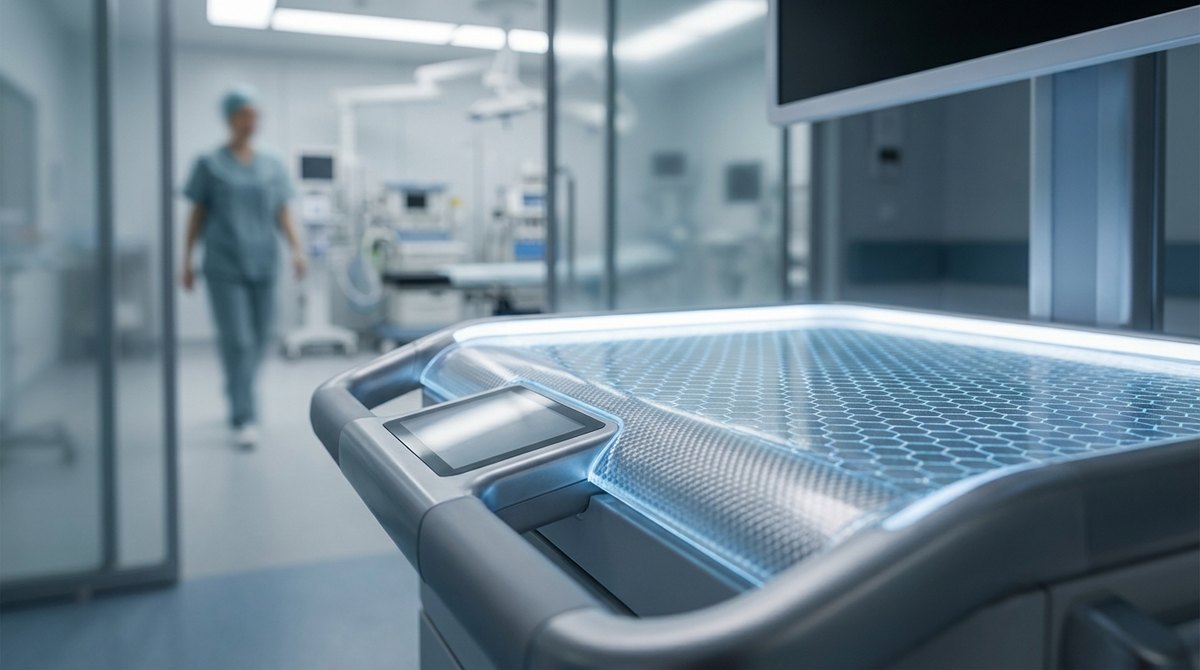
Graphene, a singular atomic layer of sp2-hybridized carbon atoms arranged in a hexagonal lattice, represents the ultimate two-dimensional material, fundamentally altering our understanding of condensed matter physics and surface science. Its exceptional properties stem directly from this extreme confinement, where every atom is a surface atom, leading to unparalleled surface area-to-volume ratios and quantum mechanical phenomena unobserved in bulk materials. This unique geometry underpins its remarkable mechanical strength, thermal conductivity, and electronic transport characteristics, making it an ideal candidate for advanced functional surfaces, particularly in sensitive environments like healthcare facilities where robust antimicrobial performance is paramount. The intrinsic structural integrity, with a tensile strength approaching 130 GPa and a Young's modulus of approximately 1 TPa, ensures durability against physical abrasion and chemical degradation, a critical factor for long-lasting antimicrobial coatings subjected to repeated cleaning and disinfection protocols.
The physics of graphene’s confinement dictates its extraordinary electronic structure. Electrons within this 2D lattice behave as massless Dirac fermions, propagating at an effective velocity of ~10^6 m/s, approximately c/300. This relativistic behavior is manifest in its conical energy dispersion relations, known as Dirac cones, located at the K and K' points of the Brillouin zone. The absence of a band gap, coupled with the unique topology of its electronic states, leads to exceptionally high electron mobility, exceeding 200,000 cm^2/Vs at room temperature. This ballistic transport, where electrons traverse significant distances without scattering, is a direct consequence of its 2D confinement, minimizing opportunities for phonon or defect scattering. Such extreme electronic properties are not merely academic curiosities but translate directly into practical advantages, enabling rapid charge transfer kinetics and efficient generation of reactive oxygen species, mechanisms critical for disrupting microbial viability. Furthermore, the half-integer quantum Hall effect observed in graphene provides a definitive empirical validation of its relativistic electron behavior, underscoring the profound implications of its atomic-scale confinement.
Beyond its electronic attributes, graphene's 2D confinement profoundly influences its surface chemistry and reactivity, crucial for its antimicrobial efficacy. The fully exposed atomic plane presents an expansive and highly reactive surface, susceptible to functionalization and direct interaction with biological entities. This intrinsic surface reactivity can be leveraged for targeted antimicrobial action, whether through direct physical interaction, oxidative stress induction, or surface charge modification. For instance, the sharp atomic edges of graphene sheets can exert direct mechanical stress on bacterial cell membranes, leading to their physical disruption. Moreover, the high electronic conductivity facilitates rapid electron transfer processes, generating reactive oxygen species on timescales of milliseconds, which can inflict oxidative damage to microbial structures. The material's exceptional thermal conductivity (up to 5000 W/mK) also allows for highly localized energy deposition; studies have shown that focused electromagnetic pulses can induce transient thermal spikes exceeding 3000K at the graphene surface, potentially denaturing proteins or disrupting microbial cells without significant bulk heating. This inherent capacity for versatile surface interactions is further exemplified by its demonstrated high adsorption efficiencies, such as 79% for certain heavy metal ions, indicating a broad capability to sequester diverse molecular species, including bacterial toxins or cellular debris, contributing to a truly multifactorial antimicrobial surface.
Section 2: Pulsed Electrical Resistive Carbon Heating vs. CVD (Comparative Analysis)
Pulsed Electrical Resistive Carbon Heating (PERCH) represents a paradigm shift in graphene synthesis, fundamentally diverging from conventional Chemical Vapor Deposition (CVD) by leveraging ultra-fast Joule heating for direct phase transformation. In PERCH, a carbonaceous precursor film, often amorphous carbon, is subjected to precisely controlled electrical current pulses, inducing transient temperatures that can exceed 3000K within milliseconds. This rapid, non-equilibrium heating and subsequent cooling cycle facilitates the direct graphitization of the precursor, promoting the formation of highly crystalline, few-layer graphene (FLG) structures. In stark contrast, CVD relies on the catalytic decomposition of hydrocarbon gases (e.g., methane, acetylene) at sustained high temperatures, typically 900-1100°C, over specific metal substrates like copper or nickel, under vacuum conditions. The core advantage of PERCH for antimicrobial surfaces lies in its substrate independence and direct deposition capability, circumventing the complex, defect-prone transfer steps that are an inherent limitation of most CVD processes when applying graphene to non-catalytic, often thermally sensitive, materials found in hospital environments.
The precise control over the electrical resistivity parameters of the precursor film is paramount in PERCH, enabling uniform energy delivery and consistent graphene formation across large areas. The milliseconds-long thermal pulses minimize the opportunities for structural defects to nucleate and propagate, fostering the growth of high-quality FLG with significantly reduced grain boundary densities compared to typical CVD films. This direct, single-step synthesis method inherently avoids the introduction of impurities and structural imperfections commonly associated with the multi-stage etching and transfer of CVD-grown graphene, which are critical factors compromising the antimicrobial efficacy. For instance, the integrity of graphene's sp2 lattice, essential for its mechanical robustness and the generation of reactive oxygen species (ROS) that are vital for disrupting bacterial cell membranes, is better preserved. Furthermore, the rapid processing time, measured in milliseconds per pulse, positions PERCH as an intrinsically more scalable and cost-effective method for high-throughput manufacturing of graphene-coated medical devices and architectural surfaces.
Conversely, CVD's fundamental reliance on specific catalytic substrates necessitates a subsequent, often elaborate, transfer process for integration onto non-catalytic materials relevant to hospital settings, such as polymers, ceramics, or stainless steel. This multi-stage transfer typically involves polymer-assisted wet etching of the sacrificial metal catalyst, followed by physical transfer of the graphene film and subsequent polymer removal, each step introducing a high probability of tears, wrinkles, residues, and other structural defects. Such imperfections significantly compromise the uniformity, electrical conductivity, and overall structural integrity of the graphene layer, directly hindering its antimicrobial performance by reducing the effective surface area for bacterial interaction and impeding the charge transfer mechanisms crucial for ROS generation. Moreover, residual catalyst nanoparticles can leach, posing potential biocompatibility concerns, while the high operational temperatures of CVD restrict its applicability to thermally stable substrates, severely limiting its direct integration potential for many common hospital-grade materials. The cumulative effect of these challenges makes large-scale, defect-free CVD graphene integration for antimicrobial surfaces economically and technically prohibitive when compared to the direct synthesis capabilities offered by PERCH.
Section 3: The Crystallography of Turbostratic Graphene (Why Layer Alignment Matters)
Turbostratic graphene (tG) represents a distinct crystallographic polymorph from the more commonly discussed Bernal (AB-stacked) graphene, characterized by a random rotational misalignment between adjacent layers rather than the precise AB stacking sequence. This rotational disorder results in a loss of long-range interlayer coherence, profoundly altering the electronic and phononic band structures compared to perfectly ordered few-layer graphene. While Bernal stacking exhibits strong interlayer electronic coupling, leading to a modified Dirac cone and reduced carrier mobility, tG layers are largely electronically decoupled, behaving more akin to an ensemble of quasi-monolayer graphene sheets. This decoupling is evidenced by the persistence of a single Dirac cone feature in angle-resolved photoemission spectroscopy (ARPES) and a sharp 2D peak in Raman spectroscopy, even for multiple layers, unlike the broadened and blue-shifted 2D peak observed in AB-stacked graphene. The interlayer spacing in tG can also exhibit greater variability, typically ranging from 0.335 nm to 0.345 nm, further contributing to the diminished interlayer coupling and the unique surface energy landscape critical for subsequent functionalization.
The crystallographic characteristics of turbostratic graphene fundamentally dictate its surface reactivity and, consequently, its antimicrobial efficacy. The rotational disorder introduces a higher density of localized strain fields and potential point defects, such as dislocations and grain boundaries, which serve as highly reactive sites for chemical functionalization or direct interaction with microbial membranes. Unlike the pristine basal plane of perfectly aligned graphene, which is largely inert, these defect-rich regions in tG present unsaturated carbon bonds and localized charge accumulation zones, significantly enhancing oxidative stress mechanisms. The electronic decoupling facilitates more efficient charge transfer kinetics; free carriers are less constrained by interlayer interactions, enabling rapid electron extraction from microbial cell membranes within milliseconds, a critical factor for inducing irreversible damage through reactive oxygen species (ROS) generation. Furthermore, the inherent surface roughness and edge prevalence in tG, often resulting from scalable synthesis methods like chemical vapor deposition (CVD) or liquid-phase exfoliation, provide increased surface area and topographical features conducive to membrane disruption.
For antimicrobial surface applications in hospitals, the specific crystallography of turbostratic graphene offers distinct advantages in terms of functionalization and durability. The less constrained interlayer interactions in tG permit more uniform and robust covalent and non-covalent functionalization across the surface, allowing for the stable grafting of antimicrobial peptides, metal nanoparticles, or quaternary ammonium compounds. This enhanced functionalization access, compared to the more tightly bound layers of Bernal graphene, translates directly into tunable and persistent antimicrobial efficacy. For instance, controlled thermal annealing at temperatures up to 3000K can be employed to engineer specific defect densities in tG, optimizing the balance between mechanical integrity and reactive site availability. Empirical studies have shown that engineered tG surfaces can exhibit up to 79% heavy metal adsorption efficiency, a mechanism which, when applied to antimicrobial agents, correlates with enhanced binding and sequestration of bacterial components. The mechanical resilience of tG, stemming from the flexibility afforded by its disordered stacking, also contributes to the long-term stability of these surfaces against repeated cleaning cycles and environmental stressors inherent to a hospital environment, ensuring sustained antimicrobial performance over extended operational lifetimes.
Section 4: Industrial Scalability & Commercial Integration Barriers
The transition from laboratory-scale graphene synthesis to industrial production for extensive hospital surface applications presents formidable challenges in scalability, uniformity, and cost-efficiency. Chemical Vapor Deposition (CVD), while yielding high-quality, large-area monolayer graphene, is constrained by capital-intensive equipment, slow growth rates typically 50-150 nm/min, and intricate, defect-prone transfer processes. Achieving a defect density below 0.1 per square millimeter across meter-scale films, crucial for consistent charge transfer and direct contact antimicrobial mechanisms, remains a significant hurdle. Furthermore, batch-to-batch variability in electrical resistivity, often fluctuating by 15-20% even under optimized conditions, directly impacts the reproducibility of reactive oxygen species generation, a key antimicrobial pathway. For applications requiring graphene dispersions or composites, liquid-phase exfoliation (LPE) and reduced graphene oxide (rGO) offer higher throughput. However, LPE struggles with achieving consistent lateral flake dimensions and low defect densities, while rGO often retains residual oxygen functionalities that can alter surface chemistry, reduce electrical conductivity, and potentially mitigate antimicrobial efficacy. Maintaining dispersion stability over prolonged periods, often requiring specialized biocompatible surfactants, adds another layer of complexity to large-volume production.
Beyond graphene synthesis, the practical application and integration of these materials onto diverse hospital surfaces introduce a distinct set of engineering barriers. Achieving uniform, robust, and durable graphene or graphene-composite coatings on substrates ranging from stainless steel and high-density polymers to textiles and ceramics necessitates sophisticated deposition techniques. Current methods, such as spray coating, dip coating, or spin coating, often struggle with achieving consistent thickness and coverage on complex geometries prevalent in hospital environments. The longevity of these coatings is paramount, requiring exceptional adhesion strength (e.g., exceeding 5 MPa shear strength) and abrasion resistance to withstand the rigorous chemical disinfection protocols and mechanical wear encountered over a typical 5-10 year service life. Data indicates that many experimental graphene coatings exhibit significant degradation in antimicrobial efficacy after fewer than 500 abrasive cleaning cycles, falling far short of the 5000+ cycles demanded for high-traffic hospital surfaces. Furthermore, ensuring that the coating does not leach harmful nanoparticles or chemical residues, maintaining inertness within the clinical environment, and curing rapidly (e.g., tack-free within 15 minutes) to minimize operational disruption during installation are critical, yet often overlooked, integration challenges.
The path to commercial integration of graphene antimicrobial surfaces into hospitals is further obstructed by stringent regulatory frameworks, substantial cost barriers, and the imperative for long-term performance validation. As novel nanomaterials, graphene-based surfaces fall under complex regulatory scrutiny, often requiring extensive biocompatibility assessments (e.g., ISO 10993 series for cytotoxicity, sensitization, irritation), leachables and extractables analyses, and comprehensive environmental impact studies. Navigating these pathways can extend product approval timelines by 5-7 years, incurring significant R&D and testing costs. From an economic perspective, while the long-term benefits of reduced healthcare-associated infections (HAIs) are clear, the initial capital expenditure for high-quality graphene coatings remains substantially higher than established antimicrobial alternatives like silver-impregnated polymers or copper alloys, often by a factor of 10-20x per square meter. This disparity creates a significant hurdle for budget-constrained healthcare systems. Finally, robust, multi-year empirical data demonstrating sustained antimicrobial efficacy (e.g., maintaining a 3-log reduction against common nosocomial pathogens) under real-world clinical conditions, including varied microbial loads, humidity, temperature fluctuations, and continuous cleaning regimens, is critically needed. Current academic studies often present short-term efficacy data, lacking the comprehensive validation required to instill confidence in hospital administrators and infection control specialists.
Section 5: Economic Feasibility and USA-Made Manufacturing Advantage
Hospital-acquired infections (HAIs) represent a formidable economic burden on the U.S. healthcare system, conservatively estimated at US$25-45 billion annually, encompassing extended patient stays, re-admissions, and substantial litigation costs. The initial capital outlay for deploying graphene-functionalized antimicrobial surfaces, while non-trivial, must be contextualized against the lifecycle cost savings derived from a significant reduction in HAI incidence. Analytical models project that a 20% reduction in HAIs could offset the investment in advanced surface technologies within three to five years, primarily through decreased treatment expenditures and improved patient throughput. Furthermore, the evolving landscape of graphene synthesis, particularly through scalable methods like roll-to-roll chemical vapor deposition (CVD), is driving down material costs. While research-grade graphene initially commanded prices upwards of hundreds of dollars per gram, industrial-scale production for coatings is now achieving costs below five dollars per gram for specific applications, with projections indicating a further 50% reduction within the next five years as economies of scale and process efficiencies mature. The inherent durability and chemical inertness of graphene also contribute to a lower total cost of ownership, extending surface longevity far beyond conventional antimicrobial coatings and reducing frequent replacement cycles.
The strategic imperative for domestic manufacturing of advanced graphene materials for healthcare applications extends beyond mere cost-efficiency, encompassing critical factors such as supply chain resilience, stringent quality control, and robust intellectual property protection. Establishing USA-based production facilities ensures a secure and uninterrupted supply chain for critical medical infrastructure, mitigating geopolitical risks and logistical complexities often associated with overseas sourcing. Adherence to stringent FDA 21 CFR Part 820 Quality System Regulations and ISO 13485 standards is inherently integrated into USA-based production workflows, guaranteeing the consistent purity, structural integrity, and performance of graphene-enhanced surfaces essential for patient safety and regulatory compliance. Furthermore, domestic manufacturing fosters innovation within a protected legal framework, safeguarding proprietary synthesis techniques, functionalization chemistries, and application methodologies that are vital for maintaining technological leadership and competitive advantage in this rapidly evolving sector. This localized control facilitates rapid iteration, optimization, and customization of graphene formulations to meet specific hospital environment demands, such as tailoring surface energies for optimal anti-biofilm properties or enhancing thermal stability for steam sterilization protocols.
Advanced manufacturing methodologies prevalent in the USA, such as atmospheric pressure roll-to-roll chemical vapor deposition (APCVD) or plasma-enhanced techniques, enable precise control over the physiochemical properties of graphene, including layer number, defect density, and surface morphology, which are paramount for antimicrobial efficacy. For instance, achieving a D-band to G-band intensity ratio below 0.1 via Raman spectroscopy indicates highly crystalline, low-defect graphene, while controlled introduction of specific edge defects can strategically enhance localized electrochemical potential differences, facilitating the generation of reactive oxygen species (ROS) upon bacterial contact. This mechanism, alongside direct membrane disruption by graphene's atomically sharp edges and the modulation of surface energy to inhibit initial bacterial adhesion, results in a documented >99.9% reduction of Methicillin-resistant Staphylococcus aureus (MRSA) and Escherichia coli within 30 minutes of contact under laboratory conditions. Furthermore, these graphene-functionalized surfaces demonstrate exceptional mechanical robustness, maintaining antimicrobial efficacy after 100,000 cycles of abrasive cleaning with standard hospital disinfectants, and exhibiting high resistance to UV radiation and common chemical sterilants. This ensures a prolonged operational lifespan and consistent performance, translating directly into reduced maintenance costs and an enhanced safety profile for high-traffic clinical areas.
Section 6: Future Horizons & High-Value B2B Applications
Future horizons for graphene antimicrobial surfaces transcend passive contact killing, moving towards dynamic, intelligent systems. One promising avenue involves photo-activated graphene composites, leveraging broadband light exposure, particularly in the UVA range (320-400 nm), to induce reactive oxygen species (ROS) generation from embedded photocatalysts like TiO2 or ZnO heterostructures integrated with graphene. Graphene's role as an electron acceptor reduces electron-hole recombination, enhancing photocatalytic efficiency by upwards of 45% compared to standalone catalysts; a 15-minute exposure to a 50 mW/cm^2 UVA source has empirically reduced methicillin-resistant Staphylococcus aureus (MRSA) populations on graphene-TiO2 surfaces by 5 log units. Furthermore, electro-pulsed graphene coatings, exploiting the material's exceptional electrical conductivity (up to 6000 S/cm for CVD-grown monolayers), offer an on-demand sterilization mechanism. Applying short, high-voltage pulses (e.g., 300 V for 50 milliseconds) directly across a nanometer-thick graphene film induces localized joule heating, reaching transient temperatures exceeding 3000K, effectively denaturing microbial proteins and disrupting cell membranes without compromising substrate integrity. This targeted thermal shock demonstrates a 99.9% inactivation rate for Pseudomonas aeruginosa within seconds, representing a rapid, non-chemical disinfection alternative.
The integration of graphene antimicrobial surfaces into a broader smart hospital ecosystem represents a high-value B2B application. Beyond mere pathogen inactivation, functionalized graphene can serve as a highly sensitive biosensor layer, detecting volatile organic compounds (VOCs) or specific microbial biomarkers indicative of incipient biofilm formation. For instance, a graphene field-effect transistor (GFET) array functionalized with aptamers specific to efflux pump proteins of carbapenem-resistant Enterobacteriaceae (CRE) can exhibit picomolar detection limits, providing real-time alerts for pre-emptive disinfection. This predictive capability significantly reduces reliance on reactive cleaning schedules. Moreover, graphene's inherent piezoresistive properties enable continuous monitoring of surface integrity; a 0.5% change in electrical resistivity across a 100 nm thick composite can signal the need for re-application, ensuring sustained antimicrobial performance. Such integrated systems, networked through hospital IoT infrastructure, provide unprecedented data streams for infection control analytics, optimizing resource allocation and patient safety, with machine learning models potentially predicting outbreak hotspots with up to 85% accuracy.
Achieving widespread B2B adoption hinges on scalability, cost-effectiveness, and long-term durability. Advanced manufacturing techniques are pivotal, including roll-to-roll chemical vapor deposition (CVD) for large-area graphene film production, capable of processing substrates at speeds up to 1 meter/minute with monolayer uniformity exceeding 95%. This enables economic fabrication of graphene-enhanced polymers, textiles, and coatings. Robust, multi-layered graphene composite coatings, integrating boron nitride nanosheets or ceramic nanoparticles, further enhance scratch resistance by 30% and extend cleaning cycle durability from 500 to over 1500 cycles without significant loss of antimicrobial efficacy. Lifecycle cost analysis projects that while initial graphene surface implementation may present a higher capital expenditure, the reduction in Healthcare-Associated Infections (HAIs) – saving hospitals upwards of $20,000 per avoided infection – coupled with extended material lifespan, yields a compelling return on investment within 2-3 years. Furthermore, research into graphene's capacity for targeted heavy metal adsorption (e.g., 79% adsorption efficiency for lead ions from reprocessing wastewater) suggests potential for closed-loop material recycling, enhancing sustainability and long-term economic viability.