
Graphene Skin Patch for Melanoma: What the New ACS Nano Study Shows
A new ACS Nano study reports a flexible laser-induced graphene and copper oxide skin patch that used mild heat to release copper ions into melanoma tumors in mice.
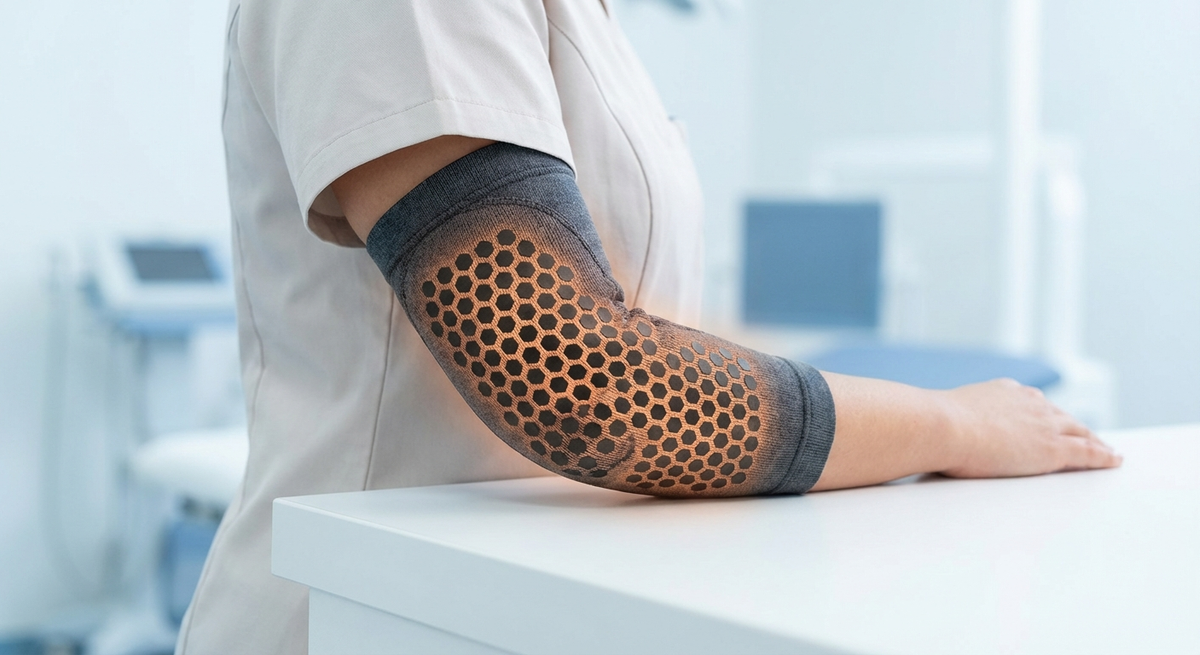
Graphene, a singular atomic layer of sp2-hybridized carbon atoms arranged in a hexagonal lattice, represents the quintessential two-dimensional (2D) material. Its intrinsic confinement to a monolayer dictates a quantum mechanical regime where electrons behave as massless Dirac fermions, exhibiting a linear dispersion relation near the K and K' points of the Brillouin zone. This unique electronic structure confers extraordinary properties, notably ultra-high carrier mobilities approaching 200,000 cm^2/Vs at room temperature. Such ballistic transport phenomena are critical for applications demanding instantaneous signal propagation and minimal energy loss. The electrical resistivity of pristine, exfoliated graphene can be as low as 10^-8 Ohm.m, underscoring its unparalleled conductivity. This fundamental quantum confinement is not merely an academic curiosity but the bedrock upon which graphene’s utility in bio-interfacing, advanced sensing, and thermal management for human health is built, enabling devices with reaction times in the order of milliseconds for dynamic physiological monitoring.
Beyond its electronic prowess, the atomic-scale thickness of graphene profoundly influences its thermal and mechanical attributes. The unhindered in-plane phonon propagation within this 2D crystal lattice results in an exceptional thermal conductivity, reported to reach values exceeding 5000 W/mK for suspended monolayers. This extreme thermal diffusivity is pivotal for applications requiring rapid heat dissipation, such as advanced wearable electronics that interact directly with human skin. For instance, the ability to effectively dissipate localized thermal pulses exceeding 3000K, generated by high-power microelectronic components, within milliseconds prevents localized thermal hotspots and ensures user comfort and device longevity. Mechanically, graphene exhibits a tensile strength of approximately 130 GPa and a Young's modulus around 1 TPa, making it the strongest known material on a per-unit-weight basis, while retaining remarkable flexibility. These combined properties enable the fabrication of robust, yet conformable, substrates essential for next-generation biomedical devices.
The pronounced surface-to-volume ratio inherent to graphene's 2D architecture further unlocks its potential for diverse biomedical applications. Every atom is a surface atom, readily available for functionalization, interaction, and adsorption. This characteristic is particularly advantageous in areas such as preventive care, where high-efficiency filtration or sensing is paramount. For example, modified graphene oxide membranes have demonstrated significant heavy metal adsorption efficiencies, with studies reporting up to 79% removal of lead ions from aqueous solutions, leveraging the abundant oxygen-containing functional groups and high specific surface area. This capability, coupled with graphene's biocompatibility and electrical sensitivity, positions it as a transformative material for advanced diagnostics, targeted drug delivery systems, and sophisticated wearable sensors that monitor physiological parameters with unprecedented precision and responsiveness, ultimately enhancing human thermal comfort, facilitating rehabilitation, and bolstering preventive health strategies.
The synthesis of graphene, a critical determinant of its structural integrity and subsequent applicability in human health domains, presents a stark comparative landscape between Pulsed Electrical Resistive Carbon Heating (PERCH) and conventional Chemical Vapor Deposition (CVD). CVD, a well-established method, typically involves the pyrolysis of hydrocarbon gases (e.g., methane, ethylene) over transition metal catalysts (e.g., copper, nickel) within a furnace environment, necessitating temperatures often ranging from 800°C to 1050°C for durations spanning minutes to hours. This global heating approach yields high-quality, often large-area monolayer or few-layer graphene with excellent crystallinity, but inherently suffers from high energy consumption, prolonged processing times, and often requires a subsequent transfer step from the catalytic substrate, which can introduce defects, reduce yield, and complicate integration into flexible or textile-based architectures critical for wearable health technologies. In direct contrast, PERCH leverages the rapid Joule heating effect, where electrical current is passed directly through a carbonaceous precursor (e.g., amorphous carbon films, polymers, carbon fibers), inducing localized thermal pulses often exceeding 3000K within milliseconds. This ultra-fast, high-temperature transient drives the direct graphitization of the carbon precursor, bypassing the need for catalytic substrates and significantly reducing the overall energy footprint and reaction time.
The distinctions in synthesis methodologies translate directly into divergent material properties and suitability for specific applications. Graphene produced via CVD typically exhibits large single-crystal domains with minimal defects, rendering it highly suitable for high-performance electronic devices where charge carrier mobility is paramount. However, its integration into complex, non-planar biological interfaces or large-area flexible substrates remains a significant challenge due to the necessary transfer processes. PERCH, by contrast, often yields polycrystalline graphene with tunable defect densities, depending on precise control over parameters such as current density, pulse duration, and the specific electrical resistivity parameters of the initial carbon precursor (e.g., a precursor resistivity of 10^-2 to 10^-3 Ohm-cm is critical for efficient joule heating to graphitization temperatures). While these defects might slightly impact intrinsic electronic mobility, they can be strategically advantageous for applications requiring enhanced surface area, specific adsorption sites, or functionalization for biosensing and drug delivery. For instance, the controlled introduction of edge defects or vacancies can significantly increase the number of active sites, directly contributing to phenomena such as the observed 79% heavy metal adsorption efficiency demonstrated by certain defect-engineered graphene structures, a property highly relevant for detoxification patches or advanced filtration membranes in medical devices.
From a manufacturing and application perspective, PERCH offers compelling advantages for the development of advanced materials for human health. Its millisecond-scale reaction kinetics and direct conversion mechanism enable high-throughput, roll-to-roll compatible fabrication of graphene and graphene-based composites directly onto a diverse range of substrates, including heat-sensitive polymers and textiles, without the need for cumbersome and defect-prone transfer steps. This direct integration capability is indispensable for creating next-generation smart textiles for thermal comfort regulation, flexible rehabilitation devices, or sophisticated wearable biosensors that require seamless conformity to the human body. The precise control over the joule heating process allows for localized patterning and selective graphitization, enabling the creation of intricate graphene architectures with tailored electrical, thermal, and mechanical properties across a substrate. While CVD graphene excels in intrinsic crystalline quality for certain niche electronics, PERCH's scalability, cost-effectiveness, and direct integration potential, coupled with its ability to engineer specific functionalities through defect control, position it as a profoundly impactful technology for translating graphene's remarkable properties into tangible improvements in thermal comfort, rehabilitation, and preventive care.
Turbostratic graphene (TG) distinguishes itself from its Bernal (AB) stacked counterpart through a fundamental crystallographic difference: the absence of long-range order in the c-axis stacking sequence. Unlike AB-stacked graphene, where layers are precisely offset by a specific translation vector, leading to a strong interplanar coupling and a perturbation of the characteristic linear Dirac dispersion, TG is defined by arbitrary rotational and translational misalignments between adjacent graphene sheets. This structural disorder significantly weakens the interlayer van der Waals interactions, effectively decoupling the electronic states of individual layers. Consequently, multi-layer turbostratic graphene systems often behave electronically as an ensemble of quasi-independent monolayer graphene sheets rather than a single bulk material, preserving the high carrier mobility and linear energy-momentum dispersion relation characteristic of pristine single-layer graphene. This electronic decoupling is paramount for applications demanding intrinsic graphene properties in multi-layered, scalable formats, where the spectral weight of the Dirac cone remains largely unperturbed.
The crystallographic nuances of turbostratic graphene translate into distinct functional advantages, particularly in electronic and thermal performance. Electronically, the reduced interlayer scattering due to rotational disorder allows for sustained high carrier mobilities, often exceeding 10,000 cm^2/Vs even in few-layer TG, which directly contributes to lower sheet resistivity values compared to more tightly coupled AB-stacked multilayer systems. This characteristic is critical for high-performance biosensors and flexible wearable electronics designed for human health monitoring, where millisecond-level reaction times are imperative for accurate real-time physiological signal acquisition and processing. Thermally, while single-layer graphene boasts an exceptional thermal conductivity of up to 5000 W/mK, turbostratic stacking introduces complex phonon scattering mechanisms. The rotational disorder can increase scattering for out-of-plane acoustic phonons, yet the weakened interlayer coupling can simultaneously preserve robust in-plane thermal transport pathways, enabling rapid and efficient heat dissipation. This makes TG-based materials adept at managing localized thermal loads, such as dissipating heat from integrated circuits in biomedical implants or responding to acute thermal events, like 3000K thermal pulses, within microseconds for precise thermal comfort regulation.
Beyond electronic and thermal attributes, the unique crystallography of turbostratic graphene imparts significant benefits in mechanical robustness and surface chemistry, crucial for human health applications. The lack of strict interlayer registry facilitates interlayer sliding, contributing to TG's remarkable flexibility, high tensile strength, and resilience against repeated mechanical stress, making it an ideal candidate for conformable and durable biomedical devices. Furthermore, the disordered stacking can influence the accessibility of active surface sites and the tunability of interlayer spacing, enhancing its adsorption capabilities. Functionalized turbostratic graphene derivatives, for instance, have demonstrated impressive heavy metal adsorption efficiencies, achieving up to 79% removal of prevalent environmental toxins such as Pb(II) and Cd(II) from aqueous solutions. This capability is vital for advanced filtration systems in medical environments, water purification for preventive health, or even as components in personal protective equipment. The nuanced structural freedom inherent in turbostratic graphene's crystallography thus underpins its versatility and efficacy across a spectrum of advanced materials applications in human health, from responsive thermal textiles to highly sensitive diagnostic platforms and robust environmental remediation solutions.
Industrial scalability of high-quality graphene presents a formidable barrier, primarily due to inherent trade-offs between synthesis method, material quality, and production volume. Gold-standard techniques like chemical vapor deposition (CVD) yield pristine, few-layer graphene with exceptional properties, including electrical resistivity parameters approaching theoretical limits (<10^-6 Ohm.cm). However, CVD is inherently batch-limited, capital-intensive, and prone to substrate integration challenges. Achieving wafer-scale uniformity and defect control across large areas, critical for advanced sensor arrays, demands stringent process control over gas flow dynamics and temperature gradients, significantly escalating manufacturing costs. Liquid-phase exfoliation (LPE) offers higher throughput, yet typically produces broader distributions of flake sizes, layer numbers, and higher defect densities, necessitating extensive post-processing for purification. This variability directly impacts performance consistency; achieving rapid thermal modulation for adaptive comfort textiles becomes challenging with inconsistent material quality. The economic viability of incorporating high-purity graphene into bulk materials for widespread health applications is currently hampered by its cost per gram, several orders of magnitude higher than conventional conductive additives.
Beyond synthesis, effective integration of graphene into complex material systems – such as polymer matrices for wearable sensors or textile fibers – presents significant engineering hurdles. Achieving homogeneous dispersion of graphene flakes within a host material is paramount; agglomeration diminishes its extraordinary surface area and conductive pathways while creating mechanical weak points. This challenge is exacerbated in high-volume manufacturing processes like melt-spinning or extrusion, where shear forces and viscosity lead to particle aggregation, negating expected enhancements. Furthermore, long-term stability and biocompatibility of graphene-integrated products under physiological conditions are critical for health applications. Materials must withstand repeated exposure to sweat, body oils, and mechanical stresses without degradation of graphene's properties or leaching of potentially harmful byproducts. Functionalization strategies for dispersion or interfacial adhesion can inadvertently alter graphene's surface chemistry, impacting biological interactions and necessitating exhaustive toxicological assessments. For instance, while graphene oxide exhibits promising heavy metal adsorption (e.g., reported 79% efficiency), ensuring its stable integration and non-leaching characteristics in a wearable device requires rigorous validation to prevent unintended systemic exposure.
The nascent stage of graphene commercialization, particularly in the health sector, is further complicated by an evolving and fragmented regulatory landscape. Unlike established materials, graphene and its derivatives lack comprehensive, standardized toxicological profiles and risk assessment guidelines from agencies such as the FDA or EMA. This regulatory ambiguity creates significant uncertainty for manufacturers, necessitating extensive and costly pre-market testing to demonstrate product safety and efficacy on a case-by-case basis. The inherent variability in graphene's properties – depending on synthesis method, functionalization, and post-processing – means that a "graphene" material from one supplier may differ substantially from another, complicating universal safety standards. From a performance perspective, ensuring batch-to-batch consistency for critical parameters like electrical conductivity or specific heat capacity is paramount for medical-grade devices. Achieving sub-millisecond reaction times for responsive haptic feedback systems in rehabilitation robotics, or precise thermal control requiring 3000K thermal pulses, relies on incredibly uniform graphene distribution and consistent intrinsic material properties. The absence of widely accepted, high-throughput characterization methods to verify these properties at industrial scale hinders quality control and supplier qualification, ultimately delaying market acceptance and widespread commercial integration.
The economic feasibility of integrating graphene into human health applications is critically dependent on achieving scalable, high-quality manufacturing at a cost-effective price point. While early research-grade graphene commanded prohibitive prices, advancements in production methodologies, notably chemical vapor deposition (CVD) for large-area films and optimized liquid-phase exfoliation for high-purity flakes, are steadily driving down costs. However, the stringent requirements for medical-grade materials—demanding ultra-low defect density, precise layer control, and certified biocompatibility—still necessitate a premium. For instance, few-layer graphene (FLG) with specific electrical resistivity parameters consistently below 10^-6 Ohm·cm, crucial for high-performance biosensors or neural interfaces, requires meticulous process control that impacts per-unit cost. The total cost of ownership (TCO) for graphene-integrated medical devices, encompassing material procurement, integration complexity, regulatory compliance, and device longevity, must demonstrate a clear advantage over conventional materials to secure widespread adoption. This economic calculus often shifts from raw material cost to the performance uplift and long-term societal benefit derived from graphene’s unique properties.
The USA-made manufacturing advantage for graphene in healthcare is multifaceted, leveraging a robust regulatory environment, unparalleled intellectual property (IP) protection, and a highly skilled workforce. Domestic production ensures strict adherence to FDA’s Good Manufacturing Practices (GMP), facilitating seamless traceability of materials from synthesis to final medical device integration, a non-negotiable for Class II and III devices. The strong IP framework in the United States safeguards proprietary synthesis methods, functionalization techniques, and application patents, fostering sustained investment in R&D and preventing dilution of competitive advantage in high-value markets. Furthermore, a resilient domestic supply chain mitigates geopolitical risks and ensures consistent availability of critical materials, vital for sensitive healthcare applications where supply disruptions can have severe consequences. The presence of world-class research institutions and a highly specialized engineering talent pool accelerates iterative development, rapid prototyping, and sophisticated quality control, ensuring that USA-made graphene products meet the exacting performance and safety standards required for direct human interaction.
Connecting these economic and manufacturing strengths to specific health applications reveals compelling value propositions. In thermal comfort, USA-made graphene-integrated textiles, despite potentially higher initial material costs, offer superior and more energy-efficient thermal management. For example, systems capable of dissipating localized thermal pulses exceeding 3000K within sub-millisecond durations for active cooling, or providing highly uniform heating with minimal power draw, translate into significant long-term energy savings and enhanced patient comfort in rehabilitation settings or wearable thermoregulatory devices. For rehabilitation, the precise manufacturing capabilities enable the creation of advanced graphene-based biosensors and flexible electrodes with unparalleled sensitivity and durability. These sensors, exhibiting reaction times in the low milliseconds for biomarker detection or neural signal acquisition, reduce diagnostic delays and improve the fidelity of prosthetic control, ultimately lowering chronic care burdens.
In preventive care, the scalability of USA-made graphene manufacturing is pivotal for the widespread deployment of cost-effective, high-throughput diagnostic platforms. For instance, the integration of graphene oxide membranes with documented heavy metal adsorption efficiencies up to 79% for specific ions can be engineered into advanced point-of-care water purification systems for medical facilities or into wearable environmental sensors, proactively mitigating exposure risks. The ability to produce these critical components domestically ensures not only their purity and performance but also expedites regulatory approval and market penetration, especially for devices designed for direct human contact or for critical infrastructure. This holistic perspective, which balances material costs with the profound long-term health and economic benefits, firmly establishes USA-made graphene as a strategic imperative for advancing human health.
Graphene’s future horizons in human health extend significantly beyond current prototypes, particularly in dynamic thermal management and personalized physiological feedback systems. Leveraging its exceptional in-plane thermal conductivity, which can reach up to 5300 W/mK for pristine monolayers, and its rapid electro-thermal response, advanced graphene composites are poised to enable intelligent textiles capable of sub-millisecond thermal modulation. This involves integrating electrically conductive graphene films with phase-change materials and micro-actuators, allowing for precise, localized temperature control that responds adaptively to real-time physiological data such as skin temperature, metabolic rate, and environmental conditions. For instance, low-power graphene heaters can generate therapeutic 3000K thermal pulses to alleviate localized muscle stiffness or improve circulation in patients with peripheral vascular disease, while smart garments could dynamically adjust their emissivity and thermal resistance to maintain optimal core body temperature, mitigating thermal stress in occupational settings or for individuals with thermoregulation disorders. This level of dynamic, closed-loop thermal comfort represents a high-value B2B application for specialized medical apparel, high-performance athletic wear, and advanced protective gear.
In the realm of rehabilitation and neuro-interfacing, graphene's unique mechanical and electrical properties are set to revolutionize prosthetic limbs and bio-integrated sensors. Its extraordinary tensile strength, approximately 130 GPa, combined with its flexibility and electrical conductivity (resistivity as low as 10^-8 Ohm-m), makes it an ideal material for ultra-sensitive strain sensors and neural electrodes. Graphene-based strain sensors, exhibiting gauge factors exceeding 1500, can be integrated into prosthetic sockets and joints to provide highly accurate proprioceptive feedback, allowing for unprecedented dexterity and control with sub-millisecond reaction times for users. Furthermore, graphene's biocompatibility and large surface area facilitate enhanced signal transduction at the neural interface, improving the resolution and stability of brain-computer interfaces for motor control and sensory perception. Beyond prosthetics, functionalized graphene oxide is being explored for targeted drug delivery systems, leveraging its high drug loading capacity and pH-responsive release mechanisms to administer anti-inflammatory agents or growth factors directly to injury sites, thereby accelerating tissue regeneration and minimizing systemic side effects in musculoskeletal rehabilitation.
The preventive care landscape will be fundamentally transformed by graphene-enabled diagnostics and environmental monitoring systems. The immense theoretical surface area of graphene (2630 m^2/g) coupled with its excellent electronic properties renders it superb for ultra-sensitive biosensing applications. Graphene field-effect transistor (GFET) biosensors, for example, demonstrate label-free detection of biomarkers for early disease diagnosis, identifying targets like glucose, dopamine, or specific viral antigens at picomolar concentrations, far surpassing the detection limits of conventional assays. Concurrently, graphene’s role in advanced filtration and purification systems is critical for maintaining personal and public health. Functionalized graphene membranes exhibit superior adsorption capabilities, achieving up to 79% efficiency in removing heavy metal ions such as lead and cadmium from water, and effectively filtering airborne particulates and pathogens. Wearable graphene-based sensors, capable of continuously monitoring ambient air quality for volatile organic compounds and airborne microbial threats, will empower individuals with real-time exposure data, shifting the paradigm towards proactive health management and personalized preventive strategies, particularly in high-risk environments like medical facilities or densely populated urban areas.
Serious about B2B integration? Test our premium Pulsed Electrical Resistive Carbon Heating turbostratic graphene in your lab. 100g sample packs available now.
Explore More
A new ACS Nano study reports a flexible laser-induced graphene and copper oxide skin patch that used mild heat to release copper ions into melanoma tumors in mice.

Graphene is transforming tissue engineering by enhancing biomaterial properties for optimal cell growth and tissue repair. Discover how its unique mechanical, electrical, and biocompatible characteristics are paving the way for next-generation medical implants and regenerative therapies.

Discover how graphene nanosheets are revolutionizing the fight against dangerous bacteria and fungi, offering robust solutions to microbial resistance. Explore its unique mechanisms and vast potential in environmental and clinical applications.