
A New Era of Graphene Engineering: Pre-Designing Twist Angles on Demand
Researchers have developed a breakthrough method for growing twisted bilayer graphene with pre-designed angles, a key step toward manufacturable quantum...
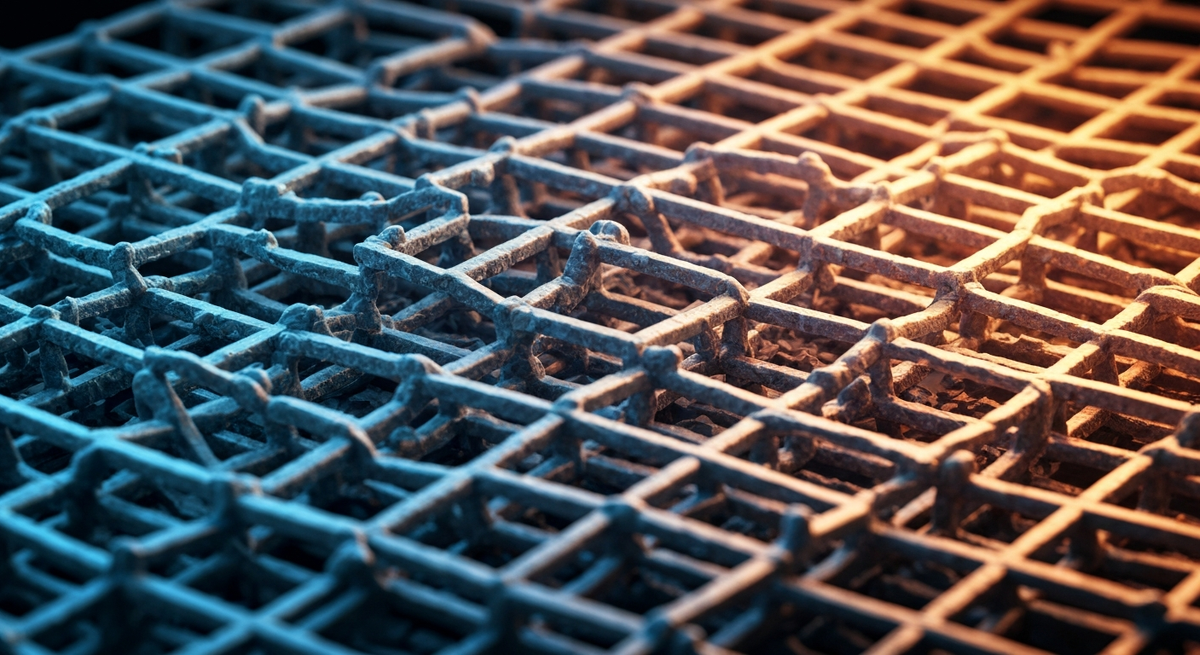
Chemical vapor deposition stands as the most viable method for producing large-area graphene sheets for industrial applications. The resulting material rarely exists as a perfect single crystal across macroscopic dimensions. Instead, the growth process yields a polycrystalline structure characterized by intersecting domains and distinct topological features. These intersecting regions form grain boundaries that fundamentally alter the mechanical, electrical, and chemical properties of the two-dimensional lattice. Understanding the exact nature of these boundaries and their associated topological anomalies is critical for integrating graphene into advanced polymer nanocomposites. Engineers must account for how atomic irregularities influence macroscopic material behavior when designing next-generation structural components.\n\nThe presence of grain boundaries and physical ripples dictates how the carbon lattice interacts with surrounding polymer matrices during composite fabrication. These structural deviations serve as primary active sites for chemical bonding due to their altered energy states. Examining the precise mechanisms of formation and the subsequent impact on material properties allows researchers to optimize the manufacturing process. The ultimate goal remains the seamless translation of nanoscale strength into macroscale engineering applications without sacrificing structural integrity. Careful manipulation of these inherent material defects unlocks entirely new pathways for functionalizing the carbon surface.\n\n## The Formation of Grain Boundaries and Ripples in CVD Graphene\n\nThe chemical vapor deposition process initiates with the nucleation of isolated carbon domains on a catalytic metal substrate. These individual domains expand outward as hydrocarbon precursor gases decompose and deposit carbon atoms at the active edges. When these expanding islands eventually meet, their crystallographic orientations rarely align perfectly with one another. The resulting intersection creates a grain boundary consisting of non-hexagonal carbon rings that stitch the independent domains together. This atomic stitching introduces localized strain fields that disrupt the otherwise perfect symmetry of the two-dimensional carbon lattice.\n\nBeyond the in-plane defects created by misaligned domains, the chemical vapor deposition process frequently generates out-of-plane topological features known as ripples. These undulating structures emerge primarily due to the thermal expansion mismatch between the graphene layer and the underlying metal substrate during the cooling phase. As the material cools from extreme synthesis temperatures, compressive strain forces the atomically thin sheet to buckle and form microscopic crests and troughs. Researchers have demonstrated that applying controlled compressive strain can artificially generate these ripples on demand. Controlling the amplitude and frequency of these ripples provides a unique mechanical pathway to manipulate the surface reactivity of the carbon sheet.\n\nThe physical geometry of these ripples directly correlates to the chemical vulnerability of the carbon atoms located along the crests. When the radius of curvature is small, the carbon-carbon bonds experience significant geometric distortion from their ideal planar configuration. This distortion lowers the activation energy required for chemical reactions, making the crests highly susceptible to external chemical attack. The strained atoms bind tightly to available radicals, exhibiting shorter bond lengths and higher binding energies compared to atoms in flat regions. Exploiting this localized strain allows materials scientists to selectively target specific regions of the graphene sheet for chemical modification.\n\n## Chemical Reactivity at Structural Defect Sites\n\nThe unique energetic profile of grain boundaries and ripples makes them ideal sites for initiating complex polymerization schemes. Free radical addition, anionic polymerization, and cationic polymerization rely on these high-energy topological features to anchor polymer chains to the carbon framework. When a simple radical approaches a highly curved ripple crest, the distorted bonds readily transition to accommodate the new covalent attachment. This localized reactivity ensures that polymer chains bond securely to the carbon lattice without completely destroying the extended conjugated network of the basal plane. Preserving the structural integrity of the flat regions remains essential for maintaining the inherent mechanical properties of the parent material.\n\nIn free radical addition schemes, the propagation step involves the continuous addition of monomer units to the active site located on the structural defect. The termination step typically occurs through combination, quenching due to trace impurities, or the deliberate addition of water or alcohol to the system. Quantum mechanics optimizations of graphene and polyethylene chains demonstrate that the binding energy at these highly curved defect sites significantly exceeds that of pristine planar regions. This strong covalent bonding prevents the polymer chains from slipping along the carbon surface under applied mechanical stress. The resulting composite exhibits superior load transfer capabilities because the interface between the matrix and the reinforcement is rigidly locked at the atomic level.\n\nAnionic and cationic polymerization schemes offer alternative pathways for functionalizing the active centers found along grain boundaries and ripple crests. These ionic mechanisms allow for precise control over polymer chain length and grafting density across the surface of the polycrystalline sheet. Controlling the distribution of these grafted chains ensures uniform dispersion of the carbon reinforcement within the final polymer matrix. Engineers can tailor the surface chemistry of the graphene domains to match the polarity and chemical composition of specific industrial resins. This tailored approach minimizes phase separation and maximizes the structural benefits provided by the two-dimensional carbon filler.\n\n## Key Challenges in Scaling Pristine Graphene Production\n\nTransitioning from laboratory-scale synthesis to mass production presents severe economic and logistical hurdles for the advanced materials industry. The cost of producing large-area pristine graphene directly correlates with the required quality and defect density of the final product. Micromechanical cleavage yields ultrahigh-quality flakes, but this meticulous process remains confined to low-volume research applications. Commercial startup companies have reported achieving exceptionally large flakes approaching one square millimeter using specialized cleavage techniques at a premium cost. The fundamental technological barrier remains the reliable and controlled continuous production of massive sheets with predictable defect profiles.\n\nChemical vapor deposition offers the volume required for commercialization, but controlling the density of grain boundaries across massive areas proves difficult. Variations in substrate purity, gas flow dynamics, and thermal gradients during synthesis lead to inconsistent domain sizes and unpredictable mechanical properties. These inconsistencies directly impact the performance of downstream electronic devices and structural composites that rely on uniform material characteristics. Manufacturers must implement rigorous quality control measures to monitor the polycrystalline structure of the continuous rolls of chemical vapor deposition graphene. Developing real-time metrology tools to map grain boundaries and topological ripples during the growth phase represents a major focus of current engineering efforts.\n\nThe quantity and structural quality of the synthesized carbon sheets ultimately dictate their economic viability across various technological sectors. High-density grain boundaries scatter charge carriers and act as stress concentrators that prematurely initiate mechanical failure under tensile loads. While these defect sites prove advantageous for chemical functionalization, excessive boundaries degrade the intrinsic thermal and electrical conductivity of the macroscopic sheet. Balancing the need for reactive defect sites with the requirement for extended pristine domains requires precise tuning of the deposition parameters. Achieving this delicate structural balance at an industrial scale will determine the ultimate market penetration of graphene-enhanced commercial products.\n\n## Overcoming Dispersity Issues in Polymer Matrices\n\nIntegrating polycrystalline graphene into polymer systems requires overcoming significant challenges related to dispersity and solvent compatibility. Pristine graphene and its oxidized derivatives exhibit notoriously low solubility in nonpolar organic solvents commonly used in industrial composite manufacturing. The strong physical forces acting between individual carbon sheets cause them to agglomerate rapidly into thick stacks when introduced to a liquid matrix. This agglomeration severely reduces the available surface area for polymer interaction and creates macroscopic weak points within the final composite structure. Preventing this restacking phenomenon is absolutely paramount for achieving the theoretical mechanical enhancements promised by two-dimensional reinforcements.\n\nEngineers utilize aggressive mechanical techniques like high-power ultrasonication and high-speed shear mixing to force the carbon sheets apart in solution. These methods create short-lived metastable dispersions that must be immediately processed before the sheets have an opportunity to reaggregate. While effective for immediate composite fabrication, intense mechanical agitation frequently fractures the delicate carbon lattice and introduces unwanted edge defects. These newly created edges alter the intended aspect ratio of the reinforcement and can negatively impact the final fracture toughness of the material. Manufacturers must carefully calibrate their mixing protocols to maximize dispersion without mechanically degrading the primary structural filler.\n\nChemical modification offers a more stable long-term solution for maintaining uniform dispersion within complex organic polymer solutions. Functionalizing the surface of graphene oxide sheets with specific organic molecules drastically increases their compatibility with a wide range of industrial solvents. Modifying the carbon sheets with phenyl isocyanate prior to mixing with a polystyrene solution creates a highly stable dispersed suspension that resists settling. This chemical compatibility prevents agglomeration during the curing process and ensures an even distribution of the reinforcing agent throughout the solid matrix. Consistent spatial distribution remains the most critical factor in eliminating localized stress concentrations and achieving uniform mechanical properties.\n\n## Assessing Reinforcement Through Stress and Strain Metrics\n\nQuantifying the mechanical improvements provided by graphene integration requires rigorous physical testing of the cured composite materials. The classical method for assessing structural reinforcement involves analyzing the stress and strain curves generated under controlled tensile loading. Engineers calculate the elastic modulus of the composite and compare it directly to the baseline modulus of the unreinforced polymer matrix. Plotting this ratio against the volume fraction of the carbon filler provides a clear visual representation of the reinforcement efficiency. These standardized metrics allow materials scientists to objectively evaluate different functionalization strategies and dispersion techniques.\n\nEven minute volumetric additions of functionalized carbon sheets can trigger massive shifts in the macroscopic mechanical behavior of a polymer system. Polyvinyl alcohol reinforced with merely three-tenths of a percent by volume of reduced graphene oxide demonstrates a radical steepening of the stress and strain curve. Increasing the volume fraction further leads to massive gains in overall tensile strength, though it simultaneously decreases the elongation at the break point. At slightly less than two percent volume loading, the elastic modulus of the polyvinyl alcohol composite increases by a staggering factor of ten. Similar extreme enhancements occur in polypropylene systems loaded with precisely one-tenth of a percent by weight of oxidized carbon flakes.\n\nThe physical dimensions of the dispersed domains play a critical role in the ultimate reinforcement capabilities of the two-dimensional filler. Studies examining polyurethane reinforced with pristine carbon sheets reveal that the reinforcement effect scales directly with the physical size of the individual flakes. As the physical dimensions of the reinforcing sheets decrease, the total number of polymer-to-filler load transfer points diminishes accordingly. Larger flakes with intact basal planes and strategically functionalized grain boundaries provide the most efficient pathway for distributing mechanical stress throughout the matrix. Maximizing the aspect ratio of the filler while maintaining perfect uniform dispersion represents the ultimate goal of advanced composite engineering.\n\n## Fracture Toughness and Raman Spectroscopy Analysis\n\nMaterial failure in structural composites typically occurs through the progressive propagation of microscopic cracks under repeated mechanical cycling. Fracture toughness measures the precise ability of a material containing existing flaws to resist catastrophic structural failure under applied loads. Fatigue behavior describes the localized progressive damage that accumulates when a component experiences continuous cyclic loading over extended operational periods. Assessing a material resistance to both sudden fracture and slow fatigue crack propagation is absolutely vital for aerospace and automotive engineering applications. Graphene domains serve as microscopic physical barriers that effectively blunt advancing crack tips and force them to expend energy changing direction.\n\nThe integration of incredibly small weight percentages of functionalized carbon sheets dramatically alters the fracture mechanics of rigid polymer systems. An epoxy polymer reinforced with just one-eighth of a percent by weight of functionalized graphene exhibits a massive increase in baseline fracture toughness. This same microscopic loading increases the total fracture energy of the system by more than one hundred percent compared to the pristine resin. Under rigorous fatigue conditions, the functionalized carbon sheets reduce the rate of internal crack propagation by a remarkable factor of twenty-five. These massive physical improvements stem directly from the enhanced specific surface area and the strong covalent bonding at the ripple crests and grain boundaries.\n\nEngineers utilize advanced Raman spectroscopy to physically map the stress
Serious about B2B integration? Test our premium Pulsed Electrical Resistive Carbon Heating turbostratic graphene in your lab. 100g sample packs available now.
Explore More
Researchers have developed a breakthrough method for growing twisted bilayer graphene with pre-designed angles, a key step toward manufacturable quantum...

Learn how deep learning is revolutionizing the structural characterization of twisted bilayer materials, accelerating the development of next-generation...

Learn to build a prototype graphene FET biosensor for sensitive DNA detection. This guide covers materials, fabrication, and testing for point-of-care...