
A New Era of Graphene Engineering: Pre-Designing Twist Angles on Demand
Researchers have developed a breakthrough method for growing twisted bilayer graphene with pre-designed angles, a key step toward manufacturable quantum...
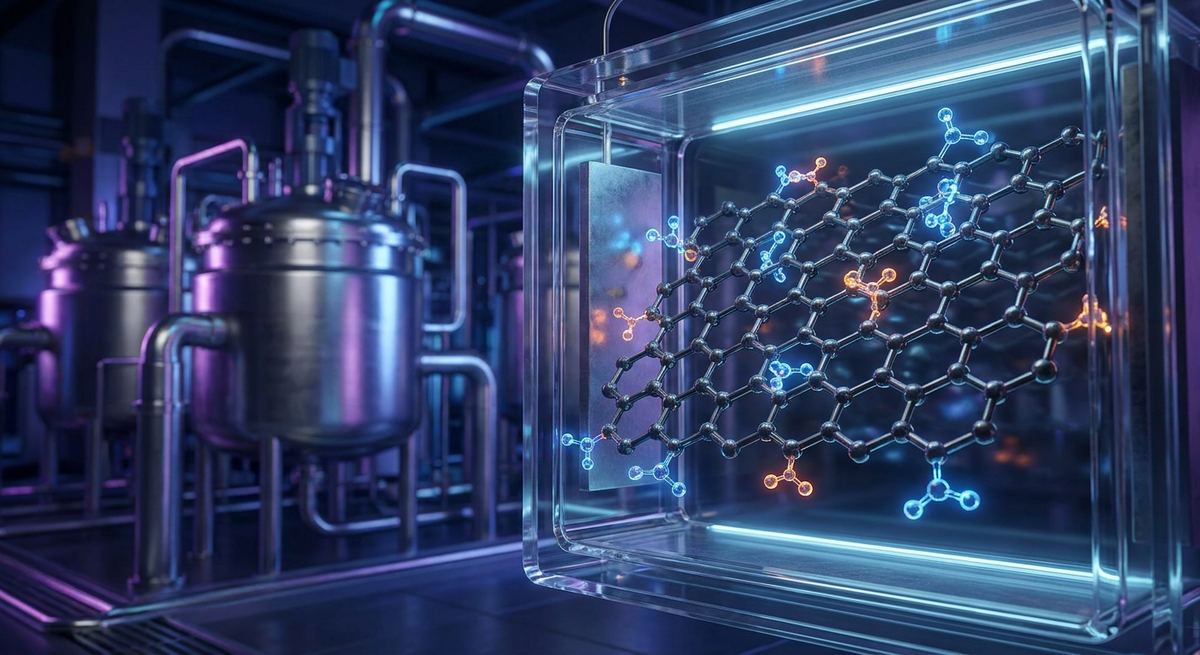
Unlocking Advanced Electrochemistry with Functionalized Graphene
In the rapidly evolving landscape of materials science, graphene has emerged as a transformative material, heralded for its extraordinary properties. This single-atom-thick layer of carbon, arranged in a hexagonal lattice, is the fundamental building block for all graphitic structures, offering a unique combination of strength, conductivity, and surface area. However, to truly harness graphene's potential, particularly in sophisticated applications like electrochemistry, a crucial step often becomes necessary: functionalized graphene. Functionalization involves chemically or physically modifying the graphene surface, introducing specific groups or materials that enhance its inherent properties or imbue it with new functionalities. This strategic tailoring transforms raw graphene into a versatile platform capable of interacting precisely with target molecules, facilitating efficient charge transfer, and boosting the performance of electrochemical systems across various domains. From highly sensitive biosensors to next-generation energy storage devices, functionalized graphene is not just a material; it's an enabler, pushing the boundaries of what's possible in analytical chemistry, environmental monitoring, and sustainable energy solutions. This article delves into the intricate world of functionalized graphene, exploring its synthesis methodologies, the remarkable properties it brings to the table, and its diverse, impactful applications in electrochemistry. For engineers, materials scientists, and R&D professionals, understanding the nuances of functionalization is key to innovating with this groundbreaking material and developing the advanced technologies of tomorrow.
Graphene, a two-dimensional (2D) material composed of sp2-hybridized carbon atoms arranged in a honeycomb lattice, stands as the progenitor of the entire graphitic family. Its inherent properties make it an exceptionally promising candidate for electrochemical applications even in its pristine form. The remarkable electrical conductivity, stemming from its delocalized pi-electron system, facilitates rapid electron transfer, which is fundamental to any electrochemical process. Furthermore, graphene boasts an immense theoretical specific surface area of 2630 m²/g, providing an extensive interface for electrolyte interaction and active site exposure, crucial for high-performance electrodes.
Beyond its electronic and surface characteristics, graphene exhibits exceptional mechanical strength and chemical inertness, contributing to the durability and stability of electrochemical devices. These attributes make it an ideal support material or active component in various electrochemical systems, from energy storage to sensing. However, pristine graphene can present limitations in certain complex electrochemical environments. Its hydrophobic nature often hinders dispersion in aqueous electrolytes, and a lack of specific binding sites can limit its selectivity or catalytic activity for particular redox reactions. Addressing these limitations necessitates the strategic modification of its surface chemistry, paving the way for functionalized graphene.
Functionalization represents a sophisticated engineering approach to customize graphene's surface, transforming its intrinsic properties to meet specific electrochemical demands. This process involves introducing various chemical groups, nanoparticles, or even biological molecules onto the graphene lattice, thereby modulating its electronic structure, surface chemistry, and interfacial characteristics. The overarching goal is to enhance properties such as wettability, dispersibility, catalytic activity, selectivity, and overall device performance. Understanding the different functionalization strategies is crucial for designing materials that precisely target specific applications.
One primary category is covalent functionalization, where chemical groups form strong bonds directly with the carbon atoms of the graphene lattice. Common examples include oxidation, which introduces oxygen-containing groups like hydroxyl, carboxyl, and epoxy, leading to graphene oxide (GO) or reduced graphene oxide (rGO). Nitrogen doping, often achieved by incorporating nitrogen atoms into the graphene lattice, also represents a form of covalent functionalization, significantly altering the electronic properties and introducing active sites. These covalent modifications can increase solubility, introduce specific reaction sites, and tune the electronic band structure, which are critical for various electrochemical processes.
In contrast, non-covalent functionalization relies on weaker interactions, such as π-π stacking, van der Waals forces, or electrostatic interactions, to attach molecules or materials to the graphene surface. Polymers, surfactants, and biomolecules are frequently employed in this manner, often preserving the intrinsic electronic properties of graphene while imparting new functionalities. For instance, attaching conductive polymers can create hybrid materials with synergistic properties, enhancing both charge transfer and specific recognition capabilities. This approach offers the advantage of reversibility and avoids damaging the graphene lattice, making it suitable for applications where the pristine electronic structure is paramount.
The choice between covalent and non-covalent strategies depends heavily on the desired outcome and the specific electrochemical application. Covalent methods typically offer greater stability and a broader range of tunable properties but can sometimes introduce defects that slightly diminish electrical conductivity. Non-covalent methods generally maintain high conductivity and are excellent for biosensing or drug delivery, where specific biomolecular interactions are key. Both approaches demonstrate the remarkable versatility of graphene as a platform for advanced material design, allowing scientists and engineers to precisely tailor its characteristics for optimal performance in demanding electrochemical environments.
Functionalized graphene dramatically enhances electrochemical performance by addressing the inherent limitations of pristine graphene and introducing new functionalities. The mechanisms behind these improvements are multifaceted, primarily revolving around increased active site availability, optimized charge transfer kinetics, and enhanced selectivity. These modifications collectively contribute to superior efficiency, sensitivity, and stability in diverse electrochemical systems.
One critical improvement is the proliferation of active sites. Pristine graphene, while highly conductive, often lacks sufficient edge defects or specific functional groups that can act as catalytic centers or binding sites for target analytes. Functionalization, particularly through the introduction of oxygen-containing groups, nitrogen doping, or metallic nanoparticles, creates numerous such sites. These sites facilitate adsorption, enhance reaction pathways, and lower activation energies for redox reactions, leading to significantly improved electrocatalytic activity. For instance, nitrogen-doped graphene can act as a metal-free catalyst for oxygen reduction reactions in fuel cells, showcasing the power of engineered active centers.
Furthermore, functionalization plays a pivotal role in optimizing charge transfer kinetics at the electrode-electrolyte interface. While graphene itself is highly conductive, poor wetting or aggregation can impede efficient electron exchange. Introducing hydrophilic groups or creating nanoscale architectures through functionalization can improve the dispersion of graphene in aqueous solutions and enhance the accessibility of its surface. This ensures a more uniform and effective charge transfer across the electrode interface, reducing overpotentials and increasing reaction rates. Hybridization with other conductive materials or the formation of conductive pathways through specific functional groups also contributes to this enhanced kinetic performance.
The ability to impart selectivity is another profound advantage of functionalized graphene, particularly in sensing applications. By attaching specific recognition elements, such as enzymes, antibodies, or aptamers, functionalized graphene electrodes can selectively detect target molecules even in complex biological matrices. The large surface area of graphene provides ample space for immobilizing these biorecognition elements, while its excellent conductivity allows for the efficient transduction of biological recognition events into measurable electrical signals. This combination of high surface area, enhanced conductivity, and tailored specificity makes functionalized graphene an unparalleled platform for developing highly sensitive and selective electrochemical sensors.
The strategic modification of graphene's surface has unlocked an expansive array of applications across various electrochemical domains, propelling innovation in energy, sensing, and environmental technologies. Functionalized graphene acts as a cornerstone material, enabling performance enhancements that were previously unattainable with conventional materials. Its adaptability allows for bespoke solutions to complex challenges, from improving energy density in storage devices to boosting the efficiency of catalytic processes.
In the realm of energy storage, functionalized graphene has revolutionized supercapacitors and batteries. For supercapacitors, its high surface area, combined with enhanced wettability and ion accessibility through functionalization, leads to significantly increased capacitance and power density. Introducing pseudocapacitive materials like metal oxides or conductive polymers onto functionalized graphene surfaces creates hybrid electrodes that leverage both electric double-layer capacitance and faradaic reactions, yielding devices with superior energy storage capabilities. In batteries, particularly lithium-ion batteries, functionalized graphene serves as an excellent anode material, improving cycling stability and rate capability by providing stable interfaces for lithium insertion and extraction, while also mitigating volume changes during charge-discharge cycles.
Functionalized graphene is equally transformative in the field of electrochemical sensors and biosensors. By covalently or non-covalently attaching enzymes, antibodies, DNA strands, or other biorecognition elements, highly sensitive and selective platforms can be engineered. These biosensors are capable of detecting a wide range of analytes, from glucose and lactate in biological fluids to heavy metal ions and pathogenic bacteria in environmental samples. The large surface area maximizes probe immobilization, while the exceptional conductivity ensures efficient signal transduction, leading to rapid, accurate, and low-cost detection systems that are critical for healthcare diagnostics and environmental monitoring.
Electrocatalysis represents another significant area of impact, with functionalized graphene enhancing the efficiency of critical chemical reactions. In fuel cells, for example, nitrogen-doped graphene or graphene decorated with noble metal nanoparticles (like platinum) exhibits superior catalytic activity for oxygen reduction reactions, a bottleneck process. Similarly, in water splitting for hydrogen production, functionalized graphene can serve as a robust and efficient catalyst support, reducing the need for expensive noble metals and lowering the overall energy consumption. Its tunable electronic structure and abundant active sites make it ideal for driving various redox reactions with high selectivity and turnover rates.
Beyond these core areas, functionalized graphene is also making strides in environmental remediation. It can be employed in electrocatalytic degradation processes to break down persistent organic pollutants in wastewater, leveraging its high surface area and catalytic properties. Furthermore, its adsorbent capabilities, enhanced by specific functional groups, allow for the efficient removal of heavy metals or dyes from contaminated water sources. The versatility of functionalized graphene thus positions it as a key material in addressing some of the most pressing global challenges across energy, health, and environmental sustainability.
The successful deployment of functionalized graphene in electrochemical applications hinges on precise and reproducible synthesis and thorough characterization techniques. The journey from raw graphite to a tailored functionalized graphene material involves several critical steps, each requiring careful control to achieve the desired properties and performance. Understanding these methodologies is essential for researchers and industry professionals alike.
The most common pathway to functionalized graphene begins with graphite and involves the production of graphene oxide (GO). Methods like the Hummers’ method are widely employed to oxidize graphite, introducing numerous oxygen-containing functional groups (hydroxyl, carboxyl, epoxy) onto the graphene sheets. This process not only facilitates exfoliation into individual layers but also renders GO hydrophilic and chemically reactive, making it an excellent precursor for further functionalization. Subsequent reduction of GO, typically through chemical, thermal, or electrochemical methods, yields reduced graphene oxide (rGO), which partially restores electrical conductivity while retaining some functional groups that can act as anchoring points for further modification.
Direct functionalization of pristine graphene, obtained via methods like chemical vapor deposition (CVD) or mechanical exfoliation, is also possible. This approach often involves milder reactions to selectively introduce functional groups or defects, aiming to preserve the high quality and conductivity of the pristine material. Non-covalent functionalization techniques, such as π-π stacking interactions with aromatic molecules or polymer wrapping, are particularly suited for direct graphene, as they avoid altering the intrinsic lattice structure. These methods offer precise control over the type and density of functionalization, allowing for fine-tuning of electrochemical properties.
[IMAGE_4]
Once synthesized, functionalized graphene materials must undergo rigorous characterization to confirm their structure, composition, and electrochemical activity. Techniques like Raman spectroscopy are indispensable for assessing the degree of functionalization and identifying defect sites, providing insights into the bonding environment of carbon atoms. X-ray photoelectron spectroscopy (XPS) offers detailed elemental and chemical state analysis, confirming the presence and relative proportions of functional groups (e.g., oxygen, nitrogen). Transmission electron microscopy (TEM) and scanning electron microscopy (SEM) provide morphological information, revealing the layered structure, exfoliation state, and distribution of nanoparticles if incorporated.
Electrochemical characterization techniques are crucial for evaluating the material's performance in real-world applications. Cyclic voltammetry, electrochemical impedance spectroscopy, and chronoamperometry are routinely used to measure parameters such as active surface area, charge transfer kinetics, specific capacitance, and catalytic activity. These comprehensive characterization efforts ensure that the synthesized functionalized graphene meets the stringent requirements for high-performance electrochemical devices, paving the way for its successful translation from laboratory research to industrial application.
The trajectory of functionalized graphene in electrochemistry is poised for significant expansion, driven by ongoing research and increasing commercial interest. As understanding of its fundamental properties and synthesis methodologies deepens, the potential for widespread adoption across various industries becomes increasingly tangible. The future will likely see a greater emphasis on scalability, cost-effectiveness, and the development of robust, long-lasting devices, transitioning from laboratory prototypes to market-ready products.
One key area of future development is the precise control over functionalization. Current methods, while effective, sometimes lack the atom-level precision required for ultra-high-performance applications. Advancements in mild functionalization techniques, self-assembly strategies, and atomic-level tailoring will enable the creation of materials with unparalleled specificity and efficiency. This will lead to further breakthroughs in areas such as single-molecule sensing, highly efficient electrocatalysts for niche reactions, and next-generation energy storage systems with unprecedented energy densities and cycle lives.
Addressing challenges related to large-scale production and commercialization remains paramount. Developing environmentally friendly and cost-effective synthesis routes for functionalized graphene is crucial for its market penetration. This includes optimizing existing methods like the Hummers’ method to reduce chemical waste and energy consumption, as well as exploring novel approaches that allow for continuous, high-throughput production. Standardizing characterization protocols will also be essential to ensure consistent quality and performance across different manufacturers and applications, building confidence in the material's reliability.
The integration of artificial intelligence and machine learning is expected to play a transformative role in accelerating the discovery and optimization of new functionalized graphene materials. By predicting optimal functionalization strategies and material compositions based on desired electrochemical properties, AI can significantly reduce experimental trial-and-error, speeding up development cycles. Furthermore, the collaboration between academic institutions, research organizations, and industrial partners, such as usa-graphene.com, will be vital in translating these scientific advancements into practical, impactful technologies that address global needs in energy, health, and environmental sustainability. Functionalized graphene is not merely a promising material; it is a cornerstone for the next generation of electrochemical innovations.
*
Q1: What is the primary difference between pristine graphene and functionalized graphene in electrochemical applications?
A1: Pristine graphene offers high conductivity and surface area but often lacks specific active sites and can be hydrophobic, limiting its interaction with electrolytes or target molecules. Functionalized graphene, through chemical modification, introduces specific groups or materials that enhance active sites, improve wettability, increase selectivity, and tune electronic properties, thereby boosting overall electrochemical performance.
Q2: Why is functionalization crucial for graphene's use in biosensors?
A2: Functionalization is crucial for biosensors because it allows for the stable and specific immobilization of biorecognition elements like enzymes, antibodies, or DNA onto the graphene surface. These elements selectively bind to target analytes, while functionalized graphene's high conductivity efficiently transduces the binding event into an electrical signal, enabling highly sensitive and selective detection in complex biological samples.
Q3: Can functionalized graphene replace noble metal catalysts in electrocatalysis?
A3: In some cases, yes. Nitrogen-doped graphene or graphene functionalized with specific non-noble metal nanoparticles can exhibit catalytic activity comparable to, or even surpassing, traditional noble metal catalysts for certain reactions, such as the oxygen reduction reaction. This offers a cost-effective and sustainable alternative, reducing reliance on expensive and scarce materials like platinum.
Q4: What are the main challenges in the large-scale commercialization of functionalized graphene?
A4: Key challenges include developing cost-effective and scalable synthesis methods that maintain high material quality and reproducibility. Ensuring long-term stability and consistent performance across different batches, and establishing industry standards for quality control, are also critical for widespread commercial adoption.
Q5: How does functionalization improve graphene's performance in energy storage devices like supercapacitors?
A5: Functionalization improves supercapacitor performance by increasing the number of active sites for ion adsorption, enhancing the wettability of the electrode surface by electrolytes, and preventing graphene sheet restacking. This leads to higher specific capacitance, improved ion diffusion kinetics, and better overall energy and power density for the device.
*
In summary, functionalized graphene stands as a testament to the power of materials engineering, transforming a remarkable raw material into an even more versatile and potent platform. By strategically modifying its surface chemistry, scientists and engineers have unlocked unprecedented opportunities across electrochemistry, from revolutionizing energy storage and conversion to enabling highly sensitive diagnostic tools and effective environmental solutions. The intricate interplay between synthesis, characterization, and application development continues to push the boundaries of what is achievable, promising a future where functionalized graphene plays a central role in sustainable technological advancement. The journey of functionalized graphene is far from complete; indeed, it is only just beginning to reveal its full potential as a cornerstone material for the next generation of electrochemical innovations.
Serious about B2B integration? Test our premium Pulsed Electrical Resistive Carbon Heating turbostratic graphene in your lab. 100g sample packs available now.
Explore More
Researchers have developed a breakthrough method for growing twisted bilayer graphene with pre-designed angles, a key step toward manufacturable quantum...

Learn how deep learning is revolutionizing the structural characterization of twisted bilayer materials, accelerating the development of next-generation...

Learn to build a prototype graphene FET biosensor for sensitive DNA detection. This guide covers materials, fabrication, and testing for point-of-care...