
A New Era of Graphene Engineering: Pre-Designing Twist Angles on Demand
Researchers have developed a breakthrough method for growing twisted bilayer graphene with pre-designed angles, a key step toward manufacturable quantum...
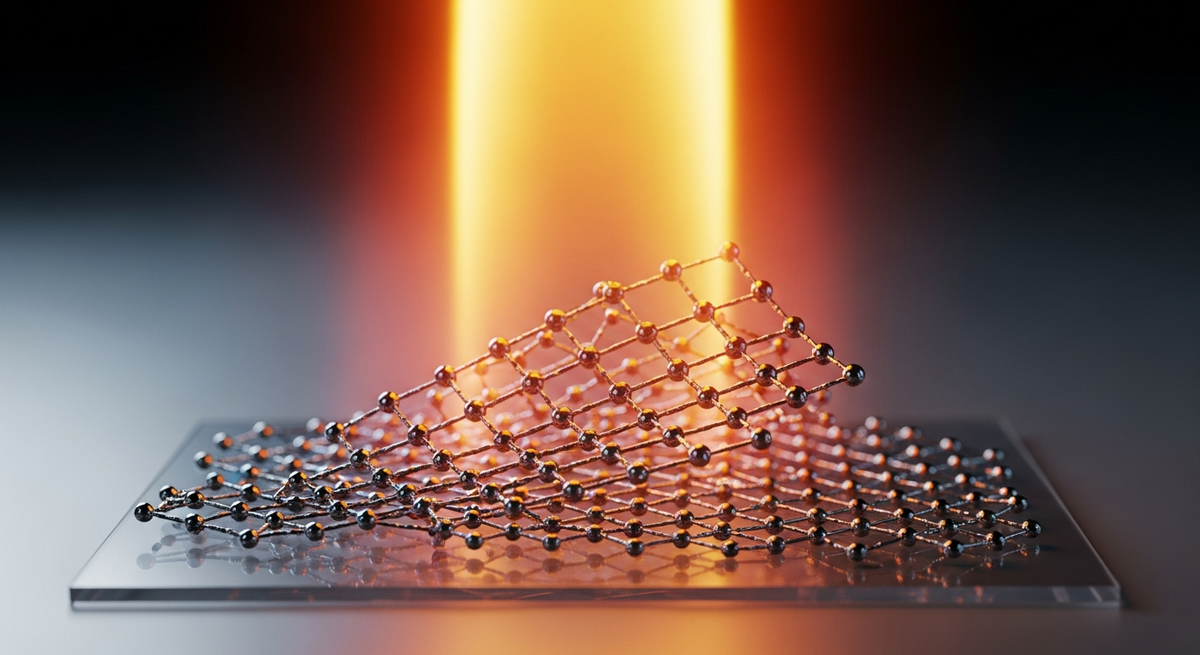
The advent of graphene, a single layer of carbon atoms arranged in a two-dimensional hexagonal lattice, has heralded a new era in materials science. Since its groundbreaking isolation via mechanical exfoliation by Novoselov et al., this wonder material has captivated scientific and industrial interest alike. Its extraordinary properties—including outstanding thermal conductivity, remarkably high electron mobility at room temperature, unique quantum tunneling effects, and superior optical characteristics—position graphene as a cornerstone for future advancements in electrochemical devices, optical technologies, and high-frequency electronics.
However, the path to widespread adoption of graphene has been hampered by significant production challenges. Traditional synthesis methods, such as mechanical exfoliation, epitaxial growth on SiC(0001), chemical reduction, exfoliation of graphite oxide, and Chemical Vapor Deposition (CVD), often contend with limitations like relatively small yields, high production costs, and inconsistent material quality. These bottlenecks have necessitated the exploration of novel, more efficient, and scalable synthesis routes to unlock graphene's full potential.
In this context, flame synthesis of graphene has emerged as a profoundly promising and disruptive alternative. This innovative approach harnesses the inherent chemical reactivity and carbon-rich environment of flames to generate high-quality carbon nanomaterials, including pure graphene and nitrogen-doped graphene, in a continuous, single-step process with short residence times. By leveraging the dynamic conditions within a flame, researchers are developing methods that could revolutionize the manufacturing landscape for graphene, offering a pathway to overcome the existing barriers of cost and scalability, and paving the way for its integration into a multitude of advanced applications.
The traditional methods for producing graphene, while foundational, present significant hurdles to industrial-scale application. Mechanical exfoliation, though yielding pristine graphene, is inherently low-throughput. Epitaxial growth on SiC(0001) offers high-quality material but is costly and substrate-dependent. Chemical reduction and exfoliation of graphite oxide are more scalable but often result in functionalized graphene with more defects and lower electrical conductivity compared to pristine graphene. CVD, a widely adopted method for various carbon nanomaterials, still requires specific catalysts and high temperatures, contributing to production costs and complexity.
Flame synthesis, in stark contrast, offers a compelling paradigm shift. It capitalizes on the rich chemical environment of a flame, which acts as a highly reactive microreactor capable of generating complex nanostructures. This method is inherently simple, continuous, and can be remarkably cost-effective. The chapter highlights a process for directly synthesizing pure graphene sheets from an ethanol flame and N-doped graphene from amine + ethanol flames, showcasing the versatility of this approach.
Key characteristics of flame-synthesized graphene include good transparency and impressive lateral dimensions, with sheets observed up to 400 µm² in size. These materials typically consist of few layers and exhibit distinct folded edges, indicative of their unique formation mechanism within the flame. The ability to produce such large, transparent, and few-layered graphene directly from a flame represents a significant step forward in addressing the scalability and quality challenges faced by other synthesis techniques. Furthermore, the inherent simplicity and potential for continuous operation position flame synthesis as a highly attractive method for the future of graphene production.
Doping, the intentional introduction of impurities into a material, is a well-established strategy in materials science to fine-tune electronic, chemical, optical, and magnetic properties. In the realm of graphene, substitutional doping with atoms like boron (B), nitrogen (N), sulfur (S), or silicon (Si) fundamentally alters the material's inherent characteristics. Nitrogen doping, in particular, has garnered substantial attention due to its capacity to induce significant changes in graphene's electronic structure and chemical reactivity, going beyond merely introducing additional n-type carriers into the carbon system.
The strategic incorporation of nitrogen atoms disrupts the perfect sp²-hybridization of carbon atoms within the graphene lattice, thereby creating localized electronic and chemical variations. This modification is crucial for a range of advanced applications, including high-frequency semiconductor devices where precise control over charge carrier density is paramount. Moreover, N-doping significantly enhances catalysis for energy conversion and storage, providing active sites that improve reaction kinetics and efficiency. The chapter specifically notes that nitrogen-doped graphene sheets synthesized from flames predominantly exhibit a “pyridine-type” structure, characterized by C=N bonds where one nitrogen atom is bonded to two carbon atoms. This specific bonding configuration is known to be highly beneficial for catalytic activity and charge transfer processes.
Beyond electronics and catalysis, N-doping also plays a vital role in improving the biocompatibility of carbon nanomaterials, making N-doped graphene a favorable candidate for sophisticated biosensing applications. The presence of nitrogen-induced defects and the pyridine-type structure on the graphene surface create highly reactive sites and modify the surface energy, which can enhance interactions with biological molecules. This ability to precisely tailor graphene's properties through N-doping underscores its potential across diverse technological frontiers, from energy storage to advanced medical diagnostics.
The elegance of flame synthesis lies in its simplicity and directness, particularly as demonstrated for the production of both pure and N-doped graphene. The experimental methodology described involves leveraging common fuels in controlled flame environments. For the synthesis of pure graphene, an ethanol flame serves as the carbon source. Ethanol, a readily available and relatively clean-burning fuel, provides the necessary carbon precursors within the high-temperature, reactive environment of the flame, allowing for the direct formation of graphene sheets.
To achieve N-doped graphene, the process introduces an amine into the ethanol flame, creating amine + ethanol flames. The amine component acts as the nitrogen source, allowing for the in-situ incorporation of nitrogen atoms into the growing graphene lattice. This one-step method is a significant advantage over multi-step doping processes, offering efficiency and scalability. The stability of nitrogen atoms incorporated via flame synthesis has been previously observed in N-doped carbon nanotubes (CNTs) from similar flame conditions, suggesting a robust doping mechanism that translates to graphene.
Rigorous characterization techniques are essential to confirm the microstructure, composition, and quality of the synthesized materials. Scanning Electron Microscopy (SEM) and Transmission Electron Spectroscopy (TEM) are employed to visualize the morphology, size, transparency, and few-layered nature of the graphene sheets, confirming their large dimensions (up to 400 µm²) and folded edges. X-ray Photoelectron Spectroscopy (XPS) is critical for identifying the elemental composition and, more importantly, for elucidating the specific bonding configurations of nitrogen within the graphene lattice, verifying the dominant “pyridine-type” structure with C=N bonds. Finally, Raman spectroscopy provides invaluable information regarding the number of graphene layers, the presence and nature of defects, and the overall quality of the synthesized material. These comprehensive analyses confirm the successful direct synthesis of both pure and N-doped graphene with tailored properties from controlled flame environments.
The unique structural and electronic properties imparted by flame synthesis, particularly the presence of surface defects and the strategic incorporation of nitrogen atoms, render flame-synthesized graphene an exceptionally promising material for high-performance applications. The chapter specifically highlights its significant potential in supercapacitors and as catalyst supports, areas where material morphology and surface chemistry play critical roles in device performance.
For supercapacitors, which are vital for energy storage systems requiring rapid charge-discharge cycles and high power density, the surface defects and nitrogen doping in flame-synthesized graphene are highly advantageous. Defects create additional active sites for ion adsorption, enhancing the material's specific capacitance and overall energy storage capacity. The pyridine-type nitrogen, with its distinct electronic environment, can further improve the wettability of the graphene surface and facilitate faster ion transport, leading to superior electrochemical performance. This combination of structural imperfections and targeted doping makes flame-derived graphene an ideal candidate for next-generation supercapacitor electrodes, offering improved efficiency and longevity.
As catalyst supports, the advantages of flame-synthesized graphene are equally compelling. Catalysts often rely on high surface area and specific active sites to facilitate chemical reactions efficiently. The abundance of surface defects acts as nucleation points for catalytic nanoparticles, promoting better dispersion and preventing agglomeration, thereby maximizing the catalytic surface area. Furthermore, the nitrogen atoms, especially in the pyridine-type configuration, can act as active sites themselves or modify the electronic properties of adjacent carbon atoms, enhancing the adsorption and activation of reactant molecules. This leads to increased catalytic activity, selectivity, and stability across a wide range of chemical processes, from fuel cells to various industrial chemical syntheses. The tailored defects and N-doping observed in flame-derived graphene thus provide a robust and versatile platform for developing highly efficient and durable catalyst systems, positioning it as a key material for advancing sustainable chemistry and energy technologies.
The synthesis of carbon nanomaterials within a flame is a fascinating testament to complex chemical kinetics and physical processes occurring under extreme conditions. The flame itself acts as a dynamic, high-temperature chemical reactor, providing a carbon-rich and chemically reactive environment that is ideal for the rapid formation of nanostructures. For graphene, the growth mechanism in a flame involves a sequence of intricate steps, drawing parallels from the established understanding of other flame-grown carbon nanomaterials like fullerenes and carbon nanotubes.
Initially, the fuel—ethanol for pure graphene, or ethanol mixed with an amine for N-doped graphene—undergoes rapid pyrolysis and partial combustion within the flame. This decomposition generates a diverse array of carbon-containing species, including small hydrocarbon radicals and larger polycyclic aromatic hydrocarbons (PAHs). These PAHs serve as the fundamental building blocks for graphene formation. Within the flame's steep temperature gradients, which can range from 800–2000°C for fullerenes or 500–1400°C for carbon nanotubes, these precursors rapidly grow and self-assemble.
The high temperatures and short residence times within the flame facilitate the rapid nucleation of graphene sheets. As these nascent sheets form, they continue to grow by incorporating additional carbon species from the surrounding flame environment. The specific conditions, such as fuel-to-oxidizer ratio, flame temperature, and collection substrate temperature (often high, such as >800°C or around 950°C for graphene with catalysts), dictate the morphology, layer number, and defect density of the resulting graphene. For N-doped graphene, the presence of amine in the fuel mixture introduces nitrogen-containing radicals. These nitrogen species can be incorporated substitutionally into the growing carbon lattice, leading to the formation of defects and specific nitrogen bonding configurations like the pyridine-type structure. This in-situ doping mechanism is a key advantage, allowing for precise control over the material’s properties directly during synthesis. The unique microstructure, including folded edges and surface defects, is a direct consequence of this rapid, non-equilibrium growth environment within the flame.
While established methods for graphene synthesis have laid the groundwork for its scientific exploration, their limitations in scalability, cost, and quality have driven the search for alternatives. Flame synthesis offers a compelling suite of advantages when compared to techniques like CVD, plasma treatment, and arc discharge, particularly for the production of N-doped graphene.
Chemical Vapor Deposition (CVD) is a cornerstone method for graphene production, often employing metal catalysts (like copper or nickel foils) at high temperatures. For N-doped graphene, carbon source gases are mixed with nitrogen-containing gases, which then dissociate and recombine on the catalyst surface. For instance, Wei et al. successfully synthesized N-doped graphene via CVD using a 25 nm thick copper film on a silicon substrate, demonstrating that N atoms could be substitutionally doped into the graphene lattice, leading to n-type behavior. While effective, CVD can be resource-intensive, requiring specific substrates and controlled atmospheric conditions, contributing to higher operational costs and batch processing limitations.
Arc-discharge is another method used to obtain carbon nanomaterials, including N-doped graphene. This technique involves evaporating a carbon source at high temperatures in the presence of nitrogen sources like pyridine vapor or NH₃. Rao et al. successfully applied this method to produce N-doped graphene. While arc discharge can produce high-quality materials, it typically offers lower yields and less precise control over the doping concentration and morphology compared to other methods.
Plasma treatment represents a post-synthesis doping approach, where pre-formed graphene is exposed to nitrogen plasma. While it allows for doping without directly incorporating nitrogen during growth, it can introduce structural damage and may not achieve the same level of uniform, substitutional doping as in-situ methods. The chapter emphasizes that the nitrogen atoms in flame-synthesized carbon nanomaterials (like CNTs, and by extension, graphene) exhibit greater stability compared to those introduced by other methods, highlighting a crucial advantage. The flame synthesis of graphene is inherently a single-step, continuous process that is simpler, potentially more cost-effective, and offers unique microstructures with specific defects and stable N-doping. These characteristics provide a distinct competitive edge, particularly for applications demanding high throughput, functionalized materials, and economic viability.
The emergence of flame synthesis as a viable method for producing high-quality graphene and N-doped graphene marks a significant milestone in materials science. The inherent advantages of this technique—simplicity, cost-effectiveness, continuous operation, and the ability to directly produce functionalized materials with tailored properties—position it as a frontrunner for future industrial scale-up. As research progresses, the focus will undoubtedly shift towards even finer control over the flame parameters, fuel types, and collection methodologies to precisely engineer the characteristics of the resulting graphene.
Further advancements will likely involve optimizing flame configurations to achieve even larger sheet sizes, fewer layers, and more uniform defect distribution, while minimizing undesirable byproducts. The exploration of different amine precursors could unlock novel nitrogen bonding configurations, further enhancing the material's performance in specific applications. Moreover, integrating in-line characterization techniques will be crucial for real-time monitoring and feedback control, ensuring consistent quality and enabling agile adjustments during continuous production.
The unique properties of flame-synthesized graphene, particularly its surface defects and stable N-doping, open doors to an expansive array of applications beyond supercapacitors and catalyst supports. This includes advanced sensors, highly efficient energy conversion devices, and even next-generation composites. By overcoming the traditional limitations of graphene production, flame synthesis is poised to accelerate the transition of this extraordinary material from the laboratory to widespread industrial and commercial use, truly cementing graphene's role as a foundational material of the 21st century.
The journey of graphene from a laboratory curiosity to a cornerstone of future technology is heavily reliant on scalable, cost-effective, and high-quality production methods. The flame synthesis of graphene represents a monumental leap forward in this endeavor, offering a direct, continuous, and remarkably simple pathway to produce both pure and functionally enhanced N-doped graphene. Its ability to yield large, few-layered sheets with tailored defects and stable nitrogen incorporation directly from an economical flame environment positions it as a transformative technology.
This innovative approach not only addresses the critical limitations of traditional graphene synthesis techniques but also opens up unprecedented opportunities for developing advanced materials for high-performance supercapacitors, highly efficient catalyst supports, and a myriad of other cutting-edge applications. As we continue to refine and scale this pioneering method, usa-graphene.com remains at the forefront, committed to providing superior quality graphene materials that harness the power of such revolutionary fabrication processes. Explore our offerings and discover how our advanced graphene solutions can propel your research and development into the next generation of technological innovation. Visit usa-graphene.com today to learn more about our materials and capabilities.
Serious about B2B integration? Test our premium Pulsed Electrical Resistive Carbon Heating turbostratic graphene in your lab. 100g sample packs available now.
Explore More
Researchers have developed a breakthrough method for growing twisted bilayer graphene with pre-designed angles, a key step toward manufacturable quantum...

Learn how deep learning is revolutionizing the structural characterization of twisted bilayer materials, accelerating the development of next-generation...

Learn to build a prototype graphene FET biosensor for sensitive DNA detection. This guide covers materials, fabrication, and testing for point-of-care...