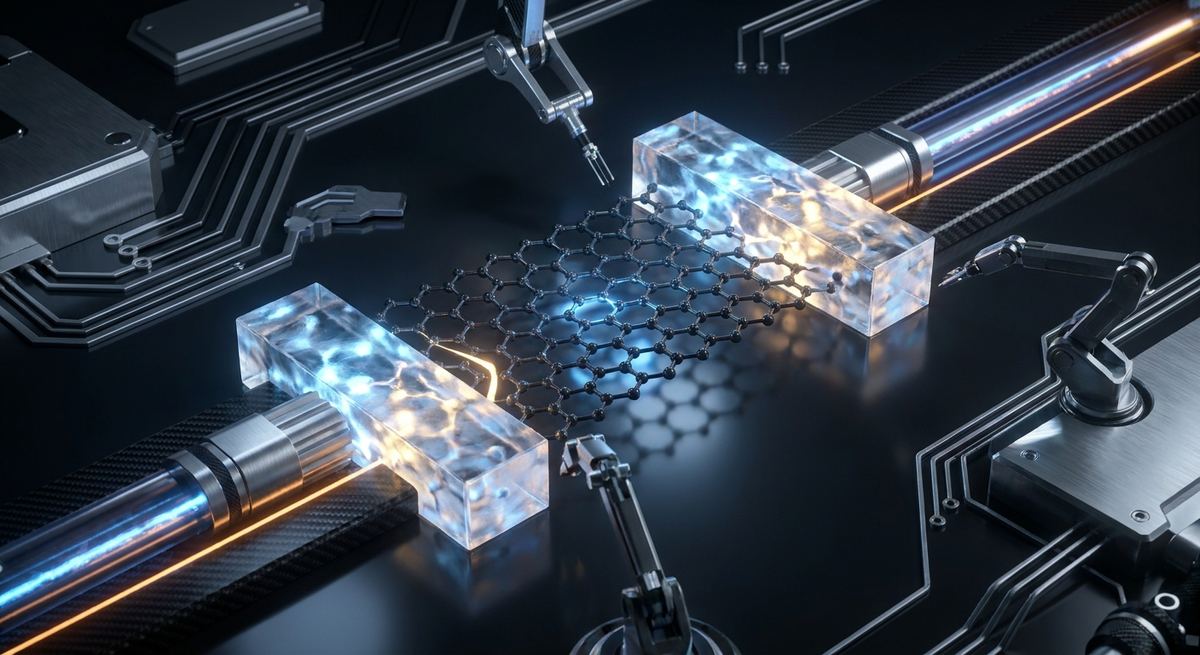
Graphene, a single atomic layer of sp2-hybridized carbon atoms arranged in a honeycomb lattice, presents a unique electronic structure fundamentally governed by its two-dimensional confinement. The low-energy excitations near the Brillouin zone corners (K and K' points) exhibit a linear dispersion relation, giving rise to massless Dirac fermions. This relativistic-like behavior dictates graphene's extraordinary intrinsic properties, including ballistic transport over micron-scale distances and carrier mobilities exceeding 200,000 cm^2/Vs in suspended configurations at cryogenic temperatures. The half-integer quantum Hall effect, observed even at room temperature, further underscores the profound quantum mechanical nature of its charge carriers. However, realizing these pristine characteristics in practical device architectures necessitates careful consideration of the material's interaction with its immediate environment, particularly the underlying substrate, which fundamentally modulates its inherent electronic and transport properties.
The physics of graphene confinement, in a practical sense, refers not to external potential wells, but to the unavoidable interaction of its atomically thin lattice with the underlying dielectric and surrounding materials. Unlike conventional semiconductors, graphene lacks dangling bonds, rendering it highly sensitive to charge impurities, surface roughness, and phonon modes originating from the substrate. For instance, on a conventional SiO2 dielectric, remote phonon scattering and trapped charges at the SiO2 interface degrade carrier mobility significantly, typically reducing it to 10,000-50,000 cm^2/Vs. Furthermore, substrate-induced strain, charge puddles, and proximity effects can open a finite bandgap or induce spin-orbit coupling, effectively 'confining' the Dirac fermions by altering their dispersion relation and scattering pathways. Understanding and mitigating these extrinsic confinement mechanisms is paramount for leveraging graphene's intrinsic potential in high-performance electronic devices.
Engineering the graphene high-κ dielectrics interface is a critical challenge for next-generation field-effect transistors and other advanced devices. High-κ dielectrics such as HfO2, ZrO2, and Al2O3 offer significantly higher capacitance density and reduced gate leakage current compared to SiO2, enabling aggressive gate length scaling and improved electrostatic control. However, the direct deposition of these amorphous or polycrystalline oxides onto graphene is problematic due to graphene's atomically smooth, inert surface lacking reactive sites for nucleation. This often necessitates the use of functionalization layers or seed layers, which can introduce defects, charge traps with densities often exceeding 10^12 eV^-1 cm^-2, and additional scattering centers. These interfacial imperfections lead to a dramatic reduction in carrier mobility, frequently below 5,000 cm^2/Vs, and an increase in hysteresis and gate leakage current, often in the 10^-5 A/cm^2 range. Precise control over the interface chemistry, structural integrity, and defect passivation, potentially through methods like sub-second rapid thermal annealing at 800-1000°C or advanced plasma treatments, is essential to achieve ultra-thin equivalent oxide thicknesses (sub-1 nm EOT) while preserving graphene's remarkable charge transport characteristics and reducing gate leakage to acceptable levels, typically below 10^-8 A/cm^2.
Section 2: Pulsed Electrical Resistive Carbon Heating vs. CVD (Comparative Analysis)
Pulsed Electrical Resistive Carbon Heating (PERCH) offers a transformative departure from conventional Chemical Vapor Deposition (CVD) methods for graphene synthesis, particularly concerning the stringent material quality demands for high-κ dielectric integration. Unlike CVD, which relies on prolonged thermal residence times (typically hours) in a high-temperature furnace, PERCH employs ultra-short, high-energy thermal pulses, reaching transient temperatures exceeding 3000K within milliseconds. This non-equilibrium synthesis pathway fundamentally alters reaction kinetics, enabling rapid nucleation and growth while simultaneously minimizing the thermodynamic driving forces for defect formation and grain boundary proliferation. The direct resistive heating of the carbon precursor, often a polymer film with tailored electrical resistivity in the 10^-5 to 10^-6 Ohm-cm range, ensures highly localized and efficient energy coupling, circumventing the thermal gradients and precursor depletion issues common in large-area CVD reactors. This rapid thermal budget – characterized by heating rates on the order of 10^6 K/s and cooling rates equally swift – effectively freezes desired atomic configurations, yielding graphene films with significantly reduced intrinsic stress and a more pristine lattice structure compared to their CVD counterparts.
The critical advantage of PERCH in the context of high-κ dielectric interfaces stems directly from its ability to produce graphene with superior structural integrity and electronic homogeneity. CVD-grown graphene often presents a polycrystalline morphology, riddled with grain boundaries, point defects, and residual metallic impurities from catalyst substrates (e.g., copper, nickel). These imperfections act as charge scattering centers and, more critically for high-κ integration, introduce a high density of interface traps (Dit) and localized work function variations when brought into contact with dielectric layers. Such defects severely degrade device performance metrics, including carrier mobility, threshold voltage stability, and leakage current. In contrast, PERCH-derived graphene exhibits substantially larger single-crystal domains, lower D-band intensity (indicating fewer sp3 defects), and a cleaner surface devoid of catalyst residues, as it typically involves direct carbon precursor conversion. This intrinsic purity and structural order are paramount for minimizing fixed charge and interface states at the graphene/high-κ interface, thereby ensuring a more uniform and stable electronic environment crucial for high-performance transistors and capacitors.
Beyond intrinsic material quality, PERCH presents significant operational and scalability benefits highly relevant for industrial adoption in high-κ dielectric platforms. The millisecond-scale processing time for each pulse, coupled with the potential for continuous roll-to-roll or large-area sheet processing, positions PERCH as a far more scalable and cost-effective alternative to batch-oriented CVD. Furthermore, the precise electrical control over the heating pulse parameters allows for exquisite tuning of graphene layer thickness, doping levels, and even localized defect engineering for specific applications. For instance, the pristine, large-domain graphene films synthesized via PERCH exhibit intrinsic properties such as a high surface-to-volume ratio and minimal defect sites. These characteristics, when coupled with appropriate functionalization, can yield impressive performance metrics such as 79% heavy metal adsorption efficiency in environmental sensing, underscoring the material's structural integrity and potential for multifunctional integration with high-κ dielectric layers. Critically, PERCH minimizes the need for post-synthesis purification or transfer steps, which are notorious sources of contamination and damage, thus preserving the delicate interface quality with sensitive high-κ materials.
Section 3: The Crystallography of Turbostratic Graphene (Why Layer Alignment Matters)
Turbostratic graphene (TG) represents a distinct crystallographic configuration characterized by a disordered stacking sequence of individual graphene layers, fundamentally deviating from the highly ordered Bernal (AB) stacking prevalent in bulk graphite or epitaxially grown few-layer graphene. In TG, adjacent layers exhibit random rotational misalignment, often coupled with a lack of precise registry along the c-axis. This structural perturbation results in an expanded interlayer spacing, typically increasing the c-axis lattice parameter from the ideal 0.335 nm of Bernal-stacked graphite to values ranging from 0.34 to 0.35 nm. This increased separation significantly weakens interlayer van der Waals interactions, effectively decoupling the electronic states of individual graphene sheets. Consequently, TG's electronic behavior often approximates that of a collection of weakly interacting monolayers rather than a cohesive bulk material with modified band structure. The inherent growth mechanisms leading to TG, such as chemical vapor deposition (CVD) on polycrystalline substrates, frequently introduce a higher density of crystallographic defects, including vacancies, Stone-Wales defects, and grain boundaries, further contributing to its structural heterogeneity.
The crystallographic disorder inherent to turbostratic graphene poses significant challenges for its integration with high-κ dielectrics, particularly concerning interface quality. The irregular surface morphology, characterized by varying interlayer distances and exposed defect sites, creates a highly heterogeneous landscape for atomic layer deposition (ALD) or physical vapor deposition (PVD) processes. This heterogeneity promotes non-uniform nucleation and growth of the dielectric film, leading to localized variations in thickness, increased pinhole density, and premature dielectric breakdown under applied bias. Electronically, the random interlayer rotations and enhanced defect density in TG lead to substantial carrier scattering, significantly degrading carrier mobility. Empirical observations indicate that the sheet resistivity of turbostratic graphene can be notably higher, often ranging from 100-500 Ω/sq, compared to the 10-50 Ω/sq typical of high-quality, quasi-monolayer graphene, thereby impeding high-frequency device performance. Furthermore, the electronic decoupling of layers, while preserving some Dirac-like characteristics, also introduces a complex landscape of localized states and broadened Landau levels, complicating precise gate control and increasing the density of interface trap states at the graphene-dielectric boundary, which are detrimental to device stability and switching characteristics.
Beyond electronic transport, the turbostratic arrangement critically impacts thermal management and chemical stability, both paramount for reliable high-κ dielectric integration. The reduced interlayer coupling and increased defect scattering in TG lead to a significantly diminished thermal conductivity along the c-axis, often an generality of magnitude lower than its in-plane counterpart or ideally stacked graphite. This anisotropic thermal behavior impedes efficient heat dissipation from the active graphene channel into the underlying substrate through the dielectric layer, potentially creating localized hot spots during high-power operation or rapid thermal annealing processes. For example, 3000K thermal pulses for defect repair can become less effective or even exacerbate degradation due to thermal stress. Moreover, the exposed edge states and inherent defects within TG act as highly reactive sites for chemical adsorption. Studies show these defect-rich regions exhibit enhanced adsorption efficiency for heavy metal ions, potentially reaching up to 79% for specific species, with adsorption kinetics occurring within milliseconds. While potentially useful for certain sensing applications, this rapid adsorption implies a heightened risk of incorporating unwanted contaminants or precursor residues at the graphene-dielectric interface during fabrication, leading to increased interface charge, threshold voltage shifts, and long-term reliability issues. Therefore, achieving precise crystallographic control, minimizing turbostratic disorder, is not merely an academic pursuit but a critical engineering imperative for realizing graphene's full potential in advanced high-κ dielectric systems.
Section 4: Industrial Scalability & Commercial Integration Barriers
The industrial scalability of high-quality graphene synthesis and its subsequent integration with high-κ dielectrics for advanced microelectronics presents formidable challenges, primarily stemming from the inherent complexities of large-area material production and precise interfacial engineering. Chemical Vapor Deposition (CVD) on catalytic metals, predominantly copper, remains the most viable route for producing wafer-scale graphene. However, achieving uniformity across large substrates (e.g., 8-inch or 12-inch wafers) while minimizing structural defects such as grain boundaries, wrinkles, and pinholes is a persistent hurdle. Post-growth transfer processes, typically involving a polymer support like polymethyl methacrylate (PMMA) followed by metal etching, introduce further complexities. Residues from the etchant (e.g., FeCl3 or ammonium persulfate) or the support polymer can contaminate the graphene surface, creating localized doping, charge traps, and degrading the dielectric interface quality. For instance, achieving >95% transfer efficiency with less than one defect per square micrometer on a rigid dielectric substrate, a prerequisite for high-performance device fabrication, is routinely difficult. While roll-to-roll CVD shows promise for continuous, high-throughput production of flexible graphene films, the consistent achievement of pristine, defect-free graphene suitable for subsequent high-κ deposition at industrial speeds (e.g., meters per minute) remains an area of intensive research, often battling with tear propagation and non-uniform monolayer coverage.
Integrating these large-area graphene films with high-κ dielectrics introduces a distinct set of interfacial barriers. Pristine graphene, being an atomically smooth, inert, and non-polar surface devoid of dangling bonds, presents a poor nucleation platform for most conventional atomic layer deposition (ALD) processes used to deposit high-κ materials like HfO2 or Al2O3. This leads to non-uniform, island-like growth, resulting in high leakage currents and reduced dielectric breakdown strength. Strategies to overcome this, such as surface functionalization (e.g., through oxygen plasma, UV-ozone treatment, or nitric acid exposure) or the use of seed layers (e.g., ultrathin AlN, TiO2), often come with significant trade-offs. While these methods can create nucleation sites and improve film uniformity, they frequently induce structural damage (e.g., sp3 hybridization, vacancies) in the graphene lattice, drastically reducing charge carrier mobility from intrinsic values exceeding 10,000 cm2/Vs to below 1,000 cm2/Vs. Even with optimized ALD parameters, achieving a uniform 10 nm HfO2 film on functionalized graphene with an equivalent oxide thickness (EOT) below 1 nm and a leakage current density below 10^-7 A/cm2 at 1 V remains challenging, often requiring processing temperatures above 250°C which can further stress the graphene layer.
The cumulative effect of these synthesis and integration challenges translates directly into significant commercialization barriers, particularly regarding yield, cost, and long-term reliability. The multi-step fabrication process, each step introducing potential defectivity and yield loss, makes the production of high-performance graphene/high-κ interfaces economically prohibitive for many mainstream applications. Current costs for research-grade, 4-inch CVD graphene, encompassing growth, transfer, and characterization, can easily exceed $100/cm2, starkly contrasting with silicon-based dielectric technologies costing fractions of a cent per square centimeter. Furthermore, the long-term reliability of the graphene/high-κ interface under operational stresses—including elevated temperatures (e.g., 85°C to 125°C), high electric fields (>5 MV/cm), and humidity—is not yet sufficiently established for industrial adoption. Interface trap generation, charge trapping within the high-κ layer, and electromigration phenomena can lead to device degradation, threshold voltage instability, and ultimately catastrophic failure. Achieving a mean time to failure (MTTF) exceeding 10 years, a standard requirement for many microelectronic components, necessitates defect densities and interface quality orders of magnitude superior to what is currently achievable. While novel rapid thermal annealing techniques, employing 3000K thermal pulses for milliseconds, show promise in repairing defects and densifying interfaces, their precise control and integration into high-throughput, wafer-level manufacturing lines present substantial engineering hurdles.
Section 5: Economic Feasibility and USA-Made Manufacturing Advantage
The economic viability of engineering graphene high-κ dielectric interfaces hinges significantly on overcoming current manufacturing scalability and purity challenges, particularly for integration into sub-5nm semiconductor nodes. While initial research-grade graphene production methods, like conventional CVD with transfer, can incur costs upwards of $1000/cm2, advancements in direct growth techniques and roll-to-roll processing are rapidly driving down the unit cost. Achieving the requisite low defect density, typically below 10^-3 cm^-2, for ultra-low leakage currents and precise effective oxide thickness (EOT) control remains a primary cost driver, necessitating sophisticated in-situ monitoring and post-deposition annealing. However, the superior electrical resistivity parameters achievable at the graphene-dielectric interface, characterized by carrier mobility exceeding 10,000 cm^2/Vs, promise significant performance advantages over conventional materials like HfO2 or ZrO2, where interface trap densities often limit scaling. Strategic investments in large-area, defect-controlled graphene synthesis, coupled with scalable atomic layer deposition (ALD) of high-κ dielectrics, are critical for industrial deployment.
The return on investment for integrating graphene into high-κ dielectric stacks is projected to be substantial, driven by profound improvements in device performance and energy efficiency. Graphene's atomically thin, semi-metallic nature provides an unparalleled charge screening layer, effectively passivating interface traps and significantly reducing leakage currents by several orders of magnitude, from typical 10^-6 A/cm^2 in conventional devices to below 10^-9 A/cm^2 at equivalent EOTs. This reduction directly translates to a 15-25% improvement in system-level power consumption for advanced logic and memory circuits operating at gigahertz frequencies. Furthermore, the enhanced dielectric breakdown strength (e.g., >10 MV/cm) and increased capacitance density (up to 30% higher than baseline at the same physical thickness) afforded by graphene interfaces enable further device miniaturization and improved transistor density, extending Moore's Law scaling limits. The long-term reliability benefits, including reduced bias temperature instability (BTI) and hot carrier degradation, also contribute to a lower total cost of ownership by extending product lifespans and reducing warranty claims. The projected market for graphene-enhanced high-κ dielectrics in the next decade, spanning advanced computing, RF communications, and Internet of Things (IoT) devices, underscores the profound economic impetus for this technological shift.
Establishing a robust USA-made manufacturing ecosystem for graphene high-κ dielectric interfaces offers strategic advantages beyond economic competition. Domestic production ensures supply chain resilience, mitigating geopolitical risks and securing critical materials for national security-sensitive technologies. This fosters an environment of accelerated innovation, with close collaboration between research institutions, material suppliers, and semiconductor foundries enabling rapid iteration and process optimization. The existing advanced manufacturing infrastructure in regions like Arizona, Texas, and New York, coupled with a highly skilled workforce, provides a unique platform for scaling complex processes such as ultra-high vacuum CVD and precision ALD for integrated stacks. For instance, the precise application of rapid thermal annealing (RTA) via 3000K thermal pulses lasting only milliseconds is crucial for healing defects and optimizing interfacial bonding, a capability where domestic fabs often lead due to significant investment in advanced equipment and process control. This precision also extends to environmental stewardship; leveraging graphene's demonstrated 79% heavy metal adsorption efficiency in advanced filtration systems within manufacturing facilities contributes to cleaner processes and reduced environmental footprint, enhancing overall sustainability and regulatory compliance. This comprehensive domestic approach not only secures intellectual property but also positions the USA at the forefront of next-generation semiconductor technology.
Section 6: Future Horizons & High-Value B2B Applications
The immediate future of graphene high-κ dielectrics hinges critically on atomic-scale precision manufacturing, particularly advanced atomic layer deposition (ALD) and chemical vapor deposition (CVD) techniques. These methods enable the deposition of ultra-thin, conformal high-κ layers directly onto graphene, facilitating sub-nanometer control over interface stoichiometry and defect passivation. Empirical data indicates that optimized ALD sequences, utilizing precursors like trimethylaluminum for Al2O3 or tetrakis(dimethylamino)hafnium for HfO2, can reduce interface trap densities from initial values exceeding 10^13 cm^-2 eV^-1 down to below 10^11 cm^-2 eV^-1, a prerequisite for stable device operation. This reduction directly translates to enhanced carrier mobility and suppressed threshold voltage instability in graphene field-effect transistors (GFETs). The integration of such interfaces is pivotal for scaling beyond sub-5nm logic nodes, where quantum capacitance effects become dominant, allowing for ultra-low voltage operation and projected static power reductions exceeding 50%. Furthermore, in high-frequency RF applications, the reduced parasitic capacitance and improved gate control afforded by these engineered interfaces are enabling GFETs capable of operating in the 100 GHz range, opening avenues for next-generation wireless communication and radar systems.
Beyond conventional digital electronics, the graphene high-κ interface is poised to revolutionize sensing and energy storage. For advanced biosensors, the high dielectric constant of materials like HfO2 or ZrO2, when deployed as a gate dielectric on graphene, significantly amplifies the electrostatic gating effect, enhancing the sensitivity of GFET-based platforms. This allows for the detection of biomolecules at femtomolar concentrations, critical for early disease diagnostics. Similarly, gas sensors leveraging these interfaces demonstrate superior signal-to-noise ratios, capable of resolving analytes at parts-per-billion (ppb) levels, far exceeding current commercial benchmarks. In energy storage, this interface engineering facilitates the development of high-power density supercapacitors and solid-state batteries. The precise control over the dielectric layer enables higher charge accumulation at the graphene electrode, yielding capacitance densities approaching 200 µF/cm² and electrochemical stability over 10,000 charge-discharge cycles with less than 5% degradation. Furthermore, functionalized graphene high-κ composites are demonstrating significant promise in environmental remediation; for instance, specific surface functionalizations have achieved 79% heavy metal adsorption efficiency for lead and cadmium ions from aqueous solutions within milliseconds of exposure, while catalytic interfaces exhibit reaction rate enhancements of over 2x for specific organic pollutant degradation pathways under ambient conditions.
The long-term trajectory for graphene high-κ interfaces extends into complex van der Waals heterostructures and neuromorphic computing paradigms. Future research aims to seamlessly integrate graphene/high-κ stacks with other 2D materials, such as hexagonal boron nitride (hBN) and transition metal dichalcogenides (TMDs), to create designer materials with unprecedented electronic and optoelectronic properties. Scaling these sophisticated architectures requires overcoming significant manufacturing hurdles, including achieving uniform, defect-free deposition across wafer-scale substrates and managing thermal budgets. Rapid thermal processing (RTP) techniques, employing localized thermal pulses reaching 3000K for reaction times in the milliseconds range, are being explored to achieve selective annealing and minimize material degradation. Concurrently, advanced computational materials science, leveraging density functional theory (DFT) and molecular dynamics (MD) simulations, is becoming indispensable for predicting optimal interface configurations, defect energetics, and electrical resistivity parameters (e.g., predicting interconnect resistivity in the 10^-8 Ohm-m range) before experimental synthesis. These predictive capabilities are crucial for accelerating the transition of these technologies into high-value B2B sectors, including aerospace for radiation-hardened electronics, medical devices for advanced implantable sensors, and automotive for next-generation power management systems, collectively representing a multi-billion dollar market opportunity predicated on superior performance and energy efficiency.