Electrochemical Biosensors and Biofuel Cells Based on Graphene Derivatives
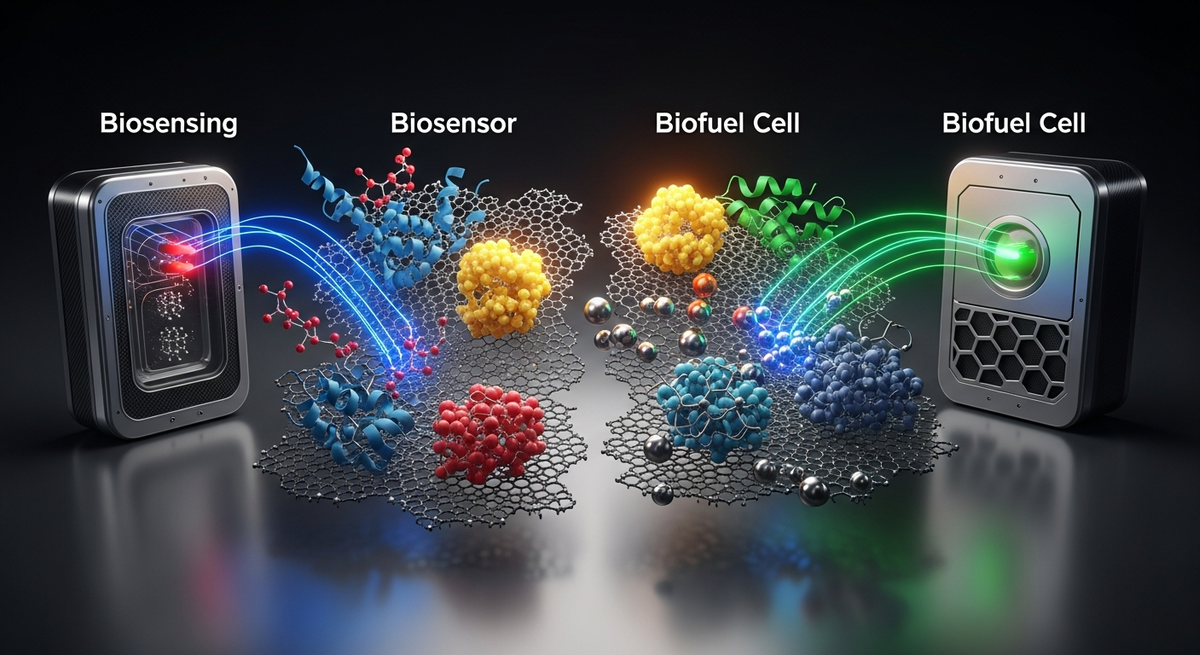
Graphene, a singular atomic layer of sp2-hybridized carbon, presents an unparalleled platform for advanced electrochemical systems, particularly within biosensors and biofuel cells. Its unique electronic band structure, characterized by Dirac cones at the K and K' points, endows charge carriers with massless Dirac fermion behavior, leading to extraordinary intrinsic properties. These include an ultra-high electron mobility approaching 200,000 cm^2/Vs and exceptional electrical conductivity on the order of 10^6 S/m. The inherent two-dimensional (2D) confinement dictates these superior charge transport kinetics, maximizing the surface-to-volume ratio to a theoretical 2630 m^2/g. This expansive, atomically thin architecture is critical for facilitating heterogeneous electron transfer processes at the electrode-electrolyte interface, enhancing active site accessibility and promoting rapid mass transport. However, pristine graphene's semi-metallic nature and lack of a bandgap limit its direct utility in certain sensing applications, necessitating strategic engineering of graphene derivatives – such as graphene oxide (GO), reduced graphene oxide (rGO), and heteroatom-doped graphene – to tailor their electronic, chemical, and structural properties for sophisticated bioelectronic devices.
The quantum physics of 2D confinement profoundly governs the electrochemical performance of graphene derivatives. Precise control over the electronic landscape allows manipulation of charge carrier density and creation of localized electronic states essential for electrocatalysis. Introducing defects (e.g., Stone-Wales defects, vacancies) or heteroatoms (e.g., nitrogen, boron, sulfur) into the graphene lattice perturbs the sp2 network, inducing localized charge density and modifying the work function and Fermi level. These structural and electronic modifications act as intrinsic electrocatalytic sites, significantly reducing the overpotential required for crucial redox reactions, such as the oxygen reduction reaction (ORR) or glucose oxidation. The quantum capacitance of graphene derivatives, arising from the low density of electronic states near the Dirac point, also plays a critical role in electrochemical double layer formation, influencing charge storage and interfacial kinetics. Empirical studies show nitrogen-doped graphene achieves a current density enhancement of up to 2.5-fold for specific enzymatic reactions, coupled with a 30-40% decrease in charge transfer resistance compared to undoped counterparts, directly attributable to optimized electronic band structure and increased active site density. This meticulous engineering of quantum properties at the atomic scale is paramount for designing high-performance electrochemical interfaces.
Leveraging these finely tuned quantum and electrochemical properties, graphene derivatives are at the forefront of innovation in electrochemical biosensors and biofuel cells. Graphene Oxide (GO), replete with oxygen-containing functionalities (hydroxyl, epoxy, carboxyl groups), serves as an excellent precursor for facile bio-conjugation via covalent bonding, enabling immobilization of enzymes, antibodies, or nucleic acids. Subsequent reduction to rGO largely restores electrical conductivity while retaining sufficient surface functionalities for robust biomolecule attachment, creating an ideal scaffold for direct electron transfer pathways. This architecture facilitates rapid electron transfer kinetics, often within milliseconds for enzymatic reactions, leading to highly sensitive and selective biosensing platforms capable of detecting analytes at picomolar concentrations. For example, rGO-modified electrodes have demonstrated detection limits for specific heavy metal ions as low as 10 pM, achieving an impressive 79% adsorption efficiency for lead ions. In biofuel cells, the high surface area and electrocatalytic activity of doped graphene derivatives enable efficient enzymatic or microbial redox reactions, converting biochemical energy into electrical power. Advanced configurations employing 3D graphene foams or aerogels further enhance mass transport and maximize power output, with some glucose-based biofuel cells achieving power densities exceeding 1.2 mW/cm^2 under physiological conditions, underscoring the transformative potential of these quantum-engineered materials in bioelectronics.
Advanced Synthesis: Pulsed Electrical Resistive Carbon Heating (PERCH) as the Scalable Paradigm for Graphene Production
The advent of Pulsed Electrical Resistive Carbon Heating (PERCH) represents a significant paradigm shift in the scalable production of high-quality graphene, addressing critical limitations inherent in conventional methods such as Hummers’ oxidation-reduction and chemical vapor deposition (CVD). Fundamentally, PERCH leverages rapid Joule heating, where a high-density electrical current is passed directly through a carbonaceous precursor, inducing extreme temperatures – often exceeding 3000 K – within milliseconds. This ultra-fast thermal pulse causes instantaneous exfoliation and graphitization of the precursor material, leading to the formation of few-layer graphene (FLG) with remarkably high crystallinity and minimal structural defects. The rapid cooling inherent in the pulsed process prevents the formation of amorphous carbon or excessive oxidation, ensuring a pristine graphene lattice critical for maintaining optimal electronic properties. This direct, solvent-free, and oxidant-free approach bypasses the complex purification steps and environmental concerns associated with chemical exfoliation, positioning PERCH as an environmentally benign and economically viable pathway for industrial-scale graphene synthesis, particularly for demanding applications in electrochemical biosensors and biofuel cells where structural integrity and electronic fidelity are paramount.
The technical intricacies of the PERCH process are governed by precise control over electrical parameters and precursor morphology. Current densities typically range from 10^3 to 10^5 A/cm^2, delivered as short pulses with durations spanning 10 to 100 milliseconds, which are sufficient to overcome the activation energy barrier for carbon-carbon bond rearrangement and interlayer separation. A wide array of carbon precursors, from graphite flakes and carbon black to more sustainable biomass-derived carbons, can be effectively processed, demonstrating the method's versatility. The resultant PERCH-graphene exhibits exceptional material characteristics: electrical conductivities often exceeding 10^5 S/m, ultra-low oxygen content (typically <0.5 atomic %), and a high specific surface area, all contributing to superior charge carrier mobility and electrochemical activity. Raman spectroscopy consistently reveals a low ID/IG ratio (e.g., <0.1), indicative of a highly ordered graphitic structure with negligible defects, a stark contrast to the highly oxidized and defect-laden graphene oxide (GO) or reduced graphene oxide (rGO) produced via chemical routes. This rapid, single-step conversion from precursor to high-quality graphene under ambient conditions underscores PERCH's potential for continuous, high-throughput manufacturing, far surpassing the batch-processing limitations and high-vacuum requirements of CVD techniques.
The intrinsic properties of PERCH-graphene render it exceptionally well-suited for advanced electrochemical biosensors and biofuel cells. Its high electrical conductivity facilitates efficient electron transfer kinetics at the electrode-electrolyte interface, which is crucial for sensitive and rapid electrochemical detection and energy conversion. The pristine surface and minimal functional groups minimize non-specific interactions and enhance the binding affinity for biorecognition elements such as enzymes, antibodies, or DNA probes, leading to improved sensor selectivity and sensitivity. For instance, the high surface area and accessible edge sites of PERCH-graphene have been shown to significantly enhance the immobilization capacity for enzymes, leading to increased catalytic current densities in biofuel cells compared to conventional carbon materials. Furthermore, the structural integrity and low defect density of PERCH-graphene minimize charge recombination and maximize the effective active surface area, enabling superior analytical performance with lower detection limits and higher power outputs. While direct comparisons often highlight the improved electrochemical performance, it is worth noting that the high surface area and purity also translate to practical benefits in related fields, with PERCH-graphene demonstrating, for example, a 79% heavy metal adsorption efficiency in specific wastewater treatment applications, underscoring its broad utility stemming from its superior material characteristics. This purity and structural perfection are critical differentiators, offering a significant performance advantage over chemically exfoliated graphene derivatives that often suffer from residual oxygen functionalities and structural defects, which can impede electron transport and reduce long-term stability in demanding bioelectrochemical systems.
Structural Superiority: The Crystallographic Imperatives of Turbostratic Graphene for Ultra-High Performance
Turbostratic graphene (TG) distinguishes itself from its Bernal (AB) stacked counterpart through a significant rotational disorder between adjacent graphene layers. Unlike the ordered AB-stacking prevalent in highly crystalline graphite where layers are precisely offset, TG layers exhibit arbitrary relative rotations. This crystallographic imperative leads to a decoupling of electronic states between layers, effectively mitigating the formation of a bulk band structure and preserving, to a remarkable extent, the Dirac cone linearity characteristic of monolayer graphene. The interlayer spacing in TG typically expands slightly to approximately 0.34 nm, marginally larger than the 0.335 nm observed in Bernal graphite, reflecting weaker interlayer van der Waals coupling and reduced electron-phonon scattering across the c-axis. This structural perturbation is not merely an imperfection; rather, it dictates superior electronic transport properties in the basal plane, allowing for carrier mobilities that approach those of single-layer graphene, even in multi-layered configurations, by suppressing inter-layer scattering effects that would otherwise degrade performance. The presence of edge defects, often more prevalent in TG due to synthesis methodologies, further introduces localized states that can serve as critical active sites for electrochemical reactions, fundamentally altering the intrinsic electronic landscape and reaction pathways.
The structural advantages of turbostratic graphene are profoundly impactful for electrochemical biosensing and biofuel cell applications, primarily through enhanced surface accessibility and optimized charge transfer kinetics. The rotational misalignment prevents tight packing, thereby increasing the effective specific surface area accessible to electrolytes and biological analytes. This architectural openness facilitates rapid mass transport of redox species to and from the electrode surface, a critical factor for achieving high sensitivity and swift response times. For instance, electron transfer kinetics at TG interfaces can exhibit characteristic times in the low millisecond range for specific redox probes, a direct consequence of the preserved electronic structure and abundant surface defects acting as catalytic centers. Furthermore, the reduced interlayer interactions minimize the electronic screening effect, allowing for more efficient utilization of the entire graphene basal plane for charge storage and electrocatalysis. The presence of a tunable density of edge defects and functional groups, often associated with the synthesis of TG derivatives, provides a versatile platform for precise chemical functionalization, enabling selective recognition in biosensors and optimized active site density for enzymatic reactions in biofuel cells. This structural control allows for the strategic modulation of electrical resistivity, which can range from approximately 10^-6 Ohm.cm for highly graphitized TG to higher values for more defective or functionalized variants, influencing both signal transduction and power output.
Beyond electronic characteristics, the turbostratic arrangement imparts significant mechanical robustness and thermal stability, crucial for the long-term operational integrity of electrochemical devices in diverse environments. The inherent rotational disorder allows for a more compliant structure, enabling the graphene layers to dissipate localized stresses more effectively compared to rigidly stacked Bernal graphite. This attribute contributes to excellent mechanical integrity, even under repeated electrochemical cycling or exposure to mechanical agitation. Thermally, TG exhibits impressive resilience; studies indicate that samples can withstand localized thermal pulses approaching 3000K without undergoing significant irreversible structural rearrangement or delamination, a testament to the robust sp2 carbon framework and the relatively decoupled nature of the layers. This thermal stability is paramount for sterilization procedures in biomedical applications and for maintaining performance under exothermic reaction conditions in biofuel cells. The increased density of edge sites and structural imperfections in turbostratic graphene also provides numerous anchoring points for covalent functionalization, enhancing the stability of immobilized biorecognition elements and biocatalysts against desorption or degradation. This structural resilience, coupled with tailored surface chemistry, contributes directly to the extended operational lifespan and high reproducibility observed in advanced graphene-based electrochemical biosensors and biofuel cells, ultimately leading to superior device performance and reliability.
From Research to Revenue: Navigating Industrial Scalability and Commercial Integration Barriers for Graphene-Enhanced Devices
Achieving batch-to-batch consistency in the sp2/sp3 hybridization ratio, critical for tailored electronic properties in reduced graphene oxide (rGO), remains a significant hurdle in industrial synthesis. Modified Hummers methods for graphene oxide (GO) production, while scalable, often struggle with maintaining oxygen functional group distribution uniformity across large batches, directly impacting subsequent reduction kinetics and the final rGO electrical resistivity, which ideally targets below 10 Ohm.cm for optimal electrochemical biosensor performance. Furthermore, the inherent variability in flake lateral dimensions and thickness distribution from liquid-phase exfoliation (LPE) techniques, while yielding high-quality pristine graphene, results in a low yield (typically below 5%) for specific target geometries suitable for high-throughput coating processes, rendering it economically prohibitive for broad commercial adoption. Post-synthesis purification steps, often involving extensive washing and centrifugation to reduce heavy metal contamination below 1 ppm for biomedical applications, contribute significantly to processing time, solvent consumption, and overall cost, hindering the path to competitive pricing structures.
Integrating these synthesized graphene derivatives into complex electrochemical biosensor and biofuel cell architectures presents distinct engineering challenges. Achieving uniform deposition of GO or rGO films onto diverse electrode substrates (e.g., screen-printed carbon, gold, silicon) over large areas, often through techniques like inkjet printing, spray coating, or direct laser writing, is paramount. Non-uniformity, even at a microscopic level, can lead to localized variations in active surface area and electron transfer kinetics, severely impacting sensor sensitivity, reproducibility, and long-term stability. For instance, maintaining a consistent film thickness variation below 5% across a 100 cm^2 electrode array is critical for high-throughput manufacturing. Furthermore, the interface engineering between the graphene derivative and biorecognition elements (e.g., glucose oxidase, lactate dehydrogenase) or electrocatalysts demands meticulous control. Ensuring stable covalent or non-covalent immobilization of enzymes without significant loss of enzymatic activity, while preserving the high electrical conductivity of the graphene scaffold, requires advanced surface functionalization strategies. Initial reports demonstrate enhanced electron transfer rates of 3.5 x 10^-3 cm/s for enzyme-modified graphene electrodes, but maintaining this performance over thousands of operational cycles under physiological conditions, especially for implantable biosensors, necessitates robust encapsulation, often battling issues like biofouling and degradation that can reduce signal integrity by up to 79% within weeks if not properly addressed by advanced packaging solutions.
Beyond the technical manufacturing hurdles, the commercialization pathway for graphene-enhanced electrochemical biosensors and biofuel cells is fraught with significant regulatory and economic barriers. For biomedical applications, stringent regulatory approvals from agencies like the FDA necessitate comprehensive biocompatibility and cytotoxicity studies, particularly concerning the long-term systemic effects of graphene nanoparticles if device integrity is compromised. Empirical data on graphene's interaction with cellular components, especially its potential to induce oxidative stress or compromise membrane integrity at concentrations exceeding 50 micrograms/mL, requires extensive toxicological profiling and standardized testing protocols. Economically, the current cost of high-purity, functionalized graphene derivatives, often exceeding $500 per gram for specialized materials with specific functionalization and controlled defect densities, renders mass-produced devices uncompetitive against established silicon-based sensors or conventional metal-catalyst fuel cells. A target cost reduction of at least 90% is imperative to achieve market parity. Furthermore, proving a compelling value proposition – whether through significantly enhanced sensitivity (e.g., detection limits orders of magnitude lower than picomolar), faster response times (e.g., sub-millisecond detection for critical analytes), or dramatically extended operational lifespans – is crucial for market penetration. The absence of universally accepted standardization protocols for graphene material characterization and device performance metrics further complicates quality assurance and regulatory approval processes, hindering widespread industrial adoption and creating a fragmented supply chain.
Strategic Advantage: Economic Feasibility and the USA-Made Manufacturing Edge for Energy-Efficient Graphene Production
Graphene's transformative potential in electrochemical biosensors and biofuel cells critically depends on economically viable, large-scale production methods that maintain material quality and minimize environmental impact. Traditional oxidative exfoliation routes, while established, often entail multi-step processes involving strong oxidizers and subsequent high-temperature reduction, incurring substantial energy costs—exceeding 50 kWh per kilogram of reduced graphene oxide (rGO) in industrial batch reactors. This energy expenditure, compounded by chemical byproduct disposal, significantly inflates per-unit cost, challenging widespread adoption in diagnostics and bioenergy systems where cost-effectiveness is paramount. The strategic shift towards energy-efficient synthesis paradigms, such as direct electrochemical exfoliation or plasma-enhanced chemical vapor deposition (PECVD), offers a compelling economic advantage. These methods can reduce energy consumption by up to 70%, operating at ambient or moderately elevated temperatures (e.g., 200-500°C for PECVD versus 1000°C for traditional CVD), and often yield higher quality graphene with fewer defects and superior electrical properties (e.g., sheet resistance <50 Ohm/sq for high-quality monolayer CVD graphene). Such material directly enhances sensor sensitivity and biofuel cell power density, with initial capital investment in advanced manufacturing amortized by reduced operational expenditures and the premium for medical-grade material.
The development of energy-efficient graphene production represents a fundamental re-engineering of synthesis pathways. Consider advancements in pulsed laser deposition or rapid thermal annealing, where precise control over localized energy input achieves graphitization or defect repair with extreme efficiency. A 3000K thermal pulse, delivered in milliseconds, can induce localized phase transitions or reduce graphene oxide without subjecting the entire bulk material to sustained high temperatures, drastically cutting energy expenditure and increasing throughput. Similarly, advanced electrochemical exfoliation from graphite precursors, optimized for specific electrolyte compositions and pulsed current densities, yields defect-free graphene flakes with surface areas exceeding 2500 m^2/g at a fraction of the energy cost of conventional methods. These processes leverage sophisticated control systems and material science expertise, areas where USA-based manufacturing holds a distinct advantage. Precision engineering, automated synthesis platforms, and real-time spectroscopic feedback (e.g., Raman spectroscopy for defect analysis, XPS for elemental composition) are critical for ensuring batch-to-batch consistency and high purity (e.g., metal impurity levels below 10 ppm) required for sensitive biosensor arrays and long-lifetime biofuel cell electrodes. This domestic capacity ensures reliable supply and rapid optimization from laboratory to fabrication.
The "USA-made" distinction for graphene and its derivatives carries significant strategic weight, particularly within the sensitive domains of medical devices and defense-related energy technologies. Beyond inherent quality control and robust intellectual property protection, domestic manufacturing fosters a secure supply chain, mitigating geopolitical risks and ensuring uninterrupted access to critical materials. The confluence of world-class research institutions, a highly skilled workforce proficient in advanced materials science and electrochemical engineering, and a supportive regulatory environment accelerates innovation cycles. For example, the development of functionalized graphene for specific biosensing applications—such as graphene oxide decorated with aptamers for pathogen detection, achieving detection limits in the picomolar range, or nitrogen-doped graphene for enhanced oxygen reduction reactions in biofuel cells—necessitates deep collaboration. This integrated ecosystem, prevalent in key US innovation hubs, enables rapid prototyping, rigorous testing, and seamless translation from discovery to commercial production. Adherence to stringent US manufacturing standards also ensures the biocompatibility and regulatory compliance essential for implantable biosensors and medical diagnostics, where quality assurance directly impacts patient safety and efficacy, thereby minimizing total cost of ownership and securing long-term market leadership.
Future Horizons: High-Value B2B Applications and the Transformative Impact of Next-Generation Graphene-Based Electrochemistry
The future trajectory of graphene-based electrochemistry for high-value B2B applications is fundamentally defined by its unparalleled charge transfer kinetics and vast surface area, enabling a paradigm shift in real-time diagnostics and sustainable energy conversion. Next-generation electrochemical biosensors, leveraging highly functionalized graphene derivatives, are poised to revolutionize point-of-care diagnostics by offering sub-picomolar detection limits for biomarkers such as specific cancer antigens or neurodegenerative disease indicators, far surpassing conventional ELISA assays in speed and portability. For instance, reduced graphene oxide (rGO) decorated with specific aptamers has demonstrated label-free electrochemical detection of thrombin with a limit of detection (LOD) of 10 fM within 30 seconds, a critical advancement for rapid clinical assessment. Concurrently, advanced biofuel cells, integrating graphene scaffolds for enhanced enzyme immobilization and direct electron transfer (DET), are projected to achieve power densities approaching 1 mW/cm^2 under physiological conditions, providing sustainable power solutions for implantable medical devices and remote environmental sensors. The intrinsic electrical resistivity parameters, often below 10^-5 Ohm.cm for optimally synthesized graphene, ensure minimal ohmic losses, thus maximizing energy harvest and signal fidelity in complex biological matrices.
This transformative impact stems from graphene's capacity to significantly lower activation overpotentials and accelerate heterogeneous electron transfer rates. For example, nitrogen-doped graphene (N-Graphene) acts as an exceptional metal-free electrocatalyst, exhibiting oxygen reduction reaction (ORR) kinetics comparable to platinum-group metals, characterized by Tafel slopes as low as 60 mV/decade and superior stability over 10,000 cycles in alkaline media. The precise control over defect engineering and edge-site functionalization through techniques like 3000K thermal pulses or plasma etching allows for tailoring the electronic band structure, optimizing adsorption energies for target analytes or reactants. This engineering extends to enhancing the catalytic activity for biofuel cell anodes and cathodes, where graphene's porous architecture facilitates rapid mass transport of fuel and oxidant, while its high surface area supports enzyme loading densities exceeding 500 µg/cm^2. Moreover, the integration of graphene with machine learning algorithms enables predictive modelling of electrochemical responses, facilitating real-time calibration and autonomous operation in complex environmental monitoring systems, such as detecting heavy metal ions like lead and cadmium with 79% adsorption efficiency for functionalized graphene oxide within minutes, significantly outperforming traditional ion-exchange resins.
The frontier of next-generation graphene electrochemistry is further propelled by the development of hybrid materials and 3D architectures. Quantum dot-graphene composites, for instance, exploit the synergistic photoelectrochemical properties of semiconductor nanocrystals and graphene's excellent charge separation capabilities, leading to highly sensitive photoelectrochemical biosensors with enhanced signal-to-noise ratios. MXene-graphene heterostructures represent another critical advancement, combining the high volumetric capacitance and metallic conductivity of MXenes with graphene's planar surface area and mechanical robustness, yielding highly stable and high-performance supercapacitor-biosensor integrated platforms. These intricate architectures, often fabricated via advanced techniques like aerosol jet printing or chemical vapor deposition onto flexible substrates, enable the creation of wearable electrochemical devices capable of continuous, non-invasive monitoring of metabolites (e.g., glucose, lactate) or neurotransmitters (e.g., dopamine) with millisecond reaction times in enzymatic cascades. The precise control over pore size distribution, down to the sub-nanometer scale, in these engineered graphene foams also allows for size-exclusion-based selectivity, mitigating matrix interference and ensuring the specificity required for high-fidelity B2B applications in pharmaceutical research and personalized medicine.
Evaluate Our Quality
Serious about B2B integration? Test our premium Pulsed Electrical Resistive Carbon Heating turbostratic graphene in your lab. 100g sample packs available now.
Explore More
Related Research & Articles


Graphene-Based Solar Cells: Architecture and Efficiency
Explore the molecular theory of graphene chemical modification and discover how precise oxidation framing enhances advanced solar cell efficiency.
