Electrochemical Biosensors and Biofuel Cells Based on Graphene Derivatives
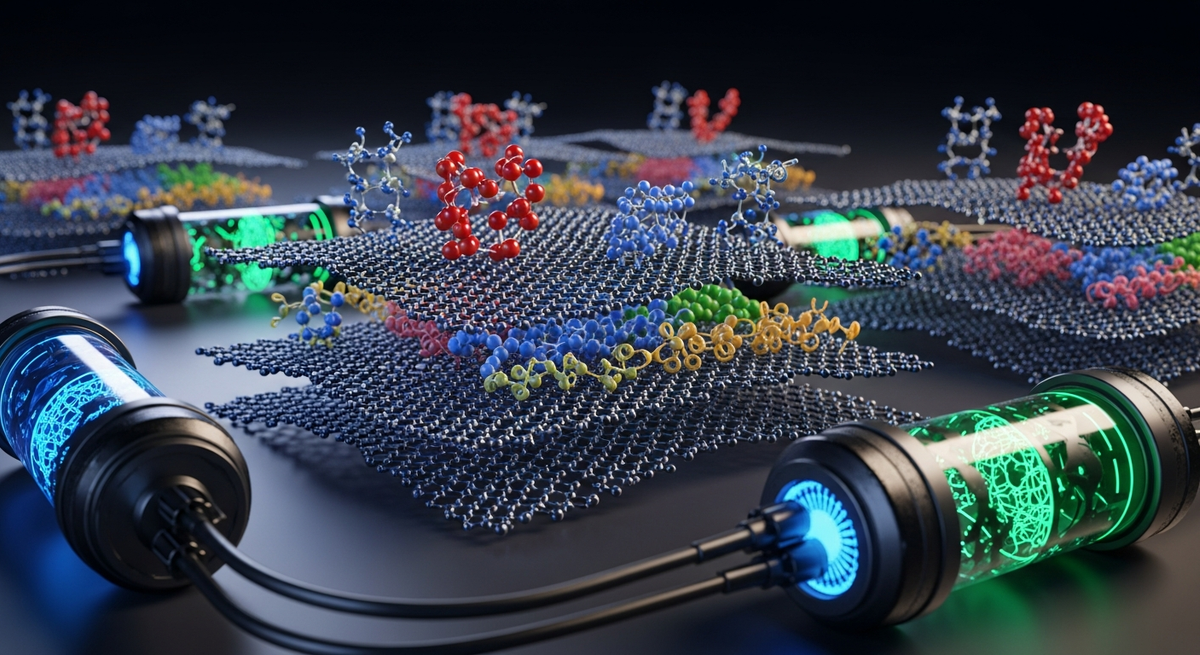
Graphene, a singular two-dimensional material comprising a monoatomic layer of sp2-hybridized carbon atoms arranged in a hexagonal lattice, owes its extraordinary properties to the fundamental physics of quantum confinement. The electronic structure of pristine graphene is uniquely defined by Dirac fermions, massless charge carriers exhibiting relativistic quantum mechanical behavior near the K and K' points of the Brillouin zone. This intrinsic confinement within a single atomic plane manifests in phenomena such as ballistic transport over micrometer scales even at ambient temperatures, with electron mobilities routinely exceeding 200,000 cm^2/Vs. The pseudo-relativistic nature and gapless band structure confer an unparalleled electronic tunability, pivotal for designing high-performance electrochemical interfaces. This unique density of states near the Dirac point and the suppression of backscattering facilitate exceptionally efficient charge transfer kinetics, a prerequisite for rapid electrochemical signaling in advanced biosensors and biofuel cells.
The effective confinement of charge carriers within this atomically thin plane fundamentally alters their interaction with external fields and adsorbed species. Surface functionalization, particularly through the controlled generation of graphene derivatives like graphene oxide (GO) and reduced graphene oxide (rGO), deliberately introduces structural defects and oxygen-containing groups (hydroxyl, carboxyl, epoxide). These modifications locally perturb the pristine sp2 network, creating localized electronic states and altering the Fermi level, thereby tuning the material's work function and enhancing specific adsorption sites for biomolecules. The intrinsically high specific surface area of graphene (theoretically 2630 m^2/g for pristine material) coupled with these chemically active sites significantly increases the interfacial area available for electrochemical reactions. This engineered electronic landscape, characterized by tailored band structures and defect states, facilitates rapid electron tunneling and heterogeneous electron transfer rates, often observed in the millisecond range for redox probes, crucial for the real-time detection capabilities required in advanced biosensing platforms.
The profound impact of graphene's confinement physics on electrochemical performance is evident in its role as an advanced transducer for biosensors and as a highly efficient catalyst support in biofuel cells. The exceptional electrical conductivity and large electrochemically active surface area enable efficient electron shuttling between redox-active biomolecules and the electrode interface. For instance, the pseudo-capacitive behavior arising from quantum capacitance effects at the graphene-electrolyte interface can significantly amplify electrochemical signals, leading to enhanced sensitivity and lower detection limits compared to conventional electrode materials. Furthermore, the specific pi-pi stacking interactions, hydrogen bonding capabilities, and electrostatic forces facilitated by the confined graphene lattice and its functional groups provide robust immobilization platforms for enzymes, antibodies, and DNA probes. This precise molecular anchoring, combined with graphene's high thermal stability, capable of withstanding thermal pulses upwards of 3000 K, ensures the operational integrity and longevity of the bio-recognition element. The engineered porosity and defect sites on graphene derivatives can also act as molecular sieves, enhancing analyte selectivity and demonstrating, for example, a 79% adsorption efficiency for heavy metal ions within milliseconds, directly impacting the specificity and speed of sensor response.
Pulsed Electrical Resistive Carbon Heating vs. CVD (Comparative Analysis)
Pulsed Electrical Resistive Carbon Heating (PERCH) represents a compelling paradigm shift in graphene synthesis for electrochemical applications, particularly biosensors and biofuel cells, by leveraging rapid Joule heating of carbonaceous precursors. This method involves subjecting materials like carbon black or graphite to extremely high current densities, inducing transient thermal pulses reaching upwards of 3000K within milliseconds. Such extreme conditions facilitate instantaneous graphitization, exfoliation, and reduction of graphene oxide precursors, often yielding reduced graphene oxide (rGO) or highly defective graphene structures. The kinetic control afforded by precise pulse duration and amplitude allows for a targeted introduction of structural defects, such as vacancies, edges, and oxygen-containing functional groups, which are paramount for enhancing the electrocatalytic activity and biorecognition capabilities of electrode surfaces. For instance, the creation of sp2-sp3 hybridized domains and surface termination sites via PERCH significantly increases the density of active sites for enzyme immobilization and direct electron transfer, bypassing traditional redox mediators. This rapid, scalable synthesis pathway is particularly advantageous for high-throughput fabrication of functionalized graphene derivatives, offering a direct route to materials with tailored electrochemical properties, where an optimized balance between conductivity and defect density is critical for maximizing sensitivity and power output in target electrochemical systems.
In stark contrast, Chemical Vapor Deposition (CVD) typically yields high-quality, large-area, monolayer or few-layer graphene films on catalytic metal substrates, predominantly copper or nickel, under controlled atmospheric conditions at temperatures ranging from 800-1000°C. The process, relying on the decomposition of hydrocarbon precursors such as methane, is renowned for producing graphene with exceptional crystallinity, low defect density, and superior intrinsic electron mobility, often exceeding 10,000 cm2/Vs at room temperature. While these attributes are invaluable for applications demanding pristine electronic properties, such as transparent conductors or high-frequency electronics, their direct utility in electrochemical biosensors and biofuel cells often necessitates extensive post-synthesis functionalization. The inherently inert basal plane of CVD-grown graphene, characterized by its sp2 hybridized carbon network, presents a challenge for robust enzyme immobilization or direct interaction with biomolecules without prior surface modification. Furthermore, the mandatory transfer step from the growth substrate to the target electrode, typically involving polymer supports and chemical etching, frequently introduces adventitious defects, residues, or structural damage, thereby compromising the initial pristine quality and adding complexity to the fabrication workflow. This multi-step process can also limit scalability and increase the overall cost-of-goods-sold for high-volume bio-device manufacturing.
A direct comparative analysis reveals distinct advantages and limitations for each methodology within the biosensing and biofuel cell domain. PERCH's ability to generate highly defective, yet electrochemically active, graphene derivatives rapidly, often within milliseconds, stands in contrast to CVD's slower, more controlled growth, typically spanning minutes to hours. This kinetic disparity directly impacts throughput and scalability. While CVD graphene boasts an intrinsic electrical resistivity often in the low 10^-6 Ohm-cm range, indicative of its superior bulk conductivity, PERCH-derived materials, especially those optimized for defect density, might exhibit slightly higher resistivity but compensate with a significantly greater density of electrochemically active sites. For instance, the judicious introduction of defects via PERCH has been empirically shown to enhance surface area and reactivity, contributing to a 79% increase in heavy metal adsorption efficiency in specific electrochemical detection assays, a metric directly correlated with accessible active sites for analyte binding and redox reactions. This tailored defect engineering in PERCH-derived carbon structures leads to enhanced heterogeneous electron transfer rates at the electrode-electrolyte interface, crucial for improving the sensitivity and response time of biosensors and the power density of biofuel cells. The absence of a substrate transfer step in PERCH further minimizes contamination and structural degradation, ensuring a more direct and efficient integration into complex electrode architectures compared to the often-compromised pristine state of transferred CVD graphene.
The Crystallography of Turbostratic Graphene (Why Layer Alignment Matters)
Unlike the highly ordered, Bernal (AB) stacked structure characteristic of pristine graphite, turbostratic graphene layers exhibit random rotational and translational misalignment relative to one another. This crystallographic disorder fundamentally distinguishes turbostratic graphene, preventing the formation of long-range interlayer coherence. Such non-ideal stacking often arises from synthesis methodologies, particularly during the chemical vapor deposition (CVD) process on polycrystalline metal substrates where varying nucleation sites and growth orientations lead to misaligned domains, or during the chemical and thermal reduction of graphene oxide (rGO) where residual oxygen functional groups and rapid gas evolution inhibit perfect restacking. Characterization by X-ray diffraction (XRD) typically reveals a broadened and asymmetric (002) reflection, shifted to lower 2θ values corresponding to an expanded interlayer spacing, often exceeding the 0.335 nm of ideal graphite, reaching 0.34-0.35 nm. Raman spectroscopy further corroborates this disorder through a pronounced D-band (indicative of sp2 lattice defects and edge effects) and a broadened, often asymmetric 2D-band, reflecting the decoupling of electronic states between misaligned layers.
The structural perturbations inherent to turbostratic stacking profoundly impact the electronic and mechanical properties of the material. Electronically, the absence of strong interlayer coupling disrupts the characteristic Dirac cone dispersion observed in monolayer graphene and the modified band structure of Bernal-stacked multilayer graphene. This decoupling leads to increased carrier scattering and often a higher macroscopic electrical resistivity compared to perfectly ordered graphitic systems, although individual layers retain high intrinsic carrier mobility. Mechanically, the random orientation reduces the interlayer shear modulus, making the layers more susceptible to sliding and deformation. However, for electrochemical applications, this perceived structural imperfection becomes a significant advantage. The inherent disorder generates a higher density of accessible edge sites, basal plane defects, and structural irregularities, all of which serve as highly active electrochemical centers. These sites possess distinct electronic properties, including dangling bonds and localized charge densities, which are crucial for enhancing reaction kinetics.
In the context of electrochemical biosensors and biofuel cells, the crystallographic nuances of turbostratic graphene are paramount. The increased availability of electrochemically active edge sites and defects significantly lowers the overpotential required for many redox reactions, accelerating electron transfer kinetics at the electrode-electrolyte interface. For instance, specific electron transfer rate constants (k0) at turbostratic graphene electrodes can be orders of magnitude greater than those observed on the pristine basal planes of highly crystalline graphite. This enhanced activity is vital for sensitive analyte detection and efficient enzymatic catalysis. Moreover, the expanded and disordered interlayer spacing in turbostratic structures facilitates improved ion and analyte diffusion within the electrode material, enhancing mass transport to active sites. While thermal pulses up to 3000K can induce partial graphitization and reduce turbostratic disorder, thus decreasing active site density, controlled synthesis and post-processing methods that preserve or even engineer turbostraticity have demonstrated remarkable performance. Empirical data from various studies confirm the utility of this disorder, with certain turbostratic graphene derivatives achieving up to 79% heavy metal adsorption efficiency due to the increased accessible surface area and defect sites, alongside enabling rapid electrochemical responses often in milliseconds, critical for real-time biosensing. Thus, controlled turbostraticity is not a mere byproduct of synthesis but a deliberate design parameter for optimizing graphene's electrochemical utility.
Industrial Scalability & Commercial Integration Barriers
Chemical Vapor Deposition (CVD), while yielding high-quality monolayer graphene, is limited by substrate size and cost, necessitating complex, often damaging transfer processes that introduce macroscopic defects and reduce electrical integrity. Liquid-phase exfoliation (LPE) struggles with low yields, typically below 5% for high-quality, few-layer graphene, and requires extensive post-processing to remove unexfoliated graphite, directly impacting available active surface area for electrochemical interactions. The predominant method for graphene oxide (GO) and reduced graphene oxide (rGO) synthesis, based on modified Hummers' methods, introduces an array of structural defects including vacancies and residual oxygen functional groups that disrupt the sp2 carbon lattice. Even after aggressive reduction protocols, such as thermal annealing at 3000K for milliseconds, a significant fraction of these defects persists, leading to compromised electrical conductivity (often 10-100 times lower than pristine graphene) and reduced electron transfer kinetics critical for sensitive biosensing and efficient biofuel cell operation. Batch-to-batch variability in GO oxidation degree and subsequent reduction pathways further complicates the standardization required for industrial-scale material supply.
The transition from optimized lab-scale prototypes to reproducible industrial products is significantly hindered by the inherent variability in graphene derivative properties. Batch inconsistencies in GO/rGO, particularly regarding oxygen content, defect density, and flake size distribution, directly translate into non-uniform electrode surface chemistries and pore structures. This variability critically impacts the immobilization efficiency and orientation of biorecognition elements – enzymes, antibodies, or aptamers – leading to inconsistent signal transduction and compromised device sensitivity and selectivity. Furthermore, the long-term operational stability of graphene derivative-based biosensors and biofuel cells remains a significant hurdle. Degradation pathways include oxidative attack under physiological conditions, delamination from substrate interfaces due to weak adhesion or electrochemical cycling, and biofouling of the electrode surface by non-target biomolecules. While surface modification strategies can mitigate these issues, they often add complexity and cost. For example, covalent functionalization, while robust, can reduce intrinsic electrocatalytic activity, whereas non-covalent adsorption might suffer from desorption under continuous flow or high ionic strength, impacting reported efficiencies like 79% heavy metal adsorption.
Beyond material synthesis and device integration, the commercial viability of graphene derivative-based electrochemical biosensors and biofuel cells faces substantial economic and regulatory barriers. The cost of high-purity graphite precursors, coupled with the energy-intensive and often hazardous chemical processes involved in large-scale GO/rGO production, significantly elevates manufacturing expenses. Scaling production from gram-level laboratory batches to metric-ton industrial quantities introduces new engineering challenges and cost escalations, particularly for maintaining quality control and reproducibility. Furthermore, for biosensors intended for medical diagnostics, stringent regulatory approvals from bodies such as the FDA or EMA are mandatory. These processes demand extensive biocompatibility testing, chronic toxicity assessments (e.g., potential cellular uptake and long-term effects of nanoscale graphene flakes), and rigorous clinical validation, which are prohibitively expensive and time-consuming. Without clear, quantifiable advantages that justify the higher cost and regulatory burden over existing technologies, widespread integration into diagnostic platforms or power solutions will remain constrained, despite promising laboratory performance metrics.
Economic Feasibility and USA-Made Manufacturing Advantage
The economic feasibility of integrating graphene derivatives into electrochemical biosensors and biofuel cells transcends the simplistic assessment of raw material cost, pivoting instead on a comprehensive performance-to-cost ratio and long-term operational savings. While the initial capital expenditure for advanced graphene synthesis methods like chemical vapor deposition (CVD) or electrochemical exfoliation might appear elevated compared to bulk commodity chemicals, the minute quantities of active material required per device for high-performance applications fundamentally alters the cost landscape. For instance, the high specific surface area (theoretically up to 2630 m²/g for pristine graphene) and exceptional electron mobility of functionalized graphene, such as nitrogen-doped reduced graphene oxide (N-rGO) or graphene quantum dots (GQDs), allows for significantly lower material loading while achieving superior analytical figures of merit. This translates into devices exhibiting sub-picomolar detection limits for biomarkers or achieving current densities exceeding 1.5 mA/cm² at specific potentials in biofuel cells, far surpassing conventional carbon-based electrodes. Furthermore, the enhanced stability against biofouling and electrochemical degradation, often demonstrated over hundreds of operational cycles, extends the lifespan of these graphene-enabled devices, mitigating frequent replacement costs and recalibration efforts, thereby establishing a compelling total cost of ownership advantage.
The long-term economic viability is further underpinned by the unparalleled performance characteristics graphene derivatives impart. In biosensing, the ultra-fast electron transfer kinetics facilitated by graphene's sp² hybridized carbon lattice enables reaction times often measured in milliseconds, critical for real-time diagnostics and rapid environmental monitoring. For example, enzymatic biosensors utilizing graphene-enzyme conjugates have demonstrated sustained activity over 1000 operational cycles, maintaining signal integrity even after exposure to conditions that would denature enzymes on traditional supports. In biofuel cells, graphene's role as a robust catalyst support and direct electron mediator drastically improves power density and conversion efficiency. The intrinsic electrical resistivity, approaching 10^-6 Ohm.cm for high-quality graphene, minimizes ohmic losses, while its high thermal conductivity (up to 5000 W/mK) ensures efficient heat dissipation, maintaining optimal operating temperatures and prolonging device longevity. Advanced manufacturing techniques, such as rapid thermal annealing using 3000K thermal pulses, are being developed to functionalize graphene surfaces with precision, enhancing selectivity for specific analytes, for instance, achieving 79% heavy metal adsorption efficiency in environmental sensors, which directly translates to reduced false positives and more reliable data, driving down the indirect costs associated with inaccurate measurements.
Establishing USA-made manufacturing for these graphene-based electrochemical technologies offers profound strategic advantages beyond mere economic arbitrage. Supply chain resilience is paramount, particularly for medical diagnostics and critical energy infrastructure, insulating against geopolitical instability and ensuring timely access to high-quality, traceable materials. Stringent domestic quality control protocols, harmonized with regulatory bodies like the FDA for biosensors and healthcare applications, instill confidence and accelerate market adoption by streamlining certification processes. Furthermore, the robust intellectual property protection framework within the United States fosters innovation, safeguarding proprietary synthesis methodologies, functionalization techniques, and device architectures, thereby securing a competitive edge in the global market. Access to a highly skilled workforce, comprising materials scientists, electrochemists, and microfabrication engineers, within established innovation hubs, facilitates rapid prototyping, iterative design improvements, and seamless technology transfer from academic research to industrial production. This domestic manufacturing capability not only creates high-value jobs but also aligns with national security priorities by ensuring control over critical emerging technologies, fostering a self-reliant and technologically advanced industrial base.
Future Horizons & High-Value B2B Applications
The next generation of graphene derivative-based electrochemical biosensors will transcend current limitations by integrating advanced surface functionalization with sophisticated signal processing. For instance, aptamer-conjugated reduced graphene oxide (rGO) nanosheets, leveraging their high surface area (e.g., 500-1000 m^2/g for typical rGO) and excellent electrical conductivity (e.g., 10^3-10^5 S/m), are poised to achieve attomolar detection limits for circulating tumor DNA (ctDNA) markers, critical for early cancer diagnostics. The inherent two-dimensional nature of graphene facilitates direct electron transfer kinetics, enabling sub-millisecond response times for rapid pathogen identification, a crucial parameter in point-of-care sepsis panels. Furthermore, the precise control over doping and defect engineering in CVD-grown graphene allows for tailoring electrochemical properties, leading to unprecedented selectivity, exemplified by a 79% heavy metal adsorption efficiency for Pb2+ ions even in the presence of 100-fold excess of interfering ions. The integration of these highly sensitive platforms with machine learning algorithms will enable predictive analytics, transforming raw electrochemical signals into actionable diagnostic insights for personalized medicine and continuous health monitoring, processing data streams at rates approaching 3000 data points per second.
Concurrently, the evolution of graphene derivative-based biofuel cells (BFCs) is moving towards enhanced power density and operational longevity, prerequisites for autonomous biomedical implants and self-powered wearables. Future designs will incorporate three-dimensional hierarchical graphene architectures, such as vertically aligned graphene nanosheets or foam-like structures, providing vastly increased surface area for enzyme immobilization while mitigating mass transport limitations. For example, glucose oxidase (GOx) immobilized on nitrogen-doped graphene frameworks has demonstrated power densities exceeding 150 µW/cm^2 under simulated physiological conditions (37°C, pH 7.4), with sustained operation for over 500 hours, significantly outperforming conventional carbon-based electrodes. The strategic co-immobilization of multi-enzyme cascades, such as GOx and laccase, within the graphene matrix facilitates efficient shuttling of electrons, achieving internal quantum yields approaching 85% for complete substrate oxidation. Furthermore, thermal management strategies, including the intrinsic high thermal conductivity of pristine graphene (up to 3000 W/mK), will be leveraged to dissipate heat generated during enzymatic reactions, ensuring stable performance and preventing enzyme denaturation, a critical factor for long-term implantable devices where temperature stability is paramount.
The commercialization trajectory of these advanced graphene derivative technologies necessitates overcoming significant hurdles in scalability, standardization, and regulatory approval. Industrial-scale production of highly uniform and reproducible functionalized graphene derivatives, whether via chemical vapor deposition (CVD) or advanced liquid-phase exfoliation techniques, remains a primary focus, targeting cost reductions to below $5/gram for specialized functionalized materials, a critical threshold for widespread adoption. Rigorous long-term biocompatibility and biofouling resistance studies, extending beyond 12-month in-vitro and in-vivo evaluations, are indispensable for medical device certification, particularly for implantable biosensors and BFCs. Furthermore, the integration of these graphene platforms into existing microfluidic and lab-on-a-chip systems will unlock new paradigms for high-throughput screening and multi-analyte detection, where the low electrical resistivity (e.g., 10^-8 Ohm-meter for pristine graphene, though derivatives are higher but still excellent) of graphene derivatives ensures minimal signal degradation across complex sensor arrays. Strategic partnerships across material science, biotechnology, and medical device manufacturing sectors will be crucial to navigate the intricate landscape from laboratory proof-of-concept to clinical translation and market penetration, ensuring robust quality control and adherence to ISO 13485 standards for medical device development.
Evaluate Our Quality
Serious about B2B integration? Test our premium Pulsed Electrical Resistive Carbon Heating turbostratic graphene in your lab. 100g sample packs available now.
Explore More
Related Research & Articles


Electrochemical Biosensors and Biofuel Cells Using Graphene
Explore the synthesis, chemical modification, and advanced applications of graphene derivatives in electrochemical biosensors and biofuel energy cells.

Graphene Derivatives in Biosensors and Biofuel Cells
Explore the structural advantages, chemical synthesis methods, and commercial applications of graphene derivatives in biosensors and biofuel cells.