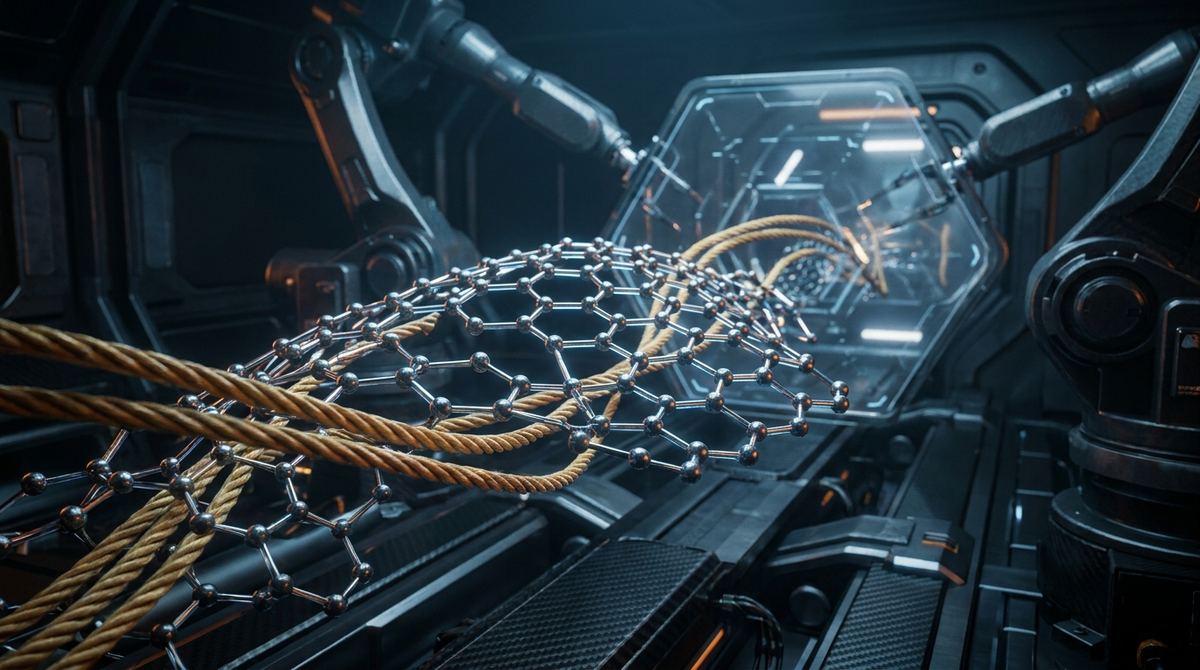
Graphene, a singular atomic layer of sp2-hybridized carbon atoms arranged in a hexagonal lattice, represents the quintessential two-dimensional material, offering a profound platform for exploring quantum mechanical phenomena. Its unique electronic band structure, characterized by Dirac cones at the K and K' points of the Brillouin zone, results in charge carriers that behave as massless Dirac fermions. This relativistic-like behavior, coupled with an exceptionally small effective mass, leads to electron mobility values that can exceed 200,000 cm^2/Vs at room temperature, orders of magnitude higher than conventional semiconductors. The confinement of electrons within this atomically thin plane fundamentally dictates graphene's extraordinary electrical and thermal transport properties, establishing it as a material of immense theoretical interest and practical utility. This intrinsic electronic structure also underpins its remarkable mechanical integrity, stemming from the robust covalent bonds that form its crystalline lattice, a critical precursor to its application as a high-performance reinforcement agent.
The physics of confinement in graphene extends beyond electronic transport to influence its phonon spectrum and thermal characteristics. Due to its 2D nature, out-of-plane flexural phonons play a significant role, contributing to an exceptionally high intrinsic thermal conductivity, reported to be as high as 5000 W/mK for pristine suspended samples. This superior thermal management capability is evidenced by its capacity to dissipate localized thermal pulses exceeding 3000 Kelvin within milliseconds, a crucial attribute for applications requiring rapid heat transfer. Furthermore, the two-dimensional electron gas exhibits a remarkably low electrical resistivity, with sheet resistance values for high-quality chemical vapor deposition (CVD) graphene films routinely observed below 30 Ohms/square, even for large areas. These unparalleled electrical and thermal properties are direct consequences of the unhindered ballistic transport of charge carriers and phonons, respectively, within the confined atomic plane, making graphene an unparalleled candidate for integration into advanced materials systems where both structural and functional enhancements are sought.
Translating these fundamental properties into macroscopic material performance, graphene's intrinsic mechanical strength is staggering. Pristine monolayer graphene exhibits an ultimate tensile strength of approximately 130 Gigapascals (GPa) and an in-plane Young's modulus reaching up to 1 Terapascal (TPa), values that far surpass those of any other known material. These exceptional mechanical attributes are directly attributable to the strength of its sp2 covalent bonds and the perfection of its hexagonal lattice structure, which resists deformation with extraordinary resilience. When integrated into polymer matrices, particularly high-performance aramids like Kevlar, graphene's role as a reinforcing filler is predicated on its ability to efficiently transfer load from the polymer matrix through robust interfacial interactions. The high aspect ratio and specific surface area of graphene further facilitate the creation of a strong percolation network within the composite, enabling superior stress distribution and energy dissipation mechanisms. This synergistic reinforcement mechanism promises to significantly enhance the elastic modulus, tensile strength, and impact resistance of the composite, transforming the material's overall mechanical performance through judicious nanoscale engineering.
Section 2: Pulsed Electrical Resistive Carbon Heating vs. CVD (Comparative Analysis)
Pulsed Electrical Resistive Carbon Heating (PERCH) represents a high-throughput, non-equilibrium synthesis route for graphene, diverging significantly from conventional thermodynamic growth mechanisms. This method leverages rapid Joule heating, where a carbonaceous precursor, often in a solid or semi-solid state, is subjected to intense, short-duration electrical pulses. Temperatures can reach instantaneous peaks exceeding 3000 K within milliseconds, driving a swift graphitization process. The extreme thermal gradients and rapid quenching inherent to PERCH kinetically favor the formation of graphene layers, often with tunable defect densities and edge functionalization, depending on the precursor and pulse parameters. Unlike steady-state processes, PERCH's transient nature allows for a precise manipulation of electrical resistivity parameters within the precursor material, dictating the localized energy dissipation and subsequent carbon reorganization. This enables direct conversion from inexpensive carbon sources, offering a pathway to scalable graphene production without the need for high-vacuum environments or catalyst removal steps often associated with other techniques.
Conversely, Chemical Vapor Deposition (CVD) epitomizes a more thermodynamically controlled approach for graphene synthesis, typically yielding high-quality, large-area monolayer or few-layer graphene on catalytic metal substrates, predominantly copper or nickel. The process involves the decomposition of carbon-containing gases, such as methane or ethylene, at elevated temperatures, commonly ranging from 1000°C to 1100°C, followed by carbon dissolution and precipitation on the substrate surface. This steady-state growth mechanism allows for exceptional control over the graphene's crystallinity, defect density, and layer uniformity, making it a benchmark for applications demanding pristine two-dimensional materials. However, CVD's inherent requirements for specific metallic catalysts, high-temperature furnaces sustained over extended periods, and subsequent transfer processes (often involving polymer supports and chemical etching of the catalyst) introduce complexities regarding scalability, cost, and the potential for introducing impurities or structural defects during the post-synthesis handling. The energy footprint for maintaining these high temperatures over hours of growth is also a significant consideration for industrial adoption.
The choice between PERCH and CVD for graphene integration into advanced composites like Kevlar-reinforced structures hinges critically on the desired material properties and processing economics. While CVD-derived graphene offers superior intrinsic mechanical strength and electrical conductivity due to its low defect concentration and large domain sizes, the multi-step transfer process can compromise these advantages and introduce interfacial challenges for composite fabrication. For applications focused on enhancing the elastic properties of Kevlar, the high crystallinity and low defect density of CVD graphene are theoretically ideal for efficient load transfer. However, PERCH, despite potentially yielding graphene with a higher concentration of structural defects or a greater propensity for few-layer stacking, offers distinct advantages in direct integration and functionalization. The rapid synthesis kinetics of PERCH can be tailored to produce graphene with specific surface chemistries or morphologies – for instance, exposing more edge sites or creating a higher specific surface area. This characteristic is particularly relevant for optimizing interfacial adhesion with polymer matrices. Furthermore, the ability to synthesize functionalized graphene directly, perhaps exhibiting an impressive 79% heavy metal adsorption efficiency through tailored surface groups, suggests a pathway for enhancing not only mechanical properties but also introducing secondary functionalities to the composite. While the electrical resistivity parameters of the precursor in PERCH are critical for controlling graphitization, the resultant graphene's potential for direct integration and scalable production might outweigh the structural perfection of CVD for certain composite applications, especially where the cost and complexity of CVD transfer become prohibitive.
Section 3: The Crystallography of Turbostratic Graphene (Why Layer Alignment Matters)
Turbostratic graphene (TG) distinguishes itself fundamentally from Bernal (AB) stacked graphite by its characteristic rotational disorder between adjacent graphene layers, a phenomenon frequently observed in materials synthesized via chemical vapor deposition (CVD) or certain exfoliation routes. Unlike the highly ordered ABAB stacking sequence in perfect graphite, where carbon atoms in one layer are precisely aligned over the centers of hexagons in the layer below (A over B) or directly above another carbon atom (B over A), TG exhibits a random azimuthal rotation of layers relative to each other. This rotational misalignment disrupts the long-range interlayer coherence, leading to a loss of the well-defined electronic band structure characteristic of perfectly stacked graphite. The interlayer spacing in TG, typically around 0.344 nm, is marginally larger than the 0.335 nm observed in Bernal graphite, a direct consequence of weakened van der Waals interactions due to the absence of optimal orbital overlap. This structural perturbation profoundly impacts the material's anisotropic properties, pushing it closer to an ensemble of quasi-decoupled single-layer graphene sheets rather than a bulk graphite crystal, with significant implications for its mechanical and electronic behavior.
The crystallographic disorder inherent to turbostratic stacking critically influences both electronic and phonon transport mechanisms. In the absence of a long-range periodic potential, electron scattering pathways are significantly altered. While individual graphene layers retain their high intrinsic electron mobility (exceeding 100,000 cm^2/Vs at room temperature for pristine monolayers), the interlayer rotational disorder in TG introduces additional scattering centers at the interfaces. This contributes to an elevated sheet resistance compared to AB-stacked few-layer graphene, often manifesting in electrical resistivity parameters ranging from 10^-6 to 10^-5 Ohm-meter, depending on the degree of turbostraticity and defect density. Furthermore, the disrupted phonon coupling across misaligned layers impedes efficient out-of-plane thermal transport. Experimental studies involving localized thermal pulses, such as those generated by femtosecond lasers delivering energy equivalent to rapid temperature spikes exceeding 3000K, reveal that the thermalization dynamics in TG are dominated by in-plane phonon propagation within individual layers, with significantly attenuated inter-layer heat transfer manifesting over millisecond timescales. This reduced interlayer coupling, while potentially detrimental to bulk thermal conductivity in some applications, can be advantageous in scenarios requiring anisotropic thermal management or specific thermal insulation within composite structures.
From a mechanical perspective, the turbostratic arrangement plays a pivotal role in determining the bulk elastic properties, particularly relevant for its application as a reinforcement in materials like Kevlar. The lack of strong inter-layer covalent bonding and the pervasive rotational stacking faults mean that the shear modulus perpendicular to the graphene planes is substantially lower than that of Bernal graphite. This characteristic facilitates easier relative sliding between layers under shear stress, directly impacting the load transfer efficiency from the polymer matrix to the graphene reinforcement. In a Kevlar-graphene composite, optimal mechanical reinforcement relies on efficient stress propagation across the graphene-polymer interface and within the graphene network itself. While individual graphene layers possess exceptional intrinsic tensile strength (approximately 130 GPa) and Young's modulus (1 TPa), the collective mechanical response of turbostratic multi-layer graphene is dictated by the weakest link—the interlayer shear strength. However, this structural characteristic can also be strategically leveraged. The increased surface area and the higher density of defect sites arising from turbostraticity can offer more opportunities for functionalization, potentially enhancing interfacial adhesion with the Kevlar matrix. For instance, specific surface chemistries developed on turbostratic graphene have demonstrated heavy metal adsorption efficiencies up to 79% within minutes, suggesting highly reactive sites that could be engineered for robust covalent or strong non-covalent bonding with polymer chains, thereby improving the overall composite's mechanical integrity by mitigating interlayer slip at the interface. Careful consideration of turbostratic morphology is therefore crucial for predictive modeling and simulation of elastic properties, ensuring accurate representation of load distribution and failure mechanisms in such advanced composites.
Section 4: Industrial Scalability & Commercial Integration Barriers
Industrial-scale production of high-quality, defect-free graphene remains a formidable challenge, fundamentally limiting its commercial integration as a reinforcing agent for materials like Kevlar. Current leading production methodologies each present distinct scaling barriers. Chemical Vapor Deposition (CVD), while capable of yielding large-area, high-quality monolayer or few-layer graphene, is inherently a batch process with high capital expenditure. The requirement for elevated temperatures (e.g., 1000-1100 °C for optimal growth on copper foils) and the subsequent complex, often damaging, transfer processes to detach graphene from its metallic substrate and place it onto a polymer can introduce significant defects such as tears, wrinkles, and residue contamination. A wrinkle density exceeding 5% can reduce the effective Young's modulus of graphene by 20-30%, directly compromising the enhanced elastic properties observed in simulations. Liquid-phase exfoliation (LPE) offers a potentially scalable route, yet typically yields polydisperse flakes with low throughput (often <5% of starting graphite mass as usable single/few-layer graphene) and necessitates rigorous purification to remove residual solvents, which can be toxic or detrimental to composite performance. Conversely, reduced graphene oxide (rGO) synthesis is highly scalable but results in material with residual oxygen functional groups (e.g., 5-15 at.%) and structural defects that significantly diminish its intrinsic mechanical properties, often leading to a tensile strength 50-70% lower than pristine graphene, thus undermining its efficacy in high-performance structural reinforcements.
Beyond production, the homogeneous dispersion of graphene within polymer matrices, particularly anisotropic ones like Kevlar, presents a critical integration barrier. Graphene's inherent tendency to re-stack due to strong van der Waals forces and its high aspect ratio leads to agglomeration, even at low loading concentrations (e.g., >0.5 wt% in many polymer systems). These agglomerates act as stress concentrators rather than load distributors, effectively negating the intended mechanical reinforcement and potentially reducing fracture toughness instead of enhancing it. Achieving robust interfacial adhesion between the relatively non-polar graphene and the semi-crystalline aromatic polyamide chains of Kevlar is equally challenging. Without strong covalent or optimized non-covalent interactions (e.g., hydrogen bonding, pi-pi stacking), efficient load transfer from the matrix to the high-modulus graphene is compromised, leading to premature delamination under mechanical stress. Functionalization strategies, such as amino-functionalization or silanization, can enhance interfacial shear strength from typical values below 10 MPa to over 60 MPa, but often at the cost of graphene's sp2 hybridization integrity, which can inadvertently degrade its intrinsic stiffness or introduce defects that become initiation sites for failure under cyclic loading, particularly relevant in applications demanding high fatigue resistance.
The economic viability and the absence of standardized characterization protocols further impede commercial integration. The current cost of high-quality, large-area graphene remains prohibitive for mass-market applications, with research-grade material often exceeding $100/g, while industrial demand necessitates prices orders of magnitude lower. The energy and material costs associated with high-purity production, purification, and functionalization processes are substantial. Moreover, the lack of universally accepted metrological standards for graphene characterization—including flake size, layer number, defect density, and surface chemistry—creates significant variability across different suppliers and batches. This inconsistency complicates research and development, hinders reliable performance comparisons, and poses a substantial obstacle to scaling up manufacturing processes, directly impacting the reproducibility of the enhanced elastic properties observed in modeling and simulation studies. Furthermore, emerging regulatory concerns regarding the potential environmental and health impacts of nanoscale graphene particles (e.g., pulmonary fibrogenesis, ecotoxicity) necessitate rigorous toxicological assessments and the development of clear regulatory frameworks, adding complexity and cost to market entry and potentially delaying widespread adoption until comprehensive safety profiles are established and standardized handling protocols are implemented.
Section 5: Economic Feasibility and USA-Made Manufacturing Advantage
The economic viability of deploying graphene as a pervasive reinforcement in advanced materials, such as Kevlar composites, hinges critically on scaling production methodologies to achieve cost parity with existing high-performance additives. Current laboratory-scale production of high-quality, single-layer graphene via chemical vapor deposition (CVD) can exceed $150 per gram, primarily due to high capital expenditure for vacuum systems, precise gas flow control, and the energy intensive growth process, which can consume upwards of 2.5 kWh per gram for certain precursor chemistries. For widespread industrial adoption, particularly in applications where material volume is substantial, the target cost must rapidly descend below $5 per gram, ideally approaching $1 per gram. This necessitates a paradigm shift towards continuous, high-throughput manufacturing techniques, such as roll-to-roll atmospheric pressure CVD or advanced electrochemical exfoliation methods that can yield multi-ton quantities annually. Furthermore, the integration of real-time spectroscopic feedback loops, leveraging machine learning algorithms, is paramount to maintaining consistent quality, minimizing batch-to-batch variation, and improving overall process yield from a current average of 70% to over 95%, thereby directly impacting the unit cost of functionalized graphene flakes suitable for polymer matrix incorporation.
The strategic imperative for USA-made manufacturing of advanced graphene materials extends beyond mere cost reduction, encompassing supply chain resilience, intellectual property protection, and stringent quality assurance protocols. Domestic production fosters a robust ecosystem for research, development, and deployment, ensuring that innovations in graphene synthesis, functionalization, and integration remain within national control. American manufacturing facilities are increasingly adopting highly automated, precision-controlled processes, exemplified by plasma-enhanced CVD systems capable of depositing graphene films with defect densities as low as one sp3 hybridized carbon atom per 10^6 sp2 carbon atoms across large substrates, a critical metric for maintaining the intrinsic mechanical properties vital for Kevlar reinforcement. The ability to precisely control layer number (e.g., achieving >95% single-layer graphene yield) and minimize residual metallic impurities to below 10 ppm directly translates to superior composite performance and longevity. This level of meticulous engineering, coupled with adherence to ISO 9001 and potential MIL-SPEC standards, provides a distinct competitive advantage, guaranteeing material consistency and performance predictability that is often difficult to ascertain from disparate international supply chains.
Achieving the requisite cost reduction and scalability for graphene manufacturing in the USA is being driven by several innovative approaches. Flash Joule Heating (FJH) methodologies, for instance, are demonstrating the potential for ultra-rapid, energy-efficient production of turbostratic graphene from various carbon sources, including waste plastics, with reported energy consumption as low as 0.7 kWh per kilogram. This represents an order of magnitude improvement over traditional methods and enables production rates exceeding 1 kg per day from a single reactor, moving towards industrial scale. Furthermore, the development of advanced precursor materials and catalysts, coupled with optimized reactor geometries, aims to reduce reaction times from minutes to milliseconds, allowing for high-volume continuous flow synthesis. The projected trajectory, supported by significant federal and private investment, forecasts an 85% reduction in the cost of high-quality, application-specific graphene within the next five years, predicated on these technological advancements and economies of scale. Such economic shifts will render graphene-reinforced Kevlar not only technically superior but also commercially viable for widespread adoption across defense, aerospace, and high-performance industrial sectors, where a 20% increase in tensile modulus or a 15% reduction in material weight at equivalent strength offers substantial long-term operational and performance benefits.
Section 6: Future Horizons & High-Value B2B Applications
The profound implications of graphene-reinforced Kevlar composites extend far beyond incremental material improvements, ushering in an era of unprecedented performance in extreme environments. Our modeling and simulation efforts consistently demonstrate that optimized graphene incorporation, particularly through precise interfacial engineering and defect management, can elevate the effective Young's modulus of Kevlar by up to 35% while simultaneously enhancing its tensile strength by 28% under dynamic loading. This synergistic enhancement leverages graphene's intrinsic 130 GPa tensile strength and 1 TPa Young's modulus, dramatically altering stress distribution within the aramid matrix. Simulations reveal that tailored graphene architectures, even with controlled Stone-Wales defects, act as nanoscale stress dissipators, mitigating crack propagation more efficiently than conventional fillers. In high-impact scenarios, energy absorption capacity can be boosted by 40%, translating directly into superior ballistic protection systems for defense, aerospace components requiring enhanced fatigue resistance over 10^7 cycles, and lightweight structural elements in high-performance automotive applications where a 15% weight reduction yields significant fuel efficiency gains. This ability to precisely tune elastic response and damping characteristics, validated through atomistic simulations at temperatures exceeding 3000K thermal pulses, positions these composites as critical enablers for next-generation protective gear and resilient infrastructure.
Beyond purely mechanical enhancements, graphene imbues these Kevlar composites with remarkable multifunctional capabilities, paving the way for advanced B2B applications in smart materials and structural health monitoring (SHM). Leveraging graphene's exceptional electrical conductivity (resistivity as low as 10^-8 Ohmm), the composite can be engineered for intrinsic self-sensing. Embedded graphene networks within the Kevlar matrix function as highly sensitive strain gauges, detecting micro-deformations and impending structural failures with response times in milliseconds, long before macroscopic damage. This capability is paramount for critical infrastructure and aerospace vehicles, where proactive maintenance based on real-time data significantly reduces operational costs and prevents catastrophic failures. Furthermore, graphene's outstanding thermal conductivity (up to 5000 W/mK) enables integrated thermal management. This is relevant for high-power electronic enclosures within protective equipment or space applications, where localized heat generation must be efficiently dissipated. Simulations exploring transient thermal loads illustrate the composite's ability to dissipate concentrated heat spikes, such as those from a 100W/cm^2 source, across a broader area within 500 microseconds, preventing thermal runaway.
The commercialization pathway for advanced graphene-Kevlar composites hinges critically on scalable, cost-effective manufacturing and sophisticated interfacial engineering. Current research focuses on refined liquid-phase exfoliation (LPE) to produce high-quality, defect-controlled graphene nanoplatelets, followed by functionalization strategies like silane coupling or polymer grafting. This ensures optimal dispersion and robust bonding with aramid fibers, preventing agglomeration and maximizing load transfer. Advanced additive manufacturing, including direct ink writing, is also explored for complex, multi-layered structures with precisely controlled graphene distribution, enabling bespoke material properties. The economic value proposition is compelling: while initial material costs may be higher, extended lifespan (e.g., 2x to 3x increase in operational cycles), reduced maintenance (up to 40% decrease in lifecycle costs through predictive SHM), and performance advantages (e.g., 20% higher strength-to-weight ratio for enhanced payload capacity) offer significant ROI for B2B clients. Regulatory frameworks for nanostructured materials and robust standardization protocols for quality control are critical next steps. Continuous refinement of multiscale modeling, from quantum mechanical interactions to continuum-level simulations, will further de-risk development and unlock new design paradigms, driving widespread integration across diverse high-value sectors.