
Beyond Perfection: How Electrons Hop in Real-World Graphene Electronics
Discover how hopping-mediated charge transport explains graphene's electrical behavior beyond the ideal ballistic regime, a key insight for creating...
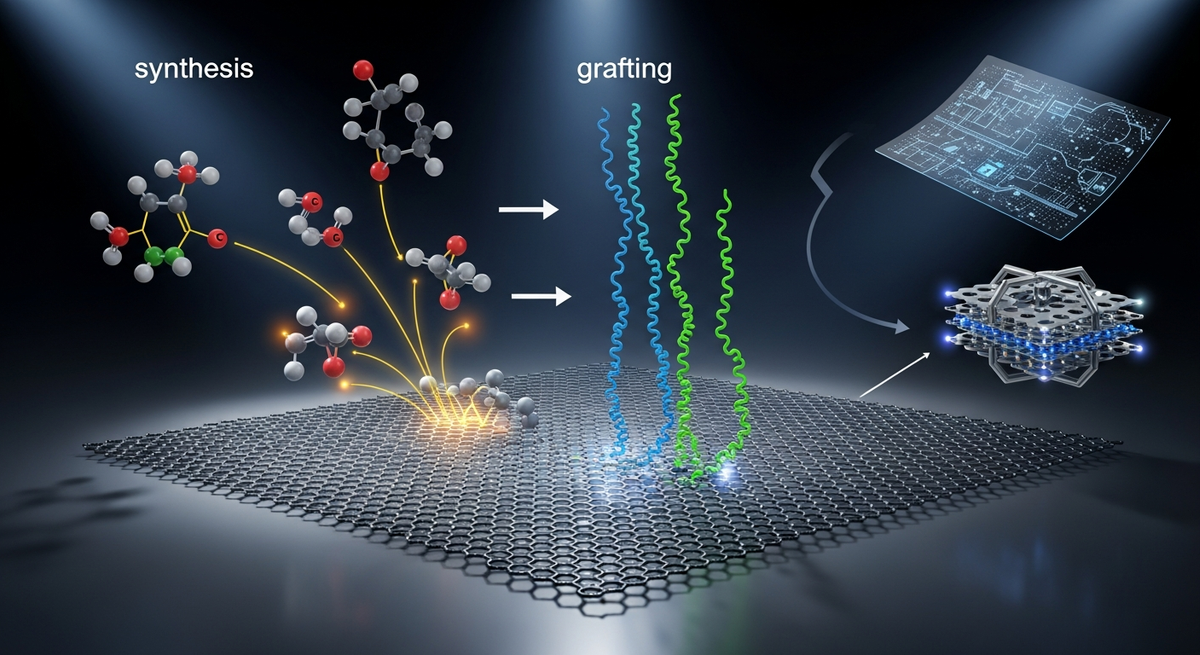
Pristine two-dimensional carbon lattices possess extraordinary electrical and mechanical properties that make them highly desirable materials in advanced engineering. Translating these intrinsic characteristics into macroscopic applications requires overcoming significant processing hurdles inherent to unmodified structural networks. The inert nature of unmodified carbon sheets prevents uniform dispersion in solvents and inhibits strong interfacial bonding with surrounding matrix materials. Scientists have developed sophisticated chemical pathways to alter the surface chemistry of these carbon frameworks to solve these integration challenges. Covalent functionalization provides a robust mechanism to attach diverse chemical species directly to the carbon framework and tune its physical properties. This precise molecular engineering transforms inert structural sheets into highly reactive components suitable for diverse industrial applications.
Graphene oxide serves as the primary precursor for these complex chemical transformations due to its rich and highly reactive surface chemistry. The basal planes and edges of these oxidized sheets contain abundant hydroxyl, epoxide, and carboxylic acid functional groups. These oxygen-rich sites act as reliable chemical anchors where new molecular architectures can be securely attached through established synthetic routes. Researchers exploit these reactive centers to introduce specialized functional groups that dictate the physical and chemical behavior of the final composite material. The resulting chemically modified networks exhibit tailored properties that are absolutely essential for high-performance electrochemical sensing and structural applications. Engineers rely on these predictable chemical modification techniques to scale up production for commercial manufacturing pipelines.
The methodologies used to achieve these structural modifications range from traditional wet chemistry to advanced irradiation techniques. Polymer grafting and microwave-assisted synthesis represent two of the most effective strategies for scaling up the production of functionalized carbon materials. Understanding the precise chemical mechanisms behind these complex reactions is critical for optimizing material performance across different environmental conditions. This text examines the specific pathways, coupling agents, and polymerization techniques that modern chemists use to transform inert carbon sheets into highly reactive composites. Mastering these synthetic routes allows material scientists to unlock the full potential of two-dimensional carbon structures in next-generation technologies.
The most common approach to modifying oxidized carbon sheets involves targeting the carboxylic acid groups located primarily at the edge sites of the material. These specific edge groups provide a highly accessible and chemically reactive zone for initiating covalent bond formation with external molecules. Chemists frequently activate these carboxylic acid groups by converting them into acyl chlorides using thionyl chloride as a primary activating agent. This activation step is crucial because it significantly increases the reactivity of the edge sites toward subsequent nucleophilic attack by modifying species. The highly reactive acyl chloride intermediate serves as a versatile stepping stone for attaching a wide array of functional molecules. This fundamental reaction pathway forms the basis for many of the advanced chemical modifications utilized in modern material science.
Once the edge sites are converted into reactive acyl chlorides, they can be readily coupled with various amine-terminated modifier species. This coupling reaction typically proceeds through the formation of a highly stable amide bond between the carbon sheet and the introduced functional group. The strength and stability of the resulting amide linkage ensure that the functional molecules remain permanently attached to the structural lattice. This permanence is critical for applications where the modified material will be subjected to harsh chemical environments or significant mechanical stress. Researchers can precisely control the degree of functionalization by adjusting the reaction time and the concentration of the amine-terminated precursors. This reliable chemical strategy allows for the creation of customized carbon networks with highly specific operational characteristics.
The activation of these functional groups can also be achieved using specialized coupling agents rather than direct conversion to acyl chlorides. Dicyclohexylcarbodiimide and ethyl-3-(3-dimethylaminopropyl) carbodiimide are frequently employed to facilitate the direct formation of amide bonds from carboxylic acids and amines. These coupling agents streamline the synthetic process by eliminating the need to isolate highly reactive and moisture-sensitive intermediates during the reaction sequence. The use of these specific reagents allows for milder reaction conditions, which helps preserve the structural integrity of the underlying carbon lattice. Chemical engineers favor these coupling techniques when working with temperature-sensitive modifier molecules that might degrade under harsher activation protocols. The versatility of these coupling agents greatly expands the library of functional groups that can be successfully anchored to the oxidized sheets.
The strategic use of coupling agents like ethyl-3-(3-dimethylaminopropyl) carbodiimide has enabled the precise attachment of complex molecular structures to oxidized carbon networks. This specific reagent facilitates the direct condensation of carboxylic acids with primary amines to form robust amide linkages in aqueous or organic environments. The efficiency of this coupling process ensures a high density of functional groups across the surface of the modified material. Researchers rely on this reliable chemical pathway to introduce specialized sensing molecules that interact selectively with target analytes in environmental testing. The resulting chemically modified structures exhibit enhanced sensitivity and selectivity compared to their unmodified counterparts. This targeted molecular attachment is a cornerstone technique in the development of advanced electrochemical diagnostic devices.
Chen and coworkers successfully utilized these activation principles to covalently functionalize carbon sheets with complex porphyrin molecules. Their synthetic strategy began with the activation of carboxylic acid groups at the edge sites into acyl chlorides using thionyl chloride. Following this initial activation phase, the resulting acyl chloride intermediates were coupled with a specific amine-terminated porphyrin derivative. This highly selective coupling occurred exclusively at the amine position through the reliable formation of a stable amide bond. The successful attachment of porphyrin structures to the carbon lattice significantly enhanced the light-harvesting and electron-transfer capabilities of the composite. This specific modification pathway demonstrates the power of targeted chemical synthesis in designing advanced materials for optoelectronic applications.
The integration of porphyrin structures fundamentally alters the electronic landscape of the modified carbon network. The extended conjugated system of the porphyrin molecule interacts synergistically with the electronic structure of the underlying carbon lattice. This interaction facilitates rapid charge transfer processes that are highly beneficial for photovoltaic and electrochemical sensing technologies. The precise control over the attachment site ensures that the functional molecules are optimally oriented for maximum electronic coupling. Material scientists continue to explore variations of this synthetic route to attach different light-absorbing and redox-active molecules to structural carbon. These complex molecular assemblies represent a significant leap forward in the design of high-efficiency energy conversion materials.
Building upon the foundation of amide bond formation, researchers have successfully anchored various metal complexes directly to the oxidized carbon framework. Yu and colleagues developed a sophisticated method to modify these two-dimensional sheets using a specialized ruthenium complex containing a long-chain alkyl amino group. This intricate modification process proceeded through the attachment of the amino group directly to the activated carboxylic sites on the oxidized lattice. The formation of the amide bond securely tethered the heavy metal complex to the carbon structure without disrupting the core electronic properties. The resulting ruthenium-modified composite exhibited unique catalytic and electrochemical behaviors that are highly sought after in advanced sensor development. This successful integration of transition metals opens new pathways for creating hybrid catalytic materials.
The covalent anchoring of transition metals extends beyond ruthenium to include a variety of other reactive metallic species. Murali Krishna and researchers explored novel synthetic routes to covalently attach copper, zinc, and tin complexes onto the oxidized carbon sheets. Their methodology relied on the initial conversion of carboxylic groups into acyl chlorides using thionyl chloride in a dimethylformamide solvent under a nitrogen atmosphere. The activated sheets were subsequently coupled with carefully measured amounts of metal-containing porphyrins to achieve precise loading levels. This highly controlled environment prevented unwanted side reactions and ensured the uniform distribution of metal centers across the material surface. The resulting metal-decorated networks provide abundant active sites for electrochemical reactions in high-performance energy storage systems.
Modification strategies also utilize thiol-containing molecules to introduce sulfur-based functionality to the carbon lattice. These specific chemical modifications typically target different reactive sites on the oxidized surface compared to the standard carboxylic acid functionalization routes. The introduction of thiol groups significantly alters the surface energy and chemical affinity of the resulting composite material. Thiol-modified carbon networks exhibit exceptional binding capabilities for heavy metal ions, making them ideal candidates for environmental remediation applications. The robust nature of the covalent sulfur-carbon linkages ensures that the material maintains its structural integrity during repeated adsorption and desorption cycles. Engineers leverage these specific chemical affinities to design highly efficient filtration and purification systems.
Covalent grafting of polymers to structural carbon lattices represents a major advancement in the development of novel composite materials for industrial applications. Polymers are widely considered an exciting class of modifying agents due to their low production costs and availability in numerous chemical forms. The combination of flexible polymer chains and rigid carbon sheets produces a powerful synergetic effect that enhances both mechanical strength and chemical processability. This unique synergy can be precisely tuned to modulate the functional properties of sensors, actuators, and structural composites. By carefully selecting the polymer type and molecular weight, engineers can design materials that meet highly specific operational requirements. The resulting hybrid structures bridge the gap between traditional organic polymers and advanced nanomaterials.
The derivatization of these carbon structures with polymers is generally achieved through two primary synthetic methodologies known as grafting from and grafting to. The grafting from method involves attaching an initiator molecule directly to the carbon lattice where subsequent polymerization takes place through controlled chemical reactions. This approach allows the polymer chains to grow directly outward from the surface, ensuring a high density of grafted molecules. The grafting to method involves the direct attachment of pre-synthesized polymer chains to the reactive functional groups present on the modified carbon surface. Each synthetic strategy offers distinct advantages depending on the desired molecular architecture and the specific thermal properties required for the final application. Material chemists carefully evaluate these two pathways to optimize the structural integrity of the synthesized composite.
The choice between these two polymerization strategies fundamentally impacts the physical characteristics of the resulting composite material. The grafting from technique typically produces materials with superior interfacial bonding because the polymer chains are chemically rooted to the underlying lattice. This strong molecular connection prevents the polymer from delaminating or separating from the structural carbon under extreme mechanical stress. The grafting to method allows for tighter control over the molecular weight and polydispersity of the attached polymer chains prior to the coupling reaction. Researchers frequently utilize a combination of these approaches to engineer multi-layered composite materials with highly specialized mechanical and electrical profiles. This level of synthetic control is absolutely necessary for producing consistent materials for commercial aerospace and automotive manufacturing.
In situ polymerization provides a highly efficient route for synthesizing complex polymer-carbon composites directly within a reaction vessel. Pramoda and colleagues developed a streamlined covalent modification process driven by the reaction between oxygen-containing functional groups and octadecylamine molecules. The resulting amine-functionalized sheets were subsequently reacted with methacryloyl chloride to introduce highly reactive, polymerizable carbon double bonds. These strategically placed double bonds served as direct anchoring points that facilitated the entire in situ polymerization process. This sequential chemical modification ensured that the resulting polymer matrix was intimately chemically bonded to the dispersed carbon sheets. The final composite material exhibited vastly superior mechanical properties compared to simple physical mixtures of the two components.
Researchers have explored numerous variations of this in situ methodology to attach different classes of commercial polymers. Salavagione reported the successful covalent modification of these structural sheets with poly(vinyl alcohol) using two distinct chemical pathways. One method involved the direct esterification of the carboxylic groups, while the alternative route proceeded through the formation of an intermediate acyl chloride. Jingchao and team successfully prepared polymethylmethacrylate-coated sheets utilizing an in situ suspension polymerization technique coupled with chemical reduction. This specific process utilized hydrazine hydrate and ammonia to simultaneously reduce the oxidized carbon while the polymer chains grew along the surface. These diverse synthetic routes demonstrate the incredible adaptability of in situ polymerization for creating specialized industrial materials.
The integration of structural polyamides and conductive polymers has also been achieved through targeted in situ chemical reactions. Zhen successfully prepared nylon-6 modified composites by initiating the polymerization of caprolactam rings directly at the carboxylic sites under thermal activation. Tung reported the development of a water-soluble polyaniline composite by simultaneously reducing the oxidized carbon and polymerizing the monomer. This specific reaction utilized sodium 4-styrenesulfonate and an oxidative mechanism in an aqueous acidic solution to drive the polymerization forward. The resulting conductive composite maintained excellent solubility while exhibiting the high electrical conductivity required for advanced electronic applications. These sophisticated chemical techniques highlight the crucial role of targeted synthesis in modern materials engineering.
Atom transfer radical polymerization represents one of the most precise methods for growing controlled polymer brushes directly from solid substrates. Rodney S. Ruoff and his research team introduced a groundbreaking methodology for covalently anchoring specialized polymer brushes onto oxidized carbon surfaces. Their sophisticated approach relied on the surface-initiated atom transfer radical polymerization technique to achieve unprecedented control over polymer chain growth. The methodology fundamentally relies on establishing a uniform layer of initiation sites across the entire surface of the target material. This precise chemical control ensures that the resulting polymer chains possess uniform lengths and predictable molecular weights. The implementation of this advanced polymerization technique revolutionized the way scientists approach surface modification of two-dimensional structural lattices.
The execution of this specific polymerization strategy requires careful preparation of the oxidized carbon surface to ensure successful chain growth. The hydroxyl groups naturally present on the surface of the precursor material were initially functionalized with bromoisobutyryl bromide. This specific chemical reaction transformed the relatively inert hydroxyl sites into highly active initiation centers for the subsequent radical polymerization process. Once the surface was fully decorated with these specialized bromine-containing initiators, the controlled growth of the polymer chains could begin. The researchers successfully grew distinct polymers of styrene, butyl acrylate, and methyl methacrylate directly from these carefully engineered initiation sites. This level of synthetic precision allows for the creation of highly uniform composite materials with predictable physical behaviors.
The primary advantage of atom transfer radical polymerization lies in its ability to suppress unwanted termination reactions during chain growth. This living polymerization mechanism ensures that the active chain ends remain viable throughout the entire synthetic process. Researchers can exploit this continuous reactivity to grow complex block copolymers by sequentially adding different types of monomers to the reaction vessel. The resulting block copolymer brushes offer highly localized control over the surface energy and chemical affinity of the modified carbon network. Material scientists utilize these advanced structures to engineer highly specialized filtration membranes and targeted drug delivery vehicles. The precision afforded by this methodology continues to drive innovation in the field of advanced composite manufacturing.
Microwave technology represents a highly efficient alternative to conventional thermal heating in modern chemical synthesis and material modification. The underlying physical mechanism relies on the interaction between an oscillating electric field and molecules possessing a permanent dipole moment. When subjected to this specific electromagnetic radiation, polar molecules continuously align and realign themselves with the rapidly changing external field. This relentless microscopic oscillation generates intense internal friction and localized heat directly within the active reaction mixture. The rapid accumulation of thermal energy significantly accelerates reaction rates and drives chemical transformations to completion in a fraction of the usual time. Chemists utilize this advanced technique to reduce solvent consumption and improve the overall yield of complex molecular syntheses.
The application of microwave irradiation to the modification of structural carbon has yielded highly impressive experimental results. Xu and colleagues reported a remarkably simple and scalable methodology for covalently modifying reduced carbon sheets using hydroxypropyl-cyclodextrin. Their innovative synthetic route relied entirely on microwave irradiation to drive the formation of ester bonds between the carboxyl groups and hydroxyl groups. The precursor materials were initially dispersed uniformly in water using high-frequency sonication to ensure maximum surface area exposure. The aqueous dispersion was subsequently irradiated with targeted microwaves for specific time intervals to precisely control the degree of functionalization. This highly efficient process eliminated the need for prolonged thermal heating and significantly reduced the overall synthesis time.
Microwave-assisted synthesis also facilitates the simultaneous chemical reduction of the oxidized precursor during the modification process. In the methodology developed by Xu, hydrazine hydrate and ammonia were added to the dispersion to act as chemical reducing agents. The intense localized heating generated by the microwave irradiation dramatically accelerated the reduction process while simultaneously driving the esterification reaction. This dual-action synthetic strategy produces highly functionalized, reduced carbon networks with excellent electrical conductivity and structural integrity. The speed and efficiency of microwave-assisted reactions make this technology highly attractive for scaling up the production of advanced composite materials. Industrial manufacturers continue to adopt these irradiation techniques to streamline their chemical processing operations.
What is the primary difference between grafting from and grafting to methods in graphene polymerization?
The grafting from method involves attaching an initiator directly to the carbon lattice, allowing polymer chains to grow outward from the surface. This technique generally results in a very high density of polymer coverage and excellent interfacial bonding. The grafting to method requires pre-synthesizing the polymer chains and then chemically attaching them to reactive sites on the carbon surface. The grafting to approach provides much better control over the molecular weight and structural uniformity of the attached polymer prior to the coupling reaction. Both methods are utilized extensively depending on the specific mechanical requirements of the final composite material.
How does microwave irradiation improve the synthesis of graphene composites?
Microwave irradiation drastically reduces the time required to complete complex chemical modifications by generating intense localized heat within the reaction mixture. The oscillating electric field forces molecules with permanent dipole moments to rapidly align and realign, creating internal friction. This process provides highly efficient and uniform heating that accelerates reaction rates far beyond conventional thermal methods. It frequently leads to higher product yields, requires lower volumes of toxic solvents, and improves the overall selectivity of the chemical transformation. Researchers rely on this technology to streamline the production of chemically modified structural networks.
Why are coupling agents like EDC essential in graphene oxide modification?
Coupling agents like ethyl-3-(3-dimethylaminopropyl) carbodiimide facilitate the direct formation of stable amide bonds between carboxylic acids and primary amines. They eliminate the need to convert functional groups into highly reactive and moisture-sensitive intermediates like acyl chlorides. This allows the coupling reactions to proceed efficiently under much milder environmental conditions, preserving the structural integrity of the carbon lattice. The use of these specific reagents expands the variety of temperature-sensitive functional molecules that can be securely attached to the material. They are absolutely critical for producing highly specific electrochemical sensing components.
What role does SOCl2 play in the covalent functionalization of graphene?
Thionyl chloride serves as a powerful activating agent used to convert relatively stable carboxylic acid groups into highly reactive acyl chlorides. This specific chemical conversion occurs primarily at the edge sites of the oxidized carbon sheets where carboxylic groups are most abundant. The resulting acyl chloride intermediates are significantly more susceptible to nucleophilic attack by incoming modifier molecules. This activation step is generally required before complex structures like porphyrins can be successfully coupled to the carbon lattice. The efficient use of thionyl chloride dictates the overall success rate of the subsequent covalent bonding process.
How does atom transfer radical polymerization benefit graphene modifications?
Atom transfer radical polymerization provides unprecedented precision over the length and molecular weight of polymer chains grown from carbon surfaces. It utilizes specific chemical initiators attached to the material to start a highly controlled, living polymerization process. This mechanism suppresses unwanted termination reactions, ensuring that all polymer brushes grow at a consistent and predictable rate. The technique allows researchers to construct complex block copolymers by sequentially introducing different monomer units into the reaction. This exact synthetic control is required for developing advanced filtration membranes and highly specialized structural composites.
The chemical modification of two-dimensional carbon lattices represents a critical intersection between synthetic organic chemistry and advanced materials engineering. By utilizing sophisticated techniques like covalent functionalization and in situ polymerization, scientists can completely dictate the physical and electrical properties of these structures. The ability to anchor complex transition metals, light-harvesting porphyrins, and durable polymer chains transforms an inert mineral into a highly reactive technological component. These precise chemical interventions bridge the substantial gap between theoretical material limits and practical industrial applications. The continuous refinement of these synthetic pathways ensures that functionalized carbon structures will remain at the forefront of modern engineering.
Scaling these complex chemical reactions from laboratory environments to commercial manufacturing facilities requires highly efficient processing technologies. Innovations like microwave-assisted synthesis and advanced coupling agents significantly reduce the time and hazardous solvents traditionally required for material modification. As these streamlined production methods become widely adopted, the availability of specialized carbon composites will dramatically increase across global supply chains. Engineers will utilize these tailored materials to construct superior energy storage devices, highly sensitive diagnostic sensors, and lightweight aerospace components. The mastery of these covalent modification techniques ultimately unlocks the remarkable potential inherent within these two-dimensional structural networks.
Serious about B2B integration? Test our premium Pulsed Electrical Resistive Carbon Heating turbostratic graphene in your lab. 100g sample packs available now.
Explore More
Discover how hopping-mediated charge transport explains graphene's electrical behavior beyond the ideal ballistic regime, a key insight for creating...

A practical guide to fabricating a flexible graphene fiber sensor for the simultaneous detection of nitric oxide and H2O2, key cancer biomarkers.

Explore a new low-noise Pauli-consistent ensemble Monte Carlo simulation for graphene, a powerful computational tool for designing next-generation...