
A New Era of Graphene Engineering: Pre-Designing Twist Angles on Demand
Researchers have developed a breakthrough method for growing twisted bilayer graphene with pre-designed angles, a key step toward manufacturable quantum...
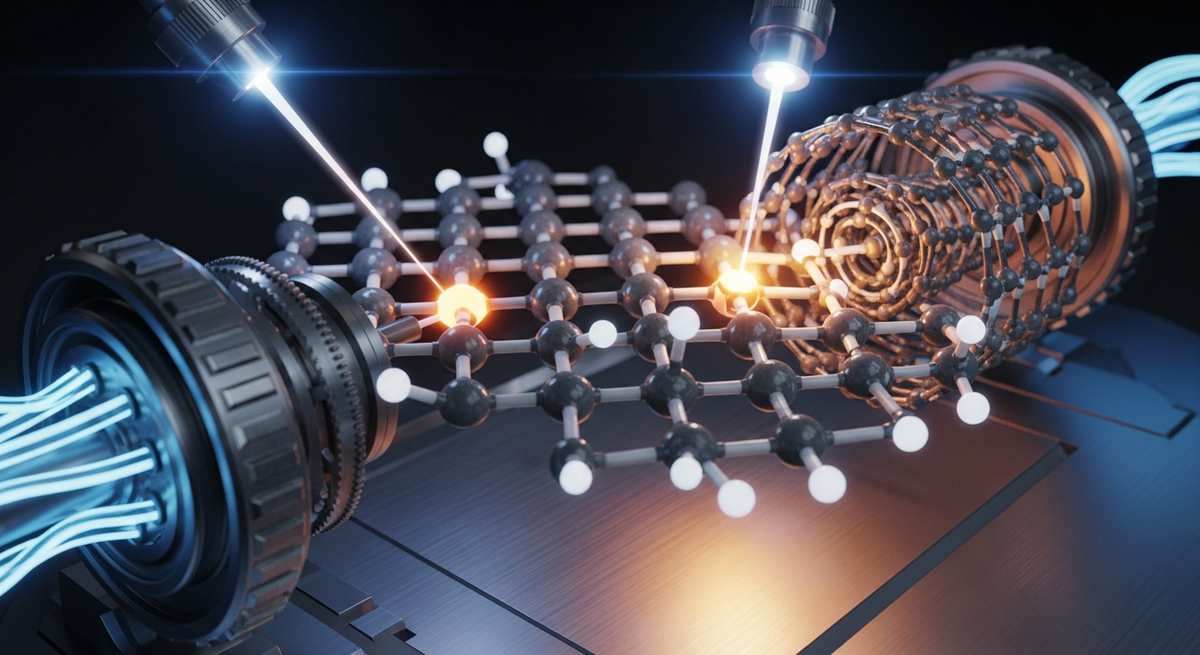
Graphene, since its groundbreaking isolation in 2004, has captivated the scientific and industrial worlds with a suite of truly extraordinary properties. This single-atom-thick sheet of sp2 hybridized carbon atoms boasts unparalleled strength, stiffness, surface area, and exceptional charge carrier mobility. Such attributes position it as a revolutionary material for everything from next-generation electronics and optical devices to advanced polymer composites and innovative biomedical applications. Indeed, graphene often surpasses its nanocarbon relatives like nanotubes and fullerenes in potential for specific high-performance uses.
However, the path from discovery to widespread application is rarely straightforward. Pristine graphene, with all its inherent advantages, presents significant practical hurdles. Its natural hydrophobicity, coupled with a strong tendency for individual sheets to aggregate irreversibly through π–π stacking, makes it notoriously difficult to disperse and process in common solvents. Furthermore, its inherent zero bandgap, while ideal for certain high-speed electronics, poses a fundamental limitation for applications requiring semiconductors, such as transistors, where a tunable bandgap is essential. Overcoming these challenges is paramount to harnessing graphene's full promise.
Chemical modifications offer a powerful and versatile pathway to address these limitations. By introducing specific chemical functionalities to the graphene lattice, researchers can meticulously tailor its properties. These modifications can dramatically improve dispersibility, prevent agglomeration, and critically, open and tune the material's electronic bandgap. While non-covalent methods exist, relying on weaker interactions like van der Waals forces or hydrogen bonding, covalent bonding stands out for its robust and stable integration of new molecular structures. This article delves into the sophisticated world of covalent modifications, focusing on strategies that transform pristine graphene into a highly adaptable and application-ready material.
Pristine graphene, celebrated for its unique 2D structure and exceptional intrinsic properties, faces significant practical obstacles that hinder its widespread adoption. The material's inherent insolubility in most common organic and inorganic solvents is a primary concern. This poor dispersibility makes it incredibly challenging to process graphene into uniform films or integrate it homogeneously into composite materials, which is crucial for many industrial applications.
Compounding the dispersibility issue is graphene's strong propensity for irreversible aggregation. The powerful π–π stacking interactions between individual graphene sheets cause them to re-stack, effectively reverting to a graphite-like structure. This re-aggregation not only diminishes the beneficial properties derived from its high surface area but also makes it exceedingly difficult to maintain a stable, well-dispersed suspension, essential for solution-based processing techniques.
Beyond these physical processing challenges, graphene's electronic structure presents a significant hurdle for certain applications. Its zero bandgap, while enabling ballistic electronic transport, restricts its utility in devices like transistors that rely on the ability to switch current on and off. For graphene to function as a semiconductor, a controllable bandgap must be introduced, allowing for precise modulation of its electronic behavior. Chemical modification offers a direct route to engineer this crucial property.
While various methods exist for preparing graphene, such as mechanical exfoliation, chemical vapor deposition (CVD), and reduction of graphene oxide (GO), each has its own trade-offs. Exfoliation and CVD yield high-quality, less-defective pristine graphene, ideal for electronics, but they are often limited by low production yields and high costs. Reduced graphene oxide (RGO), while economical and scalable, typically suffers from more defects, smaller sheet sizes, and residual oxygen-containing groups, which can impede its performance in sensitive electronic applications. Therefore, regardless of the production method, targeted chemical modification remains a vital step in realizing graphene's full potential.
When considering how to modify graphene, two broad categories emerge: non-covalent and covalent functionalization. Both approaches aim to alter graphene's properties, but they do so through fundamentally different types of interactions, each with distinct advantages and disadvantages. Understanding this distinction is crucial for selecting the appropriate modification strategy for a given application.
Non-covalent methods involve interactions that do not form strong chemical bonds between the modifying molecules and the graphene surface. These include π–π stacking interactions, electrostatic forces, hydrogen bonding, coordination bonds, and van der Waals forces. The primary advantage of non-covalent modification is its ability to largely preserve graphene's intrinsic sp2 conjugated structure, minimizing disruption to its electronic properties. This makes non-covalent approaches attractive for applications where maintaining the pristine electronic characteristics is paramount.
However, the inherent weakness of these non-covalent interactions presents a significant limitation. The functionalities attached to graphene via these methods can be easily desorbed or displaced under certain conditions, such as solvent changes, temperature fluctuations, or mechanical stress. This lack of robust attachment makes non-covalent functionalization unsuitable for applications requiring long-term stability or strong interfacial interactions, such as durable polymer composites or implantable biomedical devices.
Covalent functionalization, in contrast, involves the formation of strong, stable chemical bonds between the modifying molecules and the carbon atoms of the graphene lattice. This approach, while potentially introducing some defects or sp3 hybridization into the graphene structure, offers unparalleled stability and permanence. Covalently attached functional groups are far more resistant to desorption and degradation, ensuring that the modified properties are retained even in harsh environments.

This robust attachment allows for precise and durable tuning of graphene's solubility, dispersibility, and electronic bandgap, making it ideal for applications demanding high mechanical integrity, long-term stability, or specific electronic behavior. While the introduction of sp3 defects can sometimes impact conductivity, careful control over the functionalization process can mitigate these effects, balancing the benefits of stable modification with the preservation of essential graphene properties. For many advanced materials and device applications, the strength and reliability of covalent bonds are indispensable.
One of the most effective and widely explored strategies for covalently modifying graphene involves free radical addition reactions. These reactions capitalize on the reactivity of the sp2 hybridized carbon atoms within the graphene lattice, allowing for the stable attachment of various functional groups. The process typically involves generating highly reactive free radicals that then attack the graphene sheet, forming new carbon-carbon bonds.
Among the diverse free radical reactions, modifications via diazonium salt reactions stand out as particularly significant. This method is highly versatile and relatively straightforward, making it a cornerstone of graphene functionalization. Diazonium salts, when decomposed, generate aryl radicals that readily react with the graphene surface. The aryl group becomes covalently attached, forming a stable C–C bond and effectively functionalizing the material.
The diazonium salt reaction offers several advantages. It can be carried out under mild conditions, often at room temperature, and in various solvents, making it adaptable for different processing requirements. Furthermore, a vast array of aryl diazonium salts are available, meaning that a wide range of functional groups—from alkyl chains for improved solubility to electroactive moieties for sensor applications—can be introduced onto the graphene surface. This versatility makes it a powerful tool for tailoring graphene's properties precisely.
Beyond diazonium salts, other free radical reactions contribute to the toolkit for graphene modification. These can include the use of peroxides, alkyl halides, or even electrochemical generation of radicals. While diazonium reactions are often preferred for their control and scalability, these alternative radical pathways offer additional routes for specific functionalization needs, expanding the repertoire of accessible graphene derivatives. Each method, however, requires careful optimization to control the degree of functionalization and minimize excessive structural damage to the graphene lattice, ensuring the desired balance of new properties and preserved intrinsic characteristics.
Beyond free radical additions, researchers employ a sophisticated array of reactions to covalently modify graphene, often leading to more complex or highly specialized derivatives. Cyclization reactions represent a class of methods where new ring structures are formed on the graphene surface, profoundly altering its electronic and structural properties. These include functionalization with highly reactive intermediates such as arynes, nitrenes, and carbenes, each offering unique pathways for covalent attachment.
Arynes, for instance, are highly reactive aromatic species with an additional triple bond in the ring, making them potent dienophiles. They can undergo cycloaddition reactions with the sp2 carbons of graphene, forming new ring structures that bridge across the graphene lattice. This method can lead to significant changes in local geometry and electronic structure, potentially opening a bandgap or introducing specific electronic states. The controlled introduction of such bridge-like structures can be critical for certain advanced electronic applications.
Similarly, nitrenes and carbenes, which are highly electron-deficient species, are excellent candidates for direct addition to the graphene basal plane. Nitrenes, typically generated from azides, can insert into C=C bonds or undergo cycloaddition, leading to the formation of aziridine rings or other nitrogen-containing functionalities. Carbenes, often derived from diazo compounds, behave analogously, forming cyclopropane rings on the graphene surface. Both nitrene and carbene additions are powerful tools for introducing nitrogen or carbon-based rings, respectively, enabling precise tuning of electronic properties and surface chemistry.
Nucleophilic addition reactions also provide a pathway for functionalization, particularly when dealing with electron-deficient graphene or when seeking to introduce specific nucleophilic groups. These reactions involve an electron-rich species attacking an electron-poor site on the graphene lattice. While perhaps less common for pristine graphene's basal plane, which is generally considered electron-rich, they become more relevant for modified graphene or graphene oxide with pre-existing defects or functional groups that create electrophilic sites.
Finally, substitutional reactions and chemical doping offer alternative, often more subtle, ways to modify graphene's electronic landscape. Substitutional reactions involve replacing carbon atoms within the graphene lattice with heteroatoms like boron or nitrogen. This direct integration of foreign atoms into the graphene framework can fundamentally alter its electronic band structure, turning it into a p-type or n-type semiconductor. Chemical doping, on the other hand, involves introducing electron-donating or electron-withdrawing molecules that interact with graphene's electronic system, effectively shifting its Fermi level and tuning its conductivity without necessarily forming direct covalent bonds to the basal plane carbon atoms. These methods are crucial for engineering graphene's electronic properties for specific semiconductor devices.
While this discussion primarily focuses on the covalent modification of pristine graphene, it is impossible to overlook the significant role that graphene oxide (GO) plays in the broader field of graphene functionalization. GO serves as a readily available and highly versatile precursor, offering a practical pathway to various functionalized graphene materials, even if the end goal is often reduced graphene oxide (RGO).
GO is typically produced by the aggressive oxidation of graphite, a process that introduces a wealth of oxygen-containing functional groups onto the carbon basal plane and edges. These groups include hydroxyl, epoxy, carboxyl, and carbonyl functionalities. The presence of these diverse and reactive sites makes GO inherently hydrophilic and easily dispersible in water and some organic solvents, addressing one of pristine graphene's major challenges right from the start.
The abundance of these functional groups on GO's surface provides numerous anchor points for further covalent modification. Unlike pristine graphene, which requires more aggressive or specialized reactions to create initial bonding sites on its inert sp2 lattice, GO's existing functionalities allow for a wide range of organic reactions. For example, the carboxyl groups can participate in esterification or amidation reactions, while hydroxyl and epoxy groups can undergo nucleophilic ring-opening or etherification. This makes GO a highly reactive platform for attaching various molecules, polymers, or nanoparticles with relative ease.

Despite its ease of functionalization, GO itself is an electrical insulator due to the disruption of its sp2 network by the oxygen groups. Therefore, after functionalization, GO often undergoes a reduction process to restore its electrical conductivity, yielding functionalized reduced graphene oxide (f-RGO). While f-RGO typically contains more defects and residual oxygen groups than pristine graphene, its ease of mass production and versatile functionalization pathways make it an invaluable material for many applications, particularly in polymer composites, energy storage, and biosensors, where high electrical conductivity might be important but not necessarily paramount. The ability to leverage GO's reactivity allows for cost-effective and scalable production of a diverse range of functionalized graphene derivatives.
The ability to covalently modify graphene has unlocked a vast array of applications, transforming it from a material with theoretical promise into a practical component across multiple industries. By tailoring graphene's properties through chemical bonding, researchers and engineers can optimize its performance for specific real-world demands, overcoming its inherent limitations and exploiting its unique advantages.
In the realm of electronic and optic devices, functionalized graphene plays a crucial role. The introduction of specific functional groups can open and tune graphene's bandgap, a critical step for developing graphene-based transistors and other semiconductor components. Modified graphene can also be integrated into transparent electrodes, flexible displays, and high-speed photodetectors, where its enhanced processability and controlled electronic properties are paramount. For instance, specific covalent modifications can improve the interface between graphene and other semiconductor materials, leading to more efficient device architectures.
Polymer nanocomposites represent another major application area where covalently functionalized graphene excels. Pristine graphene's tendency to aggregate makes it difficult to achieve homogeneous dispersion within polymer matrices, limiting the enhancement of mechanical, thermal, and electrical properties. Covalent attachment of polymer chains or other functional groups to graphene dramatically improves its compatibility with various polymers, allowing for uniform dispersion and strong interfacial adhesion. This results in nanocomposites with significantly improved strength, stiffness, thermal conductivity, and electrical conductivity, finding use in lightweight structural materials, conductive coatings, and advanced packaging.
Biomedical materials also benefit immensely from functionalized graphene. The inherent hydrophobicity of pristine graphene is a significant barrier for biological applications, as it limits biocompatibility and interaction with aqueous biological environments. Covalent modification with hydrophilic or biocompatible molecules, such as polyethylene glycol (PEG) or specific peptides, can render graphene water-soluble and non-toxic, making it suitable for drug delivery systems, biosensors, tissue engineering scaffolds, and bioimaging agents. The ability to attach specific biomolecules allows for targeted drug delivery or highly sensitive diagnostic tools.
Beyond these major categories, covalently functionalized graphene finds utility in a diverse range of other applications. It can be used in advanced energy storage devices, such as supercapacitors and batteries, where functionalization can improve electrode stability and electrolyte compatibility. In catalysis, modified graphene can act as a high-surface-area support for noble metal nanoparticles, enhancing catalytic activity and selectivity. Furthermore, its use in advanced separation membranes and environmental remediation technologies is being actively explored, leveraging its tailored surface chemistry for efficient filtration and pollutant removal. The ongoing research and development in these areas highlight the transformative power of covalent functionalization in realizing graphene's full potential.
Graphene’s journey from a laboratory marvel to a material of profound practical utility is intrinsically linked to the advancements in its chemical modification. While the intrinsic properties of pristine graphene are undeniably exceptional, its inherent challenges—poor dispersibility, aggregation tendencies, and a zero bandgap—present significant roadblocks to widespread application. Covalent bonding emerges as a powerful and indispensable strategy, offering robust and stable solutions to these fundamental issues.
By strategically attaching a diverse range of molecules via free radical additions, cyclization reactions, and other sophisticated chemical pathways, scientists can precisely engineer graphene’s surface chemistry and electronic structure. This meticulous control allows for dramatic improvements in processability, long-term stability in various environments, and the critical ability to open and tune its electronic bandgap. Even graphene oxide, despite its initial insulating properties, serves as a highly reactive and scalable platform for producing functionalized derivatives, bridging the gap between mass production and tailored performance.
The impact of covalently functionalized graphene is already being felt across a multitude of sectors, from high-performance electronics and optoelectronics to advanced polymer composites and life-saving biomedical technologies. As research continues to refine these functionalization techniques, developing more selective, scalable, and less disruptive methods, the full potential of graphene will continue to unfold. The future promises even more innovative applications, driven by our ever-increasing ability to precisely control and manipulate this truly remarkable material at the atomic scale.
Serious about B2B integration? Test our premium Pulsed Electrical Resistive Carbon Heating turbostratic graphene in your lab. 100g sample packs available now.
Explore More
Researchers have developed a breakthrough method for growing twisted bilayer graphene with pre-designed angles, a key step toward manufacturable quantum...

Learn how deep learning is revolutionizing the structural characterization of twisted bilayer materials, accelerating the development of next-generation...

Learn to build a prototype graphene FET biosensor for sensitive DNA detection. This guide covers materials, fabrication, and testing for point-of-care...