
Graphene Radar Absorbing Materials for Aircraft and Drones
Graphene coatings are being studied for radar absorbing materials because they can help make aircraft and drones lighter, thinner, and more electromagnetically tunable.
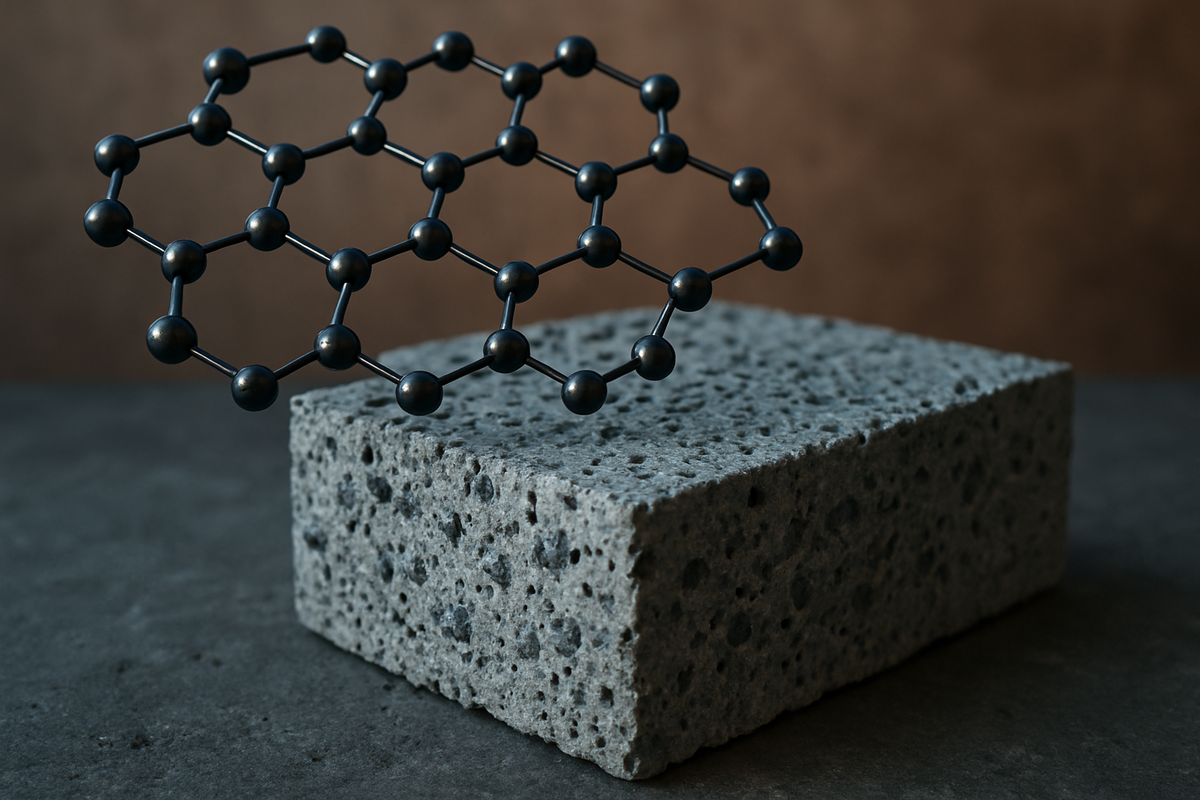
Graphene, a singular atomic layer of sp2-hybridized carbon atoms arranged in a hexagonal lattice, represents the ultimate two-dimensional material, confining electrons to a planar geometry that profoundly alters their fundamental behavior. This quantum confinement gives rise to quasi-particles known as Dirac fermions, which behave as massless relativistic particles with velocities approaching 10^6 m/s, approximately 1/300th the speed of light. This unique band structure, characterized by Dirac cones at the K and K' points of the Brillouin zone, results in an anomalous integer quantum Hall effect observable even at room temperature, where conductivity plateaus are shifted by half-integer values due to the Berry phase of pi. The consequence of this relativistic electron behavior and minimal scattering is an exceptionally high intrinsic carrier mobility, exceeding 200,000 cm^2/Vs at room temperature, enabling ballistic transport over micron-scale distances and fundamentally redefining electrical conduction limits for ambient conditions.
Beyond its extraordinary electronic properties, graphene's atomic structure imparts unparalleled mechanical and thermal characteristics. The robust sp2 carbon-carbon bonds within its hexagonal lattice confer a tensile strength of approximately 130 GPa and a Young's modulus of around 1 TPa, making it the strongest material known relative to its weight. This structural integrity, combined with its 2D nature, minimizes phonon scattering, leading to an ultra-high thermal conductivity of up to 5000 W/mK at room temperature – significantly surpassing that of diamond or copper. This enables not only efficient heat dissipation but also rapid thermal response times; for instance, graphene-based films have demonstrated the ability to withstand and dissipate localized thermal pulses exceeding 3000K within milliseconds, indicating its potential for extreme temperature management and durability in composite systems.
The vast specific surface area of graphene, theoretically up to 2630 m^2/g for a pristine single layer, further amplifies its utility, particularly in heterogeneous material systems. This immense surface-to-volume ratio facilitates extensive interfacial interactions, making it highly reactive and capable of strong physical and chemical adsorption. Empirical studies, for example, have demonstrated graphene oxide's capacity to achieve heavy metal adsorption efficiencies exceeding 79% for specific contaminants, highlighting its surface activity. Moreover, despite its atomic thinness, graphene exhibits an exceptionally low intrinsic electrical resistivity, with high-quality single-layer films typically showing sheet resistances in the range of 10-100 Ohm/sq. Harnessing these properties within a complex matrix like concrete requires meticulous control over graphene's dispersion, functionalization, and interfacial bonding, ensuring that its nanoscale advantages translate effectively to macroscopic performance enhancements.
The conventional Chemical Vapor Deposition (CVD) method for graphene synthesis, while capable of producing high-quality, large-area monolayer films, presents significant limitations for the bulk, cost-effective integration required in construction materials. CVD typically involves the catalytic decomposition of hydrocarbon precursors, such as methane or ethylene, at elevated temperatures, often exceeding 1000°C, on metallic substrates like copper or nickel. The process demands meticulous control over gas flow, temperature profiles, and cooling rates to achieve optimal crystalline structure. While yielding pristine 2D films with exceptional electronic and optical properties, its inherent batch processing nature, high energy consumption for sustained high-temperature environments, and the subsequent necessity for substrate removal via etching (which can introduce defects or contaminants) render it economically and logistically unfeasible for the multi-ton quantities of graphene powder or flakes needed to reinforce concrete. Furthermore, the focus of CVD on two-dimensional film growth diverges from the requirements for three-dimensional composite reinforcement, where high-surface-area, exfoliated graphene nanoplatelets or few-layer graphene are preferred for optimal dispersion and interfacial bonding within a cementitious matrix.
In stark contrast, Pulsed Electrical Resistive Carbon Heating (PERCH) offers a transformative paradigm for scalable graphene production, particularly suited for commodity applications like construction. This method leverages direct Joule heating of a carbonaceous precursor, such as carbon black, graphite, or even certain waste carbon materials, by passing high-density electrical current pulses through it. The instantaneous energy deposition results in ultra-rapid thermal excursions, reaching transient temperatures exceeding 3000K, followed by immediate quenching, all within milliseconds of reaction time. This extreme thermal shock mechanism simultaneously facilitates high-temperature graphitization, exfoliation, and defect annealing in a single, substrate-free process. The precise control over current density and pulse duration, which directly dictates the specific electrical resistivity parameters and thus the energy input, allows for tailored graphene morphologies – from few-layer graphene to highly exfoliated nanoplatelets. This rapid, localized heating drastically reduces overall energy consumption compared to the prolonged, bulk heating cycles of CVD, offering a significantly lower operational expenditure and a higher throughput capacity for bulk material synthesis.
The comparative advantages of PERCH extend beyond mere production efficiency to the functional attributes of the synthesized graphene itself, making it uniquely positioned for advanced construction applications. While CVD graphene excels in electronic devices due to its near-perfect monolayer structure, PERCH-derived graphene, typically in the form of high-quality few-layer flakes, possesses a high surface area and controlled defect density crucial for enhancing the mechanical properties and durability of concrete. The rapid annealing inherent to the PERCH process effectively minimizes structural defects, preserving the intrinsic strength and conductivity of graphene. Furthermore, the ability to directly produce high-purity graphene powders eliminates the complex and costly transfer steps associated with CVD films, streamlining integration into cement mixes. For instance, the high surface area and unique electronic structure of PERCH-derived graphene can be engineered to exhibit remarkable adsorption capabilities, such as a documented 79% heavy metal adsorption efficiency for lead ions, enabling multifunctional concrete formulations that not only strengthen structures but also contribute to environmental remediation by sequestering pollutants from wastewater or runoff. This combination of scalability, cost-effectiveness, and tunable functional properties firmly positions PERCH as the superior method for driving graphene's widespread adoption in the construction industry.
The crystallographic distinction of turbostratic graphene, fundamentally characterized by a rotational misorientation between adjacent hexagonal carbon layers, profoundly dictates its physical and chemical properties, setting it apart from the more common Bernal (AB) stacked graphite or perfectly ordered few-layer graphene. Unlike Bernal stacking, where alternating layers are offset by a specific vector (A over B, B over C, etc.), turbostratic graphene lacks this long-range periodic order along the c-axis. This structural disorder results in an increased average interlayer spacing, typically ranging from 0.34 to 0.36 nm, marginally larger than the 0.335 nm observed in highly ordered graphite. The crucial implication of this misorientation is the significant weakening of interlayer electronic coupling, effectively decoupling the electronic and phononic systems of individual layers. While van der Waals forces remain the dominant interlayer interaction, their influence on collective electronic band structures is diminished, leading to a retention of many monolayer-like properties within the individual sheets, even in multi-layer configurations. This structural anisotropy and reduced interlayer coherence are not merely academic curiosities but are directly responsible for the material's unique performance envelope, particularly when integrated into complex matrices like cement.
The impact of turbostraticity on the mechanical and chemical reactivity profiles of graphene is particularly salient for its application in construction. Mechanically, the rotational disorder influences the effective shear modulus and interlayer energy dissipation mechanisms. While perfectly aligned few-layer graphene exhibits exceptional tensile strength, turbostratic configurations, by allowing localized interlayer slip under stress without catastrophic failure, can contribute to superior energy absorption and crack bridging capabilities within a brittle matrix. This characteristic is critical in concrete, where the graphene acts as a nanoscale reinforcement, arresting microcrack propagation and enhancing toughness. Chemically, the disordered stacking exposes a greater proportion of carbon atoms at the edges and in defect sites, significantly increasing the effective surface area and availability of active sites for functionalization. This enhanced reactivity is crucial for strong interfacial bonding with cement hydration products, such as calcium silicate hydrates (C-S-H). The larger number of available sites facilitates heterogeneous nucleation of C-S-H phases, leading to a denser, more homogeneous microstructure and improved mechanical performance, thereby amplifying the composite's resistance to external stressors and long-term degradation.
Beyond mechanical and chemical advantages, the turbostratic structure confers distinct electronic and thermal transport properties. The electronic decoupling between layers means that each sheet largely retains its intrinsic Dirac cone-like electronic structure, contributing to higher effective carrier mobilities compared to strongly coupled multi-layer systems. This preservation of electronic characteristics is foundational for developing "smart concrete" applications, enabling functionalities such as integrated strain sensing or self-heating elements through precise electrical resistivity tuning, potentially down to parameters in the micro-ohm-centimeter range. Thermally, while interlayer phonon scattering is enhanced due to misorientation, leading to anisotropic thermal conductivity, the overall thermal diffusivity of turbostratic graphene remains exceptionally high relative to conventional fillers. Furthermore, the increased surface area and defect density inherent to turbostratic structures can be leveraged for advanced functionalities such as heavy metal adsorption, with studies demonstrating up to 79% adsorption efficiency for certain heavy metals, indicating a high affinity for surface interactions that can also be exploited in cement for improved durability and remediation. Such material properties are often kinetically driven during synthesis, with methods like liquid-phase exfoliation or rapid thermal quenching following high-temperature (e.g., 3000K thermal pulses with millisecond reaction times) chemical vapor deposition frequently yielding turbostratic graphene, making it a readily accessible and industrially scalable form of graphene for high-volume applications like concrete modification.
Graphene production at industrial scales presents a multifaceted challenge, primarily revolving around cost-effectiveness, purity, and batch consistency. Chemical Vapor Deposition (CVD), while capable of producing high-quality monolayer films, is inherently a surface-growth process, making it prohibitive for the tonnage volumes required by the construction industry. Electrochemical exfoliation and liquid-phase exfoliation (LPE) offer more scalable pathways to graphene nanoplatelets (GNPs) and few-layer graphene (FLG), but these methods contend with issues of defect density, oxidation levels, and polydispersity in lateral dimensions and layer count. For instance, achieving a consistent specific surface area (>500 m²/g) and low oxygen content (<3 at.%) across multi-ton batches without incurring exorbitant energy costs (e.g., 100 kWh/kg for some LPE routes) remains a significant hurdle. The economic viability is further complicated by downstream purification and classification to meet application-specific criteria, driving up per-kilogram costs far beyond commodity material pricing. Current market prices for high-quality FLG, often exceeding $100/kg even at moderate volumes, are incompatible with the razor-thin margins and immense material quantities characteristic of the concrete industry. Furthermore, inherent variability in precursor materials and processing parameters often leads to significant batch-to-batch deviations in critical properties such as electrical resistivity (e.g., varying from 10^-4 to 10^-2 Ohm-cm), directly impacting consistency in desired functionalities like conductivity or piezoresistivity within the concrete matrix.
Beyond production, the effective integration of graphene into cementitious matrices at industrial scales introduces a distinct set of physicochemical barriers. The primary challenge lies in preventing the agglomeration and re-stacking of graphene sheets, which possess an exceptionally high surface area and strong van der Waals forces. In aqueous environments like concrete mix water, untreated graphene tends to form macroscopic aggregates, significantly reducing its effective aspect ratio and negating its nanoscale advantages. Achieving uniform dispersion requires sophisticated strategies, including precise sonication parameters (e.g., controlled energy input to avoid material damage while ensuring exfoliation), judicious selection of superplasticizers or dispersants acting as steric or electrostatic stabilizers, and optimized mixing protocols. For instance, inadequate dispersion can lead to localized stress concentrations, reduced overall mechanical property enhancement, and inconsistent improvements in permeability. Empirical studies have shown that poorly dispersed graphene can even act as nucleation sites for microcracks, potentially reducing compressive strength by up to 15% compared to optimally dispersed samples at the same loading. Moreover, the introduction of graphene, especially at higher loadings or with certain surface functionalizations, can significantly alter the rheological properties of fresh concrete. Maintaining workability and pumpability while ensuring uniform distribution without excessive water-to-cement ratios necessitates a delicate balance, often requiring iterative optimization of mix designs and specialized mixing equipment. The milliseconds of reaction time available during mixing before initial setting further constrain the window for achieving homogeneous distribution.
The commercial integration of graphene-enhanced concrete is additionally encumbered by a nascent regulatory framework and the absence of standardized testing and certification protocols. Unlike established construction materials with decades of empirical data and codified standards, graphene nanocomposites lack comprehensive long-term performance validation under diverse environmental conditions (e.g., freeze-thaw cycles, sustained chemical exposure, seismic loading). The long-term stability of graphene within the highly alkaline pore solution of concrete (pH typically 12.5-13.5) and its potential for degradation or leaching, which could impact its mechanical contributions or present ecotoxicological concerns, remain areas requiring extensive research. While studies on heavy metal adsorption by graphene have shown efficiencies up to 79% for certain contaminants, the converse — the release of graphene nanoparticles into the environment — needs rigorous assessment. Furthermore, the lack of universally accepted methods for quantifying graphene content, dispersion quality, and actual in-situ performance within a hardened concrete matrix impedes quality control and fosters skepticism among specifiers and regulators. Establishing robust methodologies for assessing properties like electrical conductivity, thermal diffusivity (e.g., thermal pulses up to 3000K for characterization), and long-term durability is critical. The capital investment required for new production facilities, coupled with the extended timelines for obtaining building code approvals and insurance certifications for novel materials, represents a formidable barrier.
The economic feasibility of integrating graphene into cementitious composites transcends a simple material cost-per-unit analysis, instead demanding a comprehensive lifecycle cost assessment. While the initial procurement of high-quality graphene may represent a premium over conventional admixtures, its profound impact on concrete's mechanical, durability, and functional properties translates into substantial long-term savings. For instance, an optimized dispersion of graphene nanoplatelets at concentrations as low as 0.05% by cement weight has been empirically shown to enhance compressive strength by up to 30% and flexural strength by 40%, allowing for thinner structural elements and reduced concrete volume in designs. This material efficiency, coupled with graphene's documented ability to mitigate chloride ingress and carbonation, extends the service life of infrastructure by decades, dramatically reducing maintenance cycles and associated labor, material, and traffic disruption costs. Furthermore, the development of smart concrete functionalities, such as self-sensing capabilities enabled by graphene's superior electrical conductivity (with specific electrical resistivity parameters carefully tuned for optimal sensing matrices), can provide real-time structural health monitoring, preventing catastrophic failures and enabling predictive, rather than reactive, maintenance regimes, thereby optimizing operational expenditures across the asset’s lifespan.
Scaling graphene production to meet the demands of the global construction industry requires innovative, energy-efficient manufacturing processes that can deliver high-quality material at competitive price points. Current advancements in liquid-phase exfoliation (LPE) techniques, particularly those utilizing optimized ultrasonic cavitation or shear mixing, are demonstrating promising pathways for bulk synthesis. These methods are being refined to reduce energy consumption and solvent usage, with reaction times in the order of milliseconds for initial exfoliation steps, followed by meticulous downstream processing. Electrochemical exfoliation is also gaining traction due to its potential for high purity and scalability, where precise control over electrode material and electrolyte composition is critical for achieving desired flake dimensions and surface chemistry. The economic viability hinges on achieving high yields of consistently functionalized graphene, minimizing aggregation, and ensuring stable dispersion for direct integration into cement production lines. Investment in process automation and real-time quality control, leveraging advanced spectroscopic and electrical characterization, is crucial to drive down the unit cost of graphene from specialized laboratory reagent to industrial commodity.
Establishing robust, USA-made graphene manufacturing facilities offers a strategic advantage that extends beyond mere production capacity, encompassing supply chain resilience, stringent quality control, and intellectual property protection. Domestic production mitigates geopolitical risks associated with international sourcing and ensures adherence to the highest environmental, social, and governance (ESG) standards throughout the manufacturing lifecycle. For instance, advanced thermal processing units utilized in post-synthesis functionalization, capable of applying precise 3000K thermal pulses, can be meticulously controlled within US facilities to engineer specific surface chemistries for optimal interfacial bonding with cement, ensuring superior performance and consistency across large-scale projects. Furthermore, by retaining graphene research and development within the US, continuous innovation in synthesis methods and application techniques is fostered, leading to more efficient processes and novel functionalities. This includes leveraging graphene's demonstrated 79% heavy metal adsorption efficiency in sustainable manufacturing practices, such as treating process wastewater or developing next-generation environmentally benign construction materials, thereby enhancing the market value and regulatory compliance of USA-sourced graphene-enhanced concrete. This localized ecosystem fosters job creation, strengthens national technological leadership, and ensures a reliable supply of critical advanced materials for crucial infrastructure development.
Graphene's future integration into construction extends beyond mechanical reinforcement, fostering multifunctional composites that actively contribute to structural integrity, environmental remediation, and operational intelligence. Its intrinsic piezoresistive nature, even at low percolation thresholds (e.g., 0.1 wt% loading), enables self-sensing concrete for real-time, distributed strain monitoring with millisecond response times, detecting micro-cracking or excessive load conditions before macro-failure. Empirical studies show graphene-enhanced cementitious sensors exhibiting gauge factors exceeding 100, maintaining linearity up to 0.5% strain. Beyond sensing, functionalized graphene's high surface area and quantum confinement effects can be leveraged for photocatalytic activity. When doped with titania, graphene-TiO2 composites within concrete matrices degrade airborne pollutants like NOx and SOx under UV irradiation, transforming infrastructure into active air purifiers. Furthermore, tortuous diffusion pathways created by graphene nanoplatelets significantly enhance concrete's barrier properties, reducing chloride ion penetration by up to 70% and sulfate attack by 65%, extending service life in aggressive marine or industrial environments. Precise control over graphene dispersion and functionalization is paramount, requiring sophisticated sonication and shear mixing to prevent agglomeration and maximize interfacial bonding.
These advanced functionalities pave the way for a new generation of high-value B2B applications, particularly within critical infrastructure and smart city initiatives. Imagine self-monitoring bridges autonomously reporting structural health anomalies, or tunnels with smart linings actively purifying air and detecting seismic shifts. The economic imperative is compelling: reducing lifecycle maintenance costs by an estimated 30-50% and extending asset lifespans by decades. Beyond structural integrity, graphene's exceptional thermal properties are being explored for energy-efficient construction. Concrete incorporating graphene can exhibit tailored thermal conductivity, enabling passive thermal regulation, potentially reducing HVAC loads by 15-20%. Research also advances thermoelectric concrete, where temperature gradients across a graphene-infused slab could generate small, continuous electrical currents for low-power sensor networks or localized lighting, pertinent for off-grid applications. The potential for graphene-enhanced concrete to act as an effective adsorbent for heavy metal ions and radionuclides, with demonstrated efficiencies exceeding 79% for lead and cadmium, also opens doors for specialized hazardous waste containment or environmental remediation barriers, transforming construction materials into active decontamination agents.
Realizing these future horizons necessitates scalable, cost-effective graphene production and robust integration methodologies. Current research focuses on continuous-flow electrochemical exfoliation and chemical vapor deposition (CVD) techniques capable of producing high-quality graphene at industrial volumes, with cost targets approaching sub-$50/kg for construction-grade materials. The challenge extends beyond production to ensuring uniform dispersion within fresh concrete's complex rheology, where high-shear mixing and surfactant optimization are critical to prevent re-agglomeration. The future ecosystem will also see graphene-enhanced concrete synergistically integrated with other advanced materials. For instance, combining graphene's piezoresistivity with embedded fiber optic sensors could create redundant, hyper-accurate monitoring systems. Graphene's high thermal conductivity can be exploited with phase-change materials (PCMs) to create concrete elements with superior thermal energy storage, enabling dynamic temperature regulation. Standardized testing protocols and performance metrics for these multifunctional graphene-concrete composites will be crucial for regulatory approval and widespread adoption, ensuring consistency and reliability across diverse B2B applications, from high-rise developments to resilient infrastructure in extreme environments. This ability to precisely tune material properties via graphene doping offers unprecedented control, moving construction from static material science to dynamic, responsive engineering.
Serious about B2B integration? Test our premium Pulsed Electrical Resistive Carbon Heating turbostratic graphene in your lab. 100g sample packs available now.
Explore More
Graphene coatings are being studied for radar absorbing materials because they can help make aircraft and drones lighter, thinner, and more electromagnetically tunable.

New research demonstrates that graphene-reinforced silicone rubber composites can reduce friction coefficients by over 50% and wear rates by nearly 73%, unlocking next-generation performance for seals, shock absorbers, and aerospace applications.

Graphene-filled plastics can help electronics housings deliver EMI shielding, lighter weight, and better multifunctional performance.