Graphene, a single-atom-thick layer of carbon atoms arranged in a hexagonal lattice, stands as a foundational material in modern nanotechnology. Since its formal recognition and isolation in 2004 by Geim and Novoselov, building upon a term coined in 1987, this two-dimensional carbon nanostructure has captivated researchers and engineers alike. Its unique properties, including exceptional electrical and thermal conductivities, remarkable mechanical strength, and inherent biocompatibility, position it as an indispensable material across diverse sectors. From advanced electronics and robust composites to efficient energy storage and conversion devices, graphene’s potential continues to unfold at an extraordinary pace.
However, the pristine form of graphene, while possessing unparalleled intrinsic properties, presents certain limitations when directly applied in sophisticated electrochemical sensing systems. Unmodified graphene electrodes can suffer from issues related to selectivity, sensitivity, high overpotential, and sluggish electrode kinetics. These limitations arise from the absence of specific, tailored interactions between the electrode interface and target analytes. Overcoming these challenges is crucial for developing sensors capable of precise, reliable quantitative studies across various scientific and industrial applications.
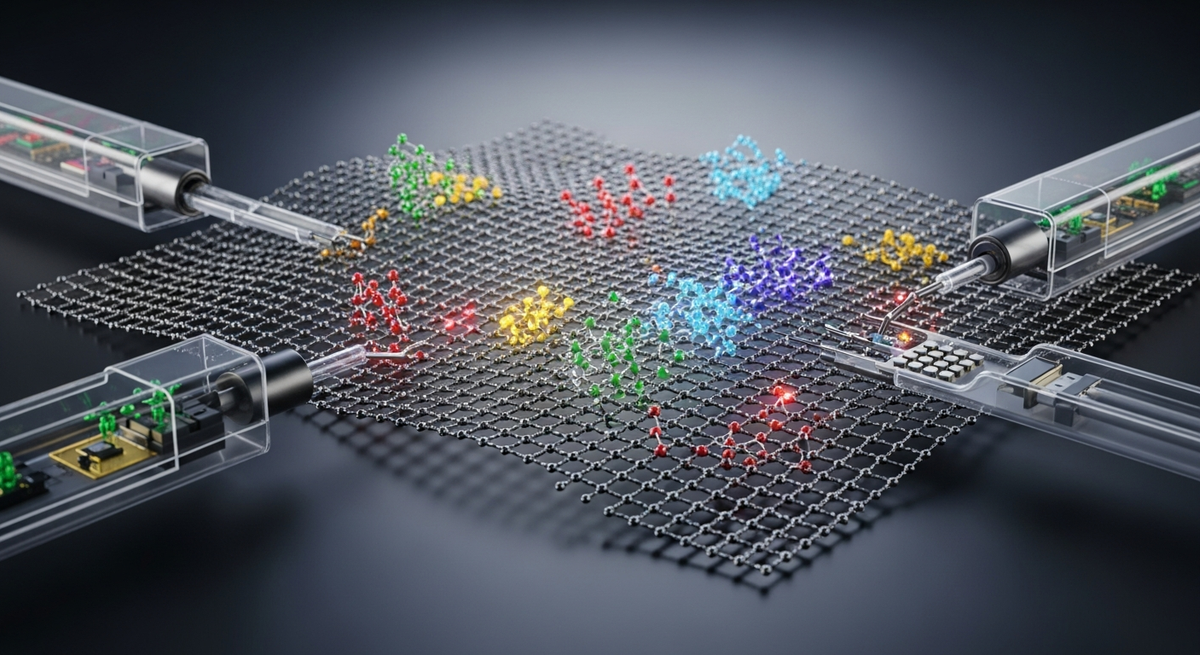
The strategic answer lies in chemically modifying the graphene surface. This approach involves altering the surface structure of graphene by integrating selective molecules or nanomaterials, thereby creating Chemically Modified Graphene (CMG). Such modifications impart new functionalities and properties not inherent to pristine graphene, allowing for the tuning of electrode performance towards specific analytical goals. The resultant CMG electrodes form a new class of materials, engineered to achieve unprecedented levels of specificity and sensitivity, making Chemically Modified Graphene for Electrochemical Sensing a cornerstone for next-generation analytical platforms.
The Imperative for Tailored Graphene Electrodes
The fundamental limitations of pristine graphene electrodes in electroanalytical chemistry necessitate targeted surface engineering. While graphene offers a vast surface area and excellent conductivity, its intrinsic surface often lacks the specific recognition sites or catalytic activity required for selective analyte binding and rapid electron transfer kinetics. This leads to a performance bottleneck, where the full potential of graphene as a sensing platform cannot be realized without deliberate intervention. The goal is to transform a highly conductive substrate into a highly selective and sensitive electrochemical interface.
Chemically modified electrodes, a concept first introduced by pioneering electrochemists, have gained significant traction due to their inherent advantages. These modified surfaces offer direct control over the electrode’s interfacial structure, enabling precise tuning of its chemical and electrochemical characteristics. For graphene, this means addressing several key objectives: minimizing the irreversible aggregation of graphene layers into less accessible platelets, anchoring highly specific functional moieties that selectively interact with target analytes, enhancing electron transfer reactivity at the substrate surface through electron mediators, and generally improving electrode kinetics while reducing the overpotential required for detection.
Chemically Modified Graphene (CMG) essentially comprises two critical components: the graphene substrate and the carefully selected modifier molecule. The choice of these components is dictated by the specific analytical work proposed and the nature of the quantitative study. By strategically selecting modifier molecules, researchers can impart properties such as enhanced catalytic activity, improved biocompatibility, or specific molecular recognition capabilities to the graphene surface. This deliberate engineering ensures that the modified graphene exhibits a new set of properties that are precisely aligned with the demands of high-performance electrochemical sensing applications.
Covalent Modification Strategies for Enhanced Functionality
Covalent modification involves forming strong, stable chemical bonds between graphene and various functional groups or molecules. This approach offers robust and permanent integration of desired properties, significantly altering graphene’s surface chemistry and enabling highly specific interactions. The methods employed are diverse, each offering unique advantages in tailoring the graphene interface for particular sensing requirements.
One widely adopted covalent modification route is diazonium salt reduction. This method provides a versatile platform for grafting a broad range of organic molecules onto graphene's surface. The diazonium salts react directly with the graphene basal plane or edge sites, forming stable carbon-carbon bonds. This robust attachment mechanism allows for the introduction of various functionalities, including those that enhance analyte specificity or improve electron transfer characteristics, making it a cornerstone for many advanced sensor designs.
Modification through oxygen-containing functional groups, often introduced during graphene oxide synthesis and subsequent reduction, provides reactive sites for further covalent functionalization. These groups, such as carboxyl, hydroxyl, and epoxide, can be leveraged for amide bond formation. This involves coupling amines or other active molecules to the carboxylic acid groups on the graphene surface, creating stable linkages that anchor specific recognition elements or catalytic sites. This strategy is particularly effective for biomolecule immobilization, facilitating biosensor development.
Covalent polymerization on the graphene surface allows for the creation of functional polymer layers that can enhance selectivity, sensitivity, or even provide an additional conductive pathway. Techniques range from in-situ polymerization of monomers directly on graphene to grafting pre-formed polymer chains. The resulting polymer-graphene composites often exhibit synergistic properties, combining the excellent electrical conductivity of graphene with the specific recognition capabilities or improved mass transport characteristics of the polymer matrix.
Microwave irradiation represents an efficient and rapid method for covalent functionalization. The localized heating and energetic environment provided by microwaves can significantly accelerate reaction kinetics, leading to controlled and uniform grafting of molecules onto graphene. This technique is particularly appealing for its scalability and ability to achieve functionalization in shorter reaction times compared to conventional heating methods, making it valuable for industrial-scale material production.
Solvent-free methods, such as ball milling and photochemical irradiation, offer environmentally friendly and sometimes more direct routes for covalent modification. Ball milling, a mechanical activation process, uses high-energy collisions to create defects and expose reactive sites on graphene, facilitating the attachment of functional groups or small molecules without the need for solvents. Photochemical methods, conversely, utilize light energy to induce chemical reactions, enabling precise spatial and temporal control over functionalization, which is particularly useful for patterning sensor arrays or creating specific surface chemistries.
Noncovalent Modification: Leveraging Intermolecular Forces
Noncovalent modification strategies offer an alternative to covalent bonding, relying on weaker intermolecular forces such as pi-pi stacking, electrostatic interactions, and van der Waals forces. This approach is highly attractive because it often preserves the intrinsic electronic properties and structural integrity of the graphene basal plane, which can be crucial for maintaining high conductivity and electron transfer rates. While less permanent than covalent bonds, noncovalent interactions can be highly effective for specific applications and offer advantages in reversibility and ease of processing.
One primary benefit of noncovalent modification is its ability to introduce functional molecules without disrupting the sp2 hybridization network of graphene. This ensures that the high electrical conductivity, a hallmark property of graphene, remains largely intact. Common noncovalent modifiers include polymers, surfactants, and biomolecules that possess aromatic rings or charged groups, allowing them to adsorb onto the graphene surface through pi-pi stacking or electrostatic attraction. For instance, certain conductive polymers can wrap around graphene sheets, preventing aggregation and improving dispersion while adding specific functionalities.
Surfactants are frequently employed to noncovalently functionalize graphene, primarily to improve its dispersion in various solvents. By adsorbing onto the graphene surface, surfactants reduce the strong van der Waals forces between individual graphene sheets, preventing their restacking and aggregation. This enhanced dispersibility is vital for creating stable graphene suspensions, which are essential for many electrode fabrication techniques, including drop-casting and inkjet printing, ensuring uniform sensor coatings.
For biosensing applications, noncovalent attachment of biomolecules such as DNA, proteins, or enzymes is particularly advantageous. These molecules can be adsorbed onto graphene surfaces through various noncovalent interactions, maintaining their biological activity due to the milder modification conditions. The large surface area and excellent conductivity of graphene, coupled with the specific recognition capabilities of the immobilized biomolecules, create highly sensitive and selective biosensors. This approach minimizes the potential for denaturation that can sometimes occur with harsher covalent modification chemistries, preserving the biomolecule's functional integrity.
Metal Nanoparticle Integration for Amplified Sensing Performance
The integration of metal or metal-oxide nanoparticles onto graphene surfaces represents a powerful strategy for enhancing the performance of electrochemical sensors. These nanoparticles act as catalytic sites, significantly improving electron transfer kinetics, increasing effective surface area, and providing specific recognition capabilities. The synergy between graphene's high conductivity and the catalytic activity of nanoparticles creates a superior sensing platform capable of detecting analytes at extremely low concentrations.
Chemical reduction is a common and versatile method for synthesizing metal nanoparticles directly on graphene. This involves reducing metal precursor salts in the presence of graphene, often using reducing agents like sodium borohydride or hydrazine. The graphene surface acts as a nucleation site, leading to the uniform deposition of nanoparticles such as platinum, gold, or silver. This method is straightforward and allows for large-scale production, offering control over nanoparticle size and distribution through reaction parameters.
Electrochemical deposition provides a precise and controlled way to integrate metal nanoparticles onto graphene electrodes. By applying specific potentials or currents, metal ions from a solution are reduced and deposited onto the graphene surface. This technique allows for fine-tuning of nanoparticle size, density, and morphology by adjusting parameters like deposition potential, time, and electrolyte composition. The direct formation of nanoparticles on the electrode surface ensures excellent electrical contact and enhanced electron transfer pathways, which is critical for high-performance sensing.
Hydrothermal and solvothermal techniques are widely used for growing metal and metal-oxide nanoparticles with controlled crystallinity and morphology on graphene. These methods involve heating precursor solutions in sealed vessels under high pressure, promoting the formation of well-defined nanostructures. The resulting composites often exhibit superior catalytic activity and stability due to the high quality of the grown nanoparticles. These techniques are particularly effective for creating complex nanostructures and composites with tailored properties.
Microwave-assisted modification with metal nanoparticles offers a rapid and energy-efficient route for composite synthesis. Microwave heating provides uniform and volumetric heating, accelerating reaction rates and promoting homogeneous nucleation and growth of nanoparticles on graphene. This leads to finely dispersed nanoparticles with controlled sizes and distributions, enhancing the overall catalytic efficiency and sensing performance. The speed and efficiency of microwave synthesis make it attractive for scaling up production of advanced sensor materials.
Sonochemical modification utilizes acoustic cavitation to deposit metal nanoparticles onto graphene. High-intensity ultrasound generates microbubbles that collapse violently, creating localized hot spots and high pressures, which can induce chemical reactions and facilitate nanoparticle formation and deposition. This method is effective for achieving uniform dispersion of nanoparticles and strong adhesion to the graphene surface, contributing to improved sensor stability and performance. The mechanical effects of sonication can also help to exfoliate graphene sheets, providing more surface area for nanoparticle attachment.
Chemically Modified Graphene for Electrochemical Sensing Applications
The strategic modification of graphene unlocks its full potential in highly demanding electrochemical sensing applications, particularly for quantitative studies of specific analytes at trace levels. The enhanced selectivity, sensitivity, and improved kinetics achieved through these modifications enable the development of powerful analytical tools crucial for environmental monitoring, healthcare, and industrial process control.
One significant application area is metal ion sensing. Heavy metal ions, such as lead, cadmium, and mercury, pose severe environmental and health risks even at minute concentrations. Chemically modified graphene electrodes provide a highly effective platform for their detection due to their ability to incorporate specific chelating agents or recognition sites. These modifiers selectively bind to target metal ions, concentrating them at the electrode surface and facilitating their electrochemical detection at trace levels, often in the parts per billion range. The excellent conductivity of graphene then ensures rapid signal transduction, leading to highly sensitive and accurate quantification. This is vital for ensuring water quality and preventing contamination in various industrial outputs.
Another critical application is hydrogen peroxide (H2O2) sensing. Hydrogen peroxide is a key reactive oxygen species involved in numerous biological processes, and its accurate detection is crucial in clinical diagnostics, food safety, and environmental analysis. Unmodified graphene can detect H2O2, but often with high overpotential and limited sensitivity. However, CMG electrodes, especially those decorated with metal or metal-oxide nanoparticles like platinum or manganese dioxide, significantly enhance H2O2 detection. These nanoparticles act as efficient catalysts, lowering the overpotential for H2O2 reduction or oxidation and dramatically increasing the sensitivity of the sensor. The result is robust and selective detection of H2O2 at clinically relevant trace levels, enabling rapid and reliable measurements in complex biological matrices or industrial settings.
Beyond these specific examples, the principles of Chemically Modified Graphene for Electrochemical Sensing extend to a vast array of other analytes, including various organic compounds, biomolecules, and gases. The ability to precisely tune the graphene surface with different functional groups, polymers, or nanomaterials means that sensors can be custom-designed for virtually any target. This versatility, combined with the inherent advantages of graphene, positions CMG as a leading material for developing advanced, high-performance electrochemical sensors that meet the rigorous demands of modern analytical science.
Engineering the Electrode Interface: Precision and Performance
The success of Chemically Modified Graphene for Electrochemical Sensing hinges on the precise engineering of the electrode interface. Every electrochemical reaction fundamentally depends on the nature of this interface, where electron transfer and analyte interaction occur. By meticulously controlling the surface chemistry and morphology of graphene, researchers can dictate the selectivity, sensitivity, and overall performance of the resulting sensor. This level of control is what elevates CMG beyond traditional electrode materials.
Achieving optimal performance involves a deep understanding of how modifier molecules interact with both the graphene substrate and the target analytes. For instance, the choice of a specific covalent linker can determine not only the stability of the functional group but also its orientation and accessibility for analyte binding. Similarly, the size, shape, and distribution of integrated metal nanoparticles directly influence their catalytic activity and the kinetics of electron transfer reactions. These intricate details collectively contribute to the sensor’s ability to detect analytes with high specificity and at exceptionally low concentrations.
The development of CMG electrodes is an iterative process, involving material synthesis, characterization, and electrochemical evaluation. Advanced analytical techniques are routinely employed to confirm the successful modification and to understand the resulting changes in surface properties. This rigorous scientific approach ensures that the designed modifications translate into predictable and enhanced electrochemical performance. The continuous refinement of modification strategies is essential for pushing the boundaries of what is possible in electroanalytical chemistry, leading to sensors that are not only more sensitive but also more robust and reliable in real-world applications.
Furthermore, the ability to tailor the graphene surface allows for the mitigation of common issues such as electrode fouling and matrix interference. By designing surfaces that repel non-target species or incorporate anti-fouling layers, the operational lifespan and accuracy of the sensors can be significantly extended. This aspect is particularly important for applications in complex biological fluids or harsh environmental samples, where sensor stability and long-term performance are paramount. The ongoing research in this domain promises to deliver even more sophisticated and resilient CMG-based sensing platforms.
FAQ
What is Chemically Modified Graphene (CMG)?
Chemically Modified Graphene (CMG) refers to graphene whose surface has been intentionally altered by attaching specific molecules, polymers, or nanoparticles. These modifications impart new or enhanced properties, such as increased selectivity, sensitivity, or catalytic activity, making it suitable for advanced applications like electrochemical sensing.
Why is modification necessary for graphene electrodes?
Modification is crucial because pristine graphene electrodes often lack the necessary selectivity and sensitivity for specific analyte detection, exhibiting high overpotential and sluggish kinetics. Chemical modification introduces specific recognition sites, improves electron transfer, and prevents graphene aggregation, thereby overcoming these limitations and enhancing sensor performance.
What are the main types of modification strategies?
The primary modification strategies include covalent modification, which forms strong chemical bonds, and noncovalent modification, which relies on weaker intermolecular forces like pi-pi stacking or electrostatic interactions. Additionally, integration with metal or metal-oxide nanoparticles through various deposition techniques is a key approach to amplify sensing capabilities.
How do metal nanoparticles enhance graphene sensors?
Metal nanoparticles significantly enhance graphene sensors by providing catalytic sites that accelerate electrochemical reactions and improve electron transfer kinetics. They also increase the effective surface area for analyte interaction and can offer specific recognition properties, leading to higher sensitivity, lower detection limits, and reduced overpotentials for various analytes.
What are key applications of CMG in electrochemical sensing?
Key applications include the highly sensitive and selective detection of trace metal ions in environmental and industrial samples, and the quantitative sensing of hydrogen peroxide in biological and food science contexts. CMG also finds use in detecting a wide range of organic compounds, biomolecules, and gases, owing to its tunable surface properties.
The Future of High-Performance Sensing
The journey from pristine graphene to Chemically Modified Graphene represents a significant leap in material science, fundamentally transforming the landscape of electrochemical sensing. By systematically addressing the inherent limitations of unmodified graphene through carefully designed chemical modifications, engineers and materials scientists have unlocked an unparalleled level of precision and performance. The ability to tailor graphene's surface with specific functional groups, polymers, or catalytic nanoparticles means that bespoke sensing solutions can be developed for an expansive array of analytical challenges, from environmental contaminant monitoring to advanced biomedical diagnostics.
The continued evolution of modification strategies, encompassing robust covalent linkages, subtle noncovalent interactions, and highly effective nanoparticle integrations, promises even more sophisticated and versatile sensing platforms. These innovations are not merely incremental improvements; they are foundational advancements that enable detection at previously unattainable trace levels with remarkable selectivity and stability. As research progresses, we anticipate CMG-based sensors becoming ubiquitous in industries demanding high-fidelity, real-time analytical capabilities, further solidifying graphene's role as a transformative material for the 21st century.
Explore how Chemically Modified Graphene can elevate your research and development projects. Visit usa-graphene.com to discover our range of high-quality graphene materials and discuss custom solutions for your electrochemical sensing applications.