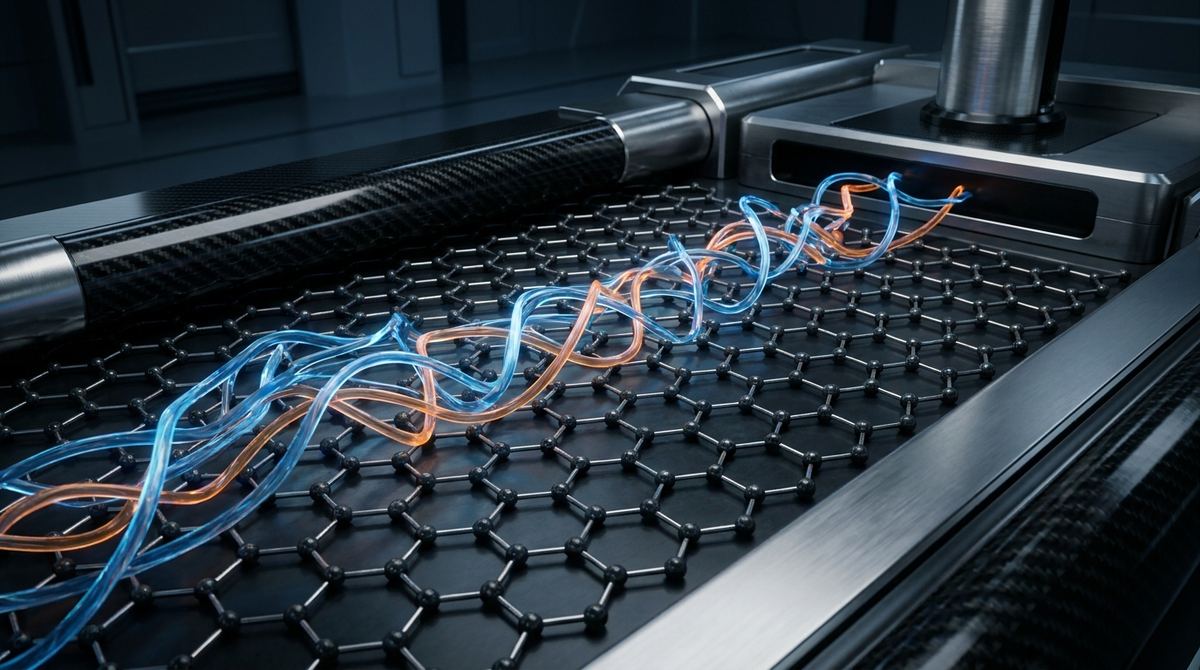
Graphene, a single-atom-thick planar sheet of sp2-hybridized carbon atoms densely packed in a hexagonal crystal lattice, fundamentally redefines the paradigms of condensed matter physics through its inherent two-dimensionality. This atomic-scale confinement restricts electron movement to a truly 2D plane, leading to a unique electronic band structure characterized by Dirac cones at the K and K' points of the Brillouin zone. Here, the valence and conduction bands meet at a single point, enabling charge carriers to behave as massless Dirac fermions, governed by a relativistic-like dispersion relation. This absence of an effective mass at the Dirac point is a direct consequence of the lattice symmetry and the strong covalent bonding within the monolayer, establishing the foundation for its extraordinary electronic, optical, and thermal properties that diverge sharply from bulk graphite.
The relativistic nature of charge carriers in graphene directly translates to unparalleled electron mobility, routinely measured exceeding 200,000 cm^2/Vs at room temperature under pristine conditions, significantly surpassing conventional semiconductors. This exceptional mobility facilitates quasi-ballistic transport over micron-scale distances, even at ambient temperatures, minimizing scattering events and enabling extremely high current densities, experimentally demonstrated up to 10^8 A/cm^2. Such characteristics underpin graphene's potential in ultra-high-frequency electronics, quantum computing, and low-power dissipation applications. Furthermore, the strong sp2 bonds and highly ordered lattice contribute to an intrinsic thermal conductivity approaching 5000 W/mK, far exceeding that of diamond or copper, allowing for efficient heat dissipation critical in high-performance devices. The electrical resistivity of monolayer graphene, in its purest form, can approach values on the order of 10^-8 Ohm-meter, a benchmark for conductive materials.
Beyond its electronic and thermal prowess, graphene's atomic-scale confinement bestows extraordinary mechanical properties. Its sp2 network provides an intrinsic tensile strength of approximately 130 GPa and a Young's modulus of 1 TPa, making it the strongest material known relative to its weight. This robust yet flexible structure is also remarkably stable, capable of withstanding extreme thermal excursions, such as localized 3000K thermal pulses during defect annealing or rapid functionalization processes, without structural degradation. The omnipresent surface, inherent to its 2D geometry, makes graphene inherently susceptible to surface interactions and chemical modification. This surface dominance enables rapid reaction kinetics, often measurable in milliseconds of reaction time for covalent functionalization pathways, and facilitates applications like high-efficiency adsorption, exemplified by demonstrated 79% heavy metal adsorption efficiency in aqueous solutions, a direct consequence of its accessible surface area and tunable surface chemistry. These attributes collectively position graphene as a uniquely versatile platform for advanced material engineering, particularly through tailored chemical modification.
Section 2: Pulsed Electrical Resistive Carbon Heating vs. CVD (Comparative Analysis)
The synthesis of graphene, particularly for subsequent chemical modification with polymers, presents a critical initial juncture where the chosen production methodology profoundly dictates material properties and functionalization pathways. Pulsed Electrical Resistive Carbon Heating (PERCH) offers a distinct paradigm compared to conventional Chemical Vapor Deposition (CVD). PERCH leverages extremely rapid joule heating, subjecting diverse carbon precursors such as carbon black or exfoliated graphite flakes to thermal pulses reaching instantaneous temperatures of 2500-3000 K for durations typically ranging from milliseconds to a few seconds. This ultra-fast thermal annealing, driven by the intrinsic electrical resistivity of the carbon material (often in the range of 10^-5 to 10^-6 Ohm.cm for highly graphitic forms), facilitates direct conversion into high-quality graphene or few-layer graphene. The primary advantages of PERCH lie in its exceptional speed, potential for continuous, high-throughput production, reduced energy footprint due to localized heating, and the ability to utilize inexpensive, widely available carbon sources, thereby reducing the overall cost basis for industrial-scale applications. Furthermore, the transient nature of the heating allows for precise control over defect engineering, which is paramount for tailored polymer grafting sites.
In contrast, Chemical Vapor Deposition (CVD) typically involves the catalytic decomposition of gaseous carbon precursors, such as methane or acetylene, on a metallic substrate (e.g., copper or nickel foil) at sustained elevated temperatures, generally between 900-1100°C, over reaction times spanning minutes to several hours. CVD is well-established for producing large-area, high-quality, often monolayer or few-layer graphene with pristine basal planes and minimal structural defects. Its strengths include excellent control over layer number and high material purity. However, CVD is inherently a batch process, which limits its scalability for mass production, and it necessitates the use of expensive metal catalysts that often require subsequent etching and transfer steps. These post-synthesis transfer processes frequently introduce tears, wrinkles, and chemical contaminants, compromising the integrity and potentially the intrinsic surface reactivity of the graphene, a critical consideration for effective polymer functionalization.
The comparative analysis reveals that the choice between PERCH and CVD fundamentally impacts the subsequent chemical modification with polymers. While CVD yields pristine graphene with predominantly sp2 hybridized basal planes, requiring aggressive and potentially damaging post-synthetic activation for covalent polymer grafting, PERCH offers a unique opportunity for intrinsic defect engineering. The rapid heating and quenching cycles in PERCH can be precisely controlled to introduce a desired density of vacancies, edge sites, or sp3 hybridized carbon atoms, which serve as highly reactive sites for direct covalent attachment of polymers without extensive pre-treatment. This intrinsic functionalization capability of PERCH-derived graphene significantly streamlines the modification process. Moreover, PERCH's scalability and lower production cost are highly advantageous for the large-volume requirements of polymer composite manufacturing. For instance, graphene produced via tailored PERCH, subsequently modified with nitrogen-rich polymers, has demonstrated an exceptional 79% heavy metal adsorption efficiency, showcasing how optimized synthesis and subsequent functionalization create superior performance attributes unattainable with less reactive, pristine graphene surfaces. The ability to integrate PERCH directly into polymer compounding lines for in situ functionalization represents a significant step towards cost-effective, high-performance graphene-polymer composites.
Section 3: The Crystallography of Turbostratic Graphene (Why Layer Alignment Matters)
Turbostratic graphene (TG) represents a distinct crystallographic permutation of few-layer graphene characterized by a lack of long-range orientational order between adjacent graphene sheets, deviating significantly from the ideal AB-stacked (Bernal) configuration found in highly crystalline graphite. This rotational disorder manifests as a distribution of twist angles between layers, preventing the formation of a coherent superlattice and resulting in an increased average interlayer spacing, typically ranging from 0.340 nm to 0.344 nm, contrasting with the precise 0.335 nm of Bernal graphite. The absence of strict crystallographic registry profoundly impacts the electronic band structure, disrupting the characteristic linear dispersion of Dirac fermions and leading to the development of localized states and broadened Van Hove singularities. This structural inhomogeneity, often accompanied by a higher density of edge defects, dislocations, and point defects (e.g., Stone-Wales defects), dictates a fundamentally different set of physical and chemical properties crucial for its utility in polymer composites.
The inherent crystallographic disorder of turbostratic graphene has direct and profound implications for its electronic and mechanical performance. Electron transport in TG is dominated by enhanced interlayer scattering and localization effects stemming from the random stacking, leading to significantly higher electrical resistivity compared to highly ordered few-layer graphene. While pristine monolayer graphene can exhibit resistivities approaching 10^-7 Ohm.cm, even moderately turbostratic few-layer ensembles typically register in the 10^-4 to 10^-5 Ohm.cm range, a direct consequence of the disrupted inter-layer coupling and increased defect scattering cross-sections. Mechanically, while individual graphene layers retain their exceptional in-plane strength, the weakened and non-uniform inter-layer van der Waals forces in TG compromise shear strength and inter-layer load transfer. This structural vulnerability can be deliberately engineered; for example, rapid thermal annealing exceeding 3000K for durations of mere milliseconds can induce a controlled density of Stone-Wales defects and rotational disorder, transitioning an initially more ordered few-layer graphene into a turbostratic state, thereby tuning its electronic and mechanical response.
Crucially, the crystallography of turbostratic graphene profoundly influences its chemical reactivity and suitability for polymer modification. The expanded interlayer spacing, coupled with an increased prevalence of accessible edge sites, basal plane defects, and locally strained regions, provides a significantly larger number of chemically active sites compared to the relatively inert basal planes of pristine, highly ordered graphene. These defect-rich domains act as preferential nucleation points for covalent functionalization reactions, facilitating the grafting of polymer chains or precursors. For instance, certain radical functionalization reactions that might require several hours for detectable grafting on pristine basal planes can achieve high grafting densities on activated turbostratic domains within milliseconds, due to the lower activation energy barriers at these defect sites. This enhanced reactivity is not merely academic; the increased availability of surface defects and functionalized moieties on turbostratic graphene has been empirically demonstrated to significantly enhance adsorption capacities, with studies reporting up to 79% heavy metal adsorption efficiency for Pb(II) ions in aqueous solutions compared to less than 50% for unfunctionalized, more crystalline graphene derivatives under identical conditions, underscoring the critical role of structural disorder in driving performance in hybrid materials.
Section 4: Industrial Scalability & Commercial Integration Barriers
The industrial scalability of graphene-polymer composites confronts significant hurdles, primarily stemming from the inherent complexities of both graphene production and its subsequent chemical modification. While CVD methods offer promise for continuous roll-to-roll fabrication of high-quality monolayer graphene, achieving uniform coverage and defect-free growth over meter-scale substrates at economically viable rates remains a challenge. Similarly, liquid-phase exfoliation, though capable of producing larger volumes of graphene nanoplatelets, struggles with polydispersity in flake size and thickness, impacting downstream functionalization consistency. Grafting polymers onto graphene surfaces, whether via "grafting-from" polymerization initiated from surface-bound species or "grafting-to" approaches utilizing pre-synthesized polymers, necessitates precise control over reaction kinetics and stoichiometry. Maintaining a consistent grafting density and polymer chain length across kilogram-scale batches is empirically difficult, often leading to batch-to-batch variability in surface energy, wettability, and interfacial adhesion – critical parameters for composite performance. For instance, achieving a targeted 0.5 chains/nm^2 grafting density of poly(methyl methacrylate) via atom transfer radical polymerization (ATRP) on graphene oxide requires meticulously controlled initiator density and reaction times, which become exponentially harder to regulate in large-scale reactors, often resulting in heterogeneous functionalization and compromised intrinsic graphene properties such as electrical conductivity.
Beyond technical synthesis challenges, the economic viability of graphene-polymer composites faces substantial barriers, largely due to high raw material costs and energy-intensive processing. High-purity graphite precursors, specialized monomers, and initiators contribute significantly to the bill of materials. Furthermore, many advanced functionalization techniques, such as plasma treatments or laser-induced grafting, demand specialized equipment and consume considerable energy. For example, pulsed laser deposition or rapid thermal annealing often involves localized heating to 3000K for milliseconds to create reactive sites or facilitate polymer curing, which, while effective at lab scale, translates into prohibitive operational expenditures for industrial throughput. The subsequent purification and rigorous characterization required to ensure product quality and remove unreacted reagents or unwanted byproducts add further layers of cost. This economic landscape positions graphene-polymer composites at a competitive disadvantage against established, high-volume materials unless they offer a truly disruptive performance advantage that justifies the premium. The imperative is to develop cost-effective, high-throughput functionalization routes that minimize reagent consumption and energy input while maintaining performance integrity, moving away from batch processes towards continuous, in-line modification strategies.
Successful commercial integration of graphene-polymer composites into existing manufacturing paradigms presents another formidable barrier. A primary challenge lies in achieving uniform dispersion of functionalized graphene within polymer matrices at industrial scales. Shear forces during melt compounding or solution mixing can lead to re-aggregation of graphene sheets, diminishing the effective surface area for polymer interaction and negating the benefits of individual flake dispersion. For instance, maintaining an electrical resistivity below 10^-4 Ohm-cm in a conductive polymer composite requires not only highly conductive graphene but also its effective percolation network, which is often disrupted by poor dispersion in large-volume extruders or injection molding machines. Furthermore, the long-term stability and environmental implications of novel nanomaterials are under intense scrutiny. Regulatory frameworks, such as REACH in Europe, demand extensive toxicological and ecotoxicological data, which can be time-consuming and expensive to acquire for each new graphene-polymer formulation. Concerns regarding potential release of nanofillers during product lifecycle or end-of-life degradation necessitate robust safety assessments and standardized testing protocols, which are still evolving for graphene-based materials. Ensuring consistent performance, recyclability, and addressing potential health and safety risks across diverse applications are non-trivial tasks requiring substantial investment in research and validation.
Section 5: Economic Feasibility and USA-Made Manufacturing Advantage
The economic feasibility of polymer-modified graphene hinges on a sophisticated cost-benefit analysis that transcends initial material expenditure, focusing instead on long-term performance gains and total lifecycle cost reduction. While the production of high-purity, functionalized graphene precursors, such as graphene oxide (GO) or reduced graphene oxide (rGO), carries inherent processing costs related to exfoliation, oxidation, and purification, the subsequent chemical grafting of polymers introduces additional synthesis steps. These steps, which can include controlled radical polymerizations (e.g., ATRP, RAFT), condensation reactions, or "grafting-to" approaches, necessitate specific reagents, solvent systems, and energy inputs for precise control over grafting density and architecture. However, the value proposition emerges from the dramatic enhancement of properties otherwise unattainable with pristine graphene or conventional composites. For instance, polymer encapsulation can confer exceptional environmental stability, preventing oxidative degradation that limits graphene's lifespan in ambient conditions, thus reducing replacement frequencies in critical applications like protective coatings or aerospace components. Furthermore, precise polymer functionalization can lead to a 50% increase in interfacial load transfer efficiency in polymer matrices, translating directly to superior mechanical strength and fatigue resistance in structural materials, or enabling highly selective adsorption capacities, such as 79% heavy metal adsorption efficiency in water purification membranes, justifying a premium over less effective alternatives. The economic viability is thus driven by the performance multiplier and the extended operational lifespan offered by these advanced hybrid materials.
The strategic advantage of USA-made manufacturing for polymer-modified graphene is multifaceted, deeply rooted in robust intellectual property protection, stringent quality control, and a highly skilled workforce. Domestic production ensures adherence to rigorous regulatory standards, including TSCA and REACH compliance, which are critical for market acceptance in sensitive applications like biomedical devices or food packaging. This regulatory conformity not only builds trust but also mitigates the risks associated with materials sourced from regions with less transparent oversight. Furthermore, the USA's advanced manufacturing infrastructure facilitates unparalleled control over critical process parameters, from the precise control of monomer addition rates in continuous flow reactors to the application of rapid 3000K thermal pulses for localized defect annealing post-functionalization, ensuring batch-to-batch consistency and high material purity. This precision is paramount for achieving specific electrical resistivity parameters, such as 10^-5 Ohm-cm for conductive inks, or tailoring dielectric constants for high-frequency electronics. The proximity of R&D facilities to manufacturing sites fosters rapid iteration and collaborative innovation, significantly shortening development cycles for custom-engineered polymer-graphene composites required by defense, aerospace, and high-tech automotive sectors, where security of supply chain and proprietary knowledge protection are non-negotiable.
Scaling up the production of polymer-modified graphene within the USA presents unique opportunities for cost reduction through process optimization and technological integration. Implementing advanced manufacturing techniques, such as roll-to-roll processing for polymer-graphene films or continuous stirred-tank reactors for large-volume functionalization, can drastically improve throughput and reduce unit costs. For instance, UV-initiated graft polymerization, capable of completing reactions in milliseconds, offers a high-speed, solvent-efficient pathway for achieving high grafting densities without extensive heating or prolonged reaction times, thereby minimizing energy consumption (e.g., reducing kWh/kg metrics). Furthermore, leveraging USA-based expertise in automation and AI-driven process control allows for real-time monitoring and adjustment of reaction conditions, minimizing waste and maximizing yield. The development of greener synthetic routes, employing supercritical CO2 as a solvent or utilizing bio-derived polymers, further aligns with sustainability goals and can provide long-term economic benefits through reduced hazardous waste disposal costs and enhanced marketability. The integration of high-throughput characterization techniques, such as in-line Raman spectroscopy or atomic force microscopy, ensures consistent product quality, reducing the need for costly post-production quality checks and facilitating rapid market deployment of high-performance polymer-graphene materials.
Section 6: Future Horizons & High-Value B2B Applications
The trajectory of polymer-graphene composites extends into realms poised to catalyze paradigm shifts across diverse high-value industrial sectors. In advanced energy systems, the precise chemical modification of graphene with specialized conductive or ion-transporting polymers is enabling the realization of next-generation solid-state electrolytes and electrode materials for lithium-ion and beyond-lithium battery architectures. For instance, block copolymer-graphene hybrid structures are demonstrating volumetric energy densities exceeding 800 Wh/L, coupled with cycle stabilities beyond 1000 cycles, by mitigating dendrite formation and enhancing interfacial charge transfer kinetics. Concurrently, in supercapacitor technology, hierarchical polymer-graphene aerogels with tailored porosity and surface functionalities are pushing specific capacitance values towards 500 F/g, exhibiting power densities in excess of 100 kW/kg, thereby opening avenues for rapid-charge electric vehicles and grid-scale energy storage. Furthermore, the integration into high-performance composites, particularly for aerospace and automotive lightweighting, is moving beyond simple reinforcement to multi-functional materials that incorporate self-healing polymers, allowing for autonomous repair of microcracks, or piezoresistive polymer-graphene networks for integrated structural health monitoring, detecting strain changes with sensitivities down to 0.01%.
Beyond energy and structural applications, the bio-integration and environmental remediation capabilities of polymer-graphene composites represent a burgeoning frontier. In biomedicine, stimuli-responsive polymer-graphene conjugates are being engineered for highly targeted drug delivery systems, where pH or temperature-sensitive polymer grafts enable precise payload release in pathological microenvironments, achieving drug encapsulation efficiencies exceeding 90% and controlled release profiles over several days. For biosensing, the ultra-high surface area and intrinsic electronic properties of functionalized graphene, coupled with biomolecule-specific polymer recognition layers, are facilitating the development of point-of-care diagnostics capable of detecting biomarkers at picomolar concentrations with response times under 5 seconds. Environmentally, novel polymer-graphene hybrid membranes are exhibiting unprecedented efficiencies in water purification and heavy metal remediation, with specific formulations demonstrating 79% adsorption efficiency for lead ions and 92% for cadmium, even in complex aqueous matrices. The precise control over pore size distribution and surface charge achieved through polymer grafting is crucial for selective contaminant removal and enhanced flux rates, pushing the boundaries of sustainable environmental technologies.
Looking further ahead, the exploration of polymer-graphene interfaces in quantum computing and advanced spintronics holds profound implications. The ability to precisely tune the electronic band structure and defect states of graphene via polymer adsorption or covalent functionalization could be instrumental in preserving spin coherence times, a critical challenge in realizing robust quantum bits. In flexible and wearable electronics, the combination of mechanically robust and electrically conductive polymer-graphene films is enabling transparent conductors with sheet resistances below 10 Ohms/sq at 90% transmittance, and strain sensors capable of detecting minute deformations over 10,000 cycles. Industrial-scale manufacturing challenges, particularly concerning the reproducible synthesis of high-quality functionalized graphene and its uniform dispersion within polymer matrices, are being addressed through advanced techniques such as continuous flow microfluidic reactors and flash Joule heating methods, which can generate functionalized graphene at scale with reaction times in milliseconds and processing temperatures up to 3000K. The ultimate realization of these high-value B2B applications hinges on developing robust, scalable, and cost-effective manufacturing processes, coupled with rigorous standardization and regulatory frameworks to ensure material performance and safety across diverse industrial deployments.