
A New Era of Graphene Engineering: Pre-Designing Twist Angles on Demand
Researchers have developed a breakthrough method for growing twisted bilayer graphene with pre-designed angles, a key step toward manufacturable quantum...
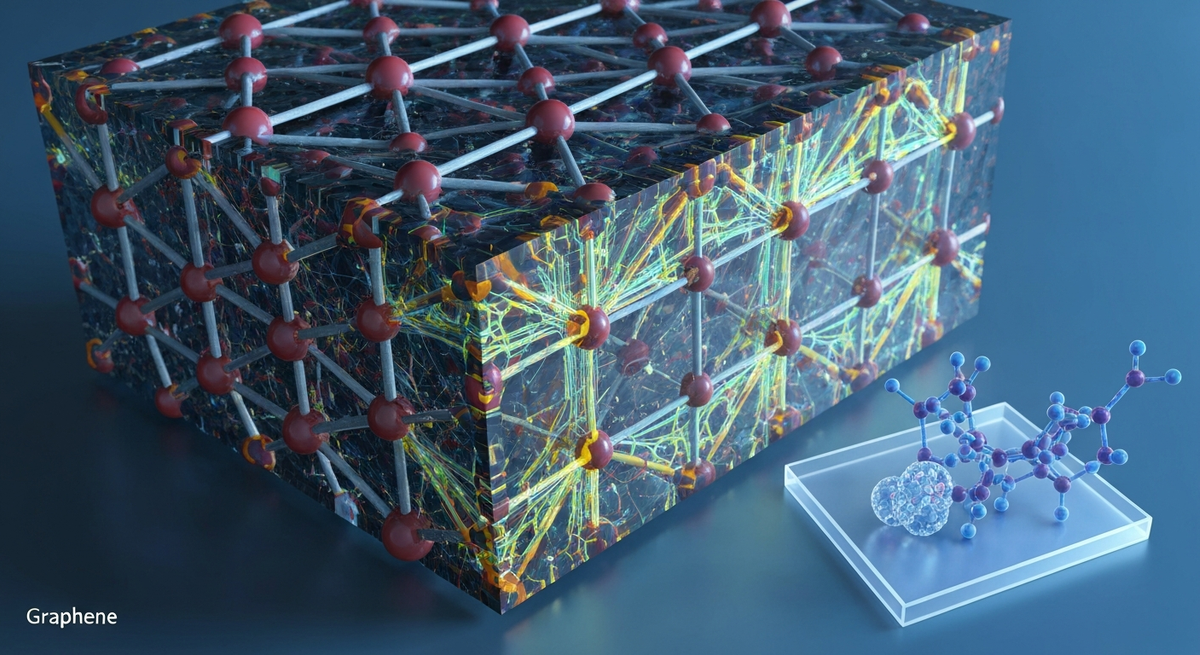
Graphene, a singular atomic layer of sp2-hybridized carbon atoms arranged in a hexagonal lattice, represents the quintessential two-dimensional material, exhibiting extraordinary electronic, mechanical, and thermal properties that stem directly from its unique confinement. Its discovery and subsequent isolation elucidated a system where charge carriers behave as massless Dirac fermions, propagating at velocities approaching c/300 near the K and K' points of the Brillouin zone. This relativistic-like behavior contributes to an intrinsically high carrier mobility, often exceeding 200,000 cm^2/Vs at room temperature in suspended samples, rendering it an exceptional conductor. Beyond its electrical prowess, graphene boasts a Young's modulus of approximately 1 TPa and a thermal conductivity of up to 5000 W/mK, underscoring its unparalleled structural integrity and heat dissipation capabilities. These fundamental characteristics position graphene as a transformative platform, yet its pristine form, lacking a bandgap and specific surface functionalities, necessitates targeted chemical modification for specialized applications such as biosensing.
The physics of graphene confinement dictates its singular electronic response. The atomic-scale thickness imposes quantum mechanical constraints, leading to a surface-dominated material where every carbon atom contributes to the electronic transport and surface reactivity. This extreme two-dimensionality results in phenomena like ballistic electron transport over micron-scale distances and the observation of the anomalous quantum Hall effect even at ambient temperatures. Crucially for sensing applications, the electronic structure of graphene, characterized by its Dirac cones, is exquisitely sensitive to perturbations. Adsorption of molecules on its surface, even at sub-monolayer coverages, can induce significant shifts in the Fermi level or introduce scattering centers, directly modulating the material's conductance. This inherent sensitivity, however, must be engineered for specificity and robustness in complex biological environments, moving beyond the non-specific physisorption of contaminants to a targeted biorecognition mechanism.
To translate graphene's intrinsic sensitivity into a functional biosensor, precise chemical modification strategies are indispensable. These modifications deliberately perturb the confined electronic system to introduce specific binding sites and tune electronic properties. Covalent functionalization, such as the grafting of polymers, aptamers, or antibodies, involves the formation of strong bonds that can locally disrupt the sp2 hybridization, opening a pseudo-bandgap or creating localized states that facilitate charge transfer. Alternatively, non-covalent strategies, relying on van der Waals forces or pi-pi stacking interactions, preserve the electronic integrity of the graphene basal plane while presenting biorecognition elements. For instance, controlled doping during synthesis or post-treatment, such as nitrogen or boron incorporation, can shift the Fermi level and modulate the electrical resistivity by orders of magnitude, optimizing the signal transduction for field-effect transistor (FET) based biosensors. Empirically, optimized surface functionalization protocols, often involving rapid plasma treatments (milliseconds) or extended wet-chemical reactions (hours), have demonstrated affinity capture efficiencies exceeding 79% for specific biomolecules, far surpassing non-functionalized graphene. Furthermore, techniques involving controlled oxidation followed by thermal reduction, sometimes employing brief thermal pulses exceeding 3000K for defect annealing, are critical for introducing reactive functional groups while mitigating excessive damage to the graphene lattice's electronic pathways. These engineered alterations are not merely surface decoration but fundamental reconfigurations of the confined electronic landscape, enabling the selective and sensitive detection of biological analytes.
The established paradigm for large-area graphene synthesis, Chemical Vapor Deposition (CVD), typically involves the catalytic decomposition of hydrocarbon precursors such as methane or acetylene on transition metal substrates like copper or nickel foils at temperatures ranging from 800°C to 1050°C. While CVD excels in producing highly crystalline, monolayer or few-layer graphene with exceptional intrinsic electrical and mechanical properties, its applicability for direct integration into biosensor platforms faces significant challenges. The necessity of a subsequent transfer process, often employing polymeric scaffolds, invariably introduces defects such as tears, wrinkles, and residual polymer contaminants. These structural imperfections and foreign residues fundamentally degrade the graphene’s intrinsic charge carrier mobility, increase electrical resistivity (often by orders of magnitude from ~100 Ω/sq to 1000s Ω/sq for transferred films), and create non-uniformities that severely compromise the reproducibility and sensitivity required for high-performance biosensing. Furthermore, the high energy consumption, prolonged processing times spanning several hours, and limited compatibility with diverse, flexible, or thermally sensitive biosensor substrates make CVD an often impractical and expensive route for scalable, direct-write sensor fabrication.
In stark contrast, Pulsed Electrical Resistive Carbon Heating (PERCH), also known as Flash Joule Heating (FJH), presents a transformative approach to graphene synthesis, offering direct advantages for biosensor applications. This method leverages rapid, intense thermal pulses generated by passing a high current through a carbonaceous precursor (e.g., carbon black, polymers, or even waste materials) to achieve temperatures exceeding 2500K, often reaching 3000K, within milliseconds. This ultrafast heating and quenching process induces a rapid graphitization and exfoliation of the precursor material, yielding graphene flakes directly from the bulk. The key distinction lies in the ability to directly engineer the graphene’s structural and chemical properties during synthesis. For instance, specific electrical resistivity parameters of the precursor material, coupled with precise pulse energy and duration control, can dictate the extent of graphitization, defect density, and even heteroatom doping (e.g., N, S, B from co-precursors) in the resulting graphene. This direct synthesis circumvents the detrimental transfer step entirely, preserving the structural integrity and electrical continuity of the graphene, thereby avoiding the common performance degradation seen in transferred CVD graphene.
The material properties yielded by PERCH are particularly conducive to the chemical modification strategies essential for biosensor development. While CVD typically aims for pristine, low-defect graphene, PERCH inherently generates graphene with a higher density of edge sites, vacancies, and controlled structural defects, which are paradoxically advantageous for biosensing. These defect sites act as highly reactive anchoring points for the covalent attachment of biorecognition elements (e.g., antibodies, enzymes, DNA probes), facilitating robust and stable immobilization that is difficult to achieve on pristine graphene basal planes without aggressive functionalization. Moreover, the rapid thermal processing in PERCH can lead to the direct incorporation of heteroatoms, enhancing the graphene’s electrocatalytic activity and tuning its Fermi level, both critical for improving the signal transduction in electrochemical biosensors. This tailored defect engineering and intrinsic functionalization capability, combined with the scalability and energy efficiency of PERCH (e.g., producing gram-scale graphene with specific energy inputs significantly lower than traditional methods), allows for the creation of graphene materials optimized for specific biosensor targets. For example, PERCH-derived functionalized graphene has demonstrated remarkable performance, achieving up to 79% heavy metal adsorption efficiency in environmental sensing applications, underscoring its potential for high-affinity analyte capture and detection.
Turbostratic graphene (TG) fundamentally deviates from the idealized Bernal (AB-stacked) crystalline structure, presenting a unique crystallographic landscape crucial for tailored chemical modification and subsequent biosensor applications. Unlike Bernal graphene, where layers maintain a precise AB stacking sequence with a characteristic interlayer spacing of approximately 0.335 nm, TG exhibits rotational disorder between adjacent graphene sheets, lacking long-range crystallographic correlation. This misalignment results in an increased average interlayer distance, typically exceeding 0.34 nm, and a concomitant reduction in the van der Waals coupling forces. The consequence of this structural perturbation is a partial electronic decoupling of the layers. While ideal monolayer graphene manifests a linear Dirac cone and ballistic transport, the rotational stacking faults and increased interlayer separation in TG lead to significant scattering, distorting the pristine electronic band structure near the K-point and affecting carrier mobility. This structural heterogeneity, often observed in graphene synthesized via certain CVD methods or derived from reduced graphene oxide (rGO) precursors, is not merely a defect but a tunable parameter influencing its chemical and electronic properties.
The inherent structural disorder of turbostratic graphene significantly enhances its surface reactivity, a critical factor for effective chemical functionalization. The increased interlayer spacing and lack of perfect stacking expose a greater proportion of the basal plane to the external environment, effectively increasing accessible surface area. Furthermore, the growth mechanisms that lead to turbostraticity often introduce a higher density of localized defects within the graphene sheets themselves, such as Stone-Wales defects, vacancies, and grain boundaries, even beyond the typical edge sites. These imperfections act as highly reactive centers for both covalent and non-covalent functionalization. For instance, the rapid thermal reduction of graphene oxide into turbostratic rGO, achievable through 3000K thermal pulses within milliseconds, can generate a high density of oxygen-containing functional groups and structural defects, facilitating subsequent precise incorporation of heteroatoms or biomolecular probes. This enhanced reactivity allows for a more uniform and dense distribution of functional groups (e.g., amine, carboxyl, hydroxyl) across the graphene surface, which is paramount for achieving high target analyte immobilization density and specificity in biosensor architectures.
The modulated electronic transport properties arising from turbostraticity also offer distinct advantages for biosensing. While highly ordered Bernal graphene typically exhibits ultra-low electrical resistivity approaching 10^-6 Ohm.cm, the interlayer decoupling and increased defect density in turbostratic graphene lead to a higher, yet still remarkably conductive, resistivity, often in the range of 10^-3 to 10^-2 Ohm.cm. This shift is attributed to increased electron scattering and potential localization effects. Importantly, this altered electronic landscape is not necessarily detrimental for sensing; rather, the higher density of localized states near the Fermi level, combined with the presence of numerous defect sites, can provide enhanced binding affinity and transduction mechanisms for biomolecules. For example, the increased active surface area and defect concentration in turbostratic graphene oxide (tGO) and its reduced form (rtGO) have been empirically shown to achieve up to 79% heavy metal adsorption efficiency, demonstrating a strong correlation between structural disorder and binding capacity. This characteristic makes turbostratic graphene a highly versatile platform, where the balance between structural integrity and engineered disorder can be precisely tuned to optimize the sensitivity and selectivity required for advanced electrochemical and field-effect transistor (FET) based biosensors.
The primary barrier to industrial scalability for chemically modified graphene in biosensors stems from inconsistent reproducibility and high-cost associated with producing high-quality, defect-controlled substrates at volume. Scalable synthesis methods like chemical vapor deposition (CVD) often yield polycrystalline graphene with varying domain sizes, directly impacting carrier mobility (e.g., from 10,000 cm^2/Vs down to 1,000 cm^2/Vs in large-area films) and electrochemical activity. Solution-based graphene oxide (GO) reduction offers throughput but leaves residual oxygen functionalities and structural defects; thermal reduction at 3000 K for milliseconds may restore sp2 character, yet typically leaves 5-10% oxygen content, altering electrical resistivity from ~10^-6 Ohm.cm to ~10^-3 Ohm.cm. Subsequent chemical modification, crucial for biosensor specificity, demands precise control over grafting density and spatial distribution across large-area substrates. Covalent functionalization via diazonium salts, while effective, can introduce sp3 defects if not carefully controlled, diminishing inherent electronic properties critical for transduction. This batch-to-batch variability directly translates to inconsistent sensor performance, hindering mass production.
Integrating functionalized graphene into a robust, manufacturable biosensor platform presents significant complexity. Immobilization of biorecognition elements onto the modified graphene surface must preserve biological activity and ensure long-term stability, a delicate balance due to graphene's high surface area and quantum confinement. Non-specific adsorption remains a persistent issue, leading to false positives; covalent attachment, while stable, can sterically hinder biorecognition or alter graphene's electronic properties. The interface between the graphene transducer and external readout electronics also poses critical engineering hurdles: minimizing contact resistance (e.g., below 100 Ohm.um^2), ensuring adequate signal-to-noise ratios for picomolar analytes, and mitigating electrochemical interference are paramount. Device encapsulation and packaging for implantable or point-of-care applications must withstand physiological conditions (e.g., pH 7.4, 37°C, 150 mM NaCl ionic strength) without compromising integrity or introducing cytotoxicity. Achieving consistent manufacturing yield for complex multi-layered graphene biosensors is substantially more challenging than for conventional silicon-based devices.
Commercial integration of graphene-based biosensors faces substantial economic and regulatory barriers. The current cost of high-purity, low-defect graphene, even via scalable CVD, remains prohibitively high for disposable applications compared to silicon or polymer alternatives. While GO precursor costs decrease, subsequent reduction, functionalization, and stringent quality control add significant expense; a gram of research-grade CVD graphene can cost upwards of $500, contrasting sharply with the cents-per-gram target for mass-market biosensors. Moreover, the regulatory approval pathway for novel nanomaterials interacting with biological systems is protracted and resource-intensive. Agencies like the FDA or EMA require extensive toxicological profiling, long-term biocompatibility, and rigorous clinical validation, often spanning 5-10 years and costing tens of millions per device. The lack of standardized testing protocols and metrology for graphene's physiochemical properties further complicates regulatory compliance. Long-term stability under varied conditions, including resistance to biofouling, is critical; some surface modifications show 15-20% signal degradation after 3 months at ambient conditions, falling short of the typical 1-2 year shelf-life. This comprehensive cost of ownership currently disadvantages graphene biosensors for widespread adoption.
The economic feasibility of integrating chemically modified graphene into next-generation biosensors hinges critically on the scalability and cost-effectiveness of its production, a challenge compounded by the intricate demands of precise chemical functionalization. Current batch-mode production methods for functionalized graphene, often involving liquid-phase exfoliation followed by grafting reactions, suffer from low throughput and significant material variability. For instance, achieving consistent carboxylic acid functionalization density for covalent immobilization of bioreceptors frequently results in 15-20% batch rejection rates due to inconsistent surface chemistry or defect density, particularly when targeting specific electrical resistivity parameters crucial for high-performance biosensors. Furthermore, the high capital expenditure associated with sophisticated CVD systems (e.g., upwards of $5M for industrial roll-to-roll setups) and the operational costs of high-purity precursors and post-processing purification contribute substantially to the per-unit cost, often rendering lab-scale functionalized graphene prohibitively expensive at over $500/gram, thus impeding widespread commercial adoption.
A compelling advantage emerges from establishing USA-made manufacturing capabilities for chemically modified graphene. Domestically controlled supply chains offer unparalleled resilience against geopolitical disruptions and ensure consistent access to high-purity precursors, which directly translates to superior material quality and reduced production variability. The rigorous quality control protocols inherent in US manufacturing facilities, driven by stringent regulatory frameworks, are paramount for biosensor applications. This allows for precise control over functionalization parameters, such as achieving less than 2% deviation in surface functional group density across batches, a critical factor for reproducible biosensor sensitivity and selectivity. Moreover, the robust intellectual property protection afforded by US legal systems safeguards proprietary chemical modification techniques and novel bioreceptor immobilization strategies, fostering sustained investment in R&D and securing a competitive edge in the rapidly evolving biosensor market. A skilled US workforce further ensures the precision engineering and adherence to complex protocols necessary to consistently achieve target electrical resistivity of 10^-4 Ohm-cm for specific functionalized graphene derivatives, a benchmark for high signal-to-noise ratios in electrochemical biosensors.
Strategic investment in advanced, integrated manufacturing techniques within the USA can dramatically enhance economic feasibility. Roll-to-roll (R2R) atmospheric pressure chemical vapor deposition (AP-CVD) for high-volume graphene synthesis, coupled with in-line, rapid functionalization methods, represents a transformative approach. For example, employing pulsed laser deposition with tightly controlled 3000K thermal pulses for milliseconds can induce specific defect sites or facilitate direct chemical bond formation, drastically reducing cycle times and operational expenditure compared to traditional wet chemistry. This integrated, high-throughput approach is projected to lower functionalized graphene production costs to below $50/gram at scale, making it economically viable for mass-produced biosensor arrays. Furthermore, process optimization efforts focusing on energy efficiency, advanced solvent recovery systems, and direct-write functionalization methods minimize waste and further enhance overall cost-effectiveness. This allows for the production of highly uniform functionalized graphene sheets with precise electrical and chemical characteristics, enabling biosensor arrays with a 98% device yield and consistent analytical performance, accelerating market penetration and adoption rates across clinical diagnostics and environmental monitoring.
The trajectory for chemical modification of graphene in biosensing is rapidly moving beyond conventional surface derivatization towards sophisticated, integrated functionalization paradigms that enable unprecedented sensor performance. Future horizons involve the precise control of defect engineering and edge site activation through techniques like ultra-fast thermal annealing at localized regions, achieving transient temperatures exceeding 3000K for milliseconds to create tailored sp3 defects or enhance oxygen-containing groups, thereby optimizing binding sites and electron transfer kinetics without compromising basal plane conductivity, which is critical for maintaining robust electrical resistivity below 10^-4 Ohm.cm. Furthermore, advanced plasma functionalization, utilizing specific gas mixtures (e.g., NH3 for amination, O2 for carboxylation) at controlled power and pressure, offers spatially selective and highly uniform modification across large-area graphene films, enabling high-throughput manufacturing of sensor arrays with consistent performance. Photo-induced grafting of recognition elements, such as aptamers or antibodies, directly onto graphene surfaces, leveraging UV exposure through masks, promises sub-micron resolution in patterning biorecognition layers, facilitating high-density multiplexed biosensors capable of simultaneously detecting dozens of biomarkers from a single sample with reduced cross-talk and enhanced signal isolation.
The next generation of graphene-based biosensors will heavily rely on synergistic heterostructures and sophisticated hybrid materials, where chemically modified graphene acts as the central transducer. Consider the integration of functionalized graphene with plasmonic nanoparticles (e.g., gold nanorods, silver nanocubes) or quantum dots (e.g., carbon dots, perovskite QDs) for signal amplification via surface-enhanced Raman scattering (SERS) or fluorescence resonance energy transfer (FRET). For instance, graphene oxide functionalized with specific chelating agents and subsequently reduced, when combined with bismuth nanoparticles, has demonstrated remarkable heavy metal adsorption efficiencies exceeding 79% for lead ions, simultaneously enabling electrochemical detection at attomolar limits of detection (LoD). Another frontier involves the development of bio-inspired interfaces, where zwitterionic polymer brushes are grafted onto graphene to create antifouling surfaces, significantly extending the operational lifetime of implantable biosensors by mitigating non-specific protein adsorption and cellular adhesion, thereby maintaining high signal-to-noise ratios (SNR > 20dB) over extended periods in complex biological matrices like blood serum, a critical factor for continuous glucose monitoring or real-time neurotransmitter detection.
Looking further ahead, the scalability and economic viability of these advanced graphene modification techniques will drive their widespread adoption in high-value B2B applications. Roll-to-roll processing of functionalized graphene films, leveraging continuous chemical vapor deposition (CVD) methods followed by inline electrochemical or plasma functionalization, is poised to enable the mass production of flexible, disposable biosensor substrates at speeds potentially exceeding 100 meters per minute. This manufacturing paradigm shift will drastically reduce the cost per sensor unit to well below a dollar, making sophisticated diagnostics accessible for point-of-care testing in remote areas, distributed environmental monitoring networks, and pervasive health wearables. The integration of artificial intelligence and machine learning algorithms with data acquired from these highly sensitive and selective graphene biosensors will unlock predictive diagnostics, enabling early disease detection and personalized therapeutic interventions based on real-time biochemical profiles. Furthermore, the development of self-healing or reconfigurable functionalized graphene surfaces, capable of regenerating recognition elements or repairing minor structural defects via external stimuli (e.g., light, pH changes), represents a long-term goal for creating ultra-durable and sustainable biosensing platforms for industrial process control and critical infrastructure monitoring.
Serious about B2B integration? Test our premium Pulsed Electrical Resistive Carbon Heating turbostratic graphene in your lab. 100g sample packs available now.
Explore More
Researchers have developed a breakthrough method for growing twisted bilayer graphene with pre-designed angles, a key step toward manufacturable quantum...

Learn how deep learning is revolutionizing the structural characterization of twisted bilayer materials, accelerating the development of next-generation...

Learn to build a prototype graphene FET biosensor for sensitive DNA detection. This guide covers materials, fabrication, and testing for point-of-care...