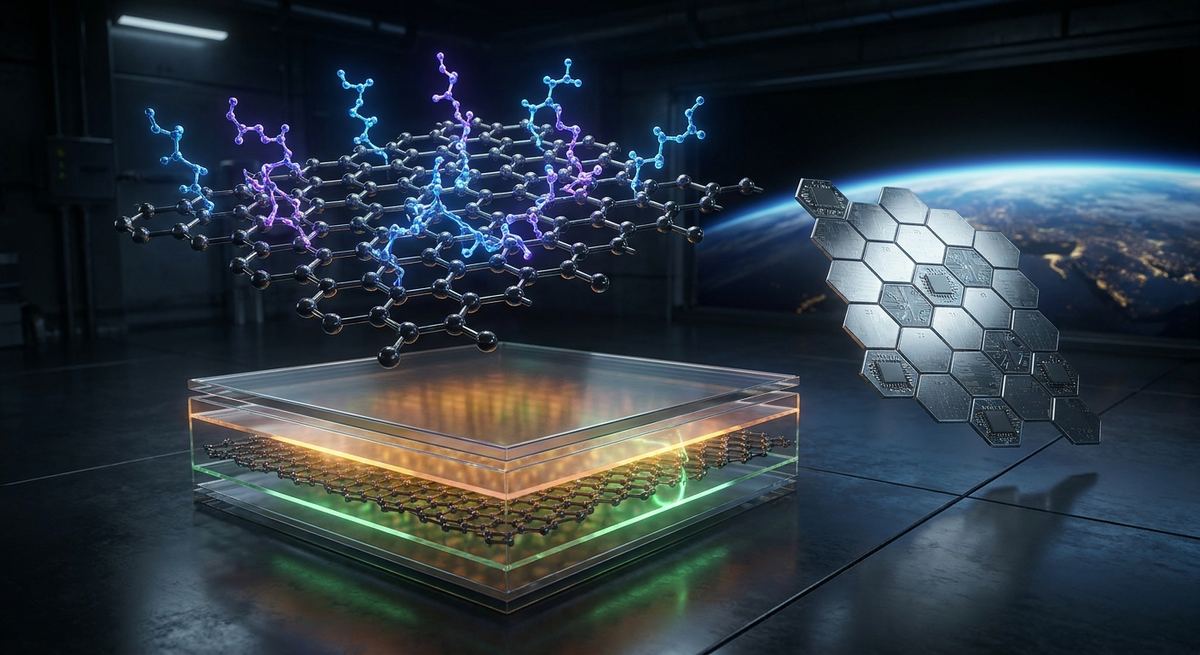
The photovoltaic industry relies heavily on transparent conducting electrodes to capture light and transport charge. Indium tin oxide has long dominated this space due to its excellent transparency and low sheet resistance. The rapid expansion of solar technology places immense pressure on global indium reserves. Manufacturers face escalating material costs and supply chain vulnerabilities. Researchers are urgently seeking cost effective alternative materials that do not compromise device performance. Graphene emerges as a highly promising candidate for next generation solar cell architectures.
An ideal monolayer of graphene offers extraordinary optical and electrical properties that surpass conventional metal oxides. It delivers a remarkable charge carrier mobility exceeding two hundred thousand square centimeters per volt second. The material also provides ninety eight percent optical transparency across the visible light spectrum. These characteristics make it exceptionally well suited for flexible and large area photovoltaic applications. Bare graphene often requires chemical modification to meet the stringent demands of commercial solar cells. Polymer integration and chemical doping strategies unlock the true potential of graphene transparent conducting films.
The Limitations Of Indium Tin Oxide In Solar Technology
Conventional solar cells depend on indium tin oxide to function as a hole collecting electrode. This legacy material achieves transparencies greater than ninety percent at a wavelength of five hundred and fifty nanometers. It also maintains sheet resistances between ten and thirty ohms per square while offering a favorable work function. These metrics have established the market standard for almost all transparent electrode applications over the past few decades. The inherent scarcity of indium reserves presents a significant barrier to the sustainable scaling of solar energy. High extraction costs force the industry to explore alternative electrode materials with higher stability and conductivity.
Early attempts to replace indium tin oxide involved single walled carbon nanotubes and metallic nanowires. These high performance alternatives quickly proved to be just as cost prohibitive as the materials they were meant to replace. The intricate manufacturing processes required to synthesize high purity carbon nanotubes drive up production expenses significantly. Metal nanowires suffer from similar economic constraints and often introduce surface roughness issues that short circuit thin film devices. The solar industry requires new cost effective materials that maintain high performance metrics without breaking the budget. Graphene based nanocomposites offer a viable pathway out of this economic and technological bottleneck.
Graphene As A Transparent Conducting Electrode
Graphene transparent conducting films serve multiple crucial functions within modern photovoltaic devices. They act as the primary transparent conductor window that allows photons to enter the active layer of the solar cell. The material simultaneously functions as a highly efficient channel for charge transport across the device architecture. Certain configurations even utilize graphene as a photoactive material and a catalyst for energy conversion processes. These versatile films integrate seamlessly into inorganic, organic, and dye sensitized solar cell systems. The intrinsic flexibility of the carbon lattice enables the fabrication of highly durable bendable electronics.
Initial developmental phases of graphene electrodes faced significant challenges regarding large scale patterned growth. Early synthesis methods struggled to produce continuous films without introducing structural defects that ruined electrical conductivity. A major breakthrough occurred when researchers developed feasible methods for the direct chemical vapor deposition synthesis of large scale graphene. This advancement allowed scientists to transfer continuous carbon monolayers onto flexible polymer substrates like polyethylene terephthalate. Continuous roll to roll manufacturing processes now make it possible to produce commercial grade transparent electrodes. The resulting films exhibit incredible mechanical resilience and can sustain thousands of extreme bending cycles without degrading.
Chemical Doping And Polymer Modification Strategies
Pure chemical vapor deposition graphene often exhibits a higher sheet resistance than commercial indium tin oxide. Researchers implement sophisticated chemical doping strategies to manipulate the work function and improve overall electrical conductivity. One highly successful approach involves synthesizing graphene and carbon nanotube nanocomposites mixed with conductive polymers. Devices utilizing these hybrid structures achieve sheet resistances around two hundred and forty ohms per square at eighty six percent transmittance. The addition of specific polymers helps bridge the electrical gaps between adjacent graphene domains. This chemical modification directly translates to measurable improvements in the open circuit voltage of the resulting solar cells.
Multilayer graphene synthesized at high temperatures provides another effective method for optimizing electrode performance. Films prepared at one thousand degrees Celsius demonstrate optimal sheet resistance profiles while maintaining eighty seven percent optical transmittance. Scientists frequently apply dopants like thionyl chloride or nitric acid between the distinct graphene layers to dramatically boost conductivity. These intercalated dopants donate or withdraw electrons from the carbon lattice to increase the overall charge carrier density. Doping multilayer graphene with gold nanoparticles has also shown immense promise in inverted solar cell configurations. The modified top electrodes yield significantly enhanced power conversion efficiencies compared to their undoped counterparts.
Electrostatic doping utilizing ferroelectric polymer coatings represents a cutting edge technique for modifying few layer graphene. Researchers apply layers of specific fluorinated polymers over the graphene to induce a permanent electric field across the material. This polarization effect effectively reduces the sheet resistance of the films down to seventy ohms per square. The optical transmittance remains high at eighty seven percent despite the addition of the thick polymer coating. Solar cells constructed with these electrostatically doped electrodes exhibit superior long term stability when compared to traditional chemical doping methods. The robust nature of the polymer layer protects the underlying carbon lattice from environmental degradation and moisture ingress.
Graphene In Dye Sensitized Solar Cells
Dye sensitized solar cells represent a unique class of photovoltaic technology that relies heavily on efficient transparent conducting oxides. A standard liquid based device comprises a fluorine doped tin oxide glass front contact and a platinum coated back contact. The photoanode typically consists of mesoporous titania nanoparticles covered in a precise monolayer of light absorbing sensitizing dye. Graphene offers an extraordinary opportunity to replace both the brittle front glass electrode and the expensive platinum counter electrode. The custom tunable work function of modified graphene aligns perfectly with the energy levels required for efficient electron injection. This precise energy alignment minimizes energy loss during the dye regeneration cycle and maximizes the open circuit voltage.
The operation of a dye sensitized cell requires rapid charge transport to prevent the recombination of electrons and holes. When the sensitizing dye absorbs a photon, it immediately injects an electron into the conduction band of the titania network. This electron must travel efficiently to the front electrode while the oxidized dye is reduced by a hole conducting electrolyte. Graphene based transparent electrodes provide a highly conductive pathway that accelerates this critical electron extraction process. The massive surface area of chemically converted graphene also serves as an exceptional catalytic site for the electrolyte regeneration at the counter electrode. Replacing traditional platinum with functionalized graphene drastically reduces manufacturing costs while maintaining competitive energy conversion rates.
Enhancing Power Conversion Efficiency Through Interfacial Layers
Beyond serving as a primary transparent electrode, graphene derivatives excel as highly effective interfacial layers in organic photovoltaics. Graphene oxide thin films function exceptionally well as hole transport layers when inserted between the transparent electrode and the active organic material. The incorporation of a three nanometer thick layer of graphene oxide leads to a massive decrease in detrimental leakage currents. This structural modification smooths out the rough surface of the underlying electrode and prevents localized electrical shorts. Devices utilizing these ultra thin hole transport layers easily achieve power conversion efficiencies exceeding three and a half percent. The solution processable nature of graphene oxide allows for simple spin coating deposition during standard manufacturing workflows.
Advanced architectural designs frequently combine graphene oxide with metal oxides to create superior composite transport layers. Bilayer structures featuring graphene oxide and nickel oxide demonstrate remarkable charge extraction capabilities in thin film solar cells. Researchers have also explored varying concentrations of single walled carbon nanotubes dispersed within the graphene oxide matrix. These specific hybrid hole transport layers optimize the energy level alignment and push power conversion efficiencies past four percent. Alternatively, newly formulated reduced graphene oxide processed with specific organic hydrazides provides even better control over the work function. These customized interfacial layers ensure that positive charges move swiftly away from the photoactive zone before recombination can occur.
Graphene derivatives also play a vital role as electron transport layers on the opposite side of the solar cell device. Solution processable composites blending reduced graphene oxide with zinc oxide or titanium dioxide yield incredibly smooth thin films. The flexible graphene sheets wrap tightly around the rigid metal oxide nanoparticles to create a continuous conductive network. This unique structural morphology reduces the surface roughness of the electron transport layer to less than three nanometers. Smooth interfaces are absolutely critical for maximizing the contact area with the active polymer blend and facilitating efficient charge extraction. Solar cells utilizing these advanced zinc oxide and graphene composites routinely achieve remarkable power conversion efficiencies reaching seven and a half percent.
Scalability And Flexible Device Applications
The ultimate commercial success of graphene based solar cells depends entirely on scalable manufacturing and substrate compatibility. Chemical conversion methods that reduce exfoliated graphene oxide in suspension offer a highly scalable route for bulk material production. A carefully controlled two step reduction approach successfully restores the sp2 hybridized carbon networks required for high electrical conductivity. These suspended chemical derivatives can be deposited onto virtually any substrate using industry standard slot die coating or spray deposition. Such liquid phase processing techniques eliminate the need for expensive vacuum equipment and high temperature chemical vapor deposition chambers. Manufacturers can rapidly produce large volumes of transparent conductive ink to meet the demands of global solar panel production.
The mechanical flexibility of polymer modified graphene unlocks entirely new form factors for modern solar technology. Researchers successfully fabricate package free flexible inverted solar cells on ultra thin polyimide substrates using highly doped multilayer graphene. These remarkable lightweight devices achieve exceptional power conversion efficiencies while remaining entirely bendable and conformable to curved surfaces. Conventional indium tin oxide layers instantly crack and lose all electrical conductivity when subjected to similar mechanical stress. Graphene electrodes maintain their structural integrity and electrical pathways even after enduring thousands of aggressive folding cycles. This unprecedented durability paves the way for wearable photovoltaic fabrics, portable energy harvesting tents, and aerospace applications.
Frequently Asked Questions
What makes indium tin oxide problematic for future solar cell manufacturing? Indium is a relatively scarce element in the Earths crust which drives up raw material costs significantly. The extraction and refinement processes are environmentally taxing and subject to severe global supply chain disruptions. Indium tin oxide films are also extremely brittle and prone to cracking when applied to flexible substrates. This mechanical fragility prevents its use in next generation bendable or wearable photovoltaic devices. Finding a scalable alternative is essential for the sustainable growth of the renewable energy sector.
How does graphene function as a transparent conducting electrode? Graphene consists of a single layer of carbon atoms arranged in a two dimensional honeycomb lattice. This unique atomic structure allows visible light to pass through with ninety eight percent optical transparency. The delocalized electrons within the carbon lattice provide extraordinary electrical conductivity and rapid charge carrier mobility. By chemically modifying or doping the graphene, engineers can tune its sheet resistance to match or exceed traditional metal oxides. It effectively collects and transports the electrical current generated by the solar cell without blocking incoming sunlight.
Why are polymers added to graphene in solar cell applications? Pure chemical vapor deposition graphene often suffers from microscopic grain boundaries that impede electrical current. Conductive polymers act as highly efficient electrical bridges that connect these isolated graphene domains together. Certain polymer coatings also serve as electrostatic dopants that permanently lower the sheet resistance of the underlying carbon film. Polymer layers provide crucial mechanical support and protect the ultra thin graphene from environmental moisture and oxygen degradation. This chemical modification strategy directly increases the overall durability and power conversion efficiency of the photovoltaic device.
What role does graphene play in dye sensitized solar cells? Dye sensitized solar cells require highly transparent front electrodes and catalytically active back electrodes to function properly. Graphene can replace the rigid fluorine doped tin oxide glass traditionally used for the front window electrode. Its massive surface area and excellent electrical properties also make it an ideal replacement for the expensive platinum counter electrode. The material accelerates the reduction of the liquid electrolyte and speeds up the crucial dye regeneration cycle. This dual functionality drastically lowers the total manufacturing cost of the device while maintaining competitive energy output.
What is an interfacial transport layer in a solar cell? Interfacial layers are ultra thin films placed between the main electrodes and the active light absorbing material. They are specifically designed to extract either positive holes or negative electrons while blocking the opposite charge. Graphene oxide and its chemical derivatives serve as exceptionally smooth and highly efficient charge transport layers. These carbon based films prevent detrimental electrical short circuits by planarizing the rough surfaces of the primary electrodes. Properly engineered interfacial layers significantly reduce internal energy losses and dramatically boost the total power conversion efficiency.
Final Thoughts
The integration of chemically modified graphene into photovoltaic architectures represents a monumental shift in renewable energy material science. The solar industry can no longer rely exclusively on scarce and brittle metal oxides to meet escalating global energy demands. Graphene provides an elegant solution that combines unprecedented optical transparency with extraordinary mechanical flexibility and charge mobility. Through precise chemical doping and polymer modification, scientists continue to push the boundaries of sheet resistance and power conversion efficiency. These advanced carbon nanomaterials are rapidly moving out of the laboratory and into scalable roll to roll manufacturing facilities.
The versatility of graphene extends far beyond its role as a simple transparent conducting window. Its ability to function as a highly efficient hole or electron transport layer fundamentally improves the internal physics of organic solar cells. By wrapping functionalized graphene sheets around metal oxide nanoparticles, researchers create perfectly smooth interfacial pathways for rapid charge extraction. The continued refinement of solution processable graphene inks will inevitably drive down the production costs of next generation flexible photovoltaics. The transition toward carbon based transparent electrodes ensures a more sustainable, resilient, and economically viable future for global solar technology.