
A New Era of Graphene Engineering: Pre-Designing Twist Angles on Demand
Researchers have developed a breakthrough method for growing twisted bilayer graphene with pre-designed angles, a key step toward manufacturable quantum...
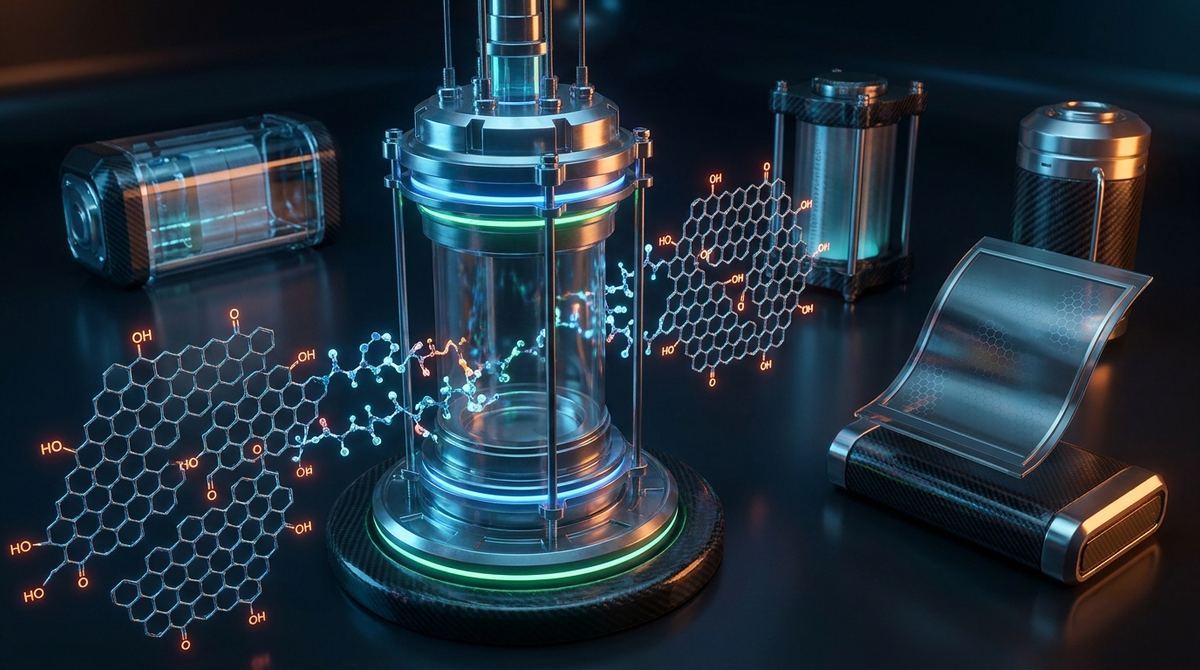
Graphene oxide represents a highly adaptable platform for advanced material engineering and complex nanofluidic applications. The chemical modification of graphene with polymers unlocks entirely new operational capabilities for specialized ion transport systems and semipermeable membranes. Researchers achieve these critical modifications through sophisticated polymerization techniques that attach specific chemical chains directly to the atomic carbon surface. The resulting hybrid materials exhibit tunable solubility metrics alongside thermal responsiveness and structural integrity under drastically varying environmental conditions. Understanding the precise mechanisms of these surface modifications provides a rigid foundation for developing advanced filtration systems and sustainable energy storage technologies. We will examine the specific chemical processes involved in functionalizing graphene oxide sheets using various controlled radical polymerization methods and specialized chemical initiators. These advanced grafting strategies allow material scientists to engineer customized two dimensional structures that meet the rigorous demands of modern industrial and scientific applications.
Functionalizing large graphene oxide sheets requires meticulous control over chemical interactions and atomic dispersion states. Researchers utilize industrial surfactants like sodium dodecylbenzene sulfonate to achieve the highly stable aqueous dispersions necessary for synthesizing hydroxyl functionalized carbon sheets. This specific functionalization process yields varied monomer conversions ranging from seventy to eighty five percent during standardized polymerization cycles. Scientists closely monitor the molecular weight parameters to determine the overall efficacy and control of the chemical reactions taking place on the microscopic scale. High values in the molecular weight distribution often indicate that the standard of control expected in controlled living radical polymerization has not been entirely achieved. These analytical metrics force material scientists to continuously refine their initiation strategies and solvent selections to achieve a more uniform polymer distribution across the substrate. Achieving strict livingness in these complex polymerizations remains a primary objective for creating highly predictable and mechanically stable graphene based membranes.
Atom transfer radical polymerization serves as a highly effective methodological approach for covalently attaching protective polymers like polymethyl methacrylate directly to graphene oxide sheets. The modification process begins with the precise attachment of initiator moieties through targeted reactions with compounds such as 2-bromo-2-methylpropionyl bromide. Polymer brushes are subsequently grown using a highly calibrated copper bromide catalyst system within a dimethylformamide solvent at strictly elevated temperatures. Researchers analyze the cleaved polymer chains using advanced gel permeation chromatography to verify the exact molecular weight and distribution metrics of the synthesized material. Atomic force microscopy measurements operating in friction mode confirm that the newly formed polymer chains achieve a homogeneous distribution across the entire graphene oxide surface. This critical uniformity is absolutely essential for maintaining consistent physical properties across the macroscopic scale of the synthesized nanofluidic membrane. Consistent polymer distribution ultimately ensures that the chemically modified graphene oxide can easily withstand the mechanical stresses inherent in high pressure industrial applications.
Creating dynamic thermoresponsive graphene nanosheets involves complex multi step chemical conversions targeting the specific functional groups located on the graphene edges and basal planes. Scientists convert existing carboxylic acid groups to highly reactive amine groups by reacting the raw graphene oxide with diamines aided by specific chemical coupling agents. This specialized reaction creates robust amide linkages while immobilization of the atom transfer radical polymerization initiators occurs simultaneously at the surface hydroxyl groups. Grafting from the immobilized initiator utilizing compounds like dimethylaminoethyl methacrylate takes place at carefully controlled temperatures often entirely in the absence of traditional liquid solvents. The resulting modified graphene oxide displays excellent physical solubility in highly acidic aqueous solutions as well as in various short chain commercial alcohols. Researchers exploit the lower critical solution temperature behavior of these specific grafted polymers to create dynamic nanosheets that drastically alter their solubility based on minor temperature fluctuations. These completely reversible changes in surface properties allow the functionalized graphene nanosheets to act as active regulatory components in temperature sensitive fluidic channels.
Single electron transfer living radical polymerization has gained significant traction across the materials science community due to its exceptionally high polymerization rate at relatively low ambient temperatures. The central defining feature of this chemical process involves the rapid disproportionation of copper one ions in suitable solvents to form separate copper zero and copper two species. This specific chemical pathway provides extremely high end group fidelity which remains a critical advantage when synthesizing complex polymers directly from flat graphene surfaces. High end group livingness enables researchers to push the entire polymerization process to complete monomer conversion without losing any control over the fundamental reaction kinetics. Scientists routinely modify graphene oxide with complex polymers utilizing this highly controlled surface grafting approach to increase the density of available hydroxyl groups. Advanced atomic force microscopy and transmission electron microscopy reveal that these covalently linked polymer layers significantly increase the overall physical thickness of the individual graphene sheets.
The strategic use of sacrificial initiators plays a highly complex role in the overarching control of polymer chain growth on flat graphene substrates. Researchers frequently introduce these secondary unbound initiators into the primary reaction mixture to help regulate the overall concentration of propagating radicals and dormant chemical species. Analysis of the free polymers generated by these sacrificial components frequently reveals significant discrepancies in overall molecular weight compared to the polymers grown directly on the carbon surface. These measurable differences suggest that the massive two dimensional graphene sheets physically interact with the propagating radicals in unique ways that inherently disrupt the living character of the process. The sheer physical size and distinct electronic environment of the carbon lattice actively interfere with the standard chemical kinetics typically observed in bulk solution polymerization. Material scientists must carefully calibrate the specific ratio of surface bound initiators to free sacrificial initiators to actively mitigate these disruptive physical effects. Refining these exact ratios remains a crucial developmental step in producing uniform polymer domains that accurately match the theoretical models of controlled radical polymerization.
Nitroxide mediated radical polymerization offers another exceptionally robust pathway for modifying the surface properties of graphene oxide with varied synthetic polymer chains. This specific technique utilizes graphene oxide heavily functionalized with specialized nitroxide compounds to produce a highly reactive and easily controllable initiating surface. The functionalized graphene substrate acts as a massive multifunctional macroalkoxyamine that simultaneously initiates and precisely controls the polymerization process in the presence of selected organic monomers. Researchers perform these advanced grafting reactions by completely dispersing the functionalized sheets in specific organic solvents and applying significant sustained heat to form stable polymer structures. Parallel to these highly controlled scientific methods researchers also frequently utilize simple free radical polymerization to grow varied polymer brushes directly from the flat two dimensional laminates. While inherently less precise than living radical techniques traditional free radical polymerization allows for the rapid and highly scalable production of varied polymer functionalized graphene materials. Expanding the extensive library of compatible polymerization techniques ensures that graphene oxide can be perfectly customized for virtually any demanding industrial or academic application.
What is the primary benefit of grafting polymers to graphene oxide?
Grafting specific polymers to graphene oxide fundamentally alters the physical and chemical properties of the base carbon material to suit highly specific engineering needs. These precise modifications allow researchers to accurately tune the solubility metrics mechanical strength and chemical reactivity of the resulting hybrid nanosheets. Polymer functionalization physically prevents the individual graphene sheets from irreversibly aggregating when they are dispersed in various liquid processing media. This enhanced structural stability is absolutely essential for utilizing graphene components in advanced membrane filtration units and targeted drug delivery systems. The attached polymer brushes also create highly customizable interstitial spaces between the sheets that dictate exactly how specific ions and molecules pass through the material.
How does Atom Transfer Radical Polymerization work on graphene?
Atom transfer radical polymerization utilizes specialized transition metal catalysts to reversibly activate and deactivate propagating polymer chains located directly on the graphene surface. The complex process begins by chemically attaching specific halogenated initiator molecules directly to the natural oxygen containing functional groups of the raw graphene oxide. A specialized copper based catalyst system then actively facilitates the controlled sequential addition of monomer units to these specific initiation sites one at a time. This highly regulated chemical growth mechanism produces incredibly dense uniform layers of polymer brushes extending outward from the flat carbon lattice. The resulting attached polymer chains exhibit a remarkably narrow molecular weight distribution which guarantees perfectly consistent material properties across the entire functionalized sheet.
What makes thermoresponsive graphene nanosheets unique?
Thermoresponsive graphene nanosheets possess the highly remarkable ability to dynamically alter their external surface properties in direct response to surrounding environmental temperature fluctuations. Scientists achieve this advanced functionality by specifically grafting polymers that naturally exhibit a lower critical solution temperature directly to the atomic graphene lattice. When the ambient environmental temperature crosses this specific thermal threshold the attached polymer chains undergo a rapid structural conformational change. This microscopic structural shift causes the entire hybrid nanosheet to transition completely reversibly between highly soluble and completely insoluble physical states. Engineers utilize this distinct dynamic physical behavior to design highly advanced smart membranes that automatically regulate internal fluid flow based entirely on local thermal conditions.
Why is Single Electron Transfer Living Radical Polymerization advantageous?
Single electron transfer living radical polymerization offers unparalleled chemical reaction speeds while successfully operating at surprisingly low ambient laboratory temperatures. The specialized technique relies entirely on the rapid disproportionation of specific copper species to constantly maintain an extremely high degree of end group fidelity. This precise level of chemical control allows researchers to actively drive the entire polymerization to absolute monomer conversion without sacrificing structural chain integrity. The strict low temperature requirement actively prevents the unwanted thermal degradation of the fragile graphene oxide substrate during the lengthy synthetic procedures. These combined chemical attributes make it the absolutely ideal method for successfully creating highly complex block copolymers directly on the surface of two dimensional materials.
What role do sacrificial initiators play in these reactions?
Sacrificial initiators are intentionally added directly to the main polymerization mixture to help carefully regulate the overall chemical kinetics of the reaction taking place. These entirely unbound molecules float freely within the liquid solution and undergo the exact same polymerization process as the initiators permanently attached to the graphene surface. By carefully analyzing the resulting free floating polymers researchers can indirectly estimate the exact molecular weight and structural properties of the surface bound chemical chains. The constant presence of these sacrificial molecules also helps effectively maintain the delicate chemical equilibrium between active and dormant radical species within the reaction vessel. Balancing this precise chemical equilibrium is absolutely critical for actively preventing the premature chemical termination of polymer growth on the massive two dimensional graphene sheets.
The precise chemical modification of graphene oxide through advanced polymer grafting techniques represents a massive technological leap forward for materials science and nanofluidic engineering. Methods like atom transfer radical polymerization and single electron transfer living radical polymerization provide scientists with the exact tools necessary to customize the two dimensional lattice at the atomic level. These highly controlled chemical reactions allow for the direct creation of smart materials that exhibit dynamic thermoresponsive behaviors and highly tunable solubility profiles. While technical challenges definitely remain regarding the precise physical control of molecular weight distributions on macroscopic sheets the foundational chemistry is undeniably robust. The continued scientific refinement of these functionalization strategies will directly accelerate the rapid development of highly efficient ion transport membranes and advanced industrial filtration systems. Mastering these incredibly complex chemical interactions guarantees that functionalized graphene based materials will continue to heavily dominate the next generation of industrial applications.
Serious about B2B integration? Test our premium Pulsed Electrical Resistive Carbon Heating turbostratic graphene in your lab. 100g sample packs available now.
Explore More
Researchers have developed a breakthrough method for growing twisted bilayer graphene with pre-designed angles, a key step toward manufacturable quantum...

Learn how deep learning is revolutionizing the structural characterization of twisted bilayer materials, accelerating the development of next-generation...

Learn to build a prototype graphene FET biosensor for sensitive DNA detection. This guide covers materials, fabrication, and testing for point-of-care...