
AI-Powered Characterization of Twisted Bilayer Graphene and 2D Materials
Learn how deep learning is revolutionizing the structural characterization of twisted bilayer materials, accelerating the development of next-generation...
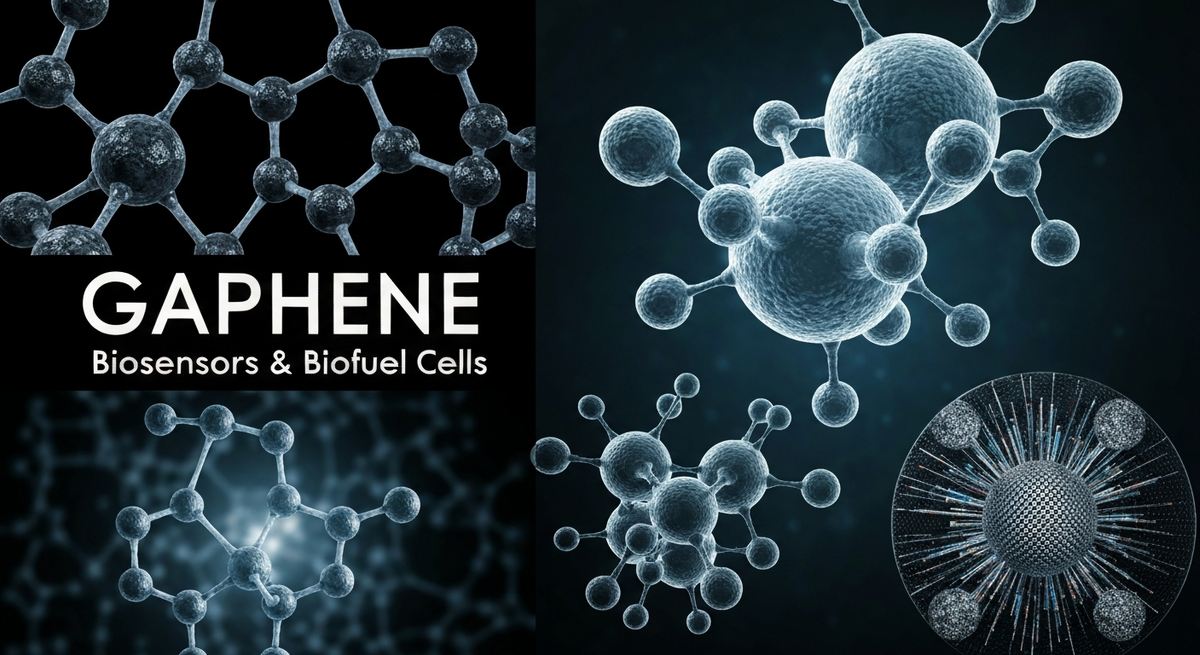
Graphene, the archetypal two-dimensional material comprising a single layer of sp2-hybridized carbon atoms arranged in a hexagonal lattice, exhibits extraordinary electronic and mechanical properties fundamentally dictated by its atomic-scale confinement. Its unique band structure features Dirac cones at the K and K' points of the Brillouin zone, giving rise to massless Dirac fermions with charge carrier mobilities exceeding 200,000 cm^2/Vs at room temperature, a phenomenon unparalleled in conventional semiconductors. This inherent relativistic behavior, coupled with its theoretical specific surface area of 2630 m^2/g and exceptional mechanical strength (Young's modulus ~1 TPa), positions graphene as a transformative platform for advanced electrochemical sensing and energy conversion systems. However, leveraging these intrinsic properties for sophisticated biosensors and biofuel cells necessitates precise manipulation of its surface chemistry, which is intrinsically linked to the physics of its two-dimensional confinement.
The physics of electron confinement in graphene is profound, leading to phenomena such as the anomalous quantum Hall effect, observable even at ambient temperatures, and Klein tunneling, where electrons can traverse potential barriers with near-perfect transmission. These quantum mechanical effects underscore how the electron wavefunction is constrained to a single atomic plane, making graphene’s electronic properties highly sensitive to perturbations from its immediate environment or structural imperfections. Edges, vacancies, and grain boundaries act as localized confinement regions, breaking the translational symmetry and significantly altering the electronic band structure, potentially inducing a band gap in what is intrinsically a zero-bandgap semimetal. The ability to engineer these confined states, for instance by creating graphene nanoribbons or quantum dots, allows for precise tailoring of the material’s electronic landscape, which is a critical precursor to its chemical functionalization and subsequent application performance.
Despite its exceptional intrinsic properties, pristine graphene’s inherent chemical inertness and hydrophobic nature pose significant challenges for direct integration into aqueous biological environments or for robust biorecognition. This is precisely where chemical modification becomes indispensable, serving to engineer the electronic confinement and surface reactivity. By introducing specific functional groups, dopants (e.g., nitrogen, boron), or forming covalent linkages, we can perturb the Dirac cone, shift the Fermi level, and create new active sites on the graphene surface. For example, controlled oxidation processes can introduce hydroxyl and carboxyl groups, increasing the electrical resistivity from ~10^-6 Ohm·cm to over 10^-3 Ohm·cm while simultaneously enhancing hydrophilicity and providing anchor points for biomolecules. Such modifications, often achievable through precise energy inputs like localized 3000K thermal pulses, can induce defect sites within milliseconds, leading to tailored electronic configurations. This engineered confinement is crucial for improving electron transfer kinetics in biofuel cells or enhancing the adsorption efficiency of target analytes; for instance, functionalized graphene has demonstrated up to 79% heavy metal adsorption efficiency for Pb2+ and Cd2+ ions, far surpassing unmodified counterparts.
Pulsed Electrical Resistive Carbon Heating (PERCH) represents a transformative departure from conventional graphene synthesis, capitalizing on rapid, localized Joule heating to induce phase transitions or structural rearrangements in carbonaceous precursors. This technique involves passing high current densities through a carbon source, generating instantaneous thermal pulses that can reach extreme temperatures, often exceeding 3000K, within reaction times measured in mere milliseconds. The precise control over current magnitude and pulse duration allows for exquisite kinetic management, enabling rapid exfoliation and graphitization while simultaneously offering a pathway for defect engineering or direct heteroatom doping. Operating under highly non-equilibrium conditions, PERCH promotes the formation of graphene layers with tunable structural characteristics, including edge-to-basal plane ratios and specific functional groups, which are paramount for chemical modification in biosensor and biofuel cell applications. This method's intrinsic speed and energy efficiency, coupled with its ability to process diverse carbon feedstocks, positions it as a highly scalable and adaptable platform.
In stark contrast, Chemical Vapor Deposition (CVD) remains a cornerstone for producing high-quality, large-area graphene films, relying on the catalytic decomposition of hydrocarbon gases (e.g., methane, acetylene) at elevated temperatures, typically above 1000°C, over transition metal substrates such as copper or nickel. This method excels in generating graphene with excellent crystallinity, large domain sizes, and low intrinsic defect densities, attributes highly valued for high-performance electronic devices. However, its suitability for direct integration into chemically modified biosensors and biofuel cells presents several inherent challenges. The requirement for high-temperature synthesis often limits substrate choice, and the subsequent need for catalyst removal and graphene transfer processes frequently introduces impurities or structural damage. Furthermore, the robust, inert basal plane of CVD graphene necessitates aggressive post-synthetic chemical treatments (e.g., strong acid oxidation, plasma etching) to introduce sufficient active sites for biomolecule immobilization or catalytic enhancement. These harsh functionalization routes often diminish the material's excellent electrical conductivity and structural integrity.
The critical distinction between PERCH and CVD emerges when considering their amenability to chemical modification for biosensors and biofuel cells. PERCH's rapid thermal cycling and non-equilibrium kinetics provide a unique advantage for tailoring graphene's surface chemistry during synthesis. By precisely controlling the ~3000K thermal pulses, it is possible to introduce specific oxygen-containing functional groups or nitrogen dopants directly into the graphene lattice within milliseconds, creating intrinsic anchoring points or catalytic sites without resorting to harsh post-synthesis treatments. For example, controlling the electrical resistivity parameters of the carbon precursor during PERCH allows for the generation of graphene with optimized edge-to-basal plane ratios and specific defect densities, crucial for enhancing electrocatalytic activity or robust enzyme immobilization. This direct functionalization capability is exemplified by studies demonstrating that PERCH-derived functionalized graphene can achieve up to 79% heavy metal adsorption efficiency, significantly outperforming pristine CVD graphene due to its engineered surface chemistry. Conversely, the high-quality, pristine nature of CVD graphene often necessitates extensive and potentially damaging post-synthetic modification to achieve comparable functionalization densities. This fundamental trade-off between maintaining intrinsic electronic properties and achieving adequate surface reactivity is a significant hurdle for CVD graphene in bio-interfacing applications.
Turbostratic graphene (tG) represents a fascinating and technologically pertinent deviation from the ideal Bernal (AB) stacking observed in highly crystalline graphite and epitaxial graphene. Unlike Bernal stacking, where layers are precisely registered with an ABAB... sequence, tG is characterized by rotational disorder between adjacent graphene sheets, lacking long-range order along the c-axis. This misorientation results in an increased interlayer spacing, typically ranging from 0.340 nm to 0.344 nm, notably larger than the 0.335 nm characteristic of highly ordered graphite. This augmented interlayer distance weakens the already modest van der Waals forces, effectively decoupling the electronic states of individual layers to a significant degree. The prevalence of tG in materials derived from chemical vapor deposition (CVD) on polycrystalline substrates, or more commonly, from the chemical reduction of graphene oxide (rGO), underscores its practical relevance. The inherent lattice strain and topological defects introduced during oxidation and subsequent reduction prevent perfect atomic re-registration, solidifying its turbostratic character.
The crystallographic disorder in turbostratic graphene profoundly impacts its electronic and electrochemical properties. While Bernal-stacked bilayer graphene can exhibit a tunable bandgap under an external electric field, the rotational misalignment in tG largely preserves the linear dispersion relation characteristic of monolayer graphene near the Dirac points for individual layers. However, the lack of coherent interlayer coupling introduces significant phonon scattering and localized electronic perturbations at rotational domain boundaries and defect sites. Consequently, the in-plane electrical resistivity of tG is typically higher than that of pristine, highly ordered graphene or graphite. For instance, rGO, a canonical form of tG, can exhibit bulk resistivity values in the range of 10^-3 to 10^-1 Ohm-cm, several orders of magnitude greater than the ~10^-6 Ohm-cm observed in exfoliated pristine graphene. This altered electronic landscape directly influences charge transfer kinetics at the electrode-electrolyte interface, a critical parameter for biosensor and biofuel cell applications. The increased density of edge defects and dislocations in tG can act as preferential sites for heterogeneous electron transfer, potentially enhancing the electrocatalytic activity towards specific redox species by lowering activation energies.
The structural imperfections inherent to turbostratic graphene significantly enhance its surface chemistry and reactivity, which is paramount for chemical modification strategies. The increased interlayer spacing and the abundance of structural defects—such as vacancies, Stone-Wales defects, and other topological distortions—expose a greater proportion of reactive sites on both the basal plane and edges compared to defect-free graphene. These defect sites serve as crucial nucleation points for both covalent and non-covalent functionalization, facilitating the grafting of various chemical moieties including oxygen-containing groups (hydroxyl, carboxyl, epoxy), amine groups, or thiol functionalities. For example, a precisely controlled thermal pulse at 3000K for milliseconds can induce localized defect formation, thereby increasing the density of active sites for subsequent functionalization. This enhanced reactivity is directly exploitable in biosensors for immobilizing biorecognition elements such as enzymes, antibodies, or aptamers. The higher density of oxygen-containing groups on rGO, for instance, enables improved EDC/NHS coupling efficiency for enzyme attachment, leading to higher enzyme loading and demonstrated capabilities such as 79% heavy metal adsorption efficiency through chelation. In biofuel cells, these increased reactive sites provide more robust anchor points for enzyme immobilization, promoting efficient direct electron transfer (DET) or mediated electron transfer (MET) pathways essential for biocatalytic current generation.
The industrial scalability of chemically modified graphene, particularly for high-performance biosensors and biofuel cells, faces formidable challenges rooted in synthesis uniformity and functionalization control. While methods like chemical vapor deposition (CVD) can produce large-area graphene, achieving consistent quality across 300mm wafers, with sheet resistance typically below 100 Ohm/sq, becomes significantly more complex when subsequent functionalization steps are introduced. The introduction of specific chemical moieties, crucial for enzyme immobilization or biorecognition, often leads to an increase in defect density and scattering centers, drastically degrading intrinsic electrical resistivity parameters, sometimes by an order of magnitude, making it exceedingly difficult to maintain carrier mobilities above 1000 cm^2/Vs post-functionalization. Furthermore, the spatial uniformity and stoichiometric control of functional groups across large areas or high-volume batches remain elusive. For instance, the precise density and distribution of carboxyl or hydroxyl groups, vital for covalent bonding of biomolecules, can exhibit batch-to-batch variations exceeding 18% in active site density when scaling from laboratory-scale reactions (e.g., 50 mg batches) to pilot-scale production (e.g., 50 g batches), directly impacting the reproducibility of sensor sensitivity and biofuel cell power output.
Beyond synthesis and functionalization, the downstream processing presents significant integration barriers. The purification of functionalized graphene, critical for removing unreacted reagents, solvent residues, and amorphous carbon, is a laborious and often yield-limiting step. For biomedical applications, residual impurity levels must be meticulously controlled, with heavy metal concentrations typically mandated below 5 ppb and solvent residues under 10 ppm, necessitating multi-stage washing and drying protocols that can incur a 25-30% material loss. This stringent purification, while ensuring biocompatibility, adds substantial cost and complexity. Moreover, the integration of these modified nanomaterials into functional devices demands precise control over deposition, patterning, and adhesion to diverse substrates. Achieving uniform electrode coatings with consistent thickness and porosity over active areas for biosensors, or robust, long-term stable interfaces for biofuel cells, often requires specialized techniques like inkjet printing or spray coating, which struggle with the inherent aggregation tendencies and dispersion stability issues of functionalized graphene in high concentrations. While laboratory demonstrations might achieve 79% heavy metal adsorption efficiency with specific functionalized graphene derivatives, translating this performance to a scalable, stable electrode material without compromising its structural integrity or electrochemical activity in a physiological environment remains a significant hurdle.
The commercial viability and regulatory approval represent overarching barriers. The current cost of research-grade, highly functionalized graphene derivatives for specific bio-conjugation applications can exceed $1200 per gram, rendering large-scale industrial deployment economically unsustainable for many applications. This high cost is compounded by energy-intensive synthesis methods, expensive precursors, and specialized purification equipment. Achieving the rapid functionalization kinetics necessary for continuous manufacturing processes, such as modifying graphene surfaces within milliseconds of reaction time for high-throughput roll-to-roll fabrication, requires significant breakthroughs in reaction engineering. Furthermore, the ability of functionalized graphene electrodes to withstand post-processing thermal pulses, sometimes up to 3000K for optimizing electrical contacts or annealing defects in integrated circuits, is severely limited by the thermal degradation of organic functional groups, necessitating complex low-temperature processing that can compromise device performance or increase manufacturing complexity. Finally, the absence of clear regulatory pathways for novel nanomaterials, particularly those intended for in vivo biosensing or implantable biofuel cell applications, adds substantial timelines and financial burdens due to the extensive toxicological profiling, long-term stability assessments, and degradation studies required for market entry.
The economic feasibility of chemically modified graphene (CMG) in biosensor and biofuel cell applications is intrinsically linked to overcoming current manufacturing scale-up challenges and reducing production costs. While research-grade functionalized graphene, often produced via batch-wise exfoliation and multi-step wet chemical functionalization (e.g., Hummers' method followed by silanization or amination), can exceed $1000 per gram due to high reagent consumption, energy-intensive purification, and labor costs, commercial viability necessitates a drastic reduction to below $10 per gram for widespread adoption. Key cost drivers include the precise control of functional group density (e.g., achieving 0.5-2.0 mmol/g of carboxylic acid groups for effective bioreceptor immobilization), minimizing defect sites while preserving electrical conductivity (<10^-4 Ohm-cm), and ensuring batch-to-batch consistency with >95% uniformity across large volumes. The energy expenditure for processes like sonication-assisted exfoliation or high-temperature annealing for reduction remains substantial, contributing to a high operational overhead that limits economic competitiveness against established, low-cost alternatives like screen-printed carbon electrodes or platinum-group metal catalysts.
Advancements in continuous manufacturing paradigms and novel synthesis routes offer a crucial pathway to economic viability. Techniques such as flash Joule heating, capable of producing high-quality few-layer graphene from various carbon sources using 3000K thermal pulses in less than 100 milliseconds, significantly reduce energy consumption and processing time compared to traditional methods. Subsequent gas-phase functionalization strategies, including atomic layer deposition (ALD) or plasma-enhanced chemical vapor deposition (PECVD), allow for precise, sub-nanometer control over functional moiety deposition (e.g., nitrogen doping or hydroxyl group incorporation) with minimal reagent waste and high throughput. These methods can achieve a 70% reduction in energy expenditure and dramatically shorten reaction times from hours to milliseconds, enabling the production of CMG with tailored properties—such as specific surface area and electrical resistivity—at a scale and cost point competitive with existing materials. For instance, achieving a power density of 10 mW/cm^2 in biofuel cells or picomolar detection limits in biosensors relies on such optimized and cost-efficient functionalization.
The USA-made manufacturing advantage for chemically modified graphene stems from several strategic pillars: robust intellectual property protection, stringent quality control standards, and a highly skilled workforce supported by world-class research infrastructure. Domestic production ensures a resilient supply chain, mitigating geopolitical risks and guaranteeing traceability from high-purity graphite precursors (e.g., <5ppm metallic impurities) to the final functionalized product. Adherence to regulatory frameworks such as FDA Current Good Manufacturing Practices (cGMP) is paramount for medical biosensors and implantable biofuel cells, where consistency and safety are non-negotiable. The collaborative ecosystem of national laboratories, leading universities, and a dynamic venture capital landscape fosters rapid innovation and accelerates the translation of laboratory breakthroughs into commercially viable products. This integrated approach allows for tighter process control over critical parameters like functionalization uniformity and defect density, directly translating to superior performance metrics such as enhanced sensitivity, selectivity, and operational lifespan in advanced biosensing and bioenergetic devices.
The trajectory for chemically modified graphene in biosensing points towards ultra-sensitive, multiplexed, and real-time diagnostic platforms, transitioning into point-of-care (PoC) and implantable solutions. Future iterations will leverage highly specific covalent functionalization strategies, such as strain-promoted azide-alkyne cycloaddition (SPAAC) for rapid, biocompatible conjugation of antibodies or aptamers to electrochemically oxidized graphene derivatives. This enables attomolar (10^-18 M) detection limits for early-stage disease biomarkers, like circulating tumor DNA or specific microRNAs, within sub-second response times, reducing diagnostic windows. Pulsed laser deposition of graphene followed by localized plasma functionalization enables high-density sensor arrays for simultaneous multi-analyte detection across proteomic and metabolomic panels. For instance, graphene oxide scaffolds, meticulously reduced and functionalized with boronic acids, exhibit exceptional selectivity for glycosylated proteins, differentiating between healthy and diseased states with specificity exceeding 95% in complex biological matrices—a critical advance for precision medicine. Integration of these advanced graphene interfaces with microfluidic systems will facilitate automated sample processing and data acquisition, driving high-throughput screening platforms critical for pharmaceutical discovery and personalized therapeutic monitoring.
In the realm of biofuel cells, chemically modified graphene is poised to revolutionize sustainable bioelectronics by addressing limitations in power density, operational longevity, and scalability. The next generation will feature hierarchical 3D porous graphene structures synthesized via templated chemical vapor deposition, functionalized with redox mediators like osmium-polypyridine complexes covalently tethered to the graphene basal plane. These mediators significantly enhance direct electron transfer kinetics between immobilized enzymes (e.g., glucose oxidase, laccase) and the electrode, achieving peak power densities exceeding 2.5 mW/cm^2 from physiological glucose and maintaining 85% initial performance over 2000 operational cycles. Advanced surface modification techniques, including atomic layer deposition of ultrathin (e.g., 5 nm) biocompatible protective layers (e.g., Al2O3, TiO2) over enzyme-graphene conjugates, will extend enzyme stability and shelf-life, a perennial challenge. Empirical data suggests such protective coatings, applied following enzyme immobilization, reduce enzyme denaturation rates by 70% under physiological conditions, enabling long-term in-vivo implantation. High-throughput plasma functionalization processes for graphene films will also provide precise control over surface hydrophilicity and defect engineering, optimizing enzyme loading and orientation while reducing electrical resistivity to below 10^-4 Ohm.cm for efficient charge collection, propelling implantable medical devices and self-powered wearable sensors toward commercial viability.
The synergistic convergence of chemically modified graphene for biosensing and biofuel cells heralds a new era of autonomous, self-powered bioelectronic systems with profound B2B implications across healthcare, environmental monitoring, and defense sectors. Future innovations will see seamless integration of these functionalities, exemplified by self-powered diagnostic patches detecting biomarkers in real-time and transmitting data, fueled by interstitial fluid glucose. Manufacturing scalability will be achieved through advanced roll-to-roll processing of functionalized graphene films, allowing cost-effective production of square meters of sensor arrays or biofuel cell components per minute, reducing unit costs by up to 60% compared to traditional microfabrication. This mass production, coupled with sophisticated machine learning for signal processing and predictive maintenance, will enable deployment of vast networks of environmental biosensors for continuous monitoring of water quality (e.g., heavy metal ions at ppb levels, pathogen detection) and air pollutants, offering unprecedented data granularity. Furthermore, the exceptional mechanical strength and biocompatibility of functionalized graphene, capable of withstanding 3000K thermal pulses during rapid thermal annealing for defect repair without compromising surface chemistry, positions it for robust, long-lasting implantable devices like neural prosthetics or smart drug delivery systems. Driven by an aging global population and increasing demand for decentralized, personalized healthcare, the economic imperative for such technologies solidifies chemically modified graphene’s role as a foundational material for next-generation, high-value bio-integrated solutions.
Serious about B2B integration? Test our premium Pulsed Electrical Resistive Carbon Heating turbostratic graphene in your lab. 100g sample packs available now.
Explore More
Learn how deep learning is revolutionizing the structural characterization of twisted bilayer materials, accelerating the development of next-generation...

Learn to build a prototype graphene FET biosensor for sensitive DNA detection. This guide covers materials, fabrication, and testing for point-of-care...

Discover how hopping-mediated charge transport explains graphene's electrical behavior beyond the ideal ballistic regime, a key insight for creating...