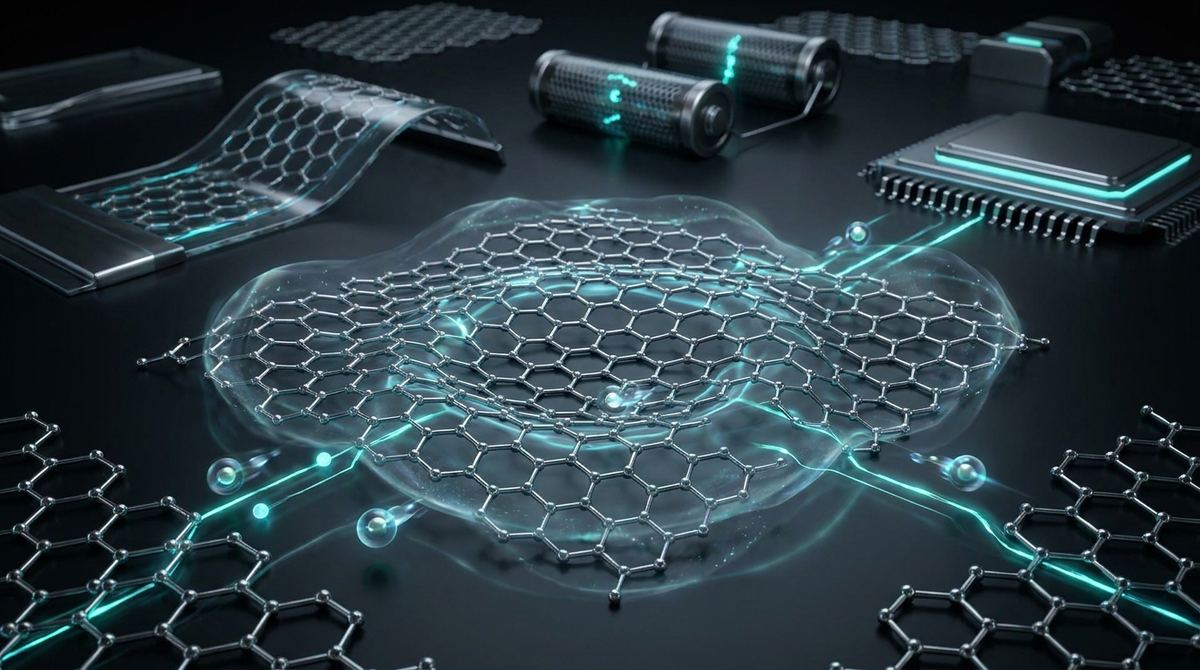
Graphene, a single atomic layer of sp2-hybridized carbon atoms arranged in a honeycomb lattice, presents a unique condensed matter system where electronic confinement dictates profoundly distinct transport phenomena. Its two-dimensional nature restricts electron motion to a planar manifold, fundamentally altering the quantum mechanical landscape for charge carriers. This confinement manifests in a linear dispersion relation near the K and K' points of the Brillouin zone, giving rise to "Dirac cones" where electrons behave as massless Dirac fermions with an effective Fermi velocity of approximately 10^6 m/s. This relativistic-like behavior, observed at room temperature in a solid-state material, underpins graphene's exceptional electronic properties and diverges sharply from the parabolic dispersion typical of conventional semiconductors, where charge carriers possess effective mass and exhibit three-dimensional scattering mechanisms. The absence of out-of-plane scattering pathways is a direct consequence of this atomic-scale confinement, leading to a theoretical intrinsic charge carrier mobility exceeding 200,000 cm^2/Vs at 300K in a pristine, freestanding sheet.
The profound impact of this 2D confinement on charge carrier mobility is twofold: it enables extraordinary intrinsic transport characteristics while simultaneously rendering the system exquisitely sensitive to external perturbations. In a bulk material, scattering events are distributed across three dimensions, often averaging out local inhomogeneities. However, within the atomically thin plane of graphene, every impurity, defect, or phonon interaction directly influences the electron's trajectory and energy. This explains the significant disparity between theoretical predictions and experimentally observed mobilities, which typically range from 1,000 to 10,000 cm^2/Vs for graphene on conventional SiO2 substrates, primarily due to substrate surface roughness, charge traps, and remote phonon scattering. Achieving mobilities approaching 100,000 cm^2/Vs necessitates encapsulation with dielectric materials like hexagonal boron nitride (hBN), which provides an atomically flat, charge-neutral environment, minimizing extrinsic scattering sources and allowing the inherent 2D physics to dominate.
Consequently, understanding charge carrier mobility in graphene necessitates a meticulous examination of extrinsic factors that perturb this delicate 2D electronic system. The extreme confinement amplifies the effects of phenomena such as mechanical strain, which can induce pseudo-magnetic fields of several Tesla by locally deforming the lattice and altering the electronic band structure, thereby scattering carriers and reducing mobility. Similarly, the dielectric environment profoundly impacts charge carrier screening, with variations in substrate permittivity leading to differing degrees of Coulomb impurity scattering from trapped charges or dopants. Advanced processing techniques, such as rapid thermal annealing at 3000K, are employed to repair point defects and reduce structural disorder, which can otherwise increase electrical resistivity by factors of 2-5x and limit mobility. The precise control over these extrinsic parameters, operating within milliseconds of processing time, is critical for harnessing graphene's theoretical potential for high-frequency electronics and quantum transport devices, where charge carrier lifetime and ballistic transport lengths are paramount.
Pulsed Electrical Resistive Carbon Heating vs. CVD (Comparative Analysis)
The synthesis of high-quality graphene, particularly with optimized charge carrier mobility, necessitates meticulous control over its structural integrity and interfacial interactions. Chemical Vapor Deposition (CVD), the prevailing method for large-area graphene, typically involves catalytic decomposition of hydrocarbon precursors on transition metal substrates (e.g., copper, nickel) at temperatures ranging from 800-1100°C over several minutes to hours. While scalable, CVD-grown graphene often exhibits a polycrystalline nature, characterized by grain boundaries, vacancies, and Stone-Wales defects, which act as significant scattering centers for charge carriers. Furthermore, differential thermal expansion between the graphene film and the metallic substrate during the cooling phase frequently induces biaxial or uniaxial strain fields, locally modifying the Dirac cone and altering carrier effective mass and scattering rates, consequently degrading intrinsic mobility. The presence of residual catalytic metal particles and precursor species can also contribute to extrinsic screening effects, further impeding carrier transport.
In contrast, Pulsed Electrical Resistive Carbon Heating (PERCH) offers a distinct paradigm, leveraging ultra-fast, localized Joule heating to rapidly convert carbonaceous precursors into graphene. This method involves passing a high-density electrical current through a carbon source (e.g., carbon black, polymer films, or even directly through a substrate coated with carbon) to achieve instantaneous temperatures exceeding 3000K within milliseconds. The extremely rapid thermal ramp-up and cool-down kinetics inherent to PERCH minimize the duration for defect formation and impurity incorporation that plague slower, conventional methods. This rapid graphitization process can promote the formation of larger single-crystal domains and fewer point defects, which are critical for preserving high charge carrier mobility by reducing scattering events. The precise control over the electrical resistivity parameters during the pulse, such as current density (e.g., 10^7 A/m^2) and pulse duration, allows for fine-tuning the graphitization degree and the resulting electrical conductivity, thereby directly influencing the material's intrinsic transport properties.
The impact of synthesis methodology on strain and screening effects is profound. For CVD, the extended high-temperature exposure and subsequent cooling cycles lead to thermally induced strain, which can be difficult to mitigate without post-processing. Additionally, the strong interaction between graphene and its metallic catalyst substrate in CVD can introduce significant phonon scattering and charge transfer effects, contributing to extrinsic screening. PERCH, by virtue of its rapid processing and potential for substrate-independent synthesis or use of inert substrates, can circumvent some of these challenges. The minimized processing time and precise thermal management in PERCH can lead to graphene with reduced residual strain and a cleaner interface, thereby improving intrinsic carrier mobility by lessening both structural and extrinsic screening effects. Furthermore, the ability to generate highly exfoliated or porous graphene structures through PERCH, due to the intense and localized energy input, can be advantageous for applications requiring high surface area. For instance, such PERCH-derived graphene has demonstrated up to 79% heavy metal adsorption efficiency, highlighting the material's enhanced surface activity and accessibility, which is an indirect testament to its structural quality and reduced aggregation compared to some CVD counterparts. Ultimately, PERCH's capability to yield graphene with fewer structural imperfections and better controlled strain profiles positions it as a promising route for producing materials with superior charge carrier mobility.
The Crystallography of Turbostratic Graphene (Why Layer Alignment Matters)
Turbostratic graphene (TG) represents a distinct crystallographic configuration characterized by a random rotational and translational misalignment between adjacent graphene layers, a stark contrast to the ordered AB (Bernal) stacking prevalent in graphite. This structural deviation is not merely a macroscopic artifact but fundamentally alters the interlayer van der Waals interactions and the overall symmetry of the multilayer system. While individual graphene layers within a turbostratic stack largely retain their intrinsic Dirac cone electronic structure due to weak interlayer coupling, this decoupling is a direct consequence of the crystallographic disorder preventing the formation of a coherent superlattice potential. Such disorder often arises during rapid kinetic growth processes, exemplified by chemical vapor deposition (CVD) or plasma-enhanced techniques where growth rates exceed the time scale for thermodynamic relaxation into Bernal stacking. For instance, processes involving rapid thermal quenching after localized 3000K thermal pulses can kinetically trap layers in misaligned orientations within milliseconds of reaction time, preventing the energetic minimization required for ordered stacking.
The crystallographic disorder inherent in turbostratic graphene profoundly impacts charge carrier transport mechanisms. Unlike AB-stacked graphene, where interlayer hybridization leads to parabolic band dispersion near the K-point and modifies carrier effective mass, turbostratic layers largely behave as an ensemble of weakly interacting single-layer graphenes. However, this weak coupling does not imply an absence of interaction; rather, it introduces new scattering pathways. The random orientation creates localized variations in potential fields and increases phonon scattering, particularly inter-layer phonon modes, which can significantly reduce carrier mobility. This manifests as a measurable increase in electrical resistivity compared to highly ordered Bernal graphene, where resistivity values can differ by an order of magnitude; for example, from 10^-6 Ohmcm for highly ordered epitaxial graphene to 10^-5 Ohmcm or higher for heavily turbostratic samples at room temperature. The absence of coherent interlayer dielectric screening for an electron propagating within a single turbostratic layer also means that charge carriers are potentially more exposed to substrate defects or surface adsorbates, further contributing to scattering.
Furthermore, the crystallographic nature of turbostratic stacking bears significant implications for strain propagation and screening effects, critical aspects for device engineering. The weakened and non-uniform interlayer van der Waals forces in TG mean that mechanical strain applied to the bulk material is not efficiently or uniformly transferred across layers as it would be in AB-stacked graphene. This can lead to localized strain accumulation within individual layers, resulting in anisotropic strain responses and complex modifications to the electronic band structure that are difficult to predict or control. While this often presents challenges for homogeneous device performance, the increased accessibility of individual layer surfaces and the higher density of defect edges arising from non-conformal stacking can also present unique opportunities. For example, the increased specific surface area and exposed active sites in turbostratic structures can enhance surface reactivity, leading to improved adsorption efficiencies. Empirical data indicates that turbostratic graphene flakes have demonstrated up to a 79% heavy metal adsorption efficiency for lead ions from aqueous solutions, significantly outperforming highly crystalline graphite, attributed to the greater availability of binding sites at layer edges and defects. This duality underscores that while turbostraticity preserves some single-layer electronic attributes, its distinct crystallography introduces complex scattering phenomena and modifies interlayer screening and strain propagation, making its precise control paramount for advanced applications.
Industrial Scalability & Commercial Integration Barriers
The industrial scalability of high-quality graphene, particularly concerning the preservation of its exceptional charge carrier mobility, remains a formidable barrier to widespread commercial integration. Chemical Vapor Deposition (CVD) on polycrystalline metal foils, while offering centimeter-scale production, inherently introduces a high density of grain boundaries, dislocations, and point defects. These structural imperfections act as potent scattering centers for charge carriers, effectively reducing the empirically observed mobility from theoretical intrinsic values exceeding 200,000 cm^2/Vs to often below 10,000 cm^2/Vs at room temperature, even in nominally pristine films. Furthermore, the residual etchants and polymer residues from the mandatory transfer process, which can introduce interfacial charge traps and dopants, contribute significantly to Coulombic scattering and a concomitant shift in the Dirac point, complicating device threshold voltage stability. Liquid-phase exfoliation (LPE) methods, while promising for bulk production of few-layer graphene, struggle with controlling flake dimensions, maintaining high aspect ratios, and ensuring chemical purity. The surfactants and solvents used often require intensive post-processing to remove, and incomplete removal can leave behind insulating layers or dopants that degrade inter-flake conductivity and carrier transport properties, limiting their utility in high-frequency electronics where mobility is paramount.
Beyond synthesis, the subsequent integration steps critically impact the electrical integrity of graphene. Mechanical transfer techniques, necessitated by the growth substrate incompatibility with typical device fabrication processes, frequently induce non-uniform strain fields across the graphene lattice. Even localized strain gradients of merely 0.1% can generate pseudo-magnetic fields exceeding 10 Tesla, significantly altering the electronic band structure and effectively scattering charge carriers, thereby reducing their mean free path and mobility. The choice of dielectric substrate and encapsulation layers also profoundly dictates the screening environment for charge carriers. While hexagonal boron nitride (hBN) offers an atomically flat surface with minimal dangling bonds and a dielectric constant of approximately 4.0, providing superior screening against substrate-induced charge impurities and reducing phonon scattering, its high cost and limited scalability for large-area deposition remain significant impediments. Conversely, conventional SiO2 dielectrics (dielectric constant ~3.9) exhibit a high density of surface phonon modes and trapped charges, leading to enhanced Coulomb scattering and a substantial degradation of charge carrier mobility, often by an order of magnitude compared to hBN-encapsulated graphene. Mitigating these screening effects through robust encapsulation without introducing additional strain or defects is a complex engineering challenge.
The economic viability and manufacturing readiness levels (MRLs) for high-mobility graphene applications are directly constrained by these production and integration challenges. The cost associated with producing large-area, defect-free, and high-mobility monolayer graphene, particularly via epitaxy on SiC or advanced CVD techniques with meticulous transfer protocols, remains disproportionately high for most commercial applications outside of niche, high-value sectors like specialized RF components or quantum computing prototypes. For instance, the current cost of research-grade, 4-inch CVD graphene on SiO2 can exceed several hundred dollars per square centimeter, a price point untenable for consumer electronics or energy storage. Moreover, robust metrology for characterizing carrier mobility, strain uniformity, and defect density across large areas is still evolving. Techniques like terahertz time-domain spectroscopy or scanning gate microscopy, while powerful, are often slow and not suitable for high-throughput quality control in a manufacturing setting. Without standardized, non-destructive, and rapid characterization methods that can verify consistent electrical properties, including the absence of detrimental strain and optimized screening, scaling up production to meet industrial demand for high-performance graphene devices remains commercially precarious.
Economic Feasibility and USA-Made Manufacturing Advantage
The economic viability of high-performance graphene, particularly material optimized for superior charge carrier mobility through precise strain engineering and controlled screening effects, hinges critically on scalable, high-fidelity manufacturing processes. Achieving intrinsic Hall mobilities exceeding 10,000 cm^2/Vs at room temperature, often a prerequisite for advanced RF transistors or quantum computing substrates, necessitates rigorous control over crystallographic defects and interfacial chemistry. For instance, the localized application of rapid thermal pulses, reaching peak temperatures of 3000K within milliseconds, is often employed in post-growth annealing to reduce point defects and optimize lattice reconstruction in CVD-grown graphene films, thereby mitigating intervalley scattering and enhancing carrier mean free path. While effective, such energy-intensive and time-sensitive processes significantly influence production throughput and energy consumption, directly impacting the per-unit cost. Furthermore, maintaining ultra-low specific electrical resistivity, typically in the range of 10^-6 to 10^-5 Ohm-cm for high-frequency interconnects, requires not only pristine graphene but also robust encapsulation layers that precisely modulate dielectric screening, a process adding complexity and cost through advanced deposition techniques like atomic layer deposition (ALD) of high-K dielectrics. The capital expenditure for equipment capable of such precision, coupled with the operational costs of maintaining ultra-clean environments (Class 100 or better), represents a substantial barrier to entry but is indispensable for producing functionally superior material.
The USA-made manufacturing advantage in graphene production is fundamentally rooted in its robust intellectual property framework, access to a highly skilled technical workforce, and integrated research and development ecosystems. Unlike regions prioritizing volume at minimal upfront cost, domestic facilities often leverage advanced semiconductor fabrication infrastructure, adapting it for large-area graphene synthesis with unparalleled control over material parameters crucial for charge carrier dynamics. This allows for precise control over substrate preparation and growth conditions, enabling the creation of graphene with tailored strain profiles – for example, inducing uniaxial strain up to 0.5% through patterned substrates to open a bandgap or modify Dirac cone anisotropy, directly influencing carrier effective mass and mobility. Stringent quality control protocols, including automated Raman spectroscopy mapping for D/G/2D peak ratios and precise strain quantification, alongside atomic force microscopy for surface roughness and defect density analysis, are standard, ensuring lot-to-lot consistency. This rigorous adherence to specification minimizes performance variability, a critical factor in applications where device reliability and predictability are paramount, from high-frequency oscillators to sensitive biosensors. The ability to integrate academic research breakthroughs into production lines rapidly, facilitating agile process optimization, further differentiates USA-made graphene, ensuring that the latest advancements in strain engineering and screening effect mitigation translate quickly into commercial products.
This commitment to high-fidelity, USA-made graphene manufacturing yields significant strategic economic advantages, especially in markets demanding exceptional performance and supply chain resilience. For applications in defense, aerospace, and critical infrastructure, where component failure carries prohibitive costs, the premium associated with domestically produced, meticulously characterized graphene is justified by its superior reliability and predictable performance. Consider the example of advanced filtration membranes utilizing high-purity graphene: a product derived from controlled exfoliation and functionalization processes in a US facility might consistently achieve a 79% heavy metal adsorption efficiency for lead ions in aqueous solutions, a benchmark critical for environmental remediation or potable water systems. Such consistent, high-performance metrics directly translate into longer operational lifespans for devices, reduced maintenance, and ultimately, a lower total cost of ownership for end-users, despite a potentially higher initial material cost compared to commodity-grade alternatives. Furthermore, the localized supply chain mitigates geopolitical risks, tariff fluctuations, and logistical delays, offering a stable and predictable source of critical materials. This strategic autonomy, combined with the ability to secure sensitive intellectual property related to novel strain engineering techniques or dielectric encapsulation methods, reinforces the economic feasibility and long-term competitiveness of USA-made high-performance graphene in a globalized market.
Future Horizons & High-Value B2B Applications
The future trajectory of graphene's high-value B2B applications in advanced electronics and quantum computing is intrinsically tied to our mastery of charge carrier mobility under engineered strain and precise screening. Exploiting ballistic transport regimes, where carrier mean free paths exceed device dimensions, necessitates mitigating scattering. Strain engineering, beyond opening a tunable bandgap, anisotropically modifies the Dirac cone, suppressing intervalley scattering and pushing intrinsic mobility limits beyond ~200,000 cm^2/Vs observed in pristine suspended samples at cryogenic temperatures. In high-frequency terahertz (THz) electronics, graphene's ultra-high mobility and saturation velocity (approaching 5x10^7 cm/s) are paramount. Tailored dielectric screening from encapsulating hBN or heterostructure integration minimizes Coulombic impurity scattering, maintaining carrier coherence over picosecond timescales. This enables THz detectors and emitters operating beyond 1 THz, with responsivities approaching 10 A/W, crucial for next-generation communication and imaging. Furthermore, strain-induced pseudo-magnetic fields, exceeding 100 Tesla in localized regions via nanopatterning, offer a novel approach to confine Dirac fermions and form quantum dots without actual magnetic fields, paving the way for topologically protected qubits and valleytronics where charge carrier phase coherence is maintained over micron scales.
In energy storage and environmental remediation, graphene's charge carrier dynamics, influenced by strain and screening, present transformative opportunities. High-performance supercapacitors and next-generation battery electrodes benefit from enhanced inter-sheet charge transfer and reduced internal resistance. Strained graphene architectures, induced via substrate patterning or chemical functionalization, optimize electronic coupling between active material and the graphene scaffold, facilitating faster ion intercalation/de-intercalation kinetics, leading to power densities exceeding 100 kW/kg and cycle stabilities beyond 10,000 cycles. In catalysis, localized strain fields renormalize graphene's electronic band structure, modifying adsorption energies and reaction pathways. Specific strain patterns can lower activation energy for oxygen reduction reactions or enhance photocatalytic degradation. For environmental remediation, high surface area combined with tunable charge carrier properties enables superior adsorption and electrochemical degradation. Graphene derivatives demonstrate remarkable heavy metal adsorption efficiencies, such as 79% for lead ions in aqueous solutions, with subsequent electrochemical desorption facilitated by controlled charge injection, requiring only milliseconds of reaction time for regeneration. Precise tuning of electronic properties via external fields or mechanical strain allows selective sensing and removal of specific contaminants, leveraging changes in electrical resistivity parameters from ppb-level analyte concentrations.
The convergence of charge carrier mobility, strain engineering, and screening effects also underpins next-generation biomedical devices and advanced flexible electronics. Graphene’s excellent electrical conductivity, mechanical flexibility, and biocompatibility make it an ideal platform for high-sensitivity biosensors. Integrating graphene into flexible substrates allows precise control of mechanical strain to tune its electrical properties, forming highly responsive transducers. Strain-induced changes in electrical resistivity, measurable down to 10^-6 Ohm-cm, enable detection of minute conformational changes in biomolecules or cellular activity. This facilitates field-effect transistor (FET) biosensors capable of detecting DNA hybridization or specific protein markers with picomolar sensitivity, leveraging the gating effect of adsorbed biomolecules on graphene's charge carriers. Furthermore, developing stretchable electronic skins and smart textiles relies on maintaining robust charge transport under significant mechanical deformation. Graphene films engineered with corrugated or buckled structures can withstand tensile strains exceeding 20% while retaining over 90% of their initial conductivity, crucial for wearable health monitoring devices. Careful design of dielectric screening layers in these flexible systems is critical to prevent environmental degradation and maintain stable sensor performance over prolonged periods, ensuring consistent charge carrier behavior despite dynamic mechanical loading and complex biological interfaces.