
AI-Powered Characterization of Twisted Bilayer Graphene and 2D Materials
Learn how deep learning is revolutionizing the structural characterization of twisted bilayer materials, accelerating the development of next-generation...
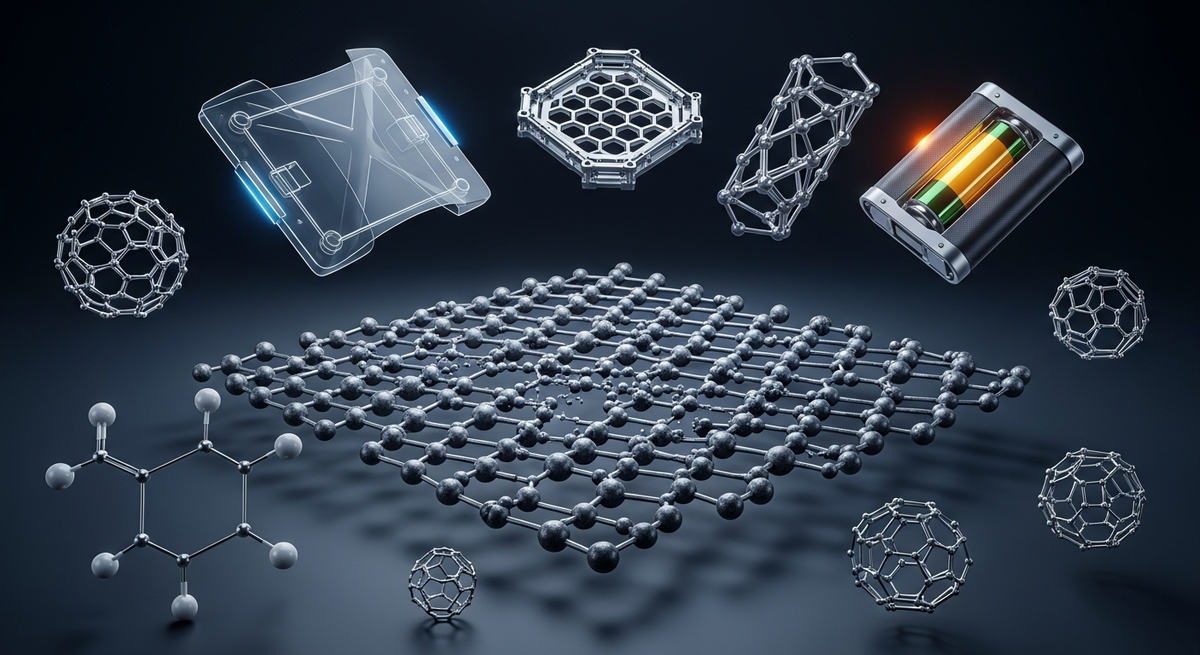
Graphene, the single-atom-thick marvel of carbon, captivates the scientific and industrial world with its unparalleled properties. From exceptional electrical conductivity and mechanical strength to unique optical characteristics, it consistently pushes the boundaries of material science. Yet, despite its perfect two-dimensional crystalline structure in theory, real-world graphene is rarely pristine. It inevitably harbors atomic-scale defects and impurities, which, surprisingly, are not always detrimental.
At usa-graphene.com, we understand that a deep dive into these imperfections is crucial for both fundamental understanding and advanced engineering. These atomic-scale disruptions – ranging from missing carbon atoms (vacancies) to adsorbed foreign species (adatoms) – fundamentally alter graphene’s intrinsic properties. Far from being mere flaws, these defects offer a powerful toolkit for tuning graphene’s behavior, opening doors to novel functionalities in electronics, spintronics, sensing, and catalysis. This comprehensive exploration will demystify the science behind atomic-scale defects, emphasizing the theoretical frameworks that underpin our understanding of their profound impact on this extraordinary material.
To fully appreciate the impact of atomic-scale defects, one must first grasp the pristine electronic structure of graphene. Carbon atoms in graphene are arranged in a hexagonal, honeycomb lattice, forming robust and directional sigma bonds. These sp2 hybridized orbitals create a strong structural backbone, responsible for graphene's remarkable mechanical properties, with their associated sigma bands lying far below the Fermi level.
However, it is the remaining valence electron from each carbon atom, occupying a pZ orbital, that truly defines graphene's low-energy electronic character. These pZ orbitals, perpendicular to the graphene plane, overlap to form an extended pi-electron cloud that spreads across the entire lattice. This pi-electron system gives rise to a completely filled valence pi band and an empty conduction pi* (antibonding) band at charge neutrality and zero temperature.
The unique aspect of graphene's electronic structure is the absence of an energy gap between these pi and pi* bands, forming what are known as Dirac cones. Near specific points in the Brillouin zone, known as K points, the energy dispersion becomes linear, mimicking massless relativistic particles. This behavior, first described by Wallace over 60 years ago using a simple tight-binding Hamiltonian, dictates the extraordinary electronic and optical properties of graphene, including its exceptionally high charge carrier mobility. This foundational understanding of the pi-electron cloud and its delicate balance is essential for comprehending how even a single atomic disruption can send ripples through the entire system.
Atomic-scale defects in graphene are not a singular phenomenon but a diverse array of structural imperfections and foreign species. Their origins are as varied as their effects, stemming from both intrinsic material properties and external influences. Understanding how these defects form and how they are identified is paramount for their controlled manipulation.
Native defects, for instance, are inherent to the material itself. Missing carbon atoms, known as vacancies, can spontaneously form during graphene growth processes or at high temperatures. Topological imperfections, such as Stone-Wales defects where carbon atoms rearrange to form pentagon-heptagon pairs, and extended grain boundaries are also common occurrences in polycrystalline graphene grown by methods like chemical vapor deposition (CVD). These structural anomalies introduce localized strain and alter the perfect hexagonal symmetry of the lattice.
Beyond native defects, external interventions readily introduce foreign species and further structural damage. Electron or heavy-atom bombardment is a routine laboratory technique used to intentionally create vacancies or introduce specific defects with high precision. Furthermore, the growth environment itself can be a significant source of impurities; hydrocarbon precursors used in CVD often lead to adsorbed hydrogen atoms, small hydrocarbon groups, or hydroxyl groups becoming incorporated or adsorbed onto the graphene surface. Intentional chemical treatments are also employed to introduce atoms that form stable chemical bonds, while simple exposure to various gases, from inert molecules to metals, can leave weakly bound ad-species that primarily act as charge dopants. Advanced characterization techniques, such as scanning tunneling microscopy (STM), transmission electron microscopy (TEM), and Raman spectroscopy, are indispensable tools for visualizing and identifying these atomic-scale imperfections, providing critical experimental data for validation of theoretical models.
One of the most profound electronic consequences of atomic-scale defects in graphene is the emergence of what are known as midgap states. These states appear as localized electronic energy levels within the pristine material's zero-bandgap spectrum, fundamentally altering the electronic landscape. They are a direct manifestation of the strong perturbation introduced by defects and play a critical role in defining many of graphene's modified properties.
When a carbon atom is removed, creating a vacancy, it effectively removes a pZ orbital from the pi-electron network. This disruption breaks the local bonding symmetry and leaves behind dangling bonds, often leading to an unpaired electron. This unpaired electron can occupy a localized state that lies very close to the Fermi level, right at the Dirac point of pristine graphene. These midgap states act as strong, short-range resonant scatterers for charge carriers, meaning they efficiently absorb and re-emit electrons at specific energies, significantly impacting electron transport.
Similarly, certain types of adatoms, particularly those that form strong chemical bonds with the graphene lattice (e.g., hydrogen adatoms), also perturb the local electronic structure sufficiently to induce midgap states. These adatoms effectively localize an electron density around themselves, creating a potential well that can trap or scatter carriers. The theoretical understanding of these midgap states, derived from models like the tight-binding Hamiltonian, provides a powerful lens through which experimental observations of altered conductivity and electronic spectra can be critically examined and understood. The presence and characteristics of these midgap states are not merely academic curiosities; they are key to harnessing defects for electronic applications, such as opening a local bandgap or creating spin-polarized regions.

The unparalleled charge carrier mobility of pristine graphene is one of its most celebrated attributes, stemming from the ballistic transport of electrons that behave like massless Dirac fermions. However, the introduction of atomic-scale defects fundamentally alters this picture, transforming the nature of charge transport within the material. These imperfections act as obstacles, scattering centers, and potential traps for the highly mobile electrons, leading to significant changes in conductivity and carrier dynamics.
Vacancies, for example, are potent scattering centers due to their associated midgap states. These resonant scatterers strongly interact with the propagating pi-electrons, diverting their paths and reducing their mean free path. This effect is particularly pronounced for low-energy carriers near the Dirac point, where the linear dispersion makes them highly susceptible to such perturbations. The strength of this scattering depends on the specific defect type and its electronic structure, with some defects causing more localized, short-range scattering, while others induce longer-range potential fluctuations.
Adatoms, depending on their chemical nature and bonding characteristics, can also significantly impact charge transport. Physisorbed species, which interact weakly with the graphene lattice, primarily act as charge dopants, shifting the Fermi level and changing the carrier concentration. Chemically bound adatoms, on the other hand, behave more like vacancies, introducing local structural and electronic disruptions that lead to scattering and potentially opening up local bandgaps. This ability to precisely engineer scattering mechanisms through controlled defect introduction offers a pathway to tune graphene's conductivity, create electronic filters, or even induce metal-insulator transitions, all crucial for advanced device architectures. The theoretical models that describe resonant scattering provide a critical framework for interpreting experimental transport data, allowing researchers to differentiate between various scattering mechanisms and optimize defect concentrations for specific applications.
One of the most intriguing and potentially transformative consequences of atomic-scale defects in graphene is their ability to induce magnetism in an otherwise non-magnetic material. Pristine graphene, composed entirely of carbon atoms with paired electrons, exhibits no intrinsic magnetic moment. However, by disrupting the perfect symmetry and stoichiometry of the lattice, defects can introduce unpaired electrons, leading to localized magnetic moments and opening avenues for graphene-based spintronics.
Carbon atom vacancies are primary candidates for inducing magnetism. When a carbon atom is removed, the three surrounding carbon atoms, which were formerly bonded to it, are left with dangling bonds. These dangling bonds often reconstruct, but a net unpaired electron can remain localized around the vacancy site. This unpaired electron possesses a spin of 1/2, acting as a quasi-localized magnetic moment. Theoretical calculations and experimental observations have confirmed the presence of these vacancy-induced magnetic moments, which can be surprisingly robust even at room temperature.
Similarly, certain adatoms, particularly monovalent species like hydrogen that form a stable chemical bond, can also introduce magnetic moments. The strong bond with the adatom perturbs the local electronic structure, leading to a spin polarization in the surrounding pi-electron cloud. This phenomenon is often described in terms of a local spin density, where the electron spins in the vicinity of the adatom become unbalanced. The ability to create and control these localized magnetic moments through defect engineering holds immense promise for developing spintronic devices, where information is encoded not just in charge but also in electron spin. This includes novel magnetic sensors, spin filters, and even non-volatile magnetic memory, pushing the boundaries of what graphene can achieve.

While graphene's pristine surface is generally considered chemically inert, the introduction of atomic-scale defects dramatically alters its chemical reactivity. These defects create localized "hot spots" – regions with unsaturated bonds or altered electronic configurations – that serve as preferential sites for chemical reactions. This enhanced reactivity is not a drawback but a powerful feature, enabling the chemical functionalization of graphene for a vast array of applications.
Vacancies, with their dangling bonds and reconstructed edges, present ideal anchor points for chemical species. The removal of a carbon atom creates a local disruption in the sp2 hybridization, leaving behind reactive sites that readily bond with external atoms or molecules. This allows for the covalent attachment of functional groups, opening up possibilities for creating graphene derivatives with tailored properties, such as fluorographene or hydrogenated graphene (graphane), which exhibit new electronic and optical characteristics.
Adatoms, particularly those forming strong covalent bonds, also act as gateways for further chemical modifications. For example, a single hydrogen adatom can introduce local strain and electronic perturbation, making neighboring carbon atoms more susceptible to subsequent chemical attacks. This biased chemical reactivity towards specific neighboring lattice positions allows for selective functionalization, where precise chemical patterns can be engineered on the graphene surface. This control over chemical functionalization is critical for developing graphene-based sensors with high selectivity, catalysts with enhanced activity, and membranes for precise molecular separation. By strategically introducing and manipulating defects, researchers can transform graphene from a passive substrate into an active participant in chemical processes, expanding its utility far beyond its initial electronic promise.
Atomic-scale defects in graphene are imperfections in its perfect hexagonal lattice structure, occurring at the level of individual carbon atoms or adsorbed foreign species. These include missing carbon atoms (vacancies), rearranged carbon bonds (topological defects), or impurity atoms and molecules adsorbed onto the surface (adatoms).
While ideal graphene is perfect, real-world graphene always has defects. These defects, far from being solely detrimental, offer a powerful means to intentionally tune and modify graphene's intrinsic properties. They can unlock new functionalities in electronics, spintronics, sensing, and catalysis that pristine graphene alone cannot achieve.
Defects profoundly impact graphene's electronic properties by introducing localized midgap states near the Fermi level. These states act as strong scattering centers for charge carriers, reducing mobility and conductivity. However, they can also be exploited to open bandgaps or create quantum dots, which are critical for semiconductor-like behavior and advanced electronic devices.
Yes, defects can induce magnetism in graphene, which is intrinsically non-magnetic. Missing carbon atoms (vacancies) or certain types of adatoms can leave behind unpaired electrons with localized spin-1/2 magnetic moments. This phenomenon is crucial for developing graphene-based spintronic devices, where electron spin, not just charge, is used to carry information.
Defects create chemically active sites on graphene's otherwise inert surface. Dangling bonds or perturbed electronic regions at defect sites act as preferential attachment points for external atoms or molecules. This enables controlled chemical functionalization, allowing researchers to tailor graphene's surface chemistry for applications in sensors, catalysts, and drug delivery systems.
The journey into the realm of atomic-scale defects and impurities in graphene reveals a fascinating paradox: imperfections, when understood and controlled, can enhance rather than diminish the utility of this extraordinary material. From the fundamental perturbation of the pi-electron cloud to the emergence of midgap states, every defect tells a story of altered electronic, magnetic, and chemical landscapes. These atomic-level disruptions, whether native, induced, or intentionally designed, transform graphene from a material of pure theoretical elegance into a versatile platform for advanced technological applications.
At usa-graphene.com, we recognize that the ability to precisely engineer and characterize these defects is pivotal for the next generation of graphene-based technologies. The theoretical insights into resonant scattering, localized magnetic moments, and biased chemical reactivity provide the essential roadmap for experimentalists to develop innovative devices. As our understanding deepens, the intentional creation and manipulation of atomic-scale defects will continue to unlock graphene's hidden potential, paving the way for revolutionary advancements across diverse scientific and industrial sectors. The future of graphene is not in its perfection, but in its perfectly controlled imperfections.
Serious about B2B integration? Test our premium Pulsed Electrical Resistive Carbon Heating turbostratic graphene in your lab. 100g sample packs available now.
Explore More
Learn how deep learning is revolutionizing the structural characterization of twisted bilayer materials, accelerating the development of next-generation...

Learn to build a prototype graphene FET biosensor for sensitive DNA detection. This guide covers materials, fabrication, and testing for point-of-care...

Discover how hopping-mediated charge transport explains graphene's electrical behavior beyond the ideal ballistic regime, a key insight for creating...