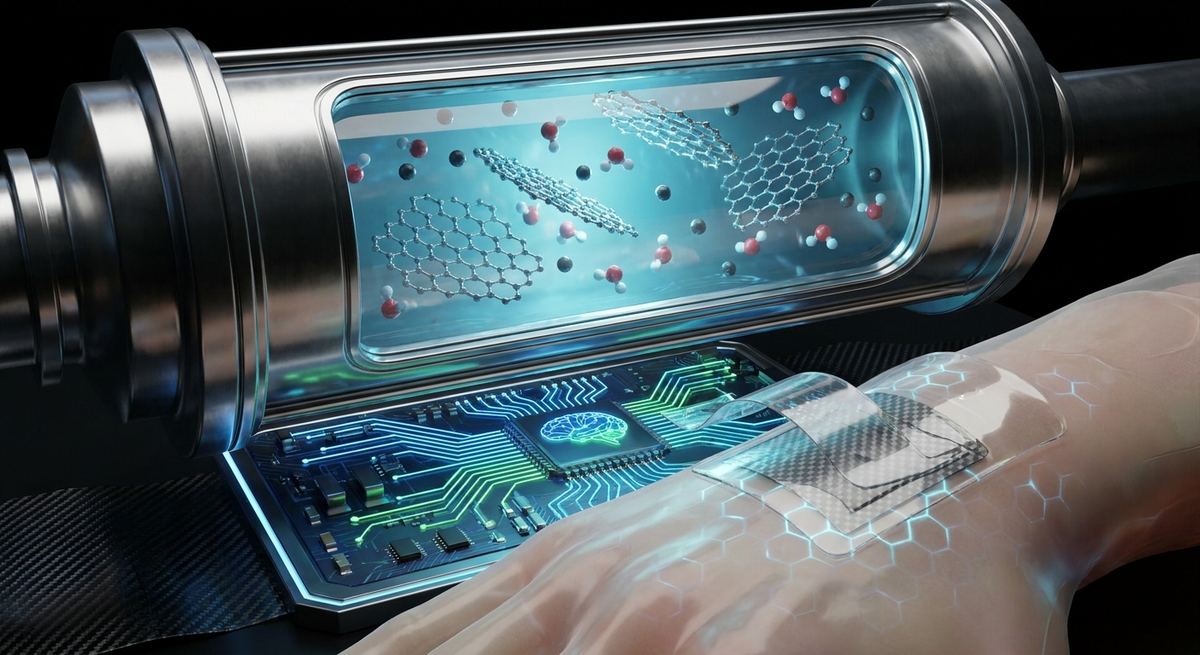
Graphene, since its groundbreaking isolation in 2004, has captivated the scientific and engineering communities with its unparalleled physiochemical properties. This single-layer carbon material boasts extraordinary carrier mobility, exceptional thermal conductivity, and remarkable optical transparency, positioning it as a cornerstone for future technological advancements. However, the inherent semimetal zero-band-gap electronic structure of pristine graphene, whether produced via chemical vapor deposition (CVD) or mechanical exfoliation, presents a significant limitation for its direct application in many electronic, sensing, and optical devices where a tunable band gap is essential for semiconductor functionality. Addressing this fundamental challenge has driven intense research into various modification strategies, including lateral confinement, strain engineering, and breaking inversion symmetry in bilayered graphene. Among these innovative approaches, aqueous graphene—often referred to interchangeably as graphene oxide (GO)—emerges as a particularly promising and versatile solution. Its distinct advantage lies in its solution-based, scalable, facile, and inherently low-cost synthesis, making it an attractive candidate for widespread industrial adoption. This article delves into the evolution of aqueous graphene synthesis methods, exploring both the theoretical underpinnings and experimental investigations that underpin its growing utility, especially within the rapidly expanding field of biosensing. For engineers, materials scientists, and R&D professionals, understanding the intricate synthesis pathways and the subsequent property modulation of aqueous graphene is paramount. This material's ability to overcome the band gap limitation, coupled with its ease of processing, unlocks a vast array of possibilities, from highly sensitive biosensors to advanced electronic components. The journey from graphite to functional aqueous graphene involves sophisticated chemical oxidation and reduction processes, which critically impact its final electronic and structural characteristics.
The Genesis of Aqueous Graphene: From Graphite to Graphene Oxide
The story of aqueous graphene begins not with its "isolation" in 2004, but much earlier, rooted in the foundational work on graphite oxidation. As early as 1859, Benjamin Brodie first reported the synthesis of graphitic acid, a precursor to what we now understand as graphene oxide, through the chemical treatment of graphite with potassium chlorate and fuming nitric acid. Later, in 1898, Staudenmaier improved upon this method by using a mixture of concentrated sulfuric acid, nitric acid, and potassium chlorate, leading to a more efficient oxidation process. These early methods laid the groundwork for understanding how graphite's layered structure could be chemically modified.
However, it was the Hummers and Offeman method, introduced in 1958, that truly revolutionized graphene oxide synthesis by employing a mixture of concentrated sulfuric acid, sodium nitrate, and potassium permanganate. This method became the gold standard due due to its relative simplicity, speed, and effectiveness in producing large quantities of graphene oxide. The process involves the intercalation of strong oxidizing agents and acids between the graphite layers, disrupting the sp2 carbon network and introducing oxygen-containing functional groups. These groups, such as hydroxyl, epoxy, and carboxyl, effectively increase the interlayer spacing and render the graphene sheets hydrophilic.
The beauty of the Hummers method lies in its ability to facilitate the exfoliation of graphite into individual graphene oxide sheets in aqueous solutions, a stark contrast to pristine graphene’s insolubility. This solution processability is a cornerstone of aqueous graphene's appeal, enabling straightforward integration into various device architectures. Despite its widespread adoption, the original Hummers method faced criticisms, primarily related to the production of toxic gases like nitrogen dioxide and the generation of significant heat, requiring careful control. Subsequent research focused on mitigating these issues while enhancing the quality and yield of the resulting graphene oxide.
Refinements in Aqueous Graphene Synthesis: Towards Better Control
The challenges associated with the original Hummers method spurred extensive research into its refinement, aiming for safer, more environmentally benign, and more controllable synthesis pathways. One significant modification involved the elimination of sodium nitrate (NaNO3) from the reaction mixture, thereby preventing the generation of toxic nitrogen-containing gases. This "modified Hummers method" often utilizes an increased amount of potassium permanganate (KMnO4) and a more carefully controlled temperature profile to compensate for the absence of NaNO3. The adjustment ensures sufficient oxidation of the graphite while improving the safety of the synthesis.
Further advancements introduced alternative oxidizing agents and acid mixtures to fine-tune the degree of oxidation and the types of functional groups introduced. For instance, the use of a phosphoric acid/sulfuric acid (H3PO4/H2SO4) mixture alongside KMnO4 has been shown to produce graphene oxide with a higher degree of oxidation and fewer structural defects. This variant often yields graphene oxide sheets with larger lateral dimensions and a more uniform distribution of oxygen functionalities. The precise ratio of these acids and the reaction temperature are critical parameters that dictate the final properties of the graphene oxide.
Beyond chemical modifications, the physical exfoliation techniques applied to the oxidized graphite have also undergone significant evolution. High-power ultrasonication is commonly employed to separate the weakly bound graphene oxide layers into individual sheets in solution. The duration and intensity of sonication play a crucial role in determining the lateral size of the graphene oxide flakes, which directly impacts their performance in sensing applications. Controlled exfoliation techniques aim to achieve a balance between obtaining individual sheets and preserving the integrity of their structure.
Understanding Aqueous Graphene's Unique Properties and Reducibility
The introduction of oxygen-containing functional groups onto the graphene basal plane and edges fundamentally transforms its properties from those of pristine graphene. These functional groups, primarily hydroxyl (-OH) and epoxy (-O-) groups on the basal plane, and carboxyl (-COOH) groups at the edges, convert the hydrophobic, conductive graphene into a hydrophilic, electrically insulating material. This high density of oxygen functionalities disrupts the sp2 hybridized carbon network, creating numerous sp3 hybridized carbon atoms and localized electron states. The presence of these groups enables the extraordinary dispersibility of graphene oxide in water and other polar solvents, facilitating solution-based processing.
This solubility is a key advantage for integrating aqueous graphene into various technologies, allowing for simple deposition methods such as spin coating, drop casting, and inkjet printing. However, for many electronic and sensing applications, the insulating nature of graphene oxide is undesirable. This is where the concept of reduced graphene oxide (rGO) becomes critical. Reduction is the process of removing a significant portion of these oxygen functional groups, aiming to restore the electrical conductivity and sp2 carbon network of graphene. The degree of reduction can be precisely controlled, offering a tunable range of electrical, optical, and mechanical properties.
Various methods exist for reducing graphene oxide, each with its own advantages and limitations. Chemical reduction, using agents like hydrazine, ascorbic acid, or sodium borohydride, is widely adopted due to its scalability and effectiveness. Thermal reduction involves heating graphene oxide to high temperatures in an inert atmosphere, leading to the decomposition and removal of oxygen groups, but often resulting in a more crumpled structure. Electrochemical reduction offers a facile, solvent-free approach, while photochemical reduction utilizes light to drive the deoxygenation process. The choice of reduction method significantly impacts the residual oxygen content, defect density, and ultimately, the performance of the resulting rGO in diverse applications.
The Mechanism of Band Gap Tuning in Aqueous Graphene
The transformation from pristine graphene’s zero-band-gap semimetal to the semiconducting or insulating graphene oxide is a direct consequence of the extensive chemical modification during oxidation. Pristine graphene owes its exceptional electron mobility to its perfectly conjugated sp2 carbon lattice, which allows electrons to move freely across the entire sheet. When oxygen functional groups are introduced, they covalently bond to the carbon atoms, converting them from sp2 to sp3 hybridization. This conversion disrupts the continuous pi-electron system, creating localized defects and breaking the long-range order of the carbon lattice.
These sp3 hybridized carbon atoms act as scattering centers for electrons and fundamentally alter the electronic structure of the material. The presence of these oxygen functionalities introduces defect states within the electronic band structure and effectively opens a band gap. The magnitude of this band gap is directly related to the density and distribution of the oxygen functional groups. Highly oxidized graphene oxide exhibits a large band gap, making it an electrical insulator, whereas partially oxidized or reduced graphene oxide displays semiconducting behavior with a tunable band gap.
The tunability of the band gap in aqueous graphene (specifically rGO) is a pivotal advantage for its application in advanced electronics and sensing. By carefully controlling the reduction process, scientists can precisely manage the remaining oxygen content and the restoration of sp2 domains. A higher degree of reduction leads to a smaller band gap and increased conductivity, approaching the properties of pristine graphene. Conversely, a lower degree of reduction maintains a larger band gap, characteristic of a semiconductor. This ability to modulate the electronic properties from insulating to semiconducting makes rGO an incredibly versatile material for designing sophisticated electronic components where a specific band gap is required for optimal performance.
Aqueous Graphene in Biosensing: Mechanisms and Applications
The unique properties of aqueous graphene, encompassing its high surface area, excellent biocompatibility, tunable electrical properties, and ease of functionalization, position it as an ideal material for next-generation biosensors. Its solution processability allows for seamless integration into microfluidic devices and flexible substrates, facilitating the creation of compact and portable sensing platforms. The ability to control its electrical conductivity through reduction further expands its utility, enabling both electrochemical and field-effect transistor (FET) based sensing modalities.
In electrochemical biosensors, graphene oxide and reduced graphene oxide serve as robust platforms for immobilizing biorecognition elements such as antibodies, enzymes, or DNA strands. The large surface area provides ample sites for binding, enhancing the sensitivity of detection. When a target analyte binds to the recognition element, it often induces a change in the local electrical environment, which can be detected as a change in current, voltage, or impedance. For example, glucose biosensors frequently utilize rGO platforms to immobilize glucose oxidase, where the enzymatic reaction with glucose generates a measurable electrochemical signal.
Field-effect transistor (FET) biosensors leveraging rGO are particularly promising due to their potential for ultra-high sensitivity and label-free detection. In a graphene-based FET sensor, the rGO acts as the channel material, and its conductivity is highly sensitive to changes in the surrounding environment. When target biomolecules, such as DNA sequences or specific proteins, bind to functionalized rGO, they induce charge transfer or electrostatic gating effects that alter the channel conductivity. This change is then measured as a shift in the transistor’s characteristic curve, providing a direct readout of analyte concentration. Pathogen detection, viral load monitoring, and the identification of cancer biomarkers are areas where rGO-FET sensors are showing significant promise.
Beyond electrochemical and FET sensors, aqueous graphene also finds application in optical biosensing. Its ability to quench fluorescence, for instance, is exploited in DNA and protein detection assays. When fluorescently labeled single-stranded DNA probes are adsorbed onto graphene oxide, their fluorescence is quenched. Upon hybridization with a target DNA sequence, the double-stranded DNA detaches from the GO surface, restoring the fluorescence signal. This "turn-on" sensing mechanism provides a simple yet highly effective way to detect specific nucleic acid sequences with high selectivity and sensitivity.
Overcoming Challenges and Future Prospects for Aqueous Graphene
Despite its remarkable potential, the widespread industrial adoption of aqueous graphene faces several challenges that researchers are actively addressing. One primary concern is batch-to-batch variability in graphene oxide synthesis. Slight variations in reaction conditions, raw graphite quality, or purification steps can lead to inconsistencies in oxidation degree, defect density, and lateral flake size, which subsequently impact the performance of derived rGO. Achieving precise and reproducible control over these parameters at scale remains a critical hurdle for manufacturing.
Another significant challenge lies in the fine-tuning of the reduction process to achieve a specific, narrow range of oxygen content and defect density for optimal performance in diverse applications. While various reduction methods exist, consistently producing rGO with tailored electronic properties and minimal structural damage is complex. Long-term stability of aqueous graphene and rGO devices, particularly in biological environments, also requires further investigation to ensure reliable and consistent performance over extended periods. Potential toxicity concerns, particularly regarding the smaller flakes and their interaction with biological systems, also warrant careful consideration and ongoing research to ensure safety in biomedical applications.
Looking ahead, the future of aqueous graphene is exceptionally bright, driven by continuous innovation in synthesis, characterization, and application development. Industrial scale-up of production methods, potentially leveraging flow chemistry or advanced reactor designs, will be crucial for meeting market demand. The integration of artificial intelligence and machine learning algorithms could revolutionize synthesis protocols, allowing for the predictive optimization of graphene oxide properties based on desired application outcomes. Advanced functionalization techniques, enabling multiplexed sensing and the creation of highly specific recognition interfaces, will further expand the capabilities of aqueous graphene biosensors. The development of novel device architectures, such as wearable sensors and implantable diagnostics, will continue to push the boundaries of what is possible with this extraordinary material, solidifying its role in next-generation healthcare and technology.
FAQ
Q1: What is the primary advantage of aqueous graphene synthesis?
A: The primary advantage is its solution-based processability. Graphene oxide, being hydrophilic, disperses readily in water, enabling simple, scalable, and low-cost manufacturing techniques like spin coating, inkjet printing, and spray coating for creating thin films and devices. This contrasts sharply with pristine graphene's insolubility.
Q2: How does aqueous graphene differ from pristine graphene electronically?
A: Pristine graphene is a zero-band-gap semimetal, meaning it conducts electricity exceptionally well but lacks a tunable band gap for semiconductor applications. Aqueous graphene (graphene oxide) has numerous oxygen functional groups that disrupt its sp2 carbon network, opening a significant band gap and making it an electrical insulator. Reduced graphene oxide (rGO) partially restores conductivity, becoming a tunable semiconductor.
Q3: What are the key challenges in scaling up aqueous graphene production?
A: Key challenges include ensuring batch-to-batch consistency in material properties like oxidation degree and flake size, which impacts device performance. Additionally, developing cost-effective and environmentally friendly large-scale reduction methods while maintaining high material quality and addressing potential long-term stability and toxicity concerns are crucial for industrial adoption.
Q4: Can reduced graphene oxide (rGO) fully restore graphene's original properties?
A: No, rGO cannot fully restore pristine graphene's original properties. While reduction significantly removes oxygen functional groups and increases conductivity, some defects and residual oxygen atoms typically remain. This means rGO generally has lower carrier mobility and higher resistivity compared to ideal pristine graphene, though it often offers a tunable band gap.
Q5: What makes aqueous graphene particularly well-suited for biosensor applications?
A: Aqueous graphene's suitability stems from its high surface area for biomolecule immobilization, excellent biocompatibility, and tunable electrical properties that can be modulated through reduction. Its solution processability allows for easy integration into various device platforms, and its diverse functional groups enable straightforward chemical modification for selective target binding.
Conclusion
The evolution of aqueous graphene synthesis represents a profound journey from the empirical observations of early chemists to the precise engineering of advanced materials. By embracing chemical oxidation, researchers have transformed inert graphite into a highly versatile, solution-processable precursor. This transformation has not only opened a band gap in graphene, addressing a critical limitation for semiconductor applications, but has also paved the way for its integration into an expansive array of technologies. The ability to tune the properties of graphene oxide through controlled reduction processes is central to its utility, particularly in the burgeoning field of biosensing. Aqueous graphene, with its unparalleled combination of facile synthesis, cost-effectiveness, and adaptable electronic characteristics, stands as a testament to scientific ingenuity. Its continued development promises to unlock unprecedented capabilities, driving innovation in diagnostics, environmental monitoring, and personalized medicine, ultimately shaping the future of high-performance sensing platforms.