
An Exact Solution for Electron Transport and Resistivity in the Hubbard Model
Researchers derived the first exact formula for resistivity in the 1D infinite-U Hubbard model, providing a crucial benchmark for understanding strongly...
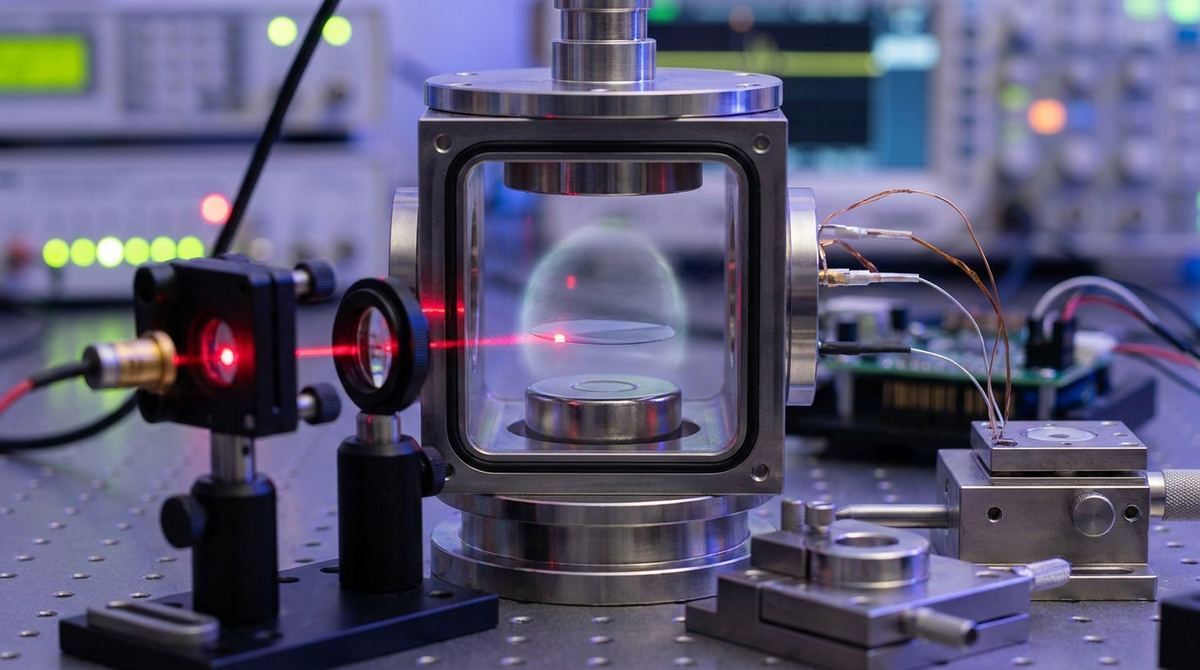
The traditional Tesla engine relies on ferromagnetic materials to convert thermal gradients into mechanical rotation. However, recent research has opened a new frontier: the diamagnetic Tesla engine. Unlike ferromagnetic materials that are attracted to magnets, diamagnetic materials like graphene are repelled by them. This research, published by Tong et al. in 2026, demonstrates that a graphene disk can be used as an engine wheel to convert light energy into high-speed rotation through a combination of magnetic levitation and thermal excitation.
For engineers and makers, this represents a significant opportunity to develop light-powered micro-actuators, sensors, and even micro-vehicles that operate without traditional electromagnetic coils or complex wiring. This guide provides a practical framework for building a proof-of-concept prototype based on the findings of the Tong et al. study.
The core challenge in building a diamagnetic engine is that standard Tesla engine designs—where a permanent magnet is placed near the edge of a disk to create unbalanced forces—often fail to produce sustained rotation in diamagnetic systems. The research identifies that a perfectly centered, levitated disk lacks the necessary restoring force to maintain stable, continuous motion under light excitation.
The breakthrough solution is lateral displacement. By intentionally offsetting the levitated graphene disk from its equilibrium position, a restoring force is created. When a light source (like a laser) creates an asymmetric thermal gradient across the disk, the resulting thermomagnetic forces act upon this offset, driving the disk into rotation. The research shows that this mechanism can achieve speeds of up to 2000 rpm under laser heating and 1000 rpm under direct sunlight.
Because the research focuses on the fundamental physics, several specific dimensions and material grades must be assumed for a laboratory-scale prototype.
Graphene Disk: The source specifies a disk fabricated by stacking graphene sheets. For a functional prototype, you will need a disk with sufficient mass to generate a measurable diamagnetic response. We suggest starting with a disk approximately 5mm to 10mm in diameter. The thickness should be achieved by stacking multiple layers of high-quality CVD graphene or thick exfoliated flakes. The exact number of layers is not specified in the source, but a thickness in the range of 100nm to 500nm is a cautious starting point for a prototype.
Permanent Magnet: A high-strength Neodymium (NdFeB) magnet is required to provide the necessary magnetic field for levitation. A small, high-grade N52 magnet is recommended.
Light Source: A focused laser (e.g., 532nm green or 650nm red) is required for high-speed testing. For solar simulation, a high-intensity halogen lamp or direct sunlight can be used.
Precision Positioning Stage: A micro-positioning stage (XYZ stage) is essential to achieve the critical lateral displacement required for rotation.
Non-Magnetic Base: A high-precision, vibration-damping platform is necessary to ensure that mechanical noise does not disrupt the levitation.
1. Disk Assembly: Prepare the graphene disk. If you are using CVD graphene, you will need to transfer the sheets onto a lightweight, thermally conductive, but electrically insulating substrate, or stack them directly if the goal is a pure graphene component. For this guide, we assume a pure stacked graphene disk to maximize diamagnetic properties.
2. Magnetic Base Setup: Mount the NdFeB magnet on a fixed, non-magnetic pedestal. The magnet should be oriented such that the magnetic field lines are perpendicular to the plane where the disk will levitate.
3. Levitation and Alignment: Place the graphene disk above the magnet. Use the XYZ stage to find the point of stable levitation. In a perfectly centered state, the disk should remain stationary.
4. Implementing Lateral Displacement: This is the most critical step. Using the micro-positioning stage, move the disk laterally away from the center. According to the research, an offset of approximately 0.8mm is optimal. You must carefully calibrate this distance, as the restoring force is highly dependent on this displacement.
5. Optical Integration: Position the laser source to strike the edge of the disk or a specific point on its surface. The goal is to create an asymmetric temperature distribution across the disk's surface.
6. Vane Attachment (Optional): If you intend to use the engine to power a micro-vehicle or another disk, you can attach small vanes to the edge of the graphene disk. These vanes allow the disk to function as a gear, transferring mechanical energy to an adjacent component.
To validate the prototype, follow this testing sequence:
1. Stability Test: Before applying light, ensure the disk remains levitated at the 0.8mm offset. If the disk falls or jumps, adjust the magnet strength or the disk mass.
2. RPM Measurement: Use a non-contact laser tachometer to measure the rotation speed. Start with low-power laser settings and gradually increase the intensity.
3. Sensitivity Analysis: Systematically vary the lateral displacement from 0.1mm to 1.5mm. Record the RPM at each increment to find the local maximum, as the research suggests the relationship between displacement and force is non-linear.
4. Thermal Gradient Verification: If possible, use an infrared camera to observe the temperature distribution on the disk surface during rotation. This confirms that the rotation is indeed driven by the thermomagnetic effect.
It is important to distinguish between the findings of the research and the assumptions made for this practical guide:
The research establishes the principle that lateral displacement enables rotation. However, the exact optimal thickness of the graphene stack and the exact dimensions of the disk are not provided. This guide assumes a 5mm-10mm diameter and a thickness in the hundreds of nanometers.
The research mentions 2000 rpm under laser heating. The specific wavelength and wattage of the laser used in the original study are not explicitly detailed in the abstract. We assume a standard laboratory-grade laser.
The research notes that the engine can power a graphene vehicle. This guide assumes the use of vanes to facilitate gear-based energy transfer, which is an engineering implementation of the concept rather than a direct measurement from the source.
Thermal Management: While the graphene disk is small, the use of a laser can create localized high temperatures. Ensure the disk does not reach temperatures that could cause structural failure or rapid thermal expansion that disrupts levitation.
Laser Safety: Always use appropriate laser safety goggles when working with high-intensity lasers.
Mechanical Instability: At 2000 rpm, even a tiny imbalance can cause the disk to fly off the magnetic field. Ensure the experimental setup is enclosed or shielded to prevent the disk from becoming a high-speed projectile.
Magnetic Interference: The strong NdFeB magnet can interfere with nearby electronic equipment. Ensure all measurement tools are shielded or placed at a safe distance.
Serious about B2B integration? Test our premium Pulsed Electrical Resistive Carbon Heating turbostratic graphene in your lab. 100g sample packs available now.
Explore More
Researchers derived the first exact formula for resistivity in the 1D infinite-U Hubbard model, providing a crucial benchmark for understanding strongly...

Learn how to utilize bipartite-lattice symmetry to generate pure spin shift currents in graphene nanoribbons for advanced spintronic device prototyping.

Researchers propose a novel method to detect spin- and valley-polarized states in van der Waals materials, a key step for next-gen spintronics and...