
Detection of spin- and valley-polarized states in van der Waals materials via
Researchers propose a novel method to detect spin- and valley-polarized states in van der Waals materials, a key step for next-gen spintronics and...
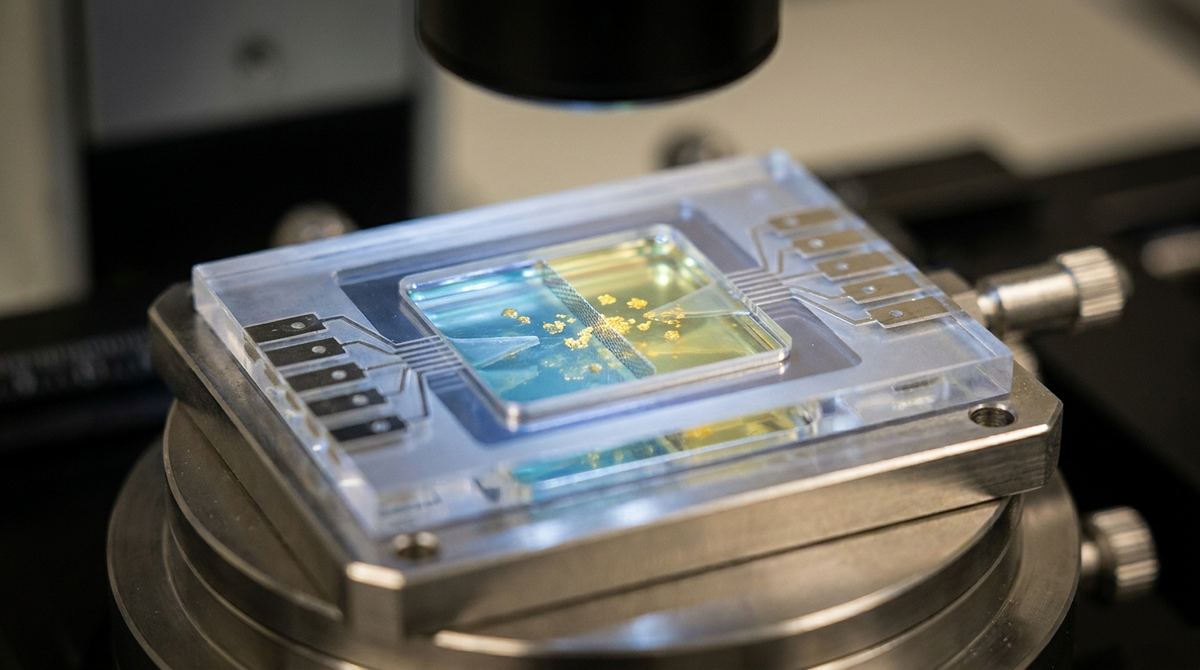
In industrial chemical engineering, particularly for reactions like acetylene hydrochlorination, the catalyst is the heart of the process. Traditionally, engineers design these catalysts using a trial-and-error approach. You synthesize a catalyst, run a reaction in a large-scale reactor, and then perform post-mortem analysis to see what happened to the surface.
The problem is that the catalyst surface is not static. Under operating temperatures and in the presence of organic solvents, gold atoms do not stay put. They move, they cluster, and they change shape. This dynamic behavior—the formation of monomers, dimers, and larger clusters—is what actually drives the catalytic activity. If you cannot see these atoms moving in real-time while they are submerged in the solvent, you are essentially designing with a blindfold on.
Recent breakthroughs have demonstrated that graphene can act as a nearly transparent, chemically inert, and mechanically robust window for liquid-phase observations. By sandwiching an organic solvent between two layers of graphene, we create a graphene liquid cell (GLC).
This setup allows us to use an electron microscope to look through the graphene and watch, atom by atom, how gold species behave in solvents like acetone or cyclohexanone. For a startup or a specialized lab, this capability means the ability to move from empirical testing to rational design. Instead of guessing which solvent promotes better cluster stability, you can observe the exact moment a gold monomer transforms into a highly active trimer.
To build a prototype for testing catalyst stability in organic solvents, you will need the following materials and equipment.
Materials:
1. High-quality CVD Graphene: You require large-area, single-layer graphene produced via Chemical Vapor Deposition. The graphene must have a low defect density to prevent liquid leakage into the microscope vacuum.
2. Silicon Nitride (SiN) Membranes: These serve as the structural substrate. You need SiN membranes with pre-fabricated nano-apertures (typically between 50nm and 100nm in diameter) to allow electron transparency.
3. Gold Precursors: For testing, you can use gold chloride (AuCl3) dissolved in the solvent, or you can use an electron-beam evaporator to deposit a very thin layer (0.5nm to 2nm) of gold directly onto the graphene.
4. Organic Solvents: Acetone and cyclohexanone are the primary targets for testing, but the cell is designed to handle various organic liquids.
5. Microfluidic Loading System: A precision capillary system to introduce the liquid into the cell without introducing air bubbles.
Equipment:
1. Transmission Electron Microscope (TEM) or Scanning TEM (STEM): Ideally equipped with an in situ liquid cell holder.
2. AI-Enabled Image Analysis Software: To track the movement and size of over 100 individual atoms/clusters in real-time.
3. Precision Evaporator: For depositing the metal species.
Building a functional graphene liquid cell is a delicate process. Follow these steps to create a prototype for observing gold-organic interfaces.
1. Substrate Preparation: Begin with the SiN membrane. Ensure the nano-aperture is clean and free of any particulate matter.
2. Graphene Transfer: Using a polymer-assisted transfer method (such as PMMA-mediated transfer), move the CVD graphene onto the SiN substrate. The graphene must bridge the nano-aperture perfectly.
3. Catalyst Deposition: If you are not using a dissolved precursor, use an electron-beam evaporator to deposit a discontinuous layer of gold onto the graphene. The goal is to create small, isolated gold islands rather than a continuous film.
4. Liquid Loading: Using a microfluidic capillary, carefully introduce the organic solvent (e.g., acetone) into the gap between the graphene layers. The pressure must be carefully controlled to avoid rupturing the membrane.
5. Sealing: A second layer of graphene is applied to the top of the liquid, creating a hermetic seal. This creates a liquid-solid-gas sandwich that maintains the liquid environment under the microscope vacuum.
Once the prototype is loaded into the TEM, the following test plan will allow you to characterize the catalyst behavior.
1. Baseline Observation: Start with the cell in a vacuum (no liquid) to observe the initial state of the gold clusters.
2. Solvent Introduction: Introduce the organic solvent and monitor the gold atoms. Use AI-driven particle tracking to record the movement of gold monomers and dimers.
3. Polarity Comparison: Repeat the process using a solvent with different polarity (e.g., switching from acetone to cyclohexanone). Observe how the solvent properties influence the rate at which gold atoms aggregate into larger clusters.
4. Reaction Monitoring: If the setup allows for gas introduction, introduce acetylene and hydrogen to observe the catalytic hydrochlorination in real-time.
5. Quantitative Analysis: Use the AI software to generate a distribution map of cluster sizes (monomers vs. dimers vs. trimers) over a period of 30 to 60 minutes.
Because this is an advanced engineering application, several assumptions must be made during the prototyping phase.
Assumptions:
1. Temperature: It is assumed that the reaction occurs at room temperature (approx. 25C to 30C). If higher temperatures are required, the thermal expansion of the liquid must be accounted for to prevent cell rupture.
2. Concentration: We assume a low concentration of gold species to prevent massive agglomeration that would obscure the atomic-scale view.
3. AI Accuracy: We assume the AI-enabled analysis can distinguish between a single gold atom and a small cluster with high confidence.
Critical Risks:
1. Membrane Rupture: The most significant risk is the pressure differential between the liquid inside the cell and the vacuum of the TEM. If the graphene layer fails, the liquid will evaporate into the microscope column, potentially causing catastrophic damage to the TEM.
2. Beam-Induced Damage: The electron beam itself can cause radiolysis, where the energy from the beam breaks the chemical bonds of the organic solvent. This creates reactive radicals that can artificially accelerate the gold clustering.
3. Contamination: Any residual polymer from the graphene transfer process will act as a contaminant, altering the chemical interface you are trying to study.
This guide is based on the research findings published by Sullivan-Allop et al. (2026), which utilized graphene liquid cells to achieve atomic-resolution imaging of gold species in organic solvents. The research specifically highlighted how the atomic lattice of the substrate and the properties of the solvent (like acetone) dictate the behavior of gold adatoms. By implementing the engineering steps outlined here, a lab can move from observing these phenomena in a specialized research setting to applying them in a practical industrial R&D environment.
Serious about B2B integration? Test our premium Pulsed Electrical Resistive Carbon Heating turbostratic graphene in your lab. 100g sample packs available now.
Explore More
Researchers propose a novel method to detect spin- and valley-polarized states in van der Waals materials, a key step for next-gen spintronics and...

Researchers developed the CARBON-2D Topological Descriptor (C2DTD), an interpretable, physics-informed method to rapidly predict the properties of new 2D...

Learn how to create p-n junctions in graphene by selectively oxidizing the underlying germanium substrate. This guide covers a practical method for...