Imagine if we could take one of the most common, inexpensive plastics used in everything from bottle caps to food containers and transform it into a material strong and resilient enough for an aircraft. In the aerospace industry, every gram of weight and every dollar spent on materials is scrutinized. While high-end engineering plastics like polycarbonate and nylon provide the necessary strength and heat resistance, they come with a steep price tag that can inflate production costs across thousands of components. The challenge has always been finding a way to elevate a cheap, commodity plastic to the performance levels of an expensive specialty polymer. This is precisely where the intersection of material science and nanotechnology provides a solution, turning ordinary polypropylene into a sophisticated nanocomposite.
The Problem This Research Is Solving
Polypropylene is widely regarded as a commodity thermoplastic because it is abundant and cost-effective. However, from an engineering perspective, it possesses a soft and relatively weak molecular backbone. In its neat form, polypropylene lacks the structural rigidity, creep resistance, and flame retardancy required for critical aerospace applications. When a material is subjected to the extreme temperature fluctuations and mechanical stresses of flight, a standard plastic like polypropylene would likely deform or fail prematurely.
Currently, aerospace manufacturers rely on polycarbonate and nylon to fill this gap. While these materials are technically superior in terms of impact resistance and thermal stability, their high cost makes them prohibitive for certain large-scale or non-critical components. The fundamental problem is the lack of a low-cost alternative that does not compromise safety or performance. To make polypropylene viable for flight, researchers must find a way to reinforce its internal structure at the molecular level, transforming it from a simple plastic into a high-performance composite.
The Key Idea in Plain English
The central goal of the research conducted by Parthasarathy Govindaraju is to infuse polypropylene with nanoscale reinforcements to bridge the gap between commodity plastics and engineering polymers. The core idea is that by adding tiny amounts of exceptionally strong materials, such as graphene, we can change the physical properties of the plastic from the inside out.
Rather than just mixing two materials together like sand in cement, this research looks at creating a nanocomposite. In a nanocomposite, the reinforcing agents are so small and have such a high surface area that they interact with the polymer chains on a chemical level. By experimenting with graphene alongside other fillers like mica, fumed silica, and polydimethylsiloxane, the study aims to identify which additive provides the best balance of strength and fire resistance. The ultimate objective is to create a material that behaves like an expensive aerospace plastic but retains the economic advantages of polypropylene.
How the Graphene-Based System Works
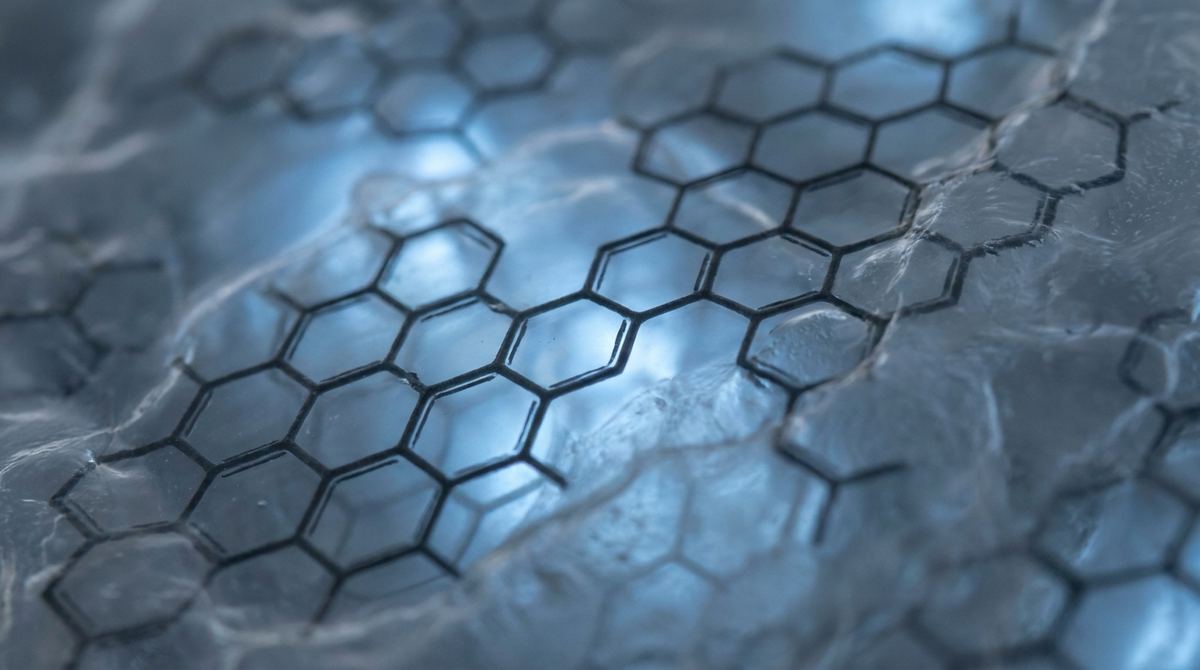
To understand why graphene improves polypropylene, one must look at the interface between the filler and the polymer matrix. Polypropylene is a semi-crystalline thermoplastic, meaning it has regions that are highly ordered and regions that are disordered. When graphene sheets are dispersed into this matrix, they act as physical barriers. Because graphene consists of a single layer of carbon atoms arranged in a hexagonal lattice, it possesses extraordinary intrinsic strength and stiffness.
The mechanism of improvement is primarily driven by the high aspect ratio and surface area of graphene. When the polymer chains of polypropylene wrap around these graphene sheets, the mobility of those chains is restricted. In a neat plastic, polymer chains can slide past one another relatively easily under stress, which leads to deformation or stretching. However, when graphene is present, it creates a network of reinforcements that anchor the polymer chains in place. This restriction increases the overall modulus and tensile strength of the material.
Furthermore, the research explores the use of coupling agents like Aminopropyltriethoxysilane, known as APTES. One of the biggest hurdles in composite science is the incompatibility between inorganic fillers and organic polymers; they often repel each other, leading to clumps or voids. APTES acts as a molecular bridge. One end of the APTES molecule bonds with the mineral filler, while the other end interacts with the polypropylene matrix. This ensures that the load is transferred efficiently from the soft plastic to the strong filler without the material splitting at the interface.
In addition to graphene and minerals, Polydimethylsiloxane polymer is utilized for crosslinking. Crosslinking creates chemical bonds between different polymer chains, essentially turning a collection of separate strings into a reinforced web. This structural change significantly enhances the thermal stability and creep resistance of the composite, ensuring it does not sag or warp when exposed to heat.
What the Researchers Found
Through the use of Fourier Transform Infrared Spectroscopy and Scanning Electron Microscope techniques, the researchers were able to visualize and verify the chemical changes occurring within the composite. The SEM imaging provided a clear look at the morphology of the material, showing how different weight percentages of graphene affected the dispersion within the polypropylene blend of copolymer and reprocessed plastic.
The findings indicate that the addition of graphene significantly enhances the mechanical properties compared to neat polypropylene. While mineral fillers like mica and fumed silica offered some improvement, graphene provided a more pronounced increase in strength due to its superior surface-to-volume ratio. The data suggests that as the weight percentage of graphene is optimized, the material becomes stiffer and more resistant to physical deformation.
Regarding flammability, the results showed that the fillers act as a char-forming layer during combustion. When the composite is exposed to fire, the graphene and other reinforcements migrate toward the surface to create a protective barrier. This carbonaceous layer insulates the underlying plastic from heat and slows down the release of flammable gases, thereby improving the overall flame resistance of the material. The use of APTES was also found to be critical in ensuring that these fillers were uniformly distributed, as poor dispersion usually leads to weak spots where cracks can easily propagate.
Why the Result Matters
The implications of this research are significant for the economics of aerospace manufacturing. If a polypropylene nanocomposite can match the performance of polycarbonate or nylon, it opens the door to massive cost savings in the production of aircraft interiors, housing units, and non-structural brackets.
Beyond costs, there is an environmental and efficiency angle. By utilizing reprocessed polypropylene in the blend, the research promotes the use of recycled materials without sacrificing technical integrity. Moreover, graphene's ability to improve strength at very low weight percentages means that engineers can create parts that are both lighter and stronger. In aviation, reducing weight directly translates to lower fuel consumption and reduced carbon emissions, making this a win for both the balance sheet and the environment.
Limitations and What Still Needs Testing
While the results are promising, it is important to note that this research represents a foundational step rather than a final commercial product. One of the primary limitations in graphene composites is the challenge of scalability. Achieving the same level of uniform dispersion in a laboratory setting using small batches is significantly easier than doing so in an industrial extruder producing tons of material per hour. Agglomeration, where graphene sheets clump together due to van der Waals forces, remains a persistent risk that could lead to structural flaws in larger parts.
Additionally, aerospace materials must undergo rigorous long-term fatigue testing. While the initial mechanical strength is improved, it remains to be seen how these nanocomposites behave over thousands of cycles of vibration and extreme thermal cycling from minus fifty degrees Celsius at altitude to high temperatures on a tarmac. Further research into the long-term aging process and the impact of ultraviolet radiation on the graphene-polypropylene bond is necessary before this material can be certified for flight.
Real-World Applications
The most immediate application for this graphene-filled polypropylene would be in secondary aerospace structures. These are components that do not support the primary load of the aircraft but are essential for functionality and passenger comfort. Examples include interior cabin panels, overhead luggage bins, and protective shrouds for electronic cabling.
Outside of aviation, this technology has potential in the automotive sector, particularly for electric vehicles where weight reduction is critical to extending battery range. It could also be applied to high-end consumer electronics housings that require a balance of impact resistance and low cost. Any industry that currently relies on expensive engineering plastics but struggles with material costs could benefit from the transition to a reinforced commodity plastic.
If You Remember One Thing
The most important takeaway is that graphene acts as a molecular reinforcement that transforms cheap, soft polypropylene into a high-performance material by restricting polymer chain movement and creating a more stable, flame-resistant structure. By using chemical coupling agents like APTES to ensure these nano-fillers are perfectly integrated, researchers can create a low-cost alternative to expensive aerospace plastics.
FAQ
Does adding graphene make the plastic heavier?
Actually, because graphene is so effective at very low concentrations, the overall weight increase is negligible. In many cases, the increased strength allows engineers to use less material overall to achieve the same structural goal, which can actually reduce the total weight of a part.
Why not just use nylon if it already works?
Nylon and polycarbonate are excellent materials, but they are significantly more expensive than polypropylene. For mass-produced components or non-critical parts, using these expensive plastics is an unnecessary cost. This research aims to provide the same performance at a fraction of the price.
What does APTES actually do in the mix?
APTES serves as a chemical glue. Since inorganic fillers like mica and organic polymers like polypropylene do not naturally bond well, APTES attaches to both, ensuring that the filler is evenly spread and firmly locked into the plastic matrix.
Can this material be recycled?
Since the base is polypropylene, which is one of the most recyclable plastics, there is a strong potential for these composites to be reprocessed. The research already incorporates reprocessed polypropylene, suggesting a move toward a circular economy in aerospace materials.
Is graphene-filled plastic as strong as metal?
While it is significantly stronger than standard plastic and can compete with engineering polymers, it is not intended to replace primary structural metals like titanium or aluminum. It is designed for components where weight and cost are more critical than absolute maximum load-bearing capacity.
Conclusion
The development of graphene-filled polypropylene nanocomposites marks a shift in how we approach material selection in high-stakes industries. By leveraging the unique properties of carbon nanomaterials and optimizing the chemical interface through coupling agents, it is possible to elevate a simple commodity plastic to aerospace standards. While challenges regarding industrial scaling and long-term fatigue remain, the work provides a clear pathway toward more sustainable and cost-effective manufacturing. The ability to engineer materials from the bottom up ensures that the future of flight will be lighter, cheaper, and safer.