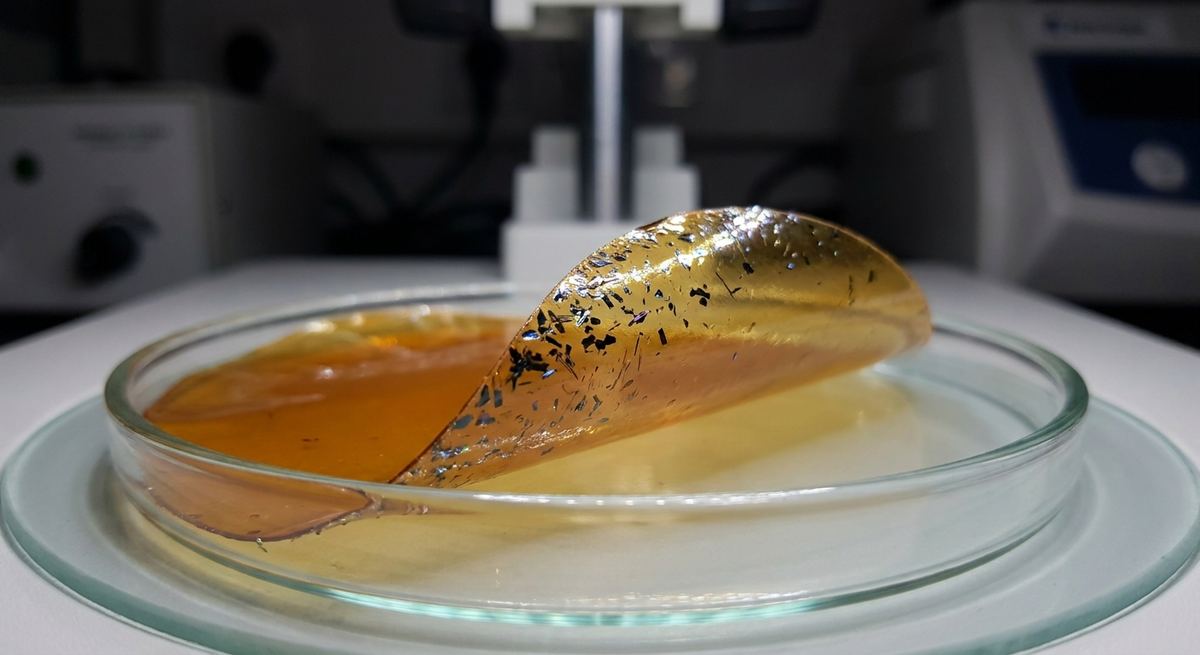
Imagine a skincare product that not only clears your pores but does so using materials harvested from agricultural waste and citrus fruit. For most people, a peel-off mask is a simple beauty ritual, but for scientists, it represents a sophisticated delivery system for nanomaterials. The challenge has always been finding an ingredient that can kill bacteria and fungi without relying on harsh synthetic chemicals or antibiotics that contribute to global drug resistance. This is where the intersection of green chemistry and nanotechnology provides a surprising solution.
The Problem This Research Is Solving
The skin is a complex organ constantly under attack from various microbial pathogens, including Staphylococcus aureus and Escherichia coli, which are primary drivers of acne and other inflammatory skin conditions. Historically, the medical community has relied on synthetic antimicrobial agents to treat these issues. However, the overuse of such chemicals has led to two significant problems: the emergence of antibiotic-resistant bacterial strains and the potential for skin irritation caused by synthetic additives.
Anjali R. More, Ganesh S. Tolsarwad, Bhagwat N. Poul, Digvijay G. Kendre, and Rohini C. Holkunde sought to address these challenges by creating a bio-based antimicrobial mask. Their goal was to move away from petrochemical-derived ingredients and instead utilize renewable resources. The primary hurdle in this endeavor is stability; creating a gel that is fluid enough to apply, yet strong enough to be peeled off in one piece while remaining biologically active, requires precise chemical engineering. By focusing on the synergy between a natural polymer and a carbon nanomaterial, the researchers aimed to create a product that provides a physical barrier against pathogens while actively neutralizing them through chemical interaction.
The Key Idea in Plain English
The core concept of this research is to combine two powerful materials: chitosan and reduced graphene oxide. Chitosan is a natural polymer derived from chitin, which is found in the shells of crustaceans. It is already known for being biocompatible and having some inherent antimicrobial properties. Reduced graphene oxide, or rGO, is a derivative of graphene—a single layer of carbon atoms arranged in a honeycomb lattice.
Rather than using expensive, laboratory-grade chemicals to produce the rGO, the researchers used rice husks, an abundant agricultural byproduct. They then used lemon juice as a green reducing agent to convert graphene oxide into its reduced form. By blending these two components into a gel optimized with glycerol and ethanol, they created a mask that adheres to the skin, kills harmful microbes on contact, and can be peeled away, taking impurities and neutralized bacteria with it.
How the Graphene-Based System Works
To understand why this system works, one must look at the atomic structure of reduced graphene oxide. Graphene oxide begins as a sheet of carbon heavily decorated with oxygen-containing functional groups like hydroxyls and epoxides. These groups make the material hydrophilic, meaning it mixes well with water, but they also disrupt the electrical conductivity of the carbon lattice. By using lemon juice—which contains citric acid and ascorbic acid—the researchers reduced these oxygen groups, restoring the sp2 hybridized carbon network. This process creates rGO, which possesses a massive surface area and a unique electronic structure.
The antimicrobial activity of rGO is not accidental; it is a result of physical and chemical interactions at the nano-scale. First, the sharp edges of rGO nanosheets can act as nano-knives, physically penetrating the phospholipid bilayer of bacterial cell membranes. This causes cellular leakage and eventual death. Second, the electronic properties of the carbon lattice allow for the generation of oxidative stress within the microbe, disrupting its metabolic functions.
When rGO is integrated into a chitosan matrix, a synergistic effect occurs. Chitosan is a cationic polymer, meaning it carries a positive charge. Bacterial cell walls are typically negatively charged. The chitosan acts as an electrostatic magnet, drawing the bacteria toward the mask and holding them in place. Once trapped, the rGO nanosheets can more effectively interact with the microbial membranes.
The physical properties of the gel were managed through a process called Box-Behnken Design. This is a statistical method used to find the perfect balance between different ingredients. For instance, glycerol was added as a plasticizer. In polymer chemistry, a plasticizer works by inserting itself between the long chains of the chitosan polymer, increasing the free volume and reducing the intermolecular forces. This prevents the dried mask from becoming too brittle, ensuring it has high folding endurance and can peel off without cracking. Ethanol was used to control the volatility of the mixture, speeding up the drying time so the user does not have to wait indefinitely for the mask to set.
What the Researchers Found
The researchers discovered that the optimized formulation of the rGO-chitosan gel exhibited significant antimicrobial efficacy. Specifically, the mask showed strong inhibition zones against Escherichia coli and Staphylococcus aureus, as well as antifungal activity against Candida albicans. These results indicate that the material is not just effective against one type of pathogen but provides a broad spectrum of protection.
Characterization through Scanning Electron Microscopy confirmed that the rGO was successfully and uniformly dispersed throughout the chitosan matrix. This uniformity is critical; if the graphene were to clump together, the mask would have "dead zones" where bacteria could survive. Further analysis using FT-IR spectroscopy showed that the functional groups of both chitosan and rGO interacted effectively, forming a stable composite rather than a simple mixture.
The physical evaluation proved that the mask met the necessary criteria for a consumer product. The drying time was optimized to be practical, the film thickness was consistent, and the folding endurance demonstrated that the resulting film was flexible enough to conform to the contours of the human face without breaking. Zeta potential analysis confirmed the stability of the dispersion, ensuring that the rGO would not precipitate out of the gel over time.
Why the Result Matters
This research is significant because it demonstrates a closed-loop approach to material science. By using rice husks as the source for graphene and lemon juice as the reducing agent, the researchers have turned agricultural waste into a high-value medical product. This reduces the environmental footprint of nanomaterial production, which typically relies on toxic chemicals like hydrazine.
Furthermore, providing an alternative to traditional antimicrobial creams is vital in the fight against superbugs. Because the rGO-chitosan system works partly through physical disruption and oxidative stress rather than targeting a specific biological pathway (like traditional antibiotics), it is much harder for bacteria to develop resistance to it. This makes it a sustainable long-term solution for skin health.
Limitations and What Still Needs Testing
While the results are promising, this research is currently in the laboratory stage and is not yet ready for commercial shelves. One of the primary limitations is that the antimicrobial testing was performed in vitro, meaning it was done in petri dishes rather than on living human skin. The complex environment of the human dermis, including sebum production and varying pH levels, could alter how the mask performs.
Additionally, long-term toxicity studies are required. While chitosan is biocompatible, the long-term effects of applying reduced graphene oxide to the skin repeatedly need to be fully understood to ensure there is no systemic absorption or chronic inflammation. The stability of the gel over months of storage at different temperatures also remains to be tested to determine its shelf life.
Real-World Applications
The most immediate application is in the cosmetic and dermatological industry as a treatment for acne-prone skin. However, the technology could extend far beyond beauty masks. This same rGO-chitosan composite could be developed into antimicrobial wound dressings or surgical patches that prevent infection while promoting healing through the biocompatible nature of chitosan.
It could also be adapted for use in targeted drug delivery. Because graphene has such a high surface area, it can be loaded with other medications, allowing the mask to act as a vehicle that pushes active pharmaceutical ingredients deeper into the skin through osmotic pressure while simultaneously killing surface bacteria.
If You Remember One Thing
The most important takeaway is that agricultural waste like rice husks can be transformed into high-tech carbon nanomaterials that, when combined with natural polymers like chitosan, create a powerful, eco-friendly weapon against skin infections and acne.
FAQ
What exactly is reduced graphene oxide in this mask?
It is a form of carbon derived from rice husks that has been processed to remove most of its oxygen groups. This gives it a structure that can physically disrupt bacterial membranes and provide antimicrobial properties.
Why use lemon juice instead of industrial chemicals?
Lemon juice acts as a green reducing agent. Traditional methods often use toxic chemicals like hydrazine, which are hazardous to the environment and the user. Lemon juice provides a safe, organic alternative for achieving the same chemical reduction.
How does the mask actually kill bacteria?
It uses a two-pronged approach. The chitosan attracts bacteria via electrostatic charges, and the rGO nanosheets act like tiny knives that pierce the bacterial cell walls while creating oxidative stress that kills the microbe from the inside.
Is this product available for purchase now?
No, this is currently an academic study. It has proven successful in a lab setting, but it still requires human clinical trials and regulatory approval before it can be sold as a commercial skincare product.
What does Box-Behnken Design mean in this context?
It is a statistical tool used by the researchers to find the perfect recipe. Instead of guessing, they used this method to mathematically determine exactly how much glycerol, ethanol, and polymer were needed to make the mask peel off perfectly without being too brittle or too liquid.
Conclusion
The development of an rGO-chitosan peel-off mask represents a successful fusion of green chemistry and nanotechnology. By leveraging the structural properties of reduced graphene oxide and the biocompatibility of chitosan, the researchers have created a material that is both environmentally sustainable and biologically potent. While further testing on human subjects is necessary, this work paves the way for a new generation of skincare products that are derived from waste and designed for efficacy, offering a promising path toward reducing our reliance on synthetic antibiotics in dermatology.