
Probing 2D Metals: Unlocking Electronic Secrets with Raman Spectroscopy
Researchers reveal how breaking inversion symmetry in 2D metals enables electronic Raman scattering, a powerful, non-destructive tool for characterizing...
Research conducted by: Ribeiro-Palau Rebeca
In a significant leap forward for condensed matter physics and nanomaterials engineering, Rebeca Ribeiro-Palau and her team have unraveled a persistent mystery surrounding anomalous gating effects in graphene-based systems. Their rigorous investigation into bilayer graphene encapsulated in hexagonal boron nitride provides unprecedented clarity on why these systems sometimes exhibit strange electronic behaviors, such as ineffective electrostatic control and severe resistance hysteresis. By identifying the precise structural parameters that trigger these phenomena, their work fundamentally alters our understanding of interface physics in van der Waals heterostructures. The research sets a new benchmark for reproducibility in the field, moving the scientific community away from speculative hypotheses and toward a deterministic understanding of how crystallographic alignment governs macroscopic electronic properties. As we delve into the intricacies of this study, it becomes clear that the architectural precision of these microscopic sandwiches holds the key to next-generation electronic devices.
For years, researchers exploring the frontiers of two-dimensional materials have encountered a baffling phenomenon when working with graphene encapsulated in hexagonal boron nitride. Under normal circumstances, applying a voltage to a gate electrode allows precise control over the charge carrier density within the graphene channel. This electrostatic gating is the fundamental mechanism behind modern field-effect transistors. However, in certain encapsulated graphene devices, scientists observed a stark deviation from this expected behavior. The gating became highly ineffective, failing to modulate the conductivity of the graphene as predicted by standard electrostatic models.
Accompanying this ineffective gating was a strong hysteresis in the electrical resistance. Hysteresis means that the state of the system depends on its history. When researchers swept the gate voltage forward, the resistance profile looked entirely different than when they swept the voltage backward. This memory-like effect suggested that the system was retaining charge or undergoing some form of internal polarization that resisted changes from the external electric field.
Initially, the scientific community hypothesized that this anomalous behavior was the signature of a novel ferroelectric state. Ferroelectricity in two-dimensional van der Waals heterostructures is a highly sought-after property, as it could pave the way for ultra-thin, non-volatile memory devices. However, the ferroelectric explanation remained highly controversial. The origin of the effect was poorly understood, its stability was questionable, and most problematically, the results were notoriously difficult to reproduce across different laboratories. Some devices showed the anomalous gating, while seemingly identical devices did not. This lack of reproducibility stalled progress and ignited a debate over whether the effect was an intrinsic property of the materials or merely an artifact of fabrication impurities. The research team recognized that solving this mystery required a completely new experimental approach, one that could isolate the specific structural variables at play without the confounding factors of multiple different devices.
To overcome the limitations of static device fabrication, the researchers employed an ingenious experimental design: a dual-gated, dynamically rotatable van der Waals heterostructure. In traditional nanofabrication, a heterostructure is assembled by stacking layers of two-dimensional materials one on top of the other at specific angles. Once assembled, the structure is permanent. If a researcher wants to test the effect of a different twist angle between the layers, they must fabricate an entirely new device, which introduces variations in interface quality, strain, and contamination.
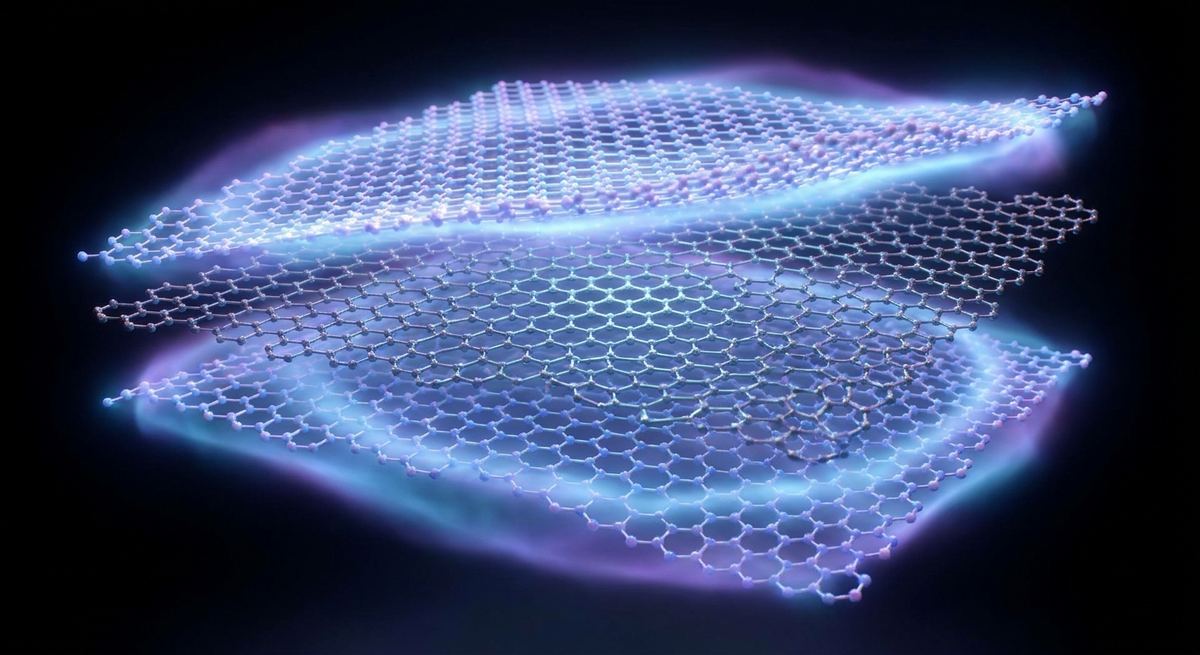
By utilizing a dynamically rotatable setup, the team bypassed this critical bottleneck. Their device consisted of a sheet of bilayer graphene sandwiched between two layers of hexagonal boron nitride. Crucially, the experimental apparatus allowed them to physically rotate the alignment of the layers in situ, while simultaneously measuring the electronic properties at room temperature. This dynamic capability meant that the exact same atomic interfaces were being tested across a continuous spectrum of twist angles. Any changes in the electronic behavior could therefore be definitively attributed to the angular alignment, rather than sample-to-sample variation.
The dual-gated aspect of the device was equally important. By having both a top gate and a bottom gate, the researchers could independently control the overall charge carrier density in the bilayer graphene and the perpendicular electric displacement field across it. Bilayer graphene is particularly sensitive to displacement fields, which can break the inversion symmetry of the lattice and open a tunable bandgap. This level of control was essential for accurately characterizing the anomalous gating effect and mapping the hysteresis across different electronic states. The combination of in situ rotation and dual-gating created a remarkably powerful platform for interrogating the delicate interplay between crystallographic alignment and electrostatic response.
Prior to this research, the prevailing assumption was that any anomalous electronic behavior in graphene-boron nitride heterostructures must be driven by the moire superlattice formed between the graphene and its encapsulating layers. A moire superlattice is a large-scale interference pattern that emerges when two mismatched or twisted atomic lattices are overlaid. In graphene aligned with boron nitride, this superlattice is known to dramatically alter the electronic band structure, creating secondary Dirac points and Hofstadter butterfly states under magnetic fields. It was logical to assume that the anomalous gating and hysteresis were somehow tied to this well-documented moire interaction.
However, the dynamic rotation experiments revealed a stunning paradigm shift. The researchers demonstrated that the anomalous gating effect was not governed by the alignment between the bilayer graphene and the boron nitride. Instead, the key parameter was the angular alignment between the two boron nitride layers themselves. This finding is deeply counterintuitive. The two boron nitride layers are physically separated by the bilayer graphene, which acts as a conductive shield. Yet, the relative crystallographic orientation of these two outer insulating layers dictates the electrostatic environment of the inner conductive channel.
This discovery fundamentally changes how scientists must view encapsulated two-dimensional systems. It suggests that the dielectric environment in van der Waals heterostructures is highly non-local and dependent on the macroscopic symmetry of the entire stack, rather than just the immediate interface. The interaction between the top and bottom boron nitride layers, mediated through the bilayer graphene, creates a complex electrostatic landscape that can either facilitate standard field-effect behavior or trap the system in an anomalous, history-dependent state. By isolating the boron nitride-to-boron nitride alignment as the primary driver, the research team effectively solved the reproducibility crisis. Previous studies had likely failed to reproduce the effect because they were solely focused on controlling the graphene-to-boron nitride angle, leaving the alignment of the two boron nitride layers to chance.
Having identified the boron nitride-to-boron nitride alignment as the critical variable, the researchers meticulously mapped the exact twist angles required to induce the anomalous gating effect. They discovered that the phenomenon is not ubiquitous; it only occurs within a highly specific angular window. To observe the ineffective electrostatic control and strong hysteresis at room temperature, the twist angle between the top and bottom boron nitride layers must lie strictly between approximately 15 degrees and 45 degrees.
This angular window is fascinating for several reasons, but the most profound observation made by the team was the complete absence of the expected 60-degree periodicity. Hexagonal boron nitride, as its name implies, possesses a hexagonal crystal lattice. Because of this six-fold rotational symmetry, one would naturally expect any physical property dependent on the twist angle to repeat every 60 degrees. If an effect is observed at 20 degrees, it should theoretically reappear at 80 degrees, 140 degrees, and so on.
Astoundingly, the experimental data showed no evidence of this 60-degree periodicity. The anomalous gating effect appears in the 15 to 45-degree window and then vanishes, refusing to follow the geometric rules dictated by the isolated crystal lattice. This missing periodicity points to a complex breaking of rotational symmetry within the assembled heterostructure. It implies that the actual physical state of the encapsulated device is influenced by factors beyond simple rigid-body geometry. Strain relaxation, lattice reconstruction, or the specific stacking fault dynamics between the remote boron nitride layers could be distorting the idealized hexagonal symmetry. This finding poses a massive puzzle for crystallographers and materials scientists, demanding new models to explain how long-range order and symmetry are modified in assembled van der Waals stacks.
Within the critical 15 to 45-degree window, the severity of the anomalous gating and the magnitude of the hysteresis are not uniform. The dynamically rotatable setup allowed the researchers to observe that the electronic effects are highly sensitive to even minute angular changes. Based on their rigorous measurements, they classified the behavior into three distinct regimes, providing a granular look at how the twist angle fine-tunes the macroscopic properties of the device.
The first regime occurs at the lower boundary, near the 15-degree mark. In this onset phase, the system transitions from standard, predictable electrostatic gating into the anomalous state. The sensitivity to angular rotation is exceptionally high here. A twist of just a fraction of a degree can trigger a sudden spike in hysteresis and a sharp drop in gate efficiency. This regime suggests a phase transition-like boundary, where the structural alignment reaches a critical threshold that abruptly alters the dielectric polarization or the charge-trapping dynamics of the heterostructure.
The second regime spans the central portion of the angular window. This is the robust phase, where the anomalous gating is at its strongest and the hysteresis loop in the resistance is widest. In this central regime, the electrostatic control of the bilayer graphene is severely compromised. The memory effect is pronounced, making the resistance highly dependent on the direction of the gate voltage sweep. The stability of the effect in this central window is what makes it observable at room temperature, distinguishing it from many delicate quantum phenomena that only survive at cryogenic temperatures.
The third regime is found approaching the upper boundary near 45 degrees. Here, the anomalous effects begin to taper off. The hysteresis loop narrows, and the gate electrode gradually regains its standard control over the charge carrier density in the graphene channel. Like the onset regime, this tapering phase is highly sensitive to small angular adjustments, representing the relaxation of the specific structural conditions that gave rise to the anomalous state. By categorizing these three distinct regimes, the researchers have provided a comprehensive roadmap of the heterostructure's behavior, offering theorists precise data points to target when building microscopic models.
The implications of this research extend far beyond solving a localized debate regarding encapsulated graphene. By definitively linking the anomalous gating to the remote alignment of the boron nitride layers and documenting the shocking lack of 60-degree periodicity, the team has opened a vast new frontier for theoretical investigation. Current computational models, such as standard density functional theory, often rely on periodic boundary conditions that assume idealized lattice symmetries. The experimental results challenge theorists to develop new, sophisticated models capable of capturing non-local dielectric interactions, spontaneous symmetry breaking, and complex strain fields in multi-layer van der Waals structures.
From a device physics perspective, the ability to control hysteresis and gate effectiveness purely through mechanical rotation is revolutionary. Hysteresis, while detrimental for standard logic transistors, is the foundational property required for memory storage and neuromorphic computing. In neuromorphic architectures, electronic components must mimic the synaptic behavior of the human brain, where the state of a connection depends on its previous activity. The twist-angle-controlled hysteresis observed in these devices offers a novel mechanism for engineering artificial synapses at the nanoscale.
Furthermore, the clarification of the conditions necessary to reproduce these phenomena is a massive boon for the experimental community. Researchers attempting to engineer ferroelectric-like states or novel memory devices in two-dimensional heterostructures now have a precise recipe to follow. They know they must meticulously align the encapsulating layers, rather than just the active channel material. This work transitions the field from an era of trial-and-error to an era of deterministic design, accelerating the development of next-generation electronic and optoelectronic technologies based on twistronics.
What is anomalous gating in this context?
Anomalous gating refers to the failure of standard electrostatic models to predict or control the electrical conductivity of a material. In these specific graphene systems, applying a voltage to the gate electrode does not efficiently change the charge carrier density as it should. Instead, the system exhibits resistance to the electric field and shows a memory effect, where the current electrical resistance depends heavily on whether the gate voltage was previously increasing or decreasing.
Why is hexagonal boron nitride used to encapsulate graphene?
Hexagonal boron nitride is an excellent insulator with a crystal lattice structure very similar to graphene. It provides an atomically flat, charge-neutral environment that protects the graphene from environmental contaminants and substrate-induced scattering. This encapsulation allows the graphene to achieve extremely high electron mobility, making it the standard method for studying delicate quantum electronic properties in two-dimensional materials.
What is a dynamically rotatable van der Waals heterostructure?
It is a highly specialized experimental device where layers of atomically thin materials are stacked together, but unlike traditional static devices, the layers can be physically rotated relative to one another while the device is fully assembled and operating. This allows scientists to measure how the electronic properties change continuously as the twist angle is adjusted, eliminating variations that occur when building multiple different static devices.
Why is the lack of 60-degree periodicity surprising?
Hexagonal boron nitride has a six-fold rotational symmetry in its crystal lattice, meaning the atomic arrangement looks identical every 60 degrees. Therefore, any physical effect arising from the alignment of these lattices is mathematically expected to repeat every 60 degrees. The fact that the anomalous gating effect appears between 15 and 45 degrees but does not repeat as the layers are rotated further is highly surprising and indicates a breakdown of the expected geometric symmetry within the assembled stack.
How does this research impact everyday electronics?
While this research is currently foundational physics, it has direct implications for the future of electronics. Understanding and controlling hysteresis in ultra-thin materials is key to developing non-volatile memory devices and neuromorphic computer chips that operate efficiently at the atomic scale. By proving how to reliably reproduce these effects, scientists can begin designing functional prototypes for next-generation, low-power computing systems.
The investigation into twist-angle-controlled anomalous gating represents a watershed moment in the study of van der Waals heterostructures. By demonstrating that the remote alignment between encapsulating boron nitride layers is the true architect of the observed hysteresis and gate ineffectiveness, Rebeca Ribeiro-Palau and her team have fundamentally rewritten the rules of dielectric interaction in two-dimensional systems. The discovery of the specific 15 to 45-degree functional window, coupled with the mysterious absence of structural periodicity, challenges existing theoretical paradigms and demands a deeper microscopic understanding of interface physics. As researchers across the globe adopt these findings, the path toward reliable, atomic-scale memory and neuromorphic devices becomes clearer, proving once again that in the realm of twistronics, the angle is everything.
Serious about B2B integration? Test our premium Pulsed Electrical Resistive Carbon Heating turbostratic graphene in your lab. 100g sample packs available now.
Explore More
Researchers reveal how breaking inversion symmetry in 2D metals enables electronic Raman scattering, a powerful, non-destructive tool for characterizing...

Researchers use AI to accelerate the discovery of new materials, identifying a graphene-boron nitride composite for interstellar spacecraft shielding.

In BN-encapsulated graphene, the ultimate limit on electron speed is not graphene itself, but remote phonon scattering from the insulating layers that...