
Probing 2D Metals: Unlocking Electronic Secrets with Raman Spectroscopy
Researchers reveal how breaking inversion symmetry in 2D metals enables electronic Raman scattering, a powerful, non-destructive tool for characterizing...
Research conducted by: Joshua Nathaniel Friend
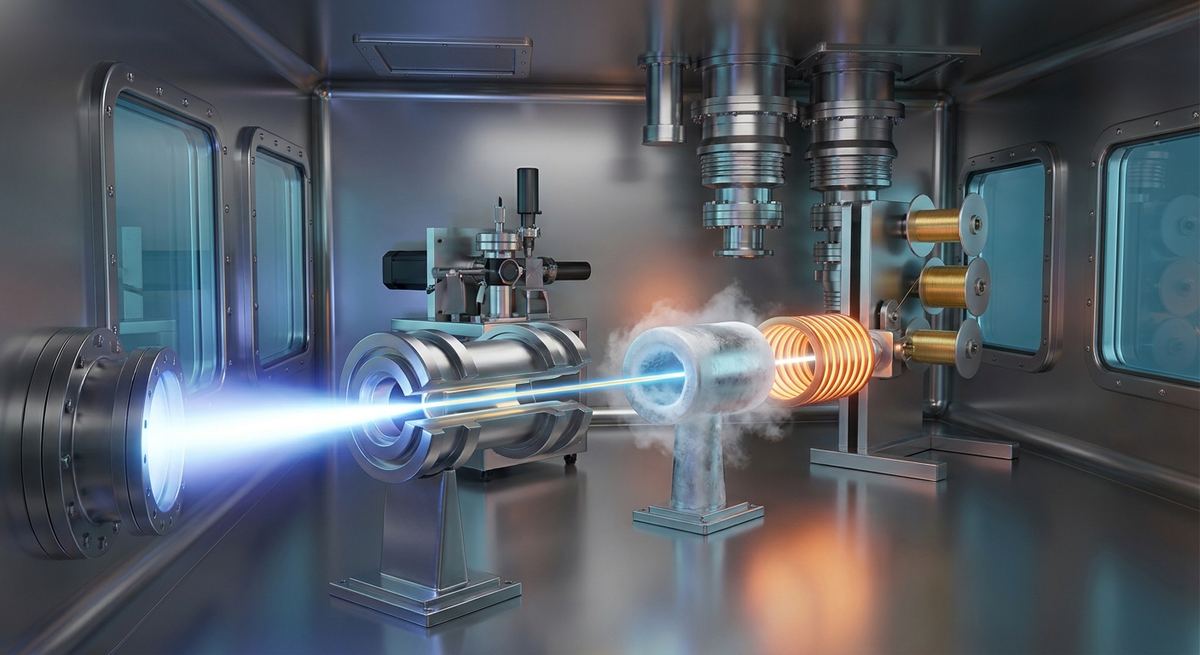
The work presented by Joshua Nathaniel Friend provides a groundbreaking conceptual foundation for the scalable production of next-generation nanomaterials. This research meticulously outlines a manufacturing framework dedicated to the continuous, inert-environment fabrication of boron and graphene-derived conductive nanothread systems. By synthesizing advanced principles of vacuum engineering, plasma physics, and materials science, the study addresses one of the most persistent bottlenecks in nanotechnology: transitioning from microscopic, laboratory-scale material synthesis to macroscopic, industrial-scale continuous manufacturing without compromising the extraordinary electronic and structural properties of the constituent nanomaterials. The insights provided in this research offer a viable pathway forward for the commercialization of ultra-conductive, lightweight nanothreads tailored for advanced semiconductor, aerospace, and energy storage applications.
The scientific community has long recognized the theoretical potential of one-dimensional and quasi-one-dimensional carbon and boron structures. Graphene exhibits unparalleled electron mobility and tensile strength, while the introduction of boron introduces unique electronic states, potential superconductivity profiles at specific doping levels, and enhanced thermal stability. However, combining these elements into a continuous nanothread architecture introduces immense practical challenges. These materials are notoriously susceptible to environmental degradation, particularly oxidation, during the high-energy phases of their synthesis. Atmospheric oxygen and moisture can rapidly bond with the highly reactive edges of the forming nanothreads, introducing catastrophic defects that annihilate their conductive properties. Therefore, a paradigm shift in manufacturing infrastructure is required, moving away from batch-processing techniques toward a continuous, unbroken chain of synthesis, stabilization, and extraction completely isolated from the ambient atmosphere. This comprehensive technical article delves deeply into the multifaceted architecture proposed to achieve this monumental engineering feat.
The fundamental premise of the proposed framework rests upon the absolute exclusion of reactive atmospheric gases during the entire lifecycle of the nanothread's creation. Boron-derived architectures, particularly when hybridized with graphene-like carbon lattices, possess highly energetic dangling bonds during their formative stages. If these bonds interact with oxygen, water vapor, or even trace amounts of nitrogen under high-thermal conditions, the resulting chemical reactions invariably lead to the formation of insulating oxide layers or structural deformities. To counteract this, the manufacturing framework stipulates the deployment of an ultra-high vacuum environment, supplemented by highly purified noble gases such as argon or helium to act as inert carrier mediums and pressure regulators.
Maintaining this inert environment continuously across a production line requires sophisticated environmental control systems that surpass standard semiconductor cleanroom standards. The framework conceptualizes a series of interconnected, hermetically sealed chambers, each dedicated to a specific phase of the manufacturing process. These chambers are linked by specially designed differential pumping stages and dynamic gas locks that allow the continuous transit of the nanothread without breaking the overarching vacuum. Getter pumps, cryogenic traps, and turbomolecular pumps work in concert to achieve base pressures low enough to render the mean free path of any residual contaminant molecules significantly larger than the dimensions of the processing zone. This meticulous attention to environmental purity ensures that the atomic lattice of the boron-graphene nanothread forms exactly as theoretically predicted, free from the interstitial impurities that have historically plagued bulk nanomaterial synthesis.
The genesis of the conductive nanothread occurs within the highly energetic domain of a plasma-assisted deposition module. This stage is responsible for dissociating the gaseous precursors containing carbon and boron into their constituent atomic species and providing them with the necessary kinetic energy to self-assemble into a continuous lattice. The framework leverages high-density plasma sources, potentially utilizing electron cyclotron resonance or inductively coupled plasma techniques, to achieve high ionization fractions of the precursor gases. By precisely controlling the plasma density, electron temperature, and gas residence time, the system can dictate the stoichiometric ratio of boron to carbon incorporating into the growing nanothread.
The dynamics of the precursors within this plasma environment are critically important. Carbon sources, such as methane or ethylene, and boron sources, such as diborane or boron trichloride, must be introduced into the plasma zone with extreme precision. The framework proposes advanced mass flow control systems integrated with real-time optical emission spectroscopy to monitor the plasma's composition. This feedback loop allows for instantaneous adjustments to the precursor flow rates, ensuring that the chemical composition of the nanothread remains uniform along its entire length. The highly reactive radicals and ions generated by the plasma are subsequently directed toward a continuous catalytic substrate or a localized nucleation zone, where the kinetic energy of the plasma accelerates the surface mobility of the adatoms, promoting the rapid formation of highly crystalline structures even at relatively lower macroscopic temperatures than would be required by purely thermal chemical vapor deposition.
Transitioning from a cloud of highly energetic plasma species to a highly ordered, one-dimensional nanothread necessitates profound spatial confinement and directional forcing. The framework addresses this by incorporating directional alignment engineering techniques within the deposition and nucleation zones. Unlike traditional thin-film deposition, which spreads material isotropically across a two-dimensional surface, the creation of a nanothread requires the atomic assembly to propagate strictly along a single longitudinal axis. This is achieved through a combination of electromagnetic confinement and template-guided synthesis.
Intense magnetic fields can be utilized to collimate the plasma stream, directing the ionized precursors into a narrow focal region. Within this region, the continuous extraction of the growing thread provides a mechanical vector that encourages the atomic lattice to align with the direction of pull. The tension applied to the nascent thread must be exquisitely controlled; too much tension will fracture the delicate atomic bonds before they fully stabilize, while too little will result in a chaotic, amorphous agglomeration rather than a highly crystalline thread. The proposed architecture also considers the use of continuously recirculating liquid metal catalysts or dynamically structured electromagnetic fields that act as virtual nozzles, funneling the self-assembling boron and carbon atoms into the desired quasi-one-dimensional geometry, thereby ensuring that the exceptional electrical conductivity derived from the pi-electron conjugation of the lattice is maintained along the macroscopic length of the spool.
Immediately following the high-energy assembly phase, the newly formed nanothread exists in a state of high thermodynamic vulnerability. The elevated temperatures inherent to the plasma deposition process leave the atomic lattice highly susceptible to spontaneous rearrangement, which can lead to the formation of energetically favorable but structurally undesirable defects, such as inter-thread cross-linking or the transition from sp2 hybridized carbon to sp3 hybridized carbon. To prevent these detrimental phase transitions, the manufacturing framework introduces a mandatory cryogenic stabilization zone.
As the continuous thread exits the deposition module, it traverses a highly engineered transit corridor enveloped by cryogenic jackets. Liquid nitrogen or liquid helium systems are utilized to rapidly quench the thermodynamic state of the material. This extreme cooling process effectively freezes the atomic lattice in its optimal, highly conductive configuration, stripping away the thermal energy required for defect propagation or structural relaxation. The speed of this quenching process is paramount; a gradual cooling would allow sufficient time for the lattice to deform. Therefore, the thermal gradient between the deposition zone and the cryogenic stabilization zone must be extraordinarily steep. This rapid thermal extraction not only locks in the desired morphology but also temporarily passivates the surface of the nanothread, reducing its reactivity and preparing it for the subsequent stages of processing without the risk of spontaneous degradation.
While cryogenic stabilization is essential for locking in the macroscopic structure of the nanothread, the rapid quenching process inevitably traps internal stresses and microscopic localized defects within the atomic lattice. If left unaddressed, these anomalies act as scattering centers for electrons, significantly degrading the overall electrical conductivity and tensile strength of the final product. To rectify this, the framework mandates a subsequent thermal conditioning phase, functioning as a continuous, high-precision annealing process.
Operating within an isolated, ultra-high vacuum or strictly controlled noble gas environment, the thermally shocked nanothread is subjected to a meticulously calibrated thermal gradient. Instead of a uniform application of heat, the system utilizes highly focused energy sources, such as tunable infrared lasers or localized induction coils, to gently elevate the temperature of the moving thread. This controlled reintroduction of thermal energy provides the constituent atoms with just enough mobility to heal structural imperfections, such as Stone-Wales defects or atomic vacancies, without disrupting the overarching one-dimensional architecture. The thermal conditioning phase effectively smooths out the energy landscape of the lattice, relaxing internal tensions and promoting the formation of extended, flawless domains of conjugated bonds. This careful balance of localized heating and continuous movement ensures that the nanothread achieves its theoretical maximums in both mechanical robustness and electrical performance.
The ultimate measure of any manufacturing framework lies in its ability to yield a continuous, usable product that can be integrated into downstream industrial applications. The extraction of the delicate nanothread from the ultra-high vacuum environment without inducing mechanical failure or environmental contamination represents a supreme engineering challenge. The proposed architecture employs a continuous spool extraction system utilizing sophisticated tension-control mechanisms and capstan drives specifically modified for vacuum operation.
These spooling mechanisms must operate with frictionless precision, as even microscopic variations in pulling tension can snap the nanothread. The system incorporates dynamic load cells and optical tension sensors that feed data into high-speed control algorithms, instantaneously adjusting the rotational speed of the extraction spools to maintain a perfectly constant strain on the thread. Furthermore, the framework integrates modular post-processing architectures situated just prior to the final spooling stage. These modular stations allow for the continuous application of protective polymer coatings, specific chemical dopants, or insulating sheaths depending on the intended final application of the material. By modularizing these post-processing steps within the overarching vacuum framework, the system provides immense flexibility, allowing manufacturers to tailor the properties of the boron-graphene nanothreads for specific end-users without requiring entirely separate production lines.
The overarching theme that binds this entire continuous manufacturing framework together is the absolute, uncompromising necessity of oxidation mitigation. Boron, in particular, exhibits a high affinity for oxygen, and any exposure of the nascent nanothread to ambient air would result in an instantaneous exothermic reaction, destroying the structural integrity and electrical properties of the material. Therefore, the environmental control systems must be redundant, continuously monitored, and capable of autonomous correction.
The architecture relies heavily on residual gas analyzers utilizing quadrupole mass spectrometry to continuously sample the vacuum environment across all modules. These analyzers are programmed to detect trace amounts of oxygen, water vapor, or hydrocarbons down to parts-per-trillion levels. If a microscopic leak or outgassing event is detected, the automated control systems can instantly increase the pumping speed of the local turbomolecular pumps, flood the affected chamber with high-purity argon to dilute the contaminant, or, in extreme cases, isolate the compromised module using ultra-fast pneumatic gate valves to protect the rest of the production line. Additionally, the final stage of the manufacturing process, before the spool is removed from the machine, involves the application of a hermetic passivation layer. This layer acts as a physical and chemical barrier, ensuring that the nanothread remains completely protected from atmospheric degradation during storage, transport, and eventual integration into commercial devices.
Question One: What is the primary advantage of combining boron with graphene in these continuous nanothread architectures?
Answer: Combining boron with graphene-derived carbon lattices introduces highly desirable modifications to the electronic band structure of the material. While pure carbon nanotubes or graphene threads offer excellent conductivity, the integration of boron atoms acts as a p-type dopant, significantly altering the density of states. This modification can lead to enhanced charge carrier mobility, lower electrical resistance at room temperature, and the potential for high-temperature superconductivity under specific stoichiometric configurations. Furthermore, boron enhances the thermal stability and mechanical stiffness of the resulting nanothread, making it more resilient to the stresses of continuous manufacturing and subsequent industrial application.
Question Two: How does the plasma-assisted deposition in this framework differ from traditional chemical vapor deposition techniques?
Answer: Traditional chemical vapor deposition relies primarily on thermal energy to break down precursor gases and drive the chemical reactions necessary for material growth. This often requires extremely high substrate temperatures and results in relatively slow deposition rates, which are not conducive to continuous, high-speed manufacturing. The plasma-assisted deposition proposed in this framework utilizes electromagnetic fields to ionize the precursor gases, creating a highly energetic plasma state. This provides the necessary activation energy for dissociation and lattice formation dynamically, allowing for rapid synthesis at lower macroscopic temperatures. The kinetic energy of the plasma ions also enhances the surface mobility of the atoms, promoting the formation of highly crystalline structures at speeds required for a continuous pulling process.
Question Three: Why is the cryogenic stabilization phase considered mandatory immediately following the deposition of the nanothread?
Answer: Following the high-energy plasma deposition, the newly formed nanothread possesses significant residual thermal energy. In this elevated energy state, the atomic lattice is highly mobile and prone to spontaneous structural rearrangements that minimize surface energy but destroy the desired one-dimensional conductive pathways. The material might agglomerate, form unwanted cross-links between adjacent threads, or undergo phase transitions that degrade its properties. The cryogenic stabilization phase acts as a rapid thermodynamic quench. By subjecting the thread to liquid nitrogen or helium temperatures, the thermal energy is instantly stripped away, freezing the atoms in their optimal, highly conductive crystalline configuration before any detrimental structural relaxation can occur.
Question Four: What are the primary mechanisms used to maintain the necessary vacuum environment while extracting a continuous spool of material?
Answer: Extracting a continuous physical object from an ultra-high vacuum chamber into the ambient atmosphere without breaking the vacuum is achieved through a series of dynamic gas locks and differential pumping stages. The nanothread exits the main processing chamber through a sequence of narrow apertures. Between each aperture, powerful vacuum pumps continuously evacuate the space. As the thread moves outward, it passes through stages of gradually increasing pressure, often utilizing an inert counter-flow of argon gas that acts as a fluidic seal. This prevents ambient air molecules from traveling backward through the apertures into the high-vacuum processing zones. Finally, the collection spool itself is often housed within a load-lock chamber that can be independently pressurized and isolated from the main line when a full spool needs to be removed.
Question Five: What are the most promising commercial applications for these inert-environment manufactured conductive nanothreads?
Answer: The continuous production of high-quality boron-graphene nanothreads opens up transformative possibilities across multiple high-tech industries. In the semiconductor sector, these ultra-conductive threads could replace traditional copper interconnects in advanced microchips, significantly reducing resistive heating and allowing for further miniaturization of electronic components. In the aerospace and automotive industries, they offer a pathway to creating ultra-lightweight, high-strength wiring harnesses, drastically reducing the weight of vehicles and improving fuel efficiency or battery range. Additionally, their high surface area and excellent electrical properties make them ideal candidates for next-generation energy storage devices, such as the structural electrodes in advanced solid-state batteries or high-capacity supercapacitors.
The conceptual manufacturing framework proposed by Joshua Nathaniel Friend represents a monumental leap forward in the field of applied nanomaterials. By systematically addressing the extreme environmental sensitivities of boron and graphene-derived architectures, this framework provides a highly detailed, mechanically sound pathway from theoretical material science to industrial-scale continuous production. The integration of plasma-assisted deposition, cryogenic stabilization, meticulous thermal conditioning, and sophisticated vacuum extraction technologies demonstrates a profound understanding of the complex thermodynamic and kinetic forces at play during nanoscale synthesis. As industries increasingly demand materials that are lighter, stronger, and more conductive than traditional metals, the successful implementation of this continuous inert-environment manufacturing framework will undoubtedly serve as the cornerstone for the next generation of advanced electronic, aerospace, and energy technologies, fundamentally altering the landscape of modern materials engineering.
Serious about B2B integration? Test our premium Pulsed Electrical Resistive Carbon Heating turbostratic graphene in your lab. 100g sample packs available now.
Explore More
Researchers reveal how breaking inversion symmetry in 2D metals enables electronic Raman scattering, a powerful, non-destructive tool for characterizing...

Researchers use AI to accelerate the discovery of new materials, identifying a graphene-boron nitride composite for interstellar spacecraft shielding.

In BN-encapsulated graphene, the ultimate limit on electron speed is not graphene itself, but remote phonon scattering from the insulating layers that...