
Stable Determinant Monte Carlo Simulations at Large Inverse Temperature $β$
Determinant Monte Carlo simulations are key to materials science but fail at low temperatures. New research offers a stable algorithm, enabling accurate...
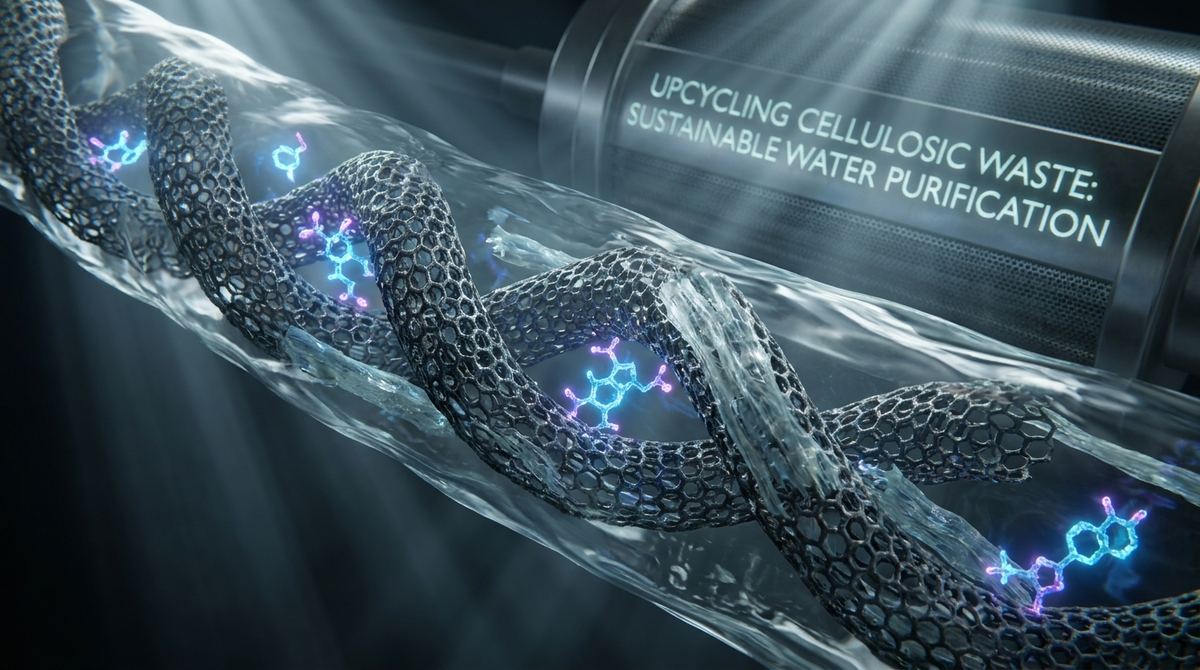
Research conducted by: Lucas A. S. de Jesus, Rivaldo L. B. Cabral, Jaime E. S. Ribeiro, Juliana D. Tinôco, Elisama V. dos Santos, José H. O. Nascimento
This dedicated team of researchers has presented a groundbreaking approach to environmental remediation and materials science. Their comprehensive study details the synthesis of reduced graphene oxide nanostructures derived from everyday cellulosic waste, specifically cotton textiles, to tackle one of the most pressing environmental crises of our time: the contamination of aquatic ecosystems by persistent pharmaceuticals. By bridging the gap between waste valorization and advanced nanotechnology, their work not only provides a highly effective adsorbent for the antibiotic Rifampicin but also establishes a scalable framework for circular economy practices in wastewater treatment. The detailed physical chemistry, thermodynamic modeling, and rigorous material characterization they have documented offer profound insights into the future of sustainable water purification.
The presence of pharmaceutical compounds in global water systems has evolved from an emerging concern into a critical ecological and public health emergency. Among these contaminants, antibiotics represent a unique class of pollutants due to their direct role in accelerating antimicrobial resistance. When sub-lethal concentrations of antibiotics continuously bathe aquatic environments, naturally occurring bacteria are subjected to immense selective pressure. Over time, these bacterial populations mutate and share genetic resistance traits, leading to the proliferation of superbugs that render standard medical treatments ineffective.
Rifampicin is a prime example of this chemical threat. As a chemically stable and biologically active macrocyclic antibiotic, it is widely utilized in the treatment of tuberculosis, leprosy, and various severe bacterial infections. Due to its complex molecular structure, a significant portion of the administered drug is excreted entirely unmetabolized into wastewater systems. Conventional municipal wastewater treatment plants, which rely heavily on biological degradation and basic chemical coagulation, are entirely ill-equipped to handle molecules as robust as Rifampicin. The compound passes through these traditional filtration systems largely intact, eventually discharging into rivers, lakes, and agricultural irrigation networks. The inability of standard infrastructure to neutralize such persistent pharmaceutical pollutants necessitates the development of advanced tertiary treatment technologies. Adsorption using high-performance nanomaterials has emerged as a highly promising solution, but the high cost of synthesizing pristine carbon nanomaterials has historically hindered widespread industrial adoption. This creates an urgent demand for novel, low-cost, and highly efficient adsorbents derived from renewable or waste resources.
The global textile industry is notorious for its massive environmental footprint, generating millions of tons of cellulosic waste annually. Fast fashion and the rapid turnover of consumer apparel result in overflowing landfills choked with cotton garments. Cotton, being primarily composed of cellulose, represents a vast, untapped reservoir of carbon-rich precursor material. The research team brilliantly recognized this potential, utilizing cotton textile waste as the foundational building block for synthesizing reduced graphene oxide, termed RC-rGO. This approach simultaneously addresses two disparate environmental issues: solid waste management and aquatic pharmaceutical pollution.
The synthesis was achieved via a simplified ferrocene-assisted thermal carbonization route. In this innovative process, the cellulosic residue is subjected to controlled high-temperature environments in the presence of ferrocene. Ferrocene acts as a crucial organometallic catalyst during the thermal breakdown of the cellulose. As the temperature rises, the cellulose undergoes pyrolysis, shedding oxygen and hydrogen atoms in the form of water vapor and volatile gases. Concurrently, the ferrocene sublimates and decomposes, releasing iron nanoparticles that seed the graphitization of the remaining carbon skeleton. These iron catalytic sites encourage the amorphous carbon atoms to rearrange into the distinct, two-dimensional honeycomb lattice characteristic of graphene. The term reduced graphene oxide is used because the resulting material retains some residual oxygen functional groups from the original cellulose, which prevents the graphene sheets from completely agglomerating while providing valuable active sites for chemical interaction. This streamlined thermal route drastically reduces the complexity and toxic chemical usage typically associated with traditional graphene oxide synthesis, such as the widely used Hummers method, thereby cementing its status as a genuinely green engineering process.
To understand exactly why this upcycled material performs so well, the researchers conducted an exhaustive suite of structural and surface characterizations. Each analytical technique provided a vital piece of the puzzle regarding the physical and chemical nature of the RC-rGO.
X-ray diffraction was utilized to probe the crystallographic structure of the synthesized material. The resulting diffractograms confirmed the presence of a turbostratic graphene structure. Unlike highly crystalline graphite where the layers are perfectly aligned in a stacked sequence, turbostratic graphene features layers that are randomly rotated or translated relative to one another. This structural misalignment is highly advantageous for adsorption because it increases the spacing between the sheets, allowing larger target molecules to penetrate the material.
Raman spectroscopy further elucidated the quality of the carbon lattice. The spectra exhibited prominent D and G bands. The G band corresponds to the in-plane vibrations of the sp2 hybridized carbon atoms, confirming the successful formation of the graphitic lattice. The D band, conversely, indicates the presence of sp3 hybridized defects, edges, and structural imperfections. A high ratio of the D band to the G band intensity confirmed a highly defective, heterogeneous surface. In the realm of adsorption, these defects are not a drawback; rather, they serve as high-energy binding sites that readily capture passing contaminant molecules.
Fourier-transform infrared spectroscopy revealed the surface chemistry of the RC-rGO. The analysis detected various oxygen-containing functional groups, such as hydroxyl, carboxyl, and epoxy groups, lingering on the edges and defect sites of the graphene sheets. These functional groups are critical because they dictate the electrostatic behavior and hydrophilicity of the material, allowing it to disperse adequately in water and interact specifically with the functional groups present on the Rifampicin molecule.
High-resolution transmission electron microscopy provided direct visual confirmation of the material morphology, showing the characteristic wrinkled, veil-like nanosheets typical of reduced graphene oxide. These wrinkles prevent the sheets from stacking completely flat, thereby preserving the exposed surface area.
Perhaps the most crucial physical parameters were determined through Brunauer-Emmett-Teller analysis. The RC-rGO boasted a substantial specific surface area of 208 square meters per gram. Furthermore, the analysis revealed an average pore diameter of 3.16 nanometers. This specific measurement classifies the material as mesoporous. This mesoporosity is an absolute necessity for this application, as the Rifampicin molecule is relatively bulky. If the pores were strictly in the microporous regime, the antibiotic molecules would suffer from size exclusion and block the pore entrances. The 3.16-nanometer channels provide the perfect physical dimensions for Rifampicin to diffuse deep into the internal structure of the adsorbent. Finally, zeta potential measurements across various pH levels mapped out the surface charge of the material, revealing the electrostatic conditions under which the graphene surface becomes negatively or positively charged.
The practical efficacy of the RC-rGO was tested through rigorous batch adsorption experiments. The researchers discovered that the material achieved an exceptional removal efficiency of greater than 95 percent for Rifampicin. The optimization of environmental parameters revealed that a pH of 5 was the absolute sweet spot for maximum adsorption.
Understanding why pH 5 is optimal requires a deep dive into the surface chemistry dictated by the earlier zeta potential measurements and the acid-base properties of Rifampicin. At pH 5, the residual oxygen functional groups on the reduced graphene oxide are partially deprotonated, giving the surface a distinct electrostatic character. Simultaneously, the Rifampicin molecule, which contains multiple ionizable functional groups including piperazine and phenolic hydroxyls, exists in a specific state of protonation. At this exact pH, the electrostatic attraction between the adsorbent surface and the antibiotic molecule is maximized.
Beyond simple electrostatic attraction, the adsorption mechanism is driven by a symphony of molecular interactions. The large, delocalized pi-electron system of the graphene lattice engages in strong pi-pi electron donor-acceptor interactions with the aromatic rings of the Rifampicin molecule. Additionally, the hydrogen atoms on the Rifampicin molecule form strong hydrogen bonds with the oxygen-rich defect sites on the RC-rGO edges. This multifaceted binding mechanism ensures that once the antibiotic molecule enters the mesoporous channels, it is held tightly in place. The process is remarkably swift, with the system reaching complete thermodynamic equilibrium in just 120 minutes, a highly favorable timeframe for industrial wastewater treatment applications where continuous flow and rapid processing times are critical.
To transition this material from a laboratory curiosity to an industrial-scale technology, engineers must understand the mathematical models governing the rate and extent of adsorption. The researchers subjected their empirical data to rigorous kinetic and equilibrium modeling.
Kinetic analysis was performed to determine the rate-limiting step of the adsorption process. The empirical data was fitted to various models, and the pseudo-second-order model provided the most mathematically sound fit. This was confirmed by a coefficient of determination greater than 0.95, alongside exceptionally low Sum of Squared Errors and Chi-square values compared to alternative models like the pseudo-first-order or intraparticle diffusion models. A pseudo-second-order kinetic profile strongly implies that chemisorption is the rate-limiting step. This means that the overall speed of the removal process is dictated by the chemical sharing or exchanging of electrons between the reduced graphene oxide and the Rifampicin molecules, rather than simply the physical diffusion of the molecules through the water.
Equilibrium data, which describes how the adsorbate distributes itself between the liquid phase and the solid adsorbent phase at maximum capacity, was best described by the Freundlich isotherm model. The superior fit of the Freundlich model over the Langmuir model is highly revealing. The Langmuir model assumes a perfectly flat, uniform surface where molecules form a single, strictly organized monolayer. In stark contrast, the Freundlich model assumes a highly heterogeneous surface with a wide distribution of binding energies, allowing for multilayer adsorption. This perfectly aligns with the Raman and X-ray diffraction data, which proved the RC-rGO is highly defective, wrinkled, and turbostratic. The Rifampicin molecules are not just laying flat in a single layer; they are stacking in multiple layers within the complex mesoporous architecture of the carbon lattice.
Thermodynamic analysis provided the final layer of physical understanding. By conducting the adsorption experiments at varying temperatures, the researchers calculated the thermodynamic parameters of the system. The enthalpy of adsorption was determined to be 15.2 kilojoules per mole. This positive enthalpy value indicates that the adsorption process is endothermic, meaning it actively absorbs heat from the surrounding environment. Consequently, the adsorption capacity of the material actually increases at higher temperatures. Furthermore, the Gibbs free energy calculations yielded negative values across all tested temperatures. A negative Gibbs free energy mathematically guarantees that the adsorption of Rifampicin onto the RC-rGO is a spontaneous process that will occur naturally without the need for continuous external energy input.
A critical flaw in many advanced nanomaterials is their single-use nature. If an adsorbent cannot be easily regenerated, it simply transfers the pollution problem from the liquid phase to the solid phase, creating highly toxic, pharmaceutical-laden solid waste. The research team directly addressed this by conducting extensive reusability studies on the RC-rGO.
Through a process of controlled desorption, the captured Rifampicin molecules were chemically stripped from the graphene sheets. The regenerated RC-rGO was then reintroduced to fresh contaminated water. The material demonstrated remarkably efficient performance even after five consecutive regeneration cycles, showing only a negligible drop in its total adsorption capacity. This high degree of reusability proves the mechanical and chemical stability of the synthesized carbon lattice.
The ability to reuse this material multiple times is the linchpin of its commercial viability. It firmly situates this technology within the framework of a circular economy. Waste cotton textiles, which would otherwise generate methane in landfills, are upcycled into a high-value nanomaterial. This nanomaterial is then used to purify water, protecting ecosystems from the devastating impacts of antimicrobial resistance. Because the material can be regenerated and reused, its lifecycle is extended dramatically, minimizing the need for continuous raw material extraction. This represents a holistic, closed-loop approach to environmental engineering that maximizes resource efficiency while aggressively mitigating pollution.
Question: What is Rifampicin and why is it a problem in wastewater?
Answer: Rifampicin is a powerful, biologically active antibiotic used primarily to treat severe bacterial infections like tuberculosis. Because of its complex and stable chemical structure, a large portion of the drug passes through the human body unmetabolized. Traditional municipal wastewater treatment plants cannot break it down, meaning it flows directly into rivers and lakes. Once in the environment, it exposes natural bacteria to sub-lethal doses of the drug, which rapidly accelerates the development of dangerous antimicrobial resistance in aquatic ecosystems.
Question: How does cellulosic waste get turned into reduced graphene oxide?
Answer: The researchers utilized cotton textile waste, which is rich in cellulose. They processed this waste using a ferrocene-assisted thermal carbonization route. By heating the cellulose to high temperatures in the presence of ferrocene, the organic material breaks down. The ferrocene acts as a catalyst, releasing iron nanoparticles that force the remaining carbon atoms to restructure themselves into the two-dimensional honeycomb lattice of graphene. This creates a highly porous, carbon-rich material from simple textile waste.
Question: Why is a pore diameter of 3.16 nanometers important for this material?
Answer: A pore diameter of 3.16 nanometers falls into the mesoporous category. This specific size is incredibly important because Rifampicin is a large, bulky molecule. If the pores in the graphene were too small, the antibiotic molecules would be physically blocked from entering the internal structure of the material, drastically reducing its effectiveness. The mesoporous channels are perfectly sized to allow Rifampicin molecules to easily diffuse inside and bind to the internal surfaces.
Question: What does it mean that the adsorption process is endothermic and spontaneous?
Answer: In thermodynamic terms, an endothermic process is one that absorbs heat. For this material, it means that as the temperature of the wastewater increases, the material actually becomes more efficient at capturing the antibiotic. The process being spontaneous means that it has a negative Gibbs free energy. In practical terms, this indicates that once the material is placed into the contaminated water, the chemical reaction binding the antibiotic to the carbon naturally occurs on its own without requiring extra energy to force the reaction.
Question: Can this graphene material be used more than once?
Answer: Yes, the reusability of the material is one of its strongest features. The researchers demonstrated that the captured antibiotic can be chemically stripped away from the graphene, cleaning it for reuse. The material maintained a highly efficient performance even after five full cycles of capturing and releasing the contaminant. This reusability makes the technology much more cost-effective and environmentally friendly, preventing the creation of new solid waste.
The upcycling of cellulosic textile waste into reduced graphene oxide nanostructures represents a highly elegant solution to multiple global challenges. By proving that high-performance nanomaterials can be synthesized from common garbage using simplified thermal routes, this research drastically lowers the barrier to entry for advanced water purification technologies. The RC-rGO material exhibits exceptional structural characteristics, combining a vast surface area with perfectly tuned mesoporosity and rich surface chemistry. Its ability to rapidly and spontaneously remove over 95 percent of Rifampicin from aqueous solutions, governed by chemisorption and heterogeneous multilayer stacking, showcases its immense potential. Most importantly, the robust reusability of this material aligns perfectly with the urgent global push toward circular economies. As we face the escalating threats of water scarcity and antimicrobial resistance, innovations like this provide a clear, scientifically sound pathway to safer water bodies and a more sustainable industrial future.
Serious about B2B integration? Test our premium Pulsed Electrical Resistive Carbon Heating turbostratic graphene in your lab. 100g sample packs available now.
Explore More
Determinant Monte Carlo simulations are key to materials science but fail at low temperatures. New research offers a stable algorithm, enabling accurate...

Researchers developed coupled dynamical Boltzmann transport equations that include long-range interactions, creating a more accurate model for electron...

Learn how to design and prototype graphene slit junctions for directional electron-beam formation and tunable spin filtering in nanoelectronic devices.