
Stable Determinant Monte Carlo Simulations at Large Inverse Temperature $β$
Determinant Monte Carlo simulations are key to materials science but fail at low temperatures. New research offers a stable algorithm, enabling accurate...
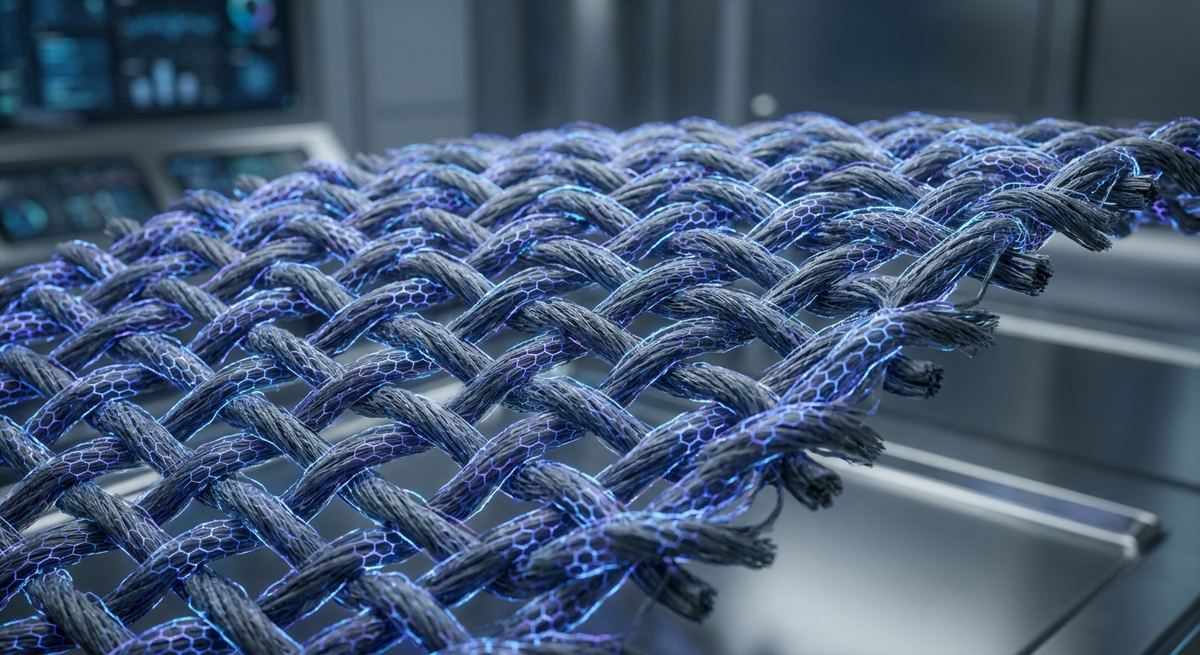
Research conducted by: Zibo Chen, Yunfa Si, Xiaobin Liao, Rui Fang, Zhen Li, Weimingyang Tan, Sichang Wang, Yongyi Ji, Wei Qian, Huaqiang Fu, Lun Li, Runquan Li, Mingtao Chen, Bo Liu, Zhugen Yang, Jiaxing Huang, Daping He
This exceptional team of materials scientists and engineers has successfully bridged the gap between nanoscale carbon chemistry and industrial-scale textile manufacturing. Their groundbreaking work provides a comprehensive solution to one of the most persistent challenges in wearable electronics, combining rigorous fundamental science with a highly practical engineering approach that promises to revolutionize the commercial viability of smart garments. By addressing the fundamental physics of fluid dynamics and molecular adhesion within fibrous structures, the researchers have paved the way for a new era of functional fabrics.
The integration of electronic capabilities into everyday clothing has long been a holy grail for materials scientists, biomedical engineers, and consumer technology companies. Wearable electronics hold immense potential for continuous health monitoring, human-machine interfaces, thermal regulation, and advanced communication systems. However, the transition from rigid silicon-based electronics to flexible, conformable e-textiles has been fraught with technical hurdles. Traditional manufacturing techniques often result in fabrics that are stiff, non-breathable, or prone to losing their electrical properties after a single wash. The core of this challenge lies in the fundamental conflict between how liquid coatings penetrate woven materials and how they adhere to them. This newly published research introduces a highly elegant chemical strategy that overcomes these barriers, achieving a remarkable synthesis of high electrical conductivity, exceptional wearability, and industrial-scale manufacturability.
To understand the magnitude of this breakthrough, one must first examine the microscopic architecture of ordinary fabrics. Textiles are composed of heavily entangled fibers arranged into yarns, creating a complex, three-dimensional porous network. When attempting to coat these fabrics with conductive macromolecules, such as conductive polymers or carbon-based nanomaterials, engineers face a frustrating paradox known as the interaction dilemma.
If the interaction forces between the coating fluid and the fabric are too strong, the conductive molecules immediately bind to the outermost surface of the textile upon contact. This rapid, uncontrolled aggregation clogs the macroscopic pores of the fabric, preventing the conductive ink from penetrating into the deeper layers of the yarn. The result is a superficial, uneven coating that flakes off easily under mechanical stress and severely compromises the fabric's natural flexibility and breathability. The fabric feels stiff, similar to canvas painted with thick acrylics, rendering it entirely unsuitable for comfortable everyday wear.
Conversely, if the interaction forces are kept weak to allow the fluid to seep deeply and uniformly into the highly entangled fiber network, a different problem arises. While the conductive macromolecules successfully penetrate the fabric, they lack the necessary adhesive forces to remain anchored to the individual fibers. During the subsequent drying or washing processes, these loosely bound molecules easily migrate, aggregate into clumps, or simply wash away entirely. The resulting fabric might remain soft and breathable, but it fails to maintain a stable, continuous conductive network, rendering its electronic properties highly unreliable or completely non-existent after minimal use. Solving this dichotomy has been the primary roadblock preventing the mass-production of durable e-textiles.
The researchers devised a brilliant conceptual framework to resolve the interaction dilemma: the temporal decoupling strategy. Instead of searching for a single, compromised state of interaction that poorly satisfies both penetration and adhesion, the team separated the coating process into distinct chronological stages, designing specific interaction strengths for each phase. This temporal separation allows the material to behave differently precisely when different behaviors are required.
During the initial phase, the primary goal is deep, uniform penetration. The chemical system is engineered to exhibit weak interactions between the conductive precursors and the fabric substrate. This low-friction, high-mobility state ensures that the coating liquid acts almost like pure water, wicking rapidly and deeply into the microscopic crevices of the entangled yarns via capillary action. The macromolecules flow freely around the individual fibers without prematurely sticking to them, ensuring an even distribution of the electronic material throughout the entire three-dimensional volume of the textile.
Once uniform penetration is achieved, the system transitions to the second phase, where the goal shifts entirely to robust adhesion. Through specific chemical triggers, the interaction forces are dramatically amplified. The previously mobile macromolecules are suddenly locked into place, forming strong, permanent bonds with the surface of the textile fibers. This stage-specific transformation ensures that the coating conforms perfectly to the microscopic topography of the fibers without bridging the gaps between them. The macroscopic pores of the fabric remain open, preserving the material's natural breathability and flexibility, while the individual fibers are now permanently sheathed in a highly conductive layer.
To execute this temporal decoupling strategy, the research team utilized graphene oxide as the conductive precursor and Triton X-100 as the critical mediating agent. Graphene oxide is a two-dimensional carbon nanomaterial decorated with oxygen-containing functional groups. These groups make graphene oxide highly dispersible in water, allowing it to be processed as an aqueous ink. However, pristine graphene oxide is electrically insulating and must be chemically or thermally reduced to restore the conjugated carbon network required for high electrical conductivity.
Triton X-100 is a nonionic surfactant with a unique molecular structure that makes it triphilic, meaning it possesses distinct affinities for three different types of environments. It features a hydrophilic polyethylene oxide chain, a lipophilic aromatic hydrocarbon group, and an affinity for the graphitic basal plane of graphene-based materials. When added to the aqueous graphene oxide dispersion, Triton X-100 acts as a highly efficient molecular bridge and flow mediator.
During the penetration stage, the triphilic nature of Triton X-100 drastically lowers the surface tension of the liquid and masks the strong interactive forces between the graphene oxide sheets and the fabric. It essentially lubricates the graphene oxide flakes, allowing them to glide smoothly into the deepest layers of the cotton or polyester fibers. Once the fabric is fully saturated, the system undergoes a reduction process to convert the graphene oxide into reduced graphene oxide. This chemical reduction strips away the oxygen functional groups, restoring the electrical conductivity of the graphene sheets while simultaneously eliminating their water solubility.
As the graphene oxide is reduced, its interaction with the Triton X-100 and the fabric substrate fundamentally changes. The newly formed reduced graphene oxide sheets experience strong van der Waals forces and hydrophobic interactions, causing them to wrap tightly and conformally around the individual textile fibers. The weak interaction phase has successfully transitioned into the strong adhesion phase. The surfactant has fulfilled its role as a temporary mediator, leaving behind a permanent, highly conductive, and conformal graphene sheath that is intimately bound to the fabric at a microscopic level.
The implementation of this temporal decoupling strategy yields results that significantly surpass previously reported methodologies. The graphene-coated fabrics exhibit a remarkable electrical conductivity of 283.1 Siemens per meter. This level of conductivity is exceptionally high for a textile-based material and is more than sufficient to support continuous electrical circuits, power sensors, and transmit data without significant signal loss. Most importantly, this high conductivity is achieved without sacrificing the intrinsic qualities that make fabric comfortable to wear.
Because the reduced graphene oxide coats the individual fibers conformally rather than filling the spaces between them, the macroscopic porosity of the fabric is entirely preserved. This ensures excellent air permeability, allowing the skin to breathe and preventing the accumulation of heat and moisture that plagues many earlier e-textile prototypes. Furthermore, the coated fabric retains excellent hydrophilicity, meaning it can easily wick away sweat from the wearer's body, a crucial requirement for athletic or medical garments.
Durability and washability are often the Achilles heel of smart fabrics, but the strong adhesion achieved in the second phase of the decoupling strategy provides exceptional resistance to mechanical degradation. The strong non-covalent bonding between the reduced graphene oxide and the fibers ensures that the conductive network remains intact even after repeated cycles of severe mechanical deformation, including stretching, twisting, and rigorous machine washing. The fabric can withstand standard laundry procedures without a catastrophic loss of electrical performance, moving the technology out of the laboratory and into the realm of practical consumer use.
Additionally, the graphene coating imparts secondary benefits that enhance the overall wearability of the fabric. The sharp nanoscale edges of the reduced graphene oxide sheets, combined with their capacity to induce oxidative stress, provide inherent bacteriostatic properties. The fabric actively inhibits the growth of bacteria, reducing odors and the risk of skin infections during prolonged use. Despite this antimicrobial activity, rigorous testing confirmed that the coated textiles remain highly biocompatible and non-toxic to human skin cells, ensuring they are entirely safe for continuous, direct contact with the wearer's body.
Perhaps the most significant achievement of this research is not just the performance of the fabric, but the scale at which it can be produced. While many nanomaterial-based e-textiles have demonstrated impressive properties in small, postage-stamp-sized laboratory samples, translating those results to industrial manufacturing scales has proven incredibly difficult. The temporal decoupling strategy, however, is inherently compatible with existing large-scale textile manufacturing infrastructure.
The research team successfully demonstrated the continuous production of their conformal graphene-coated fabric over a 200-meter roll using a customized roll-to-roll dip-coating apparatus. This proves that the chemical strategy remains stable and effective over long production runs, ensuring consistent electrical and physical properties from the first meter to the last. This massive leap from batch-scale laboratory synthesis to continuous industrial production represents a major milestone in the commercialization of wearable electronics.
When evaluating the economic viability of this process, the results are equally staggering. The combination of inexpensive raw materials, such as ordinary fabrics and graphene oxide, with a straightforward, room-temperature dip-coating process results in an extraordinarily low manufacturing cost. The researchers calculate the production cost to be approximately 0.40 US dollars per square meter. This is an order of magnitude lower than competing technologies that rely on precious metals like silver nanowires or expensive conductive polymers like PEDOT:PSS. According to the researchers, this combination of high conductivity and massive production scale outperforms current competitors by over 100-fold, while reducing costs by more than ten times, making it a highly disruptive technology in the smart textiles market.
The highly conductive and robust nature of these graphene-coated fabrics opens the door to a wide array of advanced technological applications. One of the primary use cases explored by the research team is electromagnetic interference shielding. In our modern environment, saturated with wireless communication signals, Wi-Fi, and electronic devices, protecting sensitive equipment and human health from stray electromagnetic radiation is increasingly important.
The conformal graphene coating creates a continuous, highly conductive network throughout the fabric volume. When electromagnetic waves encounter this network, the high electrical conductivity facilitates the reflection of incident waves. Furthermore, the porous, three-dimensional structure of the woven fabric forces the penetrating waves to undergo multiple internal reflections, causing the electromagnetic energy to be absorbed and dissipated as minute amounts of heat. This makes the fabric an excellent, lightweight, and flexible shield against high-frequency radiation, suitable for protective clothing in aerospace, military, and telecommunications industries.
Another highly promising application is Joule heating. When a low electrical voltage is applied across the conductive fabric, the inherent electrical resistance of the reduced graphene oxide network generates rapid, uniform thermal energy. Because the conductive layer is intimately bound to every fiber, the heat distribution is incredibly even, eliminating the dangerous hot spots that can occur in traditional wire-based heated garments. This capability is ideal for active winter wear, therapeutic heating pads for medical rehabilitation, and energy-efficient personal thermal management systems that heat the individual rather than the surrounding room.
The ingenuity of the temporal decoupling strategy lies in its fundamental reliance on controlling physical chemistry rather than relying on specific chemical bonds unique to a single material. Because the triphilic surfactant Triton X-100 mediates the interactions based on surface tension and general van der Waals forces, the process is largely substrate-agnostic. It does not require specialized, chemically modified fabrics to work.
The researchers successfully applied their methodology to a wide variety of ordinary textiles, including natural fibers like cotton and silk, as well as synthetic polymers like polyester, nylon, and Kevlar. In every case, the process yielded uniform, conformal, and highly conductive coatings. This universality is a massive advantage for the textile industry, as it means manufacturers can upgrade their existing product lines into smart fabrics without needing to re-engineer their entire supply chain or source specialized base materials.
By providing a scalable, universal, and economically viable methodology, this research bridges the critical gap between conceptual nanomaterial science and practical industrial application. It transitions graphene-based textiles from a fascinating laboratory curiosity into a ready-to-deploy industrial technology. As consumer demand for seamlessly integrated wearable electronics continues to grow, this conformal coating technique provides the foundational manufacturing platform necessary to weave advanced digital capabilities directly into the fabric of our daily lives.
Question: What is the interaction dilemma in fabric electronics?
Answer: The interaction dilemma refers to the conflicting requirements when coating highly entangled fabrics with conductive materials. If the interaction between the liquid coating and the fabric is too strong, the material aggregates on the surface, making the fabric stiff and blocking its pores. If the interaction is too weak, the liquid penetrates deeply but fails to adhere to the fibers, resulting in a coating that washes away easily and fails to provide stable electrical conductivity.
Question: How does the temporal decoupling strategy solve this problem?
Answer: The temporal decoupling strategy solves the dilemma by separating the coating process into distinct time-based stages. In the first stage, the chemical mixture is designed to have weak interactions, allowing the conductive graphene oxide to flow like pure water and penetrate deeply into the fabric without sticking. In the second stage, a chemical trigger changes the properties of the mixture, creating strong interactions that permanently lock the conductive material onto the individual fibers.
Question: Why is Triton X-100 important in this manufacturing process?
Answer: Triton X-100 is a triphilic surfactant, meaning it has an affinity for three different environments: water, oils, and the graphene surface. It acts as a molecular mediator during the penetration stage, lowering the surface tension and lubricating the graphene oxide so it can glide into the microscopic crevices of the fabric. Without it, the graphene oxide would clump together on the fabric's surface.
Question: Are these graphene-coated fabrics safe and comfortable for everyday wear?
Answer: Yes, they are highly comfortable and safe. Because the graphene conformally coats the individual fibers rather than filling the gaps between them, the fabric remains highly breathable and flexible. It retains the ability to wick away sweat (hydrophilicity) and has been proven to be biocompatible with human skin. Additionally, the graphene coating provides inherent bacteriostatic properties, preventing the growth of odor-causing bacteria.
Question: What makes this technology superior to previous smart fabric manufacturing methods?
Answer: The primary superiority lies in its unprecedented combination of high performance, massive scale, and low cost. The process achieves a high electrical conductivity of 283.1 S/m while maintaining full wearability. Crucially, it has been proven to work on a continuous 200-meter industrial roll, costing only 0.40 US dollars per square meter. This represents a 100-fold improvement in the combination of conductivity and scale, at one-tenth the cost of competing technologies.
The development of conformal graphene coatings using a temporal decoupling strategy represents a monumental leap forward for the field of wearable electronics. By intelligently manipulating the microscopic interactions between fluids, nanomaterials, and complex fibrous networks, the research team has dismantled the interaction dilemma that has long hindered the industry. The ability to continuously produce highly conductive, breathable, washable, and biocompatible smart fabrics on a 200-meter scale, utilizing universally available textiles and inexpensive chemical processes, signals a definitive shift from theoretical promise to industrial reality. As this technology moves toward widespread commercial adoption, it promises to fundamentally transform our relationship with the clothing we wear, turning everyday garments into sophisticated, interactive, and highly functional technological platforms.
Serious about B2B integration? Test our premium Pulsed Electrical Resistive Carbon Heating turbostratic graphene in your lab. 100g sample packs available now.
Explore More
Determinant Monte Carlo simulations are key to materials science but fail at low temperatures. New research offers a stable algorithm, enabling accurate...

Researchers developed coupled dynamical Boltzmann transport equations that include long-range interactions, creating a more accurate model for electron...

Learn how to design and prototype graphene slit junctions for directional electron-beam formation and tunable spin filtering in nanoelectronic devices.