
Stable Determinant Monte Carlo Simulations at Large Inverse Temperature $β$
Determinant Monte Carlo simulations are key to materials science but fail at low temperatures. New research offers a stable algorithm, enabling accurate...
Research conducted by: Afnan S. M. Elmubasher, Rami Elkaffas, Mohamed Hamid Salim, Basel Altawil, Chanaka Sandaruwan, Shanavas Shajahan, Ahsan Baidar Bakht, Irfan Hussain, Blaise L. Tardy, Sean S. M. Swei, Yarjan Abdul Samad
This distinguished team of researchers and engineers has spearheaded a transformative approach to aerospace propulsion, moving the industry away from toxic, heavy, and inefficient traditional propellants. Their groundbreaking work demonstrates how integrating advanced carbon nanomaterials with natural biological structures can yield unprecedented performance metrics in continuous wave laser ablation propulsion. By redefining the intersection of sustainable materials and space exploration technologies, their research unlocks entirely new pathways for lightweight, highly efficient spacecraft design.
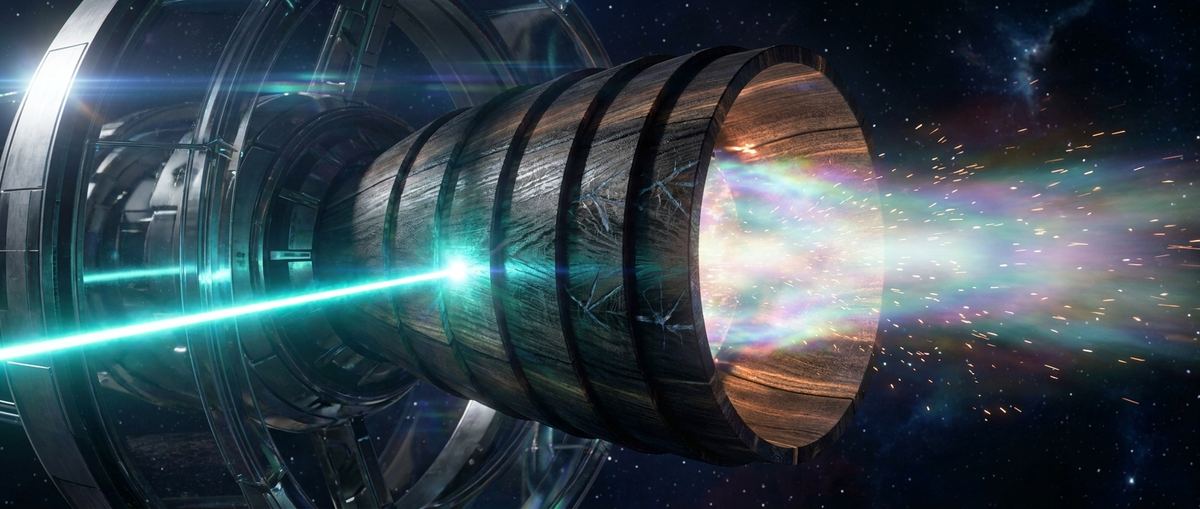
Space exploration has historically been chained to the tyrannical rocket equation, a mathematical reality dictating that carrying more chemical propellant exponentially increases the mass of a spacecraft. To escape this limitation, aerospace engineers have spent decades investigating beamed energy propulsion systems. Among these, laser ablation propulsion stands out as a highly promising alternative. By leaving the heavy energy source on the ground or in orbit and beaming laser energy to a target material on the spacecraft, the vehicle only needs to carry the working propellant mass. When the laser strikes the propellant, it rapidly heats, vaporizes, and ejects the material as a high-velocity jet of gas and plasma, generating thrust. However, despite its theoretical elegance, making this technology practical has proven extraordinarily difficult, particularly when using continuous wave lasers rather than pulsed lasers.
Continuous wave lasers are highly desirable for aerospace applications because they are generally more robust, simpler to scale, and more cost-effective than their pulsed counterparts. Unfortunately, they deliver energy at a much lower peak intensity. Traditional propellant materials, including advanced polymers, pure metals, and doped polymer composites, require immense concentrations of energy to reach their ablation thresholds. Under low-intensity continuous wave irradiation, these conventional materials simply melt, burn inefficiently, or dissipate the heat through thermal conduction rather than achieving the explosive ablation necessary to generate meaningful thrust. The aerospace industry has been searching for a holy grail material: a propellant that is exceptionally lightweight, structurally robust, and capable of extreme light absorption and rapid thermal localization. Through the integration of graphene and natural wood, this long-standing bottleneck has finally been shattered.
To truly appreciate the magnitude of this scientific breakthrough, one must understand the fundamental physics of laser ablation propulsion and the metrics used to measure its efficiency. The most critical metric in any propulsion system is specific impulse, which measures how effectively a rocket uses propellant or, more simply, how much thrust is generated per unit of propellant consumed over time. Higher specific impulse means greater efficiency, allowing a spacecraft to achieve higher terminal velocities with significantly less mass. In chemical rockets, specific impulse is strictly limited by the energy contained within the chemical bonds of the fuel and oxidizer. Laser propulsion bypasses this chemical energy limit, theoretically allowing for much higher specific impulse values.
However, the reality of testing conventional materials under continuous wave lasers has been deeply disappointing. Polymers such as polyoxymethylene and polyvinyl chloride, along with various metals, have been rigorously tested as ablation targets. Because continuous wave lasers provide a steady stream of energy rather than instantaneous, high-peak bursts, the energy tends to diffuse through the material. The target material heats up slowly, resulting in thermal degradation rather than the rapid, explosive vaporization required for high-velocity exhaust.
Consequently, no conventional material tested under continuous wave laser irradiation has ever achieved an absolute specific impulse greater than one hundred seconds. This dismal performance metric has largely relegated continuous wave laser propulsion to the realm of theoretical curiosity. To bridge the gap between theory and application, a material must possess an almost paradoxical combination of properties: it must have an incredibly low thermal conductivity to prevent heat from escaping the target zone, while simultaneously possessing an exceptionally high optical absorption coefficient to capture every incoming photon. It must also have a low ablation threshold, meaning it requires very little energy to transition from a solid state to an expanding gas. Finding a material that satisfies all these contradictory requirements in a synthetic laboratory has proven nearly impossible, leading researchers to look toward billions of years of biological evolution for the answer.
Nature is the ultimate engineer, and wood is one of its most remarkable structural achievements. At a microscopic level, natural wood is a highly anisotropic, hierarchical composite material. It consists primarily of cellulose nanofibers, which provide remarkable tensile strength, bound together by hemicellulose and lignin, which act as a rigid biological glue. This intricate cellular architecture features a vast network of micro-channels and pores that originally evolved to transport water and nutrients from the roots to the leaves of a tree. For aerospace researchers, these micro-channels represent a naturally occurring, highly ordered structural scaffold that is incredibly lightweight and possesses naturally low thermal conductivity.
However, natural wood in its raw form is not optimized for spaceflight or laser ablation. To transform this biological tissue into an advanced aerospace material, the research team utilized a sophisticated chemical process known as delignification. Delignification involves treating the wood with specific chemical solvents to dissolve and extract the lignin and hemicellulose matrices while leaving the highly aligned, structural cellulose nanofibers completely intact.
Removing the lignin fundamentally alters the physical properties of the wood. It drastically reduces the density of the material, creating a highly porous, sponge-like micro-scaffold. This increased porosity is crucial for propulsion applications because it further reduces the thermal conductivity of the material. When a laser strikes the delignified wood, the microscopic pockets of air prevent the heat from spreading laterally or deep into the bulk of the material. The thermal energy becomes trapped at the immediate surface, creating highly localized hotspots. Furthermore, the removal of lignin makes the remaining cellulose structure highly pliable and ready to be engineered with advanced nanomaterials. This porous, lightweight, and thermally insulating scaffold sets the perfect stage for the introduction of the ultimate photothermal agent.
While delignified wood provides an excellent structural and thermal foundation, it lacks the optical properties necessary to efficiently absorb laser energy. Cellulose is largely transparent to many wavelengths of light, meaning a laser beam would simply pass through or reflect off the surface without depositing its energy. To solve this critical flaw, the researchers turned to graphene, a two-dimensional lattice of carbon atoms renowned for its extraordinary physical, electrical, and optical properties.
Graphene is an unparalleled photothermal material. Its unique electronic band structure allows it to absorb a vast spectrum of electromagnetic radiation, from the ultraviolet to the infrared. When photons strike a graphene sheet, the energy is rapidly transferred to the electrons, exciting them and generating intense localized heat through a process known as electron-phonon coupling. By infusing the highly porous delignified wood scaffold with a graphene solution, the researchers created a composite material where every microscopic cellulose fiber is coated with a highly absorptive carbon layer.
The results of this integration are nothing short of spectacular. The experimental data reveals that the graphene delignified wood composite improves the absorption of laser energy compared to natural wood by an astonishing ninety-eight point six one percent. Because the graphene captures almost all the incoming laser light and immediately converts it to intense heat, and because the porous wood scaffold prevents that heat from dissipating, the surface temperature of the material skyrockets instantaneously.
This perfect synergy of high absorption and low thermal conductivity allows the graphene delignified wood to achieve an ultra-low ablation threshold intensity of zero point five four megawatts per square meter. This is officially the lowest intensity threshold ever recorded for laser ablation propulsion. It means that thrust can be generated using significantly less powerful, less expensive, and more energy-efficient continuous wave lasers. The material vaporizes so rapidly and violently at the surface that it entirely bypasses the melting phase, immediately ejecting a high-velocity plume of carbonaceous gas and achieving the desired propulsive effect with absolute minimal energy input.
With the photothermal mechanics perfected, the researchers put the graphene engineered wood to the ultimate test: measuring its propulsive efficiency. The data recorded during these experiments completely rewrite the expectations for continuous wave laser propulsion. To accurately compare materials of varying densities, the researchers utilized a metric known as density-specific specific impulse, which factors in the mass and volume of the propellant being consumed.
In their baseline tests, the researchers discovered that even natural wood performs exceptionally well due to its biological structure, achieving a density-specific specific impulse of five thousand forty-three plus or minus one hundred eighty-eight seconds per gram per cubic centimeter. This baseline alone surpasses the performance of all previously reported conventional synthetic propellants. However, the true breakthrough lies in the absolute specific impulse values, which directly dictate the velocity a spacecraft can achieve.
Under continuous wave laser irradiation, natural wood achieved an absolute specific impulse of nine hundred seven point seven four seconds. The graphene delignified wood achieved an absolute specific impulse of eight hundred point four nine seconds, alongside an exceptional density-specific specific impulse of one thousand five hundred sixty-nine point six zero plus or minus fifty-seven point four zero seconds per gram per cubic centimeter.
To contextualize these numbers, one must remember the historical barrier. Prior to this research, no other material, whether advanced polymer, metal, or composite, had ever achieved an absolute specific impulse greater than one hundred seconds under continuous wave laser irradiation. The graphene engineered wood has not just incrementally improved upon previous records; it has multiplied them by a factor of eight. This monumental leap in efficiency transforms continuous wave laser propulsion from an academic thought experiment into a highly viable, near-term technology for light space applications, satellite station-keeping, and deep space micro-probes.
In the harsh environment of space, propulsive efficiency is only one piece of the engineering puzzle. Materials utilized in spacecraft design must endure immense mechanical stresses, including the violent vibrations of launch, extreme temperature fluctuations, and the physical forces of acceleration. A propellant material that is highly efficient but structurally fragile is useless in practical aerospace applications.
Fortunately, the hierarchical structure of the engineered wood provides extraordinary mechanical resilience. The chemical delignification process, followed by the integration of graphene, allows the cellulose nanofibers to densify and form tight hydrogen bonds. This microstructural realignment results in a massive increase in tensile strength. Experimental testing demonstrates that the graphene delignified wood possesses a tensile strength of two hundred seventy-three point one megapascals, which is approximately ten times greater than that of raw natural wood.
Even more impressive is the specific tensile strength, which is the tensile strength divided by the density of the material. Because the graphene engineered wood is incredibly lightweight, its specific tensile strength reaches five hundred thirty-three megapascals per gram per cubic centimeter. This strength-to-weight ratio is phenomenal, exceeding that of many common aerospace structural materials, including certain aluminum and titanium alloys. This means that the graphene engineered wood can serve a dual purpose aboard a spacecraft. It is not merely a consumable fuel source; it can also be integrated into the structural components of the vehicle itself. As the spacecraft travels, it can gradually ablate its own structural framework to generate thrust, shedding mass and continuously increasing its acceleration over time.
Beyond the raw performance metrics and structural advantages, this research represents a massive leap forward in aerospace sustainability. The current paradigm of spaceflight relies heavily on toxic, highly volatile, and environmentally destructive chemicals. Hydrazine, for example, is the standard propellant for satellite maneuvering, yet it is highly carcinogenic and poses severe risks to both engineers on the ground and the Earth's atmosphere during launch.
In stark contrast, graphene delignified wood is an inherently green technology. The primary component is cellulose, the most abundant organic polymer on Earth, sourced from renewable timber. The delignification process utilizes standard industrial chemicals that can be recycled, and graphene is composed entirely of carbon. When ablated by a laser, the exhaust products are primarily carbon oxides and trace organic compounds, representing zero toxicity to the environment.
Furthermore, the low ablation threshold of zero point five four megawatts per square meter means that the ground-based or orbital laser infrastructure required to drive these spacecraft can operate on significantly less power. This reduces the energy footprint of mission operations. By unlocking the potential of lightweight, sustainable, and hyper-efficient graphene delignified wood, this research paves the way for a new era of space exploration. We are looking toward a future where swarms of microscopic light-sails, autonomous satellites, and deep space probes navigate the cosmos propelled not by toxic explosions, but by the clean, precise application of light on engineered biological materials.
What is continuous wave laser ablation propulsion?
Continuous wave laser ablation propulsion is an advanced aerospace concept where a steady, uninterrupted laser beam is fired at a target material on a spacecraft. The material absorbs the laser energy, rapidly heats up, and vaporizes into a high-speed jet of gas and plasma. This ejection of mass creates thrust, propelling the spacecraft forward without the need for heavy onboard chemical engines or fuel oxidizers.
Why have traditional materials failed in continuous wave laser propulsion?
Traditional materials like polymers and metals have failed because they either conduct heat too well or do not absorb light efficiently enough. When hit by a continuous wave laser, the heat dissipates through the material, causing it to melt or burn slowly rather than vaporizing explosively. This inefficient energy transfer results in incredibly low specific impulse values, historically falling below one hundred seconds.
How does delignifying wood make it better for space applications?
Delignification is a chemical process that removes lignin, the rigid glue-like substance in natural wood, while leaving the strong cellulose fibers intact. This process makes the wood highly porous and significantly lighter. The microscopic air pockets created by removing lignin act as thermal insulators, preventing laser heat from spreading and ensuring that the surface reaches the extreme temperatures needed for rapid ablation.
What role does graphene play in this new propellant material?
Graphene is a highly advanced carbon nanomaterial known for its exceptional ability to absorb light across a broad spectrum. By coating the porous cellulose structure of the delignified wood with graphene, the material's ability to absorb laser energy increases by nearly ninety-nine percent. The graphene instantly converts the laser light into intense, localized heat, triggering the highly efficient ablation process.
What is specific impulse and why are the numbers in this study important?
Specific impulse is a measure of how efficiently a rocket generates thrust from a given amount of propellant, measured in seconds. Before this study, continuous wave laser propellants could not break the one hundred second barrier. The graphene engineered wood achieved an absolute specific impulse of over eight hundred seconds, proving that it is exponentially more efficient than any synthetic material previously tested and making continuous wave laser propulsion a viable reality.
The research detailing ultra-low intensity continuous wave laser ablation propulsion using graphene-engineered wood marks a watershed moment in materials science and aerospace engineering. By ingeniously combining the natural, thermally insulating, and structurally robust micro-architecture of wood with the ultimate photothermal properties of graphene, researchers have solved a decades-old bottleneck in beamed energy propulsion. Shattering the historical specific impulse ceiling of one hundred seconds and achieving values exceeding eight hundred seconds, this sustainable, lightweight composite outperforms all conventional synthetic propellants. Furthermore, its incredible specific tensile strength allows it to serve dual roles as both structural framework and highly efficient fuel. As the aerospace industry increasingly looks toward sustainable, cost-effective, and highly efficient methods for satellite maneuvering and deep space exploration, graphene-delignified wood stands ready to propel the next generation of light-driven spacecraft into the cosmos.
Serious about B2B integration? Test our premium Pulsed Electrical Resistive Carbon Heating turbostratic graphene in your lab. 100g sample packs available now.
Explore More
Determinant Monte Carlo simulations are key to materials science but fail at low temperatures. New research offers a stable algorithm, enabling accurate...

Researchers developed coupled dynamical Boltzmann transport equations that include long-range interactions, creating a more accurate model for electron...

Learn how to design and prototype graphene slit junctions for directional electron-beam formation and tunable spin filtering in nanoelectronic devices.