
Stable Determinant Monte Carlo Simulations at Large Inverse Temperature $β$
Determinant Monte Carlo simulations are key to materials science but fail at low temperatures. New research offers a stable algorithm, enabling accurate...
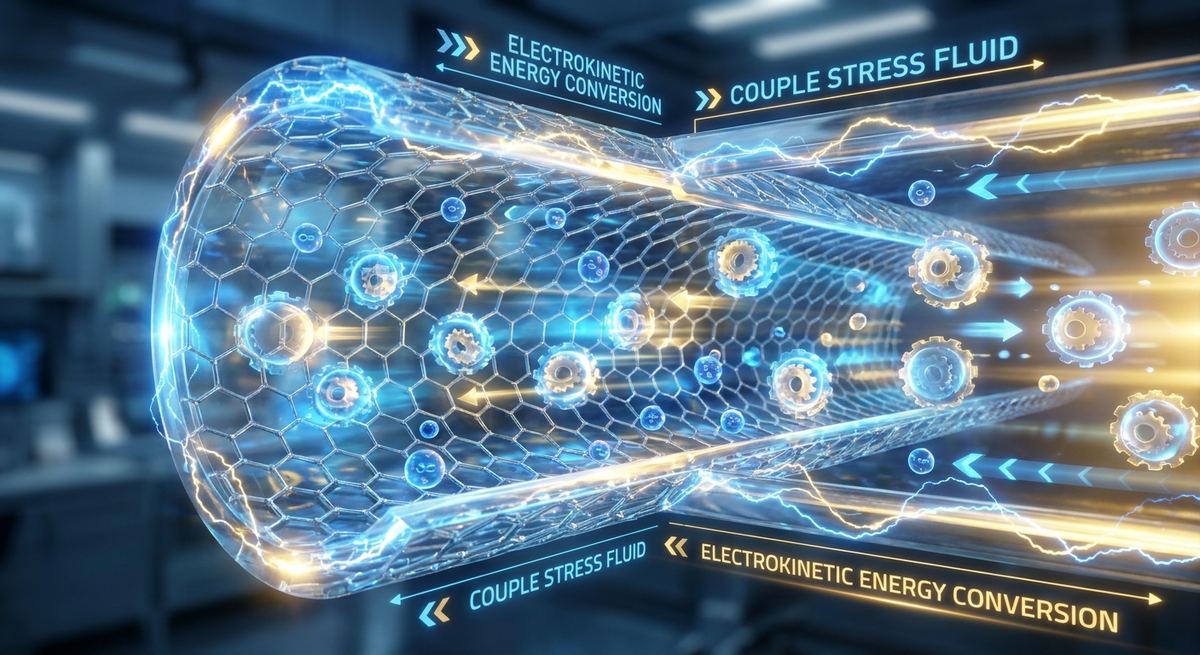
Research conducted by: Xiaojuan Fan, Yongbo Liu
This groundbreaking investigation, spearheaded by Xiaojuan Fan and Yongbo Liu, represents a monumental leap in our understanding of nanoscale fluid dynamics and energy harvesting. Their meticulous work delves into the intricate mechanisms governing fluid transport at the atomic scale, specifically focusing on how complex fluids interact with the unique properties of graphene interfaces. By bridging theoretical physics with practical engineering considerations, Fan and Liu have established a comprehensive framework that promises to redefine the future of sustainable micro-power generation and advanced biomedical devices. Their systematic approach to unraveling the multi-physics complexities of electrokinetic energy conversion stands as a testament to the rigorous scientific inquiry required to push the boundaries of nanotechnology and clean energy solutions.
The global pursuit of sustainable and miniaturized energy sources has driven scientists to explore the microscopic world of fluid dynamics, where the interaction between liquids and solid surfaces can generate usable electricity. At the forefront of this exploration is electrokinetic energy conversion, a process that leverages the natural electrical properties of fluids flowing through exceedingly narrow channels. When confined to the nanoscale, particularly within advanced materials like graphene, these fluidic systems exhibit behaviors that defy classical macroscopic physics. The research presented by Fan and Liu systematically investigates these phenomena, introducing a highly sophisticated multi-physics model that integrates constitutive relations, high-slip boundaries, and the often-overlooked factor of surface charge mobility. This article will dissect their findings in detail, exploring the theoretical foundations, the computational methodologies, and the profound implications of their discoveries for the future of microfluidic energy harvesting and biofluidic transport applications.
To fully appreciate the significance of this research, one must first understand the fundamental principles of electrokinetic energy conversion. When a solid surface comes into contact with an aqueous solution, a spontaneous redistribution of electrical charges occurs at the interface. The solid surface typically acquires a net electrical charge, which in turn attracts ions of the opposite charge from the fluid, while repelling ions of the same charge. This creates a distinct interfacial region known as the electric double layer. The electric double layer consists of a tightly bound inner layer of ions and a more diffuse outer layer where ions are mobile but still influenced by the surface charge.
When a mechanical force, such as a pressure gradient, is applied to the fluid, it forces the liquid to flow through the nanochannel. As the fluid moves, it carries the mobile ions within the diffuse part of the electric double layer along with it. This unidirectional transport of electrical charge constitutes an electrical current, specifically termed the streaming current. The accumulation of these charges at one end of the channel generates an electrical potential difference, known as the streaming potential. This potential difference drives a conduction current in the opposite direction. A steady state is reached when the streaming current exactly balances the conduction current. By placing electrodes at both ends of the channel and connecting them to an external circuit, this streaming potential can be harnessed to drive an electrical load, thereby converting mechanical work directly into electrical energy.
The efficiency of this conversion process is a paramount concern for researchers. It is defined as the ratio of the electrical power output to the mechanical power input required to drive the fluid flow. In classical macroscale systems, this efficiency is notoriously low, often less than a fraction of a percent, rendering it impractical for large-scale power generation. However, at the nanoscale, the high surface-to-volume ratio significantly amplifies electrokinetic effects. Furthermore, the introduction of advanced nanomaterials with unique surface properties, such as graphene, has opened new avenues for drastically improving conversion efficiencies, making the dream of self-powered micro-devices a tangible reality.
Traditional models of microfluidic flow often rely on the Navier-Stokes equations, which assume the fluid behaves as a classic Newtonian liquid like pure water. While this assumption holds true for many applications, it falls short when describing fluids that contain internal microstructures. Biological fluids such as blood, synovial fluid, and polymeric suspensions contain macromolecules, cells, or particles whose physical dimensions are comparable to the characteristic length scale of the microchannels or nanochannels they flow through. In these scenarios, the classical continuum mechanics approach must be expanded to account for the rotational inertia and size-dependent behaviors of the fluid's constituents.
Fan and Liu address this critical gap by utilizing the couple stress fluid model. Developed as an extension of classical fluid dynamics, Stokes micro-continuum theory introduces couple stresses alongside traditional force stresses. A couple stress fluid is characterized by a specific material constant, the couple stress parameter, which essentially measures the fluid's resistance to internal rotational motions caused by the suspended microstructures. As the size of the channel approaches the size of these internal structures, the fluid exhibits an apparent increase in viscosity near the channel walls, significantly altering the velocity profile compared to a simple Newtonian fluid.
Incorporating couple stress theory into the study of electrokinetic energy conversion adds a layer of immense complexity. The altered velocity profile directly impacts the transport of ions within the electric double layer, which in turn affects the generation of the streaming current and the resulting energy conversion efficiency. By mathematically modeling these non-Newtonian characteristics, the researchers provide a much more accurate representation of how biofluids and complex industrial liquids behave in actual microfluidic devices. This is particularly crucial for the development of implantable medical devices and lab-on-a-chip technologies, where the working fluids are rarely simple Newtonian liquids.
The choice of graphene as the material for the nanochannels is not arbitrary; it is central to the enhanced performance observed in these systems. Graphene, a single layer of carbon atoms arranged in a two-dimensional honeycomb lattice, possesses extraordinary mechanical, electrical, and surface properties. For fluid dynamics, its most critical attribute is its atomic smoothness. In traditional fluid mechanics, the no-slip boundary condition is universally applied, assuming that the layer of fluid in direct contact with a solid wall has zero velocity relative to the wall. However, on highly hydrophobic and atomically smooth surfaces like graphene, this assumption breaks down entirely.
Fluids flowing over graphene exhibit significant hydrodynamic slip. The fluid molecules at the interface are not completely arrested by the solid surface; instead, they slide along it with a measurable velocity known as the slip velocity. This phenomenon is quantified by the slip length, which is defined as the extrapolated distance into the solid wall where the fluid velocity would theoretically reach zero. Graphene nanochannels can exhibit remarkably large slip lengths, sometimes on the order of tens to hundreds of nanometers, which is massive considering the channels themselves may only be a few nanometers wide.
This high-slip boundary condition profoundly impacts electrokinetic energy conversion. Because the fluid velocity at the wall is non-zero, the overall flow rate for a given pressure gradient is substantially increased. More importantly, this enhanced velocity occurs precisely within the electric double layer, where the concentration of mobile ions is highest. Consequently, a greater number of ions are transported per unit of time, dramatically boosting the streaming current. Fan and Liu intricately weave this high-slip phenomenon into their multi-physics model, exploring how the degree of slip interacts with other system parameters to optimize or, in some surprising cases, hinder the energy conversion process.
Perhaps the most innovative and critical aspect of Fan and Liu's research is the inclusion of surface charge mobility. In the vast majority of electrokinetic studies, the electrical charges on the solid channel walls are assumed to be static and uniformly distributed. While this simplifies mathematical modeling, it does not accurately reflect the physical reality of many advanced materials and biological interfaces. On surfaces like pristine graphene or fluid-like biological membranes, the electrical charges are not rigidly fixed to the atomic lattice; they possess a degree of lateral mobility.
When a fluid flows through the channel, the hydrodynamic shear stress exerted on the wall can physically drag these mobile surface charges along in the direction of the flow. Furthermore, the streaming potential generated by the primary electrokinetic process creates an electric field that also acts upon these mobile surface charges. The movement of these surface charges constitutes a distinct electrical current, referred to as the surface current or reverse current, which flows in the opposite direction of the primary streaming current generated by the ions in the fluid.
Fan and Liu identified that surface charge mobility acts as a critical regulator of the entire system's behavior. Their research demonstrates that this reverse current effectively neutralizes a portion of the primary streaming current, leading to a reduction in both the overall streaming potential and the final energy conversion efficiency. This finding is a paradigm shift. It reveals that while graphene's smoothness provides beneficial hydrodynamic slip, the inherent mobility of its surface charges introduces a parasitic effect that must be carefully managed. Understanding and quantifying this trade-off is essential for engineers attempting to design highly efficient graphene-based energy harvesters.
To capture the intricate interplay between couple stress fluids, high-slip boundaries, and mobile surface charges, the researchers developed a highly sophisticated multi-physics mathematical model. The foundation of this model rests on the modified Navier-Stokes equations, adapted to include the couple stress terms that account for the fluid's microstructural rotational inertia. This fluid dynamics framework is then tightly coupled with the Poisson-Boltzmann equation, which describes the electrical potential distribution and ion concentration within the electric double layer.
Solving these coupled, non-linear differential equations analytically is impossible for generalized high surface potential conditions. Therefore, Fan and Liu employed advanced numerical techniques to obtain their results. They utilized the finite difference method to discretize the spatial domain of the nanochannel, transforming the continuous differential equations into a system of algebraic equations. To ensure high accuracy and stability in their numerical integration, they coupled this with the fourth-order Runge-Kutta scheme. This rigorous computational approach allowed them to simulate the system under high surface potential conditions, where the non-linear nature of the Poisson-Boltzmann equation becomes highly pronounced.
To validate their numerical code and provide a theoretical baseline, the researchers also derived analytical solutions under the assumption of low surface potentials. By applying the Debye-Huckel approximation, which linearizes the Poisson-Boltzmann equation, they were able to extract closed-form mathematical expressions for the fluid velocity, electrical potential, and energy conversion efficiency. The excellent agreement between their advanced numerical simulations and the analytical solutions under low potential conditions provides a strong validation of their computational methodology, ensuring that the complex phenomena observed at high potentials are grounded in a robust mathematical framework.
The numerical results generated by Fan and Liu's model reveal a fascinating and highly complex landscape of slip-stress coupling phenomena. The study systematically analyzes how the energy conversion efficiency responds to variations in the surface charge mobility, the hydrodynamic slip length, the couple stress parameter, and the Debye-Huckel parameter. The Debye-Huckel parameter is a dimensionless number representing the ratio of the channel height to the thickness of the electric double layer. A small parameter indicates a thick, overlapping electric double layer, while a large parameter indicates a thin electric double layer confined near the walls.
The findings dictate that the surface charge mobility dictates the fundamental behavior of the system. When surface charges are assumed to be immobile, increasing the hydrodynamic slip consistently provides universal efficiency gains across all conditions, as the increased fluid velocity directly translates to higher streaming currents. However, when surface charges are mobile, slip exhibits a complex, dual-mode behavior. At high surface charge densities, slip continues to enhance efficiency. But at low surface charge densities, an increase in slip suppresses efficiency for thick electric double layers while enhancing it for thin electric double layers. This occurs because higher slip also increases the velocity of the mobile surface charges, thereby amplifying the parasitic reverse current. Depending on the thickness of the electric double layer, this reverse current can outpace the gains from the primary streaming current.
The effects of the fluid's couple stress are equally nuanced and heavily dependent on surface charge mobility. When surface charges are mobile, the energy conversion efficiency shows an initial increase followed by stabilization as the couple stress parameter increases, regardless of the electric double layer thickness. The internal resistance of the fluid's microstructures actually helps optimize the velocity profile relative to the mobile wall charges. Conversely, when surface charges are immobile, the response bifurcates. For thick electric double layers, efficiency increases then stabilizes with rising couple stress. For thin electric double layers, however, efficiency decreases before stabilizing. This intricate mapping of multi-mode conversion mechanisms provides engineers with a crucial theoretical map for navigating the complex design space of microfluidic energy harvesters.
The theoretical foundations laid by Xiaojuan Fan and Yongbo Liu extend far beyond academic curiosity; they offer highly practical guidelines for the future of engineering. The ability to harvest electrical energy directly from fluid flow at the microscale has profound implications for the deployment of remote sensor networks, environmental monitoring systems, and the burgeoning field of the Internet of Things. By utilizing the pressure gradients naturally present in municipal water pipes, industrial fluid transport systems, or even the natural flow of rivers, arrays of graphene nanochannels could serve as distributed, maintenance-free power sources.
Furthermore, the integration of the couple stress fluid model makes this research particularly relevant to the field of biofluidics. Human blood, heavily populated with red blood cells and proteins, is a classic example of a fluid with microstructural properties. Understanding how such fluids undergo electrokinetic energy conversion in highly confined spaces is essential for the development of self-powered implantable medical devices. For instance, nanogenerators integrated into artificial blood vessels or microscopic lab-on-a-chip diagnostic tools could theoretically draw their operating power directly from the patient's own circulatory system.
The revelation that surface charge mobility can significantly hinder conversion efficiency serves as a crucial design constraint. Engineers looking to maximize power output in graphene-based systems must now consider surface functionalization techniques or chemical doping strategies that anchor these surface charges, thereby mitigating the reverse current effect. Alternatively, system parameters such as channel width and fluid ionic concentration must be meticulously tuned to operate within the specific regimes identified by Fan and Liu where slip and couple stress effects act synergistically to overcome the mobility penalties. This research essentially provides the blueprint for the next generation of optimized, high-efficiency nanofluidic power generators.
Question: What exactly is electrokinetic energy conversion?
Answer: Electrokinetic energy conversion is a process that transforms mechanical energy, such as the pressure used to push a liquid through a tube, into electrical energy. It relies on the interaction between a solid surface and a fluid. When fluid flows through a microscopic channel, it carries charged ions along with it. This movement of ions creates an electrical current and a measurable voltage across the ends of the channel, which can be captured and used to power external electronic devices.
Question: Why did the researchers focus on couple stress fluids instead of regular water?
Answer: Regular water is a Newtonian fluid, meaning its viscosity remains constant regardless of the forces applied to it. However, many important liquids, especially biological fluids like blood or industrial polymer mixtures, contain tiny internal structures, cells, or long molecules. The couple stress fluid model mathematically accounts for the rotational movement and physical size of these internal structures. Using this model makes the research applicable to a much wider and more realistic range of fluids used in medical and industrial micro-devices.
Question: How does graphene improve the energy harvesting process in these nanochannels?
Answer: Graphene is a highly unique material consisting of a single layer of carbon atoms, making it incredibly smooth at the atomic level. In fluid dynamics, this smoothness allows for high hydrodynamic slip. Instead of sticking to the walls, the fluid slides rapidly over the graphene surface. This lack of friction means the fluid flows faster for a given amount of pressure, transporting more charged ions and thereby generating a stronger electrical current for energy harvesting.
Question: What is surface charge mobility, and why is it a problem for energy efficiency?
Answer: Surface charge mobility refers to the ability of electrical charges located on the walls of the nanochannel to physically move. Typically, scientists assume these wall charges are locked in place. However, on slippery surfaces like graphene, the flowing fluid can drag these wall charges along with it. This movement creates a reverse electrical current that flows in the opposite direction of the main energy-generating current. The researchers found that this reverse current essentially cancels out some of the generated power, lowering the overall efficiency of the system.
Question: How did the researchers ensure their complex computer models were accurate?
Answer: The researchers built a highly complex multi-physics model that required advanced numerical computer simulations, specifically using the finite difference method combined with a fourth-order Runge-Kutta scheme, to handle high electrical potentials. To prove these computer simulations were accurate, they also created purely mathematical, analytical equations that work specifically for low electrical potentials using the Debye-Huckel approximation. By comparing the results of the computer simulations against the exact mathematical answers at low potentials and finding they matched perfectly, they validated the accuracy of their entire computational approach.
The rigorous investigation conducted by Xiaojuan Fan and Yongbo Liu provides an unprecedented look into the microscopic forces that govern electrokinetic energy conversion. By successfully integrating the non-Newtonian behaviors of couple stress fluids with the high-slip mechanics of graphene and the complex dynamics of mobile surface charges, they have fundamentally advanced the theoretical landscape of nanofluidics. Their discovery that surface charge mobility acts as a critical, and often limiting, regulator of system efficiency fundamentally changes how engineers must approach the design of nano-generators. As the demand for miniaturized, sustainable power sources continues to grow, the mathematical models and multi-mode conversion mechanisms elucidated in this study will undoubtedly serve as the cornerstone for the next generation of highly efficient microfluidic energy harvesters and advanced biomedical diagnostic devices.
Serious about B2B integration? Test our premium Pulsed Electrical Resistive Carbon Heating turbostratic graphene in your lab. 100g sample packs available now.
Explore More
Determinant Monte Carlo simulations are key to materials science but fail at low temperatures. New research offers a stable algorithm, enabling accurate...

Researchers developed coupled dynamical Boltzmann transport equations that include long-range interactions, creating a more accurate model for electron...

Learn how to design and prototype graphene slit junctions for directional electron-beam formation and tunable spin filtering in nanoelectronic devices.