
Stable Determinant Monte Carlo Simulations at Large Inverse Temperature $β$
Determinant Monte Carlo simulations are key to materials science but fail at low temperatures. New research offers a stable algorithm, enabling accurate...
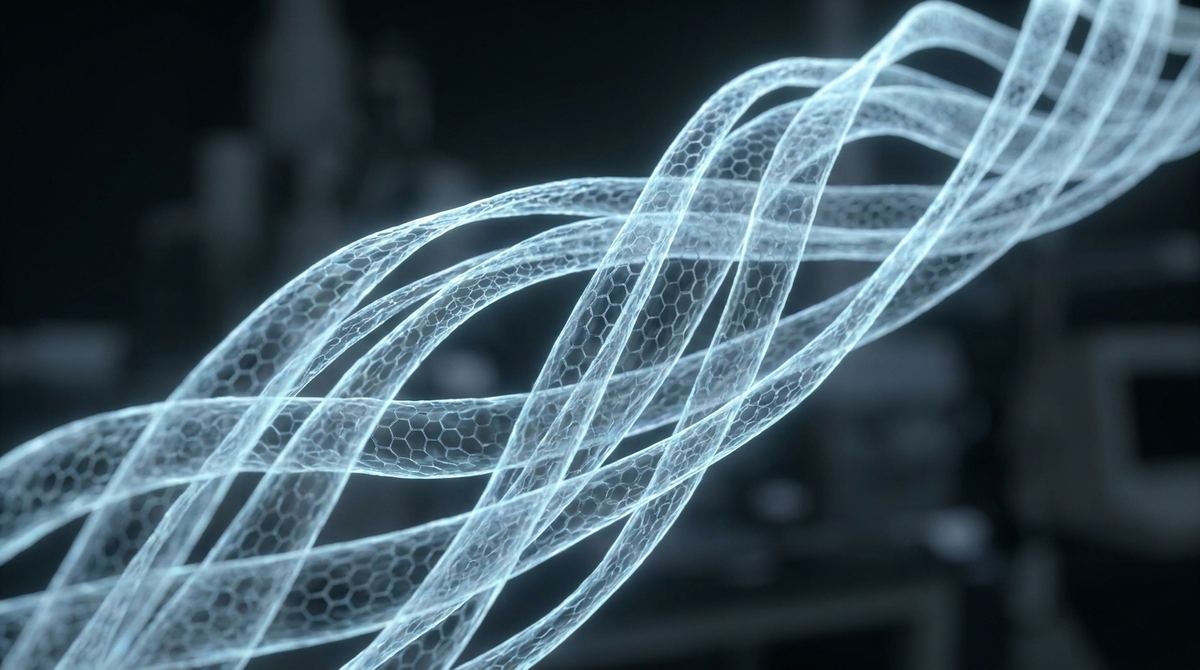
Lead authors Peng Li and Chao Gao at Zhejiang University have recently published a landmark paper in Nature Materials detailing an entirely new way to manufacture ultra-strong carbon materials. Working with an extensive team of researchers across multiple prestigious institutions, they successfully created high-performance graphene-based carbon fibres at room temperature. This massive departure from traditional manufacturing methods promises to completely alter the economics and environmental footprint of advanced materials production. The core of their research addresses one of the most stubborn bottlenecks in materials science, specifically the immense energy required to produce structural carbon. By rethinking the assembly process from the atomic level up, the team has provided a blueprint for next-generation aerospace and automotive composites.
The remarkable strength and lightweight nature of conventional carbon fibre originate entirely from its pure carbon component, which is fundamentally composed of highly ordered sp2 carbon structures. In chemistry, sp2 carbon refers to the specific hybridization of carbon atoms where they bond to three other atoms in a flat, planar arrangement, creating the iconic hexagonal lattice found in graphite and graphene. This atomic configuration provides extraordinary tensile strength and stiffness along the plane of the carbon bonds. However, getting organic precursor molecules to arrange themselves into this perfect sp2 lattice is notoriously difficult. The process requires forcing complex polymer chains to shed all non-carbon atoms and perfectly fuse into pristine hexagonal rings.
For decades, the formation of these sp2 carbon units has relied heavily on an organic carbonization method that is incredibly energy-intensive. Manufacturers typically start with linear polymers like polyacrylonitrile or small organic molecules, which must be fused into graphene units under extreme heat. This carbonization process usually requires sustained temperatures exceeding thirteen hundred degrees Celsius to achieve a final carbon content over ninety percent. Consequently, this conventional path consumes massive amounts of energy, requiring roughly seventeen times the energy needed to produce an equivalent amount of steel. This high-temperature treatment alone accounts for approximately forty percent of the total manufacturing cost, creating a massive economic and environmental barrier for broader adoption.

Figure 1. Contrast of two paths toward carbon fibres. (a) Schematic of the energy-saving graphene assembly path versus the conventional organic carbonization path. (b) Temperature comparison. (c-e) Elemental composition and energy analysis. Adapted from Li, Gao et al., Nature Materials 2025.
The financial and ecological burden of traditional high-temperature carbonization has driven scientists to search for alternative production methods for decades. The fundamental problem lies in reaction kinetics and the thermodynamic activation energy required to transform precursor polymers into structural carbon. Activation energy acts as a thermodynamic barrier that must be overcome before a chemical reaction can proceed, and breaking the strong atomic bonds in precursor polymers requires a massive influx of thermal energy. Traditional carbonization relies entirely on this brute-force thermal approach to drive the condensation and crystallization of linear molecules into a graphene backbone. Because the activation energy for these structural transformations is so high, processing temperatures cannot be substantially lowered without severely degrading the mechanical performance of the resulting fibre.
The Zhejiang University team sidestepped this thermodynamic roadblock entirely by starting with graphene oxide rather than traditional polymer precursors. Because graphene oxide already possesses the necessary two-dimensional carbon backbone, the researchers only needed to remove the oxygen functional groups rather than building the carbon lattice from scratch. They achieved this through a highly efficient catalytic chemical reduction process using a mixture of hydroiodic acid and trifluoroacetic acid. Density functional theory calculations demonstrated that the activation energy for this catalytic reduction is incredibly small, dropping to just five kilojoules per mole for hydroxyl groups. This remarkably low energy barrier allows the entire chemical reduction and structural restoration to occur at a standard ambient temperature of twenty-five degrees Celsius.
The implications of this room-temperature fabrication pathway are staggering for global manufacturing and energy conservation efforts. By eliminating the high-temperature oxidation and carbonization steps completely, the graphene assembly path cuts energy consumption by ninety-seven percent compared to traditional carbon fibre production. The researchers have essentially transformed a highly energy-consuming pyrolytic process into an energy-saving wet chemical process. This shift not only drastically reduces the carbon footprint of the manufacturing cycle but also completely changes the infrastructure requirements for production facilities. Manufacturers would no longer need massive, heavily insulated industrial furnaces, allowing for safer, cheaper, and more sustainable production of advanced structural materials.

Figure 2. Preparation of domain-folded graphene fibre (df-GF). (a) Schematic of domain liquid crystal wet-spinning through a microgrid. (b,c) Cross-sectional SEM images of df-GF showing tightly packed folds. (d,e) Cross-sectional SEM images of free-folded GF (ff-GF) showing larger microvoids. (f-j) Porosity, microvoid distribution, and mechanical performance comparison. Adapted from Li, Gao et al., Nature Materials 2025.
While room-temperature chemical reduction solves the energy problem, assembling microscopic graphene sheets into a macroscopic fibre without introducing critical structural flaws presents an entirely different physical challenge. To achieve this, the researchers utilized a technique known as liquid crystal wet-spinning, a process where a highly concentrated fluid of aligned molecules is extruded through a nozzle into a coagulation bath. Graphene oxide naturally forms liquid crystals in solution, meaning the suspended sheets spontaneously align themselves in parallel formations. When this liquid crystal dope is spun into a solid fibre, the transition from a dilute solution to a dense solid causes the material to shrink severely. This massive volume reduction typically forces the two-dimensional graphene sheets to collapse and fold randomly, creating large internal voids and chaotic structural wrinkles.
To control this chaotic collapse, the researchers invented a novel domain-folding strategy by introducing a specialized microgrid into the spinning nozzle. This microgrid acts as a precise structural sieve, separating the primary fluid flow into dozens of much finer streamlets before they enter the coagulation bath. By forcing the liquid crystal domains into these tightly constrained square micro-channels, the macroscopic fluid stream is effectively divided into a bundle of identically fine, parallel domains. As the material solidifies, the graphene oxide sheets within these restricted spaces are forced to fold into much tighter, more uniform configurations. The structural dimensions of these folds are directly dictated by the size of the microgrid holes, allowing for unprecedented control over the internal architecture of the solid fibre.
This domain-folding strategy directly mimics the multiscale hierarchical structures found in high-performance natural materials like biological muscle tissue and dense wood. The process yields hierarchically interfused fibrils featuring a radial, highly folded structure that packs together with incredible density. Compared to free-folded fibres where graphene sheets crumple randomly to create large, irregular gaps, the domain-folded sheets create interlocking assemblies with minimal empty space. Following the initial spinning process, a solvation drawing technique is applied to physically stretch the solid fibre, flattening residual wrinkles and perfectly aligning the folded sheets along the longitudinal axis. The result is a highly ordered, densely packed macroscopic fibre built entirely from microscopic two-dimensional building blocks.

Figure 3. Characterization of GF structure and its relationship with tensile strength. (a) Domain size control. (b) Strength vs. fold area. (c) Porosity reduction. (d-f) SAXS analysis and stress distribution. (g-j) Fracture morphology comparison between domain-folded and free-folded fibres. Adapted from Li, Gao et al., Nature Materials 2025.
The meticulous control over internal architecture achieved through the domain-folding strategy translates directly into unprecedented mechanical performance. When tested under rigorous laboratory conditions, the representative domain-folded graphene fibres exhibited an astonishing average tensile strength of 5.19 gigapascals. To put this into perspective, this metric is more than double the 2.32 gigapascals of strength measured in control fibres prepared using the traditional free-folding method. The material also demonstrated a remarkable Youngs modulus of 529 gigapascals, indicating an extreme level of stiffness and resistance to elastic deformation. Achieving these specific strength and stiffness metrics entirely at room temperature represents a historic milestone in the field of advanced carbon composites.
To understand exactly why the domain-folded fibres perform so well, one must look at the science of microvoids and their role in structural failure. Microvoids are simply microscopic empty spaces or air pockets trapped within the solid matrix of the fibre during the manufacturing process. According to Griffiths fracture theory, a foundational principle in materials science, the ultimate tensile strength of a material is heavily limited by the size and distribution of its internal defects. When physical stress is applied to a fibre, these microvoids act as concentration points where mechanical forces accumulate, eventually initiating microscopic cracks that lead to catastrophic structural failure. By minimizing the size and volume of these defects, the material can distribute applied loads much more evenly across its entire cross-section.
The research team utilized advanced three-dimensional focused-ion-beam and scanning electron microscopy tomography to visually and quantitatively prove this defect reduction. These high-resolution imaging techniques allowed the scientists to reconstruct the exact internal volume of the fibres, revealing a stark contrast between the two manufacturing methods. The tomography data proved that the domain-folding strategy resulted in an incredible tenfold reduction in overall microvoid volume compared to the free-folded control samples. The typical microvoid in a free-folded fibre featured a large, planar cross-section caused by massive stacking gaps between randomly crumpled sheets. Conversely, the microvoids in the domain-folded material were reduced to tiny, acicular shapes, confirming that the tightly controlled folding process successfully eliminated the large structural flaws that typically compromise material strength.

Figure 4. Structural evolution and property relationships. (a,b) Selected area electron diffraction patterns showing lattice restoration. (c-f) TEM and XRD crystallinity comparison between graphene fibre and PAN-based carbon fibre. (g) Thermal conductivity vs. processing temperature. (h) Benchmarking of tensile strength and modulus versus processing temperature. Adapted from Li, Gao et al., Nature Materials 2025.
Beyond basic tensile testing, the research team employed highly sophisticated analytical techniques to quantify the exact internal architecture of their creation. One of the primary tools used was small-angle X-ray scattering, commonly referred to as SAXS. SAXS is a powerful non-destructive analytical method that measures the elastic scattering of X-rays by a sample to determine nanoscale structural features. By applying Rulands streak method to the SAXS data, the researchers could precisely measure the longitudinal length, transverse width, and orientation angle of the internal microvoids. The scattering data confirmed a sharp sixty-six percent decrease in the longitudinal length of the microvoids as the fold area decreased, perfectly corroborating the physical density measurements and the visual tomography models.
The structural integrity of the individual carbon bonds was also evaluated using Raman spectroscopy, a technique that observes vibrational, rotational, and other low-frequency modes in a system. In carbon materials research, Raman spectroscopy is the gold standard for measuring the ratio of pristine sp2 carbon bonds to defective sp3 carbon bonds. While the high-temperature carbonization of conventional fibres essentially burns away impurities to create a crystalline lattice, the room-temperature catalytic reduction method achieves a similarly impressive restoration of the carbon network. The spectral data indicates that the chemical reduction efficiently strips away the oxygen groups without degrading the underlying hexagonal carbon framework. This proves that high heat is not strictly necessary to achieve high-quality graphitic structures if the starting precursor is properly managed.
The structural density and high crystalline quality of the domain-folded fibres also yield functional properties that drastically outperform conventional alternatives. One of the most striking advantages is the thermal conductivity of the room-temperature processed material, which reaches an exceptional 232 watts per meter-kelvin. By contrast, traditional high-strength polyacrylonitrile carbon fibres are notorious for their poor thermal management capabilities, generally exhibiting thermal conductivity well below 32 watts per meter-kelvin. The domain-folded graphene fibre exceeds the heat dissipation capacity of conventional carbon fibre by an astounding six hundred and twenty-five percent. This dual capability of ultra-high mechanical strength and superior thermal transfer makes the material incredibly attractive for advanced engineering applications where heat management is just as critical as structural integrity.

Professor Chao Gao and his research team at Zhejiang University — pioneers in graphene fibre technology.
The success of this groundbreaking room-temperature manufacturing process is the result of years of dedicated research by a highly specialized team. The project was heavily guided by Professor Chao Gao of Zhejiang University, a recognized global authority in the field of macroscopic graphene assembly. Professor Gao has spent over a decade pushing the boundaries of what is possible with graphene oxide liquid crystals and wet-spinning technologies. His laboratorys foundational work has consistently garnered international acclaim, notably when their microscopic images of intricately tied graphene fiber knots were selected by Nature as the Images of the Year in 2011. His deep expertise in polymer science and macroscopic material engineering provided the visionary framework required to abandon the traditional thermal carbonization pathway entirely.
The rigorous experimental execution and innovative problem-solving were driven by a trio of exceptionally talented co-first authors: Peng Li, Ziqiu Wang, and Gangfeng Cai. These researchers shared the heavy lifting of translating theoretical chemistry into a tangible, high-performance physical material. Their combined efforts spanned the entire experimental spectrum, from meticulously controlling the chemical exfoliation of natural graphite to designing the precision microgrid spinnerets required for the domain-folding process. They were also responsible for the exhaustive structural characterization, spending countless hours operating the focused-ion-beam tomography equipment and running the complex chemical reduction baths. Their seamless collaboration was absolutely vital to achieving the incredibly tight tolerances required to minimize microvoid formation in the final fibres.
To fully understand the physical mechanisms behind their experimental success, the experimentalists partnered with computational expert Professor Zhiping Xu from Tsinghua University. Working out of the Applied Mechanics Laboratory and the Centre for Nano and Micro Mechanics, Professor Xu brought critical theoretical validation to the project. His team conducted advanced molecular dynamics simulations to visually depict and mathematically verify the distinct folding processes occurring at the nanoscale. By utilizing intrinsic reaction coordinates and density functional theory, the computational team proved exactly why the hydroiodic acid reduction required such remarkably low activation energy. This powerful combination of cutting-edge experimental chemistry and rigorous computational mechanics is what ultimately elevated this research from a laboratory curiosity to a comprehensive scientific breakthrough.
The transition from a high-temperature pyrolytic process to a room-temperature wet chemical process holds immense promise for commercial manufacturing scalability. One of the most significant barriers to commercializing new nanomaterials is the availability and cost of the precursor ingredients. Fortunately, the primary raw material for this process is commercially accessible graphene oxide, which is already being controllably produced in multi-tonne quantities globally. Because the process begins with chemically exfoliated natural graphite rather than specialized synthetic polymers, the supply chain is highly robust and economically viable. The basic building blocks required to mass-produce these ultra-strong fibres are already sitting in chemical warehouses around the world, waiting to be spun.
The actual fabrication mechanics also align perfectly with existing industrial textile infrastructure. The three major steps of the graphene assembly path, chemical exfoliation, liquid crystal wet-spinning, and chemical reduction, are all entirely wet methods. This continuous wet processing is structurally identical to the production methods already used for everyday synthetic textiles like vinylon and acrylic clothing fibres. Manufacturers would not need to invent entirely new categories of industrial machinery to adopt this technology. Instead, existing wet-spinning production lines could be retrofitted with specialized microgrid spinnerets and chemical reduction baths, drastically lowering the capital expenditure required to bring this next-generation carbon fibre to the global market.
The potential cost savings extend far beyond the initial equipment investment, fundamentally altering the operational economics of carbon fibre production. Because the traditional high-temperature thermal treatment accounts for roughly forty percent of the total cost of conventional carbon fibre, eliminating the furnace entirely provides an immediate and massive financial advantage. Reducing the energy consumption by ninety-seven percent directly translates to significantly cheaper advanced composites. This dramatic reduction in production costs could finally unlock the use of high-performance carbon fibre in cost-sensitive industries that have previously been priced out. We could soon see ultra-lightweight, ultra-strong components transitioning from elite aerospace applications and high-end sports cars into everyday commuter vehicles and commercial wind turbine blades.
People often ask what the main advantage of room-temperature graphene fibre processing is. The primary advantage is the massive reduction in energy consumption required for manufacturing. By replacing the traditional high-temperature carbonization process with a catalytic chemical reduction, manufacturers can save approximately ninety-seven percent of the energy usually required. This approach eliminates the need for industrial furnaces running at over thirteen hundred degrees Celsius. The resulting fibres still achieve extraordinary mechanical properties without the severe environmental and financial costs associated with traditional methods.
Another common question is how domain folding physically improves the strength of carbon fibres. Domain folding forces graphene oxide sheets to fold within tightly constrained micro-channels during the wet-spinning manufacturing process. This physical constraint prevents the formation of large, irregular structural gaps that typically occur when sheets are allowed to fold freely. By creating smaller, densely packed folds, the strategy reduces the volume of internal structural defects by a factor of ten. Fewer internal defects mean the physical fibre can distribute applied stress much more evenly, leading to a greatly enhanced tensile strength.
Observers frequently inquire about the specific role hydroiodic acid plays in the manufacturing process. Hydroiodic acid acts as a crucial chemical reducing agent in the room-temperature fabrication pathway. Along with trifluoroacetic acid, it efficiently removes oxygen functional groups from the backbone of the graphene oxide precursor. This specific chemical reaction requires very little thermodynamic activation energy compared to traditional thermal reduction methods. Consequently, the pristine carbon lattice is effectively restored at twenty-five degrees Celsius rather than requiring extreme and costly industrial heat.
Industry professionals regularly ask if this new manufacturing process can be scaled up for commercial use. The researchers designed this method to be highly compatible with existing industrial continuous fibre production techniques. The chemical exfoliation of natural graphite into graphene oxide is already achievable on a multi-tonne scale across the globe. Additionally, the liquid crystal wet-spinning process closely mirrors the standard methods used to produce commercial synthetic textiles like acrylic yarn. Therefore, integrating this room-temperature process into current manufacturing facilities presents a highly realistic and economically viable path to wide-scale commercialization.
A final technical question asks why thermal conductivity is considered so important in advanced carbon fibres. High thermal conductivity allows materials to dissipate heat rapidly, which is absolutely critical for aerospace and high-performance automotive applications. Traditional high-strength carbon fibres often struggle with heat dissipation, typically exhibiting thermal conductivity well below thirty-two watts per meter-kelvin. The domain-folded graphene fibres achieve a remarkable two hundred and thirty-two watts per meter-kelvin, representing a massive functional improvement. This enhanced capability means the advanced material can handle both extreme structural loads and intense thermal stress simultaneously without degrading.
The achievement detailed by the collaborative research team represents a monumental leap forward in the practical application of nanoscale carbon materials. For over half a century, the materials science community has accepted extreme heat and massive energy consumption as unavoidable prerequisites for producing strong, stable carbon structures. By challenging this foundational assumption and approaching the problem through the lens of controlled liquid crystal assembly, the researchers have fundamentally rewritten the rules of composite manufacturing. The successful synthesis of a material boasting a tensile strength of 5.19 gigapascals at room temperature proves that chemical ingenuity can effectively replace brute-force thermal processing. This work beautifully highlights how deep theoretical understanding and precise physical engineering can combine to solve some of the most entrenched industrial challenges.
The elegance of the domain-folding strategy cannot be overstated in its contribution to this scientific milestone. By simply introducing a perfectly calibrated microgrid into the spinning process, the team managed to tame the chaotic physical collapse that has plagued macroscopic graphene assembly for years. This simple yet highly effective mechanical intervention forces microscopic sheets into a highly ordered, dense hierarchy that actively suppresses the formation of critical microvoids. It is a brilliant example of biomimicry, taking structural cues from natural materials like wood and applying them to purely synthetic carbon architectures. The resulting tenfold drop in defect volume is the direct physical mechanism that unlocks the extreme stiffness and strength documented in the mechanical testing.
Looking ahead, this low-energy fabrication pathway opens highly lucrative avenues for both academic exploration and commercial industrial application. The ability to produce elite structural materials while simultaneously cutting energy consumption by ninety-seven percent aligns perfectly with global demands for sustainable manufacturing technologies. As industries race to build lighter, stronger, and more energy-efficient vehicles, aircraft, and renewable energy systems, the demand for affordable carbon composites will only continue to surge. The work conducted at Zhejiang University and Tsinghua University ensures that the next generation of high-performance materials will not only be significantly stronger but also vastly more sustainable to produce.
Serious about B2B integration? Test our premium Pulsed Electrical Resistive Carbon Heating turbostratic graphene in your lab. 100g sample packs available now.
Explore More
Determinant Monte Carlo simulations are key to materials science but fail at low temperatures. New research offers a stable algorithm, enabling accurate...

Researchers developed coupled dynamical Boltzmann transport equations that include long-range interactions, creating a more accurate model for electron...

Learn how to design and prototype graphene slit junctions for directional electron-beam formation and tunable spin filtering in nanoelectronic devices.