
Stable Determinant Monte Carlo Simulations at Large Inverse Temperature $β$
Determinant Monte Carlo simulations are key to materials science but fail at low temperatures. New research offers a stable algorithm, enabling accurate...
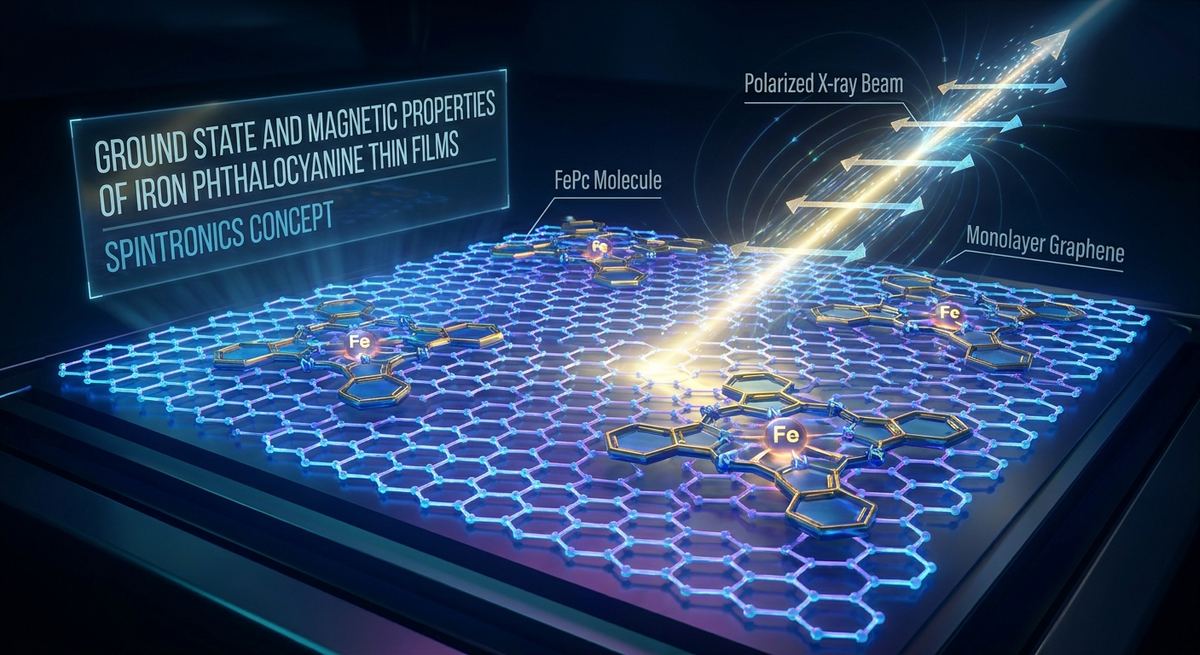
Research conducted by: Shinya Ohno, Itsuki Sakaida, Yoshihide Aoyagi, Kohei Yamamoto, Takanori Koitaya, Toshihiko Yokoyama
The scientific community owes a great debt of gratitude to this dedicated team of researchers whose exhaustive investigation into the structural and magnetic properties of molecular thin films has provided a monumental leap forward for the field of spintronics. Their meticulous experiments utilizing advanced X-ray spectroscopic techniques have illuminated the intricate relationship between molecular orientation and magnetic anisotropy, laying the fundamental groundwork for the next generation of nanoscale organic magnetic devices. By comparing the growth and behavior of these complex molecules on different substrates, their work bridges a critical gap in our understanding of quantum-level surface interactions.
The quest to miniaturize electronic components has driven researchers to explore the ultimate limit of data storage and processing: the single molecule. In the rapidly evolving field of spintronics, where the intrinsic spin of the electron is exploited alongside its fundamental electronic charge, molecular magnets offer an unprecedented canvas for innovation. Among the myriad of candidates, metallophthalocyanines have emerged as highly promising building blocks. This article delves into the groundbreaking research regarding the ground state, molecular orientation, and spin orientation of iron phthalocyanine thin films, specifically focusing on their behavior when grown on a monolayer graphene sheet compared to traditional silicon oxide substrates. The findings reveal profound insights into how physical orientation dictates magnetic properties, a principle that could revolutionize data storage technologies.
Traditional electronics rely on the movement and accumulation of charge carriers to process and store information. Spintronics, a portmanteau of spin transport electronics, introduces a new paradigm by harnessing the electron spin state, typically denoted as spin-up or spin-down, as an additional degree of freedom. This approach promises devices that operate at higher speeds, consume significantly less power, and offer higher integration densities than their conventional counterparts. To realize the full potential of spintronics at the nanoscale, scientists have turned their attention to metal-organic molecules, which can be chemically tailored to exhibit specific magnetic behaviors.
Iron phthalocyanine is a quintessential example of such a molecule. It consists of a central iron atom coordinated to four nitrogen atoms within a large, flat, macrocyclic organic ring system composed of carbon and hydrogen. The symmetry of the molecule, which belongs to the D4h point group, dictates the crystal field splitting of the central iron atom's 3d orbitals. This splitting is crucial because the arrangement of electrons within these d-orbitals determines the molecule's magnetic ground state. The central iron ion is typically in a divalent state, and its electron configuration in the square-planar ligand field results in a specific spin state that gives rise to the molecule's overall magnetic moment.
The planar nature of the phthalocyanine ring is not merely a structural curiosity; it is a vital functional characteristic. The extended pi-electron system of the organic macrocycle allows for strong intermolecular interactions and facilitates communication between the central magnetic ion and the surrounding environment. This makes iron phthalocyanine highly sensitive to its immediate surroundings, particularly the substrate upon which it is deposited. By carefully selecting the substrate, researchers can manipulate the physical orientation of the molecules, which in turn alters the crystal field environment of the iron atom, ultimately governing the magnetic anisotropy of the entire thin film system.
The foundation of any thin film device lies in the substrate. The thermodynamic and kinetic processes that govern the condensation of molecules from a vapor phase onto a solid surface are heavily influenced by the surface energy, atomic structure, and chemical reactivity of the substrate. In the realm of organic molecular beam epitaxy, the interaction between the deposited molecules and the substrate competes with the intermolecular forces between the deposited molecules themselves. This delicate balance determines the growth mode and the final orientation of the molecular film.
Silicon oxide has long been the workhorse substrate of the semiconductor industry. It is ubiquitous, highly stable, and easy to manufacture. However, its amorphous surface presents a relatively isotropic energy landscape with specific chemical interaction sites, such as dangling oxygen or silicon bonds, depending on the surface treatment. When planar organic molecules are deposited onto silicon oxide, the relatively weak interaction with the amorphous surface often allows the stronger intermolecular forces to dominate. For planar molecules with extended pi-systems, this frequently results in a growth mode where the molecules stack face-to-face to maximize their van der Waals interactions, leading to a standing-up or highly tilted orientation relative to the substrate surface.
Monolayer graphene, on the other hand, presents a radically different environment. Graphene is a single layer of carbon atoms arranged in a two-dimensional honeycomb lattice. It is atomically flat and possesses a delocalized cloud of pi-electrons above and below its basal plane. When a planar molecule like iron phthalocyanine is introduced to a graphene surface, the pi-electrons of the molecule can interact strongly with the pi-electrons of the graphene through a phenomenon known as pi-pi stacking. This non-covalent interaction is highly directional and maximizes its energetic benefit when the two pi-systems are parallel. Consequently, the surface energy landscape of graphene strongly encourages planar molecules to adopt a flat-lying orientation, entirely altering the structural architecture of the resulting thin film compared to growth on silicon oxide.
Determining the precise physical orientation of molecules within a thin film requires highly sensitive analytical techniques. One of the most powerful tools for this purpose is X-ray absorption spectroscopy, particularly the near-edge structure region, often referred to as X-ray absorption near-edge structure or near-edge X-ray absorption fine structure. This technique relies on the absorption of high-energy X-ray photons by core electrons, exciting them into unoccupied valence states or the continuum. The probability of this absorption occurring is governed by quantum mechanical selection rules, which dictate that the transition is most likely when the electric field vector of the incident X-ray is aligned with the spatial orientation of the target unoccupied orbital.
In the study of iron phthalocyanine, researchers utilize linearly polarized X-rays generated by a synchrotron radiation facility. By tuning the X-ray energy to the carbon or nitrogen K-edge, they can probe the unoccupied pi-star and sigma-star orbitals of the phthalocyanine ring. The pi-star orbitals are oriented perpendicular to the molecular plane, while the sigma-star orbitals lie within the molecular plane. By systematically varying the angle of incidence of the linearly polarized X-rays relative to the substrate surface, scientists can measure the linear dichroism, which is the difference in X-ray absorption at different polarization angles.
If the molecules are lying completely flat on the substrate, the pi-star resonance will be maximized when the X-ray electric field vector is perpendicular to the surface and minimized when it is parallel. Conversely, if the molecules are standing up, the angular dependence will be reversed. By carefully analyzing the intensity variations of these specific absorption peaks as a function of the incidence angle, researchers can calculate the average tilt angle of the molecules with remarkable precision. In the context of this research, X-ray absorption spectroscopy provided definitive evidence that iron phthalocyanine molecules on graphene orient themselves in a roughly flat-lying manner, while those on silicon oxide adopt a relatively perpendicular, standing-up configuration.
While knowing the physical orientation of the molecules is crucial, understanding how this orientation affects their magnetic behavior requires a different specialized technique: X-ray magnetic circular dichroism. This advanced spectroscopic method is the premier tool for investigating the element-specific magnetic properties of complex materials. It relies on the use of circularly polarized X-rays, where the electric field vector rotates either clockwise or counter-clockwise as the wave propagates. When these circularly polarized X-rays are absorbed by a magnetic material in the presence of an external magnetic field, the absorption intensity depends on the relative alignment of the X-ray photon's helicity and the magnetization direction of the sample.
The power of X-ray magnetic circular dichroism lies in its ability to separate the total magnetic moment of an atom into its two fundamental components: the spin magnetic moment and the orbital magnetic moment. This separation is achieved through the application of magneto-optical sum rules, developed by Thole and Carra. By integrating the dichroic signal over specific core-level absorption edges, such as the L2 and L3 edges of the central iron atom in the phthalocyanine molecule, researchers can extract quantitative values for both the spin and orbital contributions to the total magnetization.
Furthermore, by performing these measurements at different angles of the applied magnetic field relative to the sample surface, researchers can determine the magnetic anisotropy of the thin film. Magnetic anisotropy refers to the directional dependence of a material's magnetic properties. A magnetically anisotropic material has a preferred direction for its magnetization, known as the easy axis. The energy required to rotate the magnetization away from this easy axis is the magnetic anisotropy energy. In molecular spintronics, a high magnetic anisotropy energy is highly desirable because it stabilizes the magnetic state against thermal fluctuations, a critical requirement for maintaining data integrity in memory devices. The X-ray magnetic circular dichroism measurements in this study were instrumental in revealing how the substrate-induced physical orientation fundamentally rewires the magnetic anisotropy of the iron phthalocyanine films.
The comparative analysis of iron phthalocyanine thin films grown on monolayer graphene versus silicon oxide illuminates a fascinating interplay between structural orientation and quantum mechanical ground states. The research demonstrated that the stark difference in molecular orientation, flat-lying on graphene versus perpendicular on silicon oxide, is not merely a geometric curiosity; it has profound implications for the electronic and magnetic properties of the central iron atom.
When the molecules are standing up on the silicon oxide substrate, they experience a specific crystal field environment dictated primarily by the intermolecular interactions within the film and the lack of strong interaction with the substrate below. In this configuration, the X-ray magnetic circular dichroism measurements revealed a distinct magnetic ground state characterized by a specific distribution of electrons within the iron 3d orbitals. This specific electronic configuration leads to a particular spin and orbital magnetic moment, establishing a defined magnetic easy axis that dictates how the film responds to external magnetic fields.
Conversely, when the molecules are forced to lie flat on the monolayer graphene sheet due to the strong pi-pi interactions, the geometric distortion and the proximity of the graphene's highly conductive pi-electron cloud alter the crystal field splitting of the iron atom. The interaction with the graphene substrate acts as a perturbation to the intrinsic ligand field of the phthalocyanine ring. This subtle change in the electrostatic environment is sufficient to rearrange the filling of the iron 3d orbitals, thereby shifting the electronic ground state. The X-ray magnetic circular dichroism data clearly showed that this flat-lying orientation on graphene significantly alters the orbital magnetic moment. Because the orbital moment is intimately linked to the magnetic anisotropy via spin-orbit coupling, the change in molecular orientation directly results in a significant alteration of the magnetic anisotropy. The magnetic easy axis is modified, demonstrating that the macroscopic magnetic properties of the thin film can be engineered simply by changing the molecular posture via substrate selection.
The ability to control the magnetic anisotropy of molecular thin films by manipulating their physical orientation on a two-dimensional substrate opens up a wealth of possibilities for the future of nanomagnetic devices. The findings from this research highlight a viable pathway toward engineering the magnetic properties of organic spintronic materials from the bottom up. By utilizing two-dimensional materials like monolayer graphene as active templates, researchers can dictate the self-assembly and orientation of molecular magnets, thereby tuning their magnetic responses for specific technological applications.
One of the most immediate implications is in the realm of high-density magnetic data storage. As conventional magnetic recording media approach their physical limits, often referred to as the superparamagnetic limit where thermal energy flips the magnetic bits, molecular magnets offer a potential solution. If the magnetic anisotropy of a single molecule or a small cluster of molecules can be made sufficiently high, they could act as individual bits of information, increasing storage densities by orders of magnitude. The demonstration that a graphene substrate can significantly alter and potentially enhance the magnetic anisotropy of iron phthalocyanine provides a critical tool for designing more stable molecular memory elements.
Furthermore, this research has profound implications for quantum information processing. In quantum computing, molecular spins are being heavily investigated as potential qubits, the fundamental units of quantum information. The coherence time of these molecular qubits, which is the duration they can maintain their fragile quantum state, is highly dependent on their interaction with their environment. The ability to precisely position and orient molecules on a well-defined, atomically flat substrate like graphene allows for better control over the molecular environment, potentially reducing decoherence pathways. Additionally, the highly conductive nature of graphene could be utilized to electrically address and manipulate these molecular spin states, creating a bridge between the molecular quantum world and macroscopic electronic circuitry.
Question: What is iron phthalocyanine and why is it important in this context?
Answer: Iron phthalocyanine is a complex metal-organic molecule consisting of a central iron atom surrounded by a large, flat ring of carbon and nitrogen atoms. It is important because the central iron atom possesses an intrinsic magnetic moment derived from its un-paired electrons. The flat, planar structure of the surrounding organic ring allows the molecule to interact strongly with surfaces, making it an excellent candidate for studying how physical orientation affects magnetic properties in the pursuit of molecular spintronic devices.
Question: How does X-ray absorption spectroscopy determine molecular orientation?
Answer: X-ray absorption spectroscopy utilizes highly focused, linearly polarized X-rays to probe the unoccupied electronic orbitals of a material. Because the absorption of these X-rays is highly directional, researchers can determine the physical tilt of the molecules by changing the angle at which the X-rays hit the sample. If the absorption related to orbitals perpendicular to the molecule is strongest when the X-ray electric field is perpendicular to the substrate, it indicates the molecules are lying flat.
Question: What is the significance of magnetic anisotropy in these thin films?
Answer: Magnetic anisotropy refers to the tendency of a magnetic material to prefer aligning its magnetization along a specific direction, known as the easy axis. This property is crucial for data storage and memory devices because a high magnetic anisotropy energy creates an energy barrier that prevents the magnetic state from randomly flipping due to thermal fluctuations. Controlling this anisotropy is essential for creating stable, reliable nanoscale magnetic memory.
Question: Why does graphene cause the molecules to lie flat compared to silicon oxide?
Answer: Graphene is a perfectly flat, two-dimensional sheet of carbon atoms with a delocalized cloud of pi-electrons above and below its surface. Iron phthalocyanine also has a delocalized pi-electron system. When placed on graphene, these two pi-systems strongly attract each other through a mechanism called pi-pi stacking, forcing the molecule to lie flat to maximize the interaction. Silicon oxide lacks this extended pi-system, so the molecules tend to interact more strongly with each other, standing up to pack closely together.
Question: What are the practical applications of this research?
Answer: The fundamental understanding gained from this research paves the way for advanced technologies in the fields of spintronics and quantum computing. By proving that the magnetic properties of a thin film can be precisely tuned by changing the substrate and molecular orientation, engineers can develop vastly higher density magnetic hard drives, ultra-low power magnetic random access memory, and potentially stable molecular qubits for future quantum computers.
The exhaustive investigation into the ground state and magnetic properties of iron phthalocyanine thin films grown on monolayer graphene represents a significant milestone in surface science and molecular magnetism. By leveraging the advanced capabilities of X-ray absorption spectroscopy and X-ray magnetic circular dichroism, the researchers successfully demonstrated a profound connection between the physical orientation of the molecules and their intrinsic magnetic anisotropy. The revelation that the strong pi-pi interactions with the graphene substrate force the molecules into a flat-lying posture, which in turn significantly alters the crystal field splitting and the resulting orbital magnetic moment compared to growth on traditional silicon oxide, provides a powerful new mechanism for engineering magnetic materials at the nanoscale. As the demand for faster, smaller, and more efficient electronic and data storage devices continues to grow, the principles uncovered in this research will undoubtedly serve as a crucial foundation for the development of next-generation organic spintronic technologies and molecular-scale memory architectures.
Serious about B2B integration? Test our premium Pulsed Electrical Resistive Carbon Heating turbostratic graphene in your lab. 100g sample packs available now.
Explore More
Determinant Monte Carlo simulations are key to materials science but fail at low temperatures. New research offers a stable algorithm, enabling accurate...

Researchers developed coupled dynamical Boltzmann transport equations that include long-range interactions, creating a more accurate model for electron...

Learn how to design and prototype graphene slit junctions for directional electron-beam formation and tunable spin filtering in nanoelectronic devices.