
Interaction-driven transport in a non-degenerate mixture of Dirac and massive
Researchers explore interaction-driven transport in graphene, where massless Dirac fermions can drag massive particles, creating a current without direct...
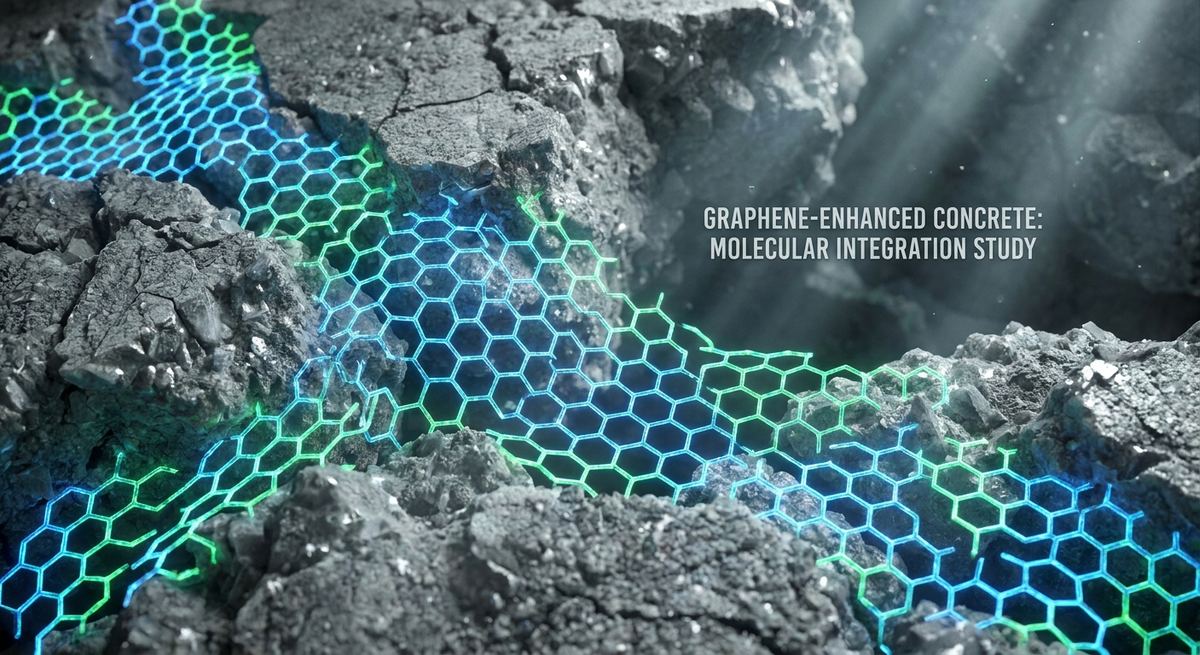
Research conducted by: Mohammed Firdous Mohammed Kalif, Bahiru Bewket Mitikie, Sofonias Alemayehu Desta, Bypaneni Krishna Chaitanya
The scientific community owes a significant debt of gratitude to these researchers for their meticulous investigation into the synergistic effects of nanomaterials within traditional building materials. Their comprehensive study, which rigorously evaluates the mechanical and microstructural enhancements brought about by graphene powder in cementitious composites, represents a major leap forward in civil engineering and sustainable construction practices. By isolating the precise variables required to optimize mix designs, this team has laid a foundational framework that will undoubtedly influence future infrastructural development and environmental mitigation strategies within the global concrete industry. Their work bridges the gap between theoretical nanotechnology and practical, macro-scale construction applications, providing a critical blueprint for the next generation of high-performance building materials.
Concrete is the undisputed backbone of modern human civilization. From towering skyscrapers and expansive bridge networks to subterranean transit systems and residential foundations, it is the most widely consumed man-made material on the planet. However, this ubiquity comes at a staggering environmental cost. The production of Portland cement, the primary binding agent in traditional concrete, is responsible for a massive portion of global anthropogenic carbon dioxide emissions. The calcination process of limestone, coupled with the extreme fossil fuel combustion required to heat cement kilns to thousands of degrees, creates a carbon footprint that is increasingly incompatible with global climate goals. The construction industry is therefore facing an existential imperative: it must find ways to reduce cement consumption without compromising the structural integrity and longevity of the built environment.
Simultaneously, structural engineers are constantly pushing the boundaries of what is physically possible. Modern architectural designs demand materials that can withstand greater loads, span longer distances, and resist harsh environmental degradation over extended lifespans. Traditional concrete, while excellent in compression, is notoriously weak in tension and susceptible to micro-cracking. These micro-cracks can propagate over time, allowing water, chlorides, and other harmful chemical agents to infiltrate the matrix, leading to the corrosion of internal steel reinforcement and ultimate structural failure.
To resolve these dual challenges of environmental sustainability and structural limitation, researchers have increasingly turned to the realm of nanotechnology. By engineering materials at the atomic and molecular levels, it is possible to fundamentally alter the macroscopic behavior of cementitious composites. Among the myriad of nanomaterials currently under investigation, graphene has emerged as a particularly promising candidate. As a two-dimensional allotrope of carbon, graphene possesses extraordinary mechanical, thermal, and electrical properties. The research detailed in this article investigates the precise mechanisms through which graphene powder can be harnessed to overcome the inherent weaknesses of traditional concrete, offering a pathway toward stronger, more durable, and more environmentally friendly infrastructure.
The integration of graphene into concrete is not merely a matter of mixing two materials together; it is an exercise in complex nanoscale engineering. Graphene consists of a single layer of carbon atoms arranged in a two-dimensional honeycomb lattice. This unique sp2 hybridized structure grants graphene a tensile strength that is orders of magnitude greater than structural steel, alongside an exceptionally high Young's modulus. When introduced into a cementitious matrix, these microscopic carbon sheets act as highly efficient reinforcement mechanisms, operating at a scale where traditional steel rebar or macro-fibers cannot reach.
The primary mechanism through which graphene enhances concrete is the bridging of nanoscale cracks. As concrete cures and experiences environmental stresses, microscopic fissures inevitably form within the calcium silicate hydrate gel, which is the main product of cement hydration. Left unchecked, these nanoscale fissures merge and propagate into macro-cracks that compromise the structural integrity of the element. Graphene sheets, dispersed throughout the matrix, intercept these propagating micro-cracks. The high tensile strength of the graphene resists the opening of the crack, effectively bridging the gap and transferring the stress across the fissure. This phenomenon requires significantly more energy for the crack to continue propagating, thereby dramatically increasing the toughness and fracture energy of the composite.
Furthermore, graphene acts as a powerful nucleation site for the cement hydration process. The high specific surface area of the nanoparticles provides an ideal substrate for the precipitation and growth of hydration products. This accelerated and more uniform hydration process leads to a denser, more refined pore structure. The calcium silicate hydrate gel forms more continuously around the graphene sheets, reducing the overall porosity of the matrix and minimizing the presence of weak capillary pores. This densification is critical not only for improving mechanical strength but also for enhancing the material's resistance to environmental ingress, which is a primary determinant of long-term durability.
To accurately quantify the benefits of graphene modification, the research team employed a highly rigorous and standardized experimental methodology. The core objective was to determine the optimal dosage of graphene powder that would yield the maximum mechanical and durability benefits without succumbing to the diminishing returns associated with nanoparticle agglomeration. To achieve this, the researchers designed a series of concrete mixtures incorporating graphene powder at dosages ranging from 0.1 percent to 0.5 percent by mass of cement, alongside a control mixture containing zero percent graphene for baseline comparison.
The preparation of these mixtures required meticulous attention to detail, particularly regarding the dispersion of the graphene powder. Because graphene sheets possess a massive surface area and are subject to strong van der Waals forces, they have a natural tendency to clump together, or agglomerate, when introduced into an aqueous environment. If the graphene is not properly dispersed, these agglomerations act as weak points or voids within the concrete, negating any potential reinforcement benefits and potentially decreasing the overall strength of the composite. The researchers utilized advanced mixing protocols, likely involving superplasticizers and high-shear mechanical mixing, to ensure a homogenous distribution of the nanoparticles throughout the cement paste.
The mechanical testing phase was conducted in strict accordance with the standards established by the American Society for Testing and Materials. Compressive strength evaluations were performed following ASTM C39 guidelines, which dictate the procedures for casting, curing, and testing cylindrical concrete specimens under axial loads until failure. Similarly, flexural strength measurements were conducted according to ASTM C78, utilizing a simple beam with third-point loading to determine the modulus of rupture. By adhering to these internationally recognized standards, the researchers ensured that their data was robust, reproducible, and directly comparable to existing literature within the field of materials science.
The results of the mechanical testing revealed a profound and statistically significant enhancement in both compressive and flexural strength, directly correlated with the inclusion of graphene powder. The data clearly demonstrated a parabolic relationship between graphene dosage and mechanical performance, allowing the researchers to pinpoint the exact optimal concentration. At a dosage of 0.4 percent by mass of cement, the concrete exhibited its absolute peak performance, far surpassing the baseline metrics of the un-modified control group.
Specifically, the compressive strength of the 0.4 percent graphene-modified concrete reached an impressive 25.16 Newtons per square millimeter after just 7 days of curing. As the hydration process continued and the matrix further consolidated, the 28-day compressive strength soared to 37.75 Newtons per square millimeter. This substantial increase in load-bearing capacity indicates that the graphene sheets were highly effective at bridging micro-cracks and facilitating efficient stress transfer throughout the cementitious matrix. The accelerated early-age strength at 7 days also corroborates the theory that graphene acts as a nucleation site, speeding up the formation of the vital calcium silicate hydrate gel.
The flexural strength tests mirrored these phenomenal compressive results. At the 0.4 percent optimal dosage, the concrete achieved a flexural strength of 2.985 Newtons per square millimeter at 7 days, and an outstanding 4.47 Newtons per square millimeter at the 28-day mark. Enhancing the flexural strength of concrete is notoriously difficult, making these results particularly noteworthy. The data proves that the two-dimensional carbon sheets are actively resisting bending stresses and preventing the bottom-up crack propagation that typically leads to flexural failure in standard concrete beams.
Crucially, the research also documented a decline in mechanical performance when the graphene dosage was increased to 0.5 percent. This drop-off perfectly illustrates the critical threshold of nanoparticle agglomeration. At 0.5 percent, the concentration of graphene overcomes the dispersive capabilities of the mixing protocol, causing the sheets to clump together. These clumps create microscopic voids and prevent the uniform hydration of the surrounding cement, ultimately compromising the structural integrity of the composite. This finding underscores the necessity of precise dosage control in the application of nanotechnology to construction materials.
To understand the microscopic mechanisms driving these macroscopic mechanical improvements, the researchers deployed a suite of advanced analytical techniques, including X-ray diffraction, Fourier Transform Infrared Spectroscopy, and Scanning Electron Microscopy. These tools allowed the team to peer into the atomic and molecular architecture of the modified concrete, verifying the presence of graphene and observing its interaction with the cement hydration products.
X-ray diffraction analysis was utilized to confirm the successful incorporation and structural integrity of the graphene within the cured concrete. By bombarding the samples with X-rays and measuring the angles of diffraction, the researchers could identify the distinct crystallographic signatures of the constituent materials. The XRD patterns revealed a characteristic diffraction peak at approximately 26.5 degrees. This specific angle corresponds to the 002 crystallographic plane of graphitic carbon, providing definitive proof that the graphene powder survived the harsh, highly alkaline environment of the hydrating cement and maintained its structural identity within the final composite.
Fourier Transform Infrared Spectroscopy was employed to investigate the chemical bonding and functional groups present within the matrix. By analyzing the absorption of infrared light at various wavelengths, the researchers could detect the subtle chemical interactions between the graphene nanoparticles and the cementitious phases. The FTIR spectra likely showed modifications in the vibrational bands associated with water molecules and silicon-oxygen bonds, further confirming that the graphene was not merely a passive filler, but an active participant in the hydration and structural formation of the concrete.
Finally, Scanning Electron Microscopy provided high-resolution visual evidence of the microstructural morphology. The SEM micrographs allowed the researchers to observe the distribution of the graphene sheets and the density of the surrounding calcium silicate hydrate gel. The imaging confirmed a highly refined and dense pore structure in the 0.4 percent modified samples, with visibly fewer micro-cracks and voids compared to the control group. The SEM images visually corroborated the mechanical data, showing exactly how the graphene sheets were interwoven with the cement hydration products to create a vastly superior, highly cohesive composite material.
While compressive and flexural strength are critical metrics for structural design, the true test of a building material's viability is its long-term durability. In the context of concrete, durability is inextricably linked to permeability. The pore network within a concrete element dictates how easily water, oxygen, and deleterious chemicals such as chlorides and sulfates can penetrate the matrix. If a concrete structure is highly permeable, these agents will eventually reach the internal steel reinforcement, initiating a corrosion process that causes the steel to expand, spall the surrounding concrete, and ultimately destroy the structural integrity of the element.
To evaluate the durability enhancements provided by the graphene powder, the researchers conducted rigorous water absorption tests. These tests measure the rate and volume of water drawn into the concrete through capillary action, providing a direct proxy for the material's permeability. The results were highly encouraging. The concrete samples modified with the optimal 0.4 percent dosage of graphene exhibited a significant reduction in water absorption compared to the un-modified control samples.
This reduction in permeability is a direct result of the microstructural refinement observed in the SEM analysis. The graphene nanoparticles effectively fill the nanoscale voids and capillary pores within the cementitious matrix. Furthermore, the two-dimensional geometry of the graphene sheets creates a highly tortuous path for any infiltrating water molecules. Instead of traveling through straight, interconnected capillary channels, water attempting to penetrate the modified concrete must navigate a complex, maze-like network obstructed by impermeable carbon barriers. By drastically reducing fluid ingress, the incorporation of graphene fundamentally protects the internal reinforcement, ensuring that structures built with this advanced material will enjoy vastly extended lifespans and require significantly less maintenance over their operational history.
The implications of this research extend far beyond the laboratory; they offer a tangible pathway toward a more sustainable and economically viable future for the global construction industry. The core conclusion drawn from this extensive study is that graphene can significantly enhance the performance of concrete, allowing for an equivalent or superior structural capacity using less cement. Because the production of clinker is the primary source of carbon emissions in the concrete supply chain, any technology that allows engineers to reduce the clinker factor of their mix designs represents a massive victory for environmental conservation.
By utilizing graphene to boost the strength and durability of the composite, mix designers can safely reduce the total volume of Portland cement required per cubic yard of concrete. This reduction directly translates to a lower carbon footprint for the construction project. Furthermore, the extended lifespan and reduced maintenance requirements of graphene-modified structures mean that fewer resources will be consumed over the building's entire lifecycle. While the initial upfront cost of graphene nanoparticles remains a consideration, the long-term economic benefits derived from enhanced durability, reduced repair costs, and lower cement consumption strongly justify the investment.
As the manufacturing processes for graphene continue to scale and become more cost-effective, its integration into standard construction practices will become increasingly feasible. The foundational data provided by this research team serves as a critical stepping stone in that transition. By definitively proving the mechanical and microstructural benefits of precise graphene dosing, they have provided the industry with the empirical evidence needed to confidently adopt this revolutionary nanomaterial. The future of infrastructure lies in working smarter at the nanoscale to build stronger and greener at the macroscale.
Question: What is the optimal amount of graphene to add to concrete according to this study?
Answer: Based on the comprehensive mechanical testing conducted by the research team, the optimal dosage of graphene powder is 0.4 percent by mass of cement. At this specific concentration, the concrete achieved its absolute highest compressive and flexural strengths. Dosages below this amount provided less reinforcement, while increasing the dosage to 0.5 percent resulted in a decrease in performance due to the agglomeration, or clumping, of the nanoparticles.
Question: How exactly does graphene improve the compressive strength of the concrete?
Answer: Graphene improves compressive strength through several nanoscale mechanisms. Firstly, the extremely strong, two-dimensional carbon sheets act as microscopic bridges that intercept and stop the propagation of micro-cracks within the cement matrix. Secondly, the immense surface area of the graphene particles provides nucleation sites that accelerate and refine the cement hydration process, resulting in a denser calcium silicate hydrate gel with fewer weak capillary pores.
Question: What role did X-ray diffraction play in this specific research methodology?
Answer: X-ray diffraction was utilized as an advanced analytical tool to confirm that the graphene powder was successfully incorporated into the final, cured concrete structure. By analyzing the way X-rays scattered off the sample, the researchers identified a distinct diffraction peak at approximately 26.5 degrees. This specific angle is the known signature for the 002 crystallographic plane of graphitic carbon, proving the graphene survived the mixing and curing process intact.
Question: Why does adding too much graphene, such as the 0.5 percent dosage, actually decrease the concrete's performance?
Answer: Graphene sheets possess a massive surface area and are highly susceptible to van der Waals forces, which causes them to attract one another. When the concentration of graphene in the mixture is too high, the mechanical mixing process cannot overcome these forces, and the nanoparticles clump together into agglomerations. These clumps fail to bond properly with the cement matrix and essentially act as weak voids or defects in the concrete, thereby lowering its overall strength.
Question: How does modifying concrete with graphene make the construction industry more environmentally friendly?
Answer: The primary environmental benefit of graphene-modified concrete is its potential to significantly reduce the amount of Portland cement required in construction. Because cement production is a massive source of global carbon dioxide emissions, reducing its usage is critical. Graphene increases the strength of the concrete so dramatically that engineers can use less cement to achieve the same structural requirements. Additionally, the improved durability means structures will last longer and require fewer resources for repairs over time.
The rigorous investigation into graphene as a functional additive for cementitious composites marks a pivotal moment in the evolution of building materials. By successfully identifying the optimal dosage of 0.4 percent by mass of cement, the research team has unlocked exceptional enhancements in both early-age and long-term mechanical performance, achieving remarkable compressive and flexural strengths. Beyond mere load-bearing capacity, the microstructural refinements confirmed by advanced spectroscopy and microscopy translate directly to reduced permeability and vastly superior durability against environmental degradation. Most importantly, this nanotechnology-driven approach provides a scientifically validated method for reducing the volumetric requirement of Portland cement in structural mix designs. As the global construction industry grapples with the urgent need to decarbonize, the strategic implementation of graphene-modified concrete offers a powerful, scalable solution to build the resilient, high-performance, and sustainable infrastructure of tomorrow.
Serious about B2B integration? Test our premium Pulsed Electrical Resistive Carbon Heating turbostratic graphene in your lab. 100g sample packs available now.
Explore More
Researchers explore interaction-driven transport in graphene, where massless Dirac fermions can drag massive particles, creating a current without direct...

Researchers have developed a high-efficiency graphene-silicon microring modulator, a critical step toward faster, lower-power optical communications and...

Build a near-infrared photodetector with nitrogen-doped porous graphene nanoribbons. This guide details the materials, fabrication steps, and test plan.